Porto is the kind of city that grabs you by the collar and refuses to let go. From the moment you step into its tangled web of steep, narrow streets, past buildings clad in blue-and-white azulejo tiles that shimmer in the Atlantic light, you realize this is not Lisbon’s quieter sibling. Porto has its own gravity, its own rhythm, and two days here will leave you planning your return before you have even left.
Day One: The Historic Heart
Start your first morning in the Ribeira district, Porto’s UNESCO-listed riverside quarter. The houses here tumble down the hillside in a cascade of terracotta, ochre, and faded pastels, their laundry lines strung between wrought-iron balconies like celebratory bunting. Grab a coffee at one of the small cafés along the Cais da Ribeira and watch the Douro River slide past, flat-bottomed rabelo boats bobbing at their moorings. These were the vessels that once carried barrels of Port wine downriver from the vineyards of the Douro Valley, and they remain Porto’s most iconic image.
From Ribeira, climb the steep streets to São Bento railway station. Even if you have no train to catch, this is an essential stop. The entrance hall is lined with over twenty thousand azulejo tiles, installed between 1905 and 1916 by artist Jorge Colaço. They depict scenes from Portuguese history in vivid blue and white: medieval battles, royal processions, and the evolution of transport. Stand in the middle of the hall and let the scale of the work sink in. It is one of Europe’s most beautiful train stations, and admission is free—just walk in off the street.
A short walk uphill brings you to Livraria Lello, frequently cited as one of the world’s most beautiful bookshops. The neo-Gothic facade gives way to an interior of carved wood, stained glass, and a dramatic crimson staircase that spirals upward like a frozen whirlpool. Yes, there is a queue, and yes, you must buy a small voucher to enter (redeemable against a book purchase), but the interior genuinely lives up to the hype. Arrive early—by 9:30 a.m. if possible—to beat the worst of the crowds.
For lunch, head to the Bolhão Market, Porto’s grand municipal market that reopened in 2022 after extensive renovation. The two-story iron-and-glass structure now houses dozens of vendors selling everything from bacalhau (salt cod) to wedges of Serra da Estrela cheese oozing like warm brie. Grab a bifana (pork sandwich) from one of the stalls and eat standing at the counter, the way locals do. If you want something heartier, order a francesinha—Porto’s legendary gut-busting sandwich of cured meats, fresh sausage, and steak, blanketed in melted cheese and swimming in a spicy tomato-beer sauce. It is not diet food. It is glory.
Day One Afternoon: Cross the River
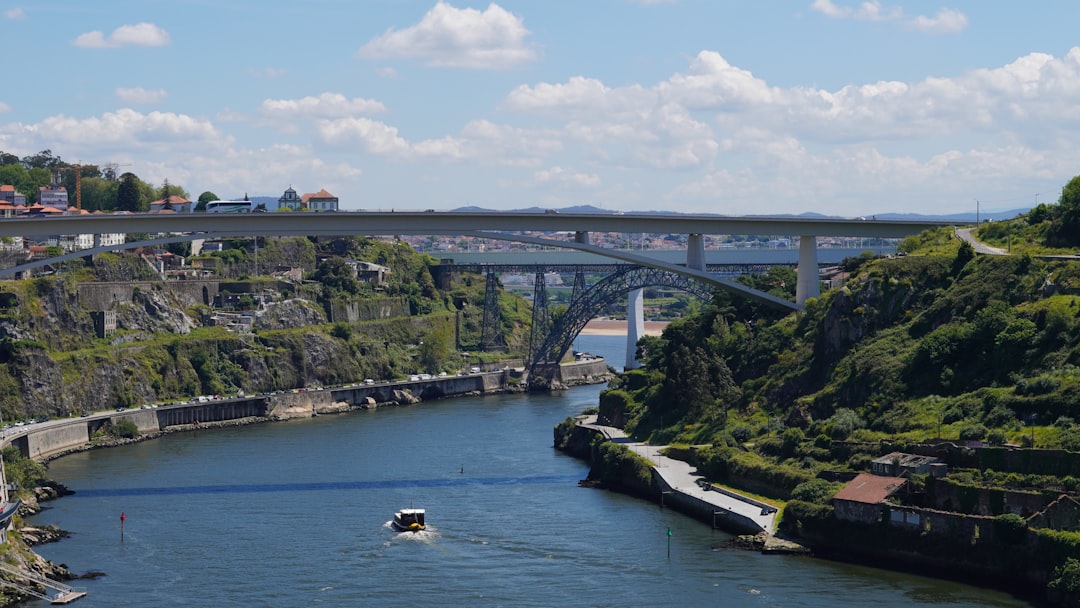
After lunch, walk across the top deck of the Ponte Dom Luís I, the double-decker iron bridge designed by a student of Gustave Eiffel. The upper deck is reserved for pedestrians and the metro, and the views from the middle are staggering—the full sweep of Porto’s riverfront spread out below you, the red rooftops stacked like playing cards against the hill. Cross to Vila Nova de Gaia on the south bank, where the Port wine lodges have been aging wine in cool, dark cellars for centuries.
You could spend an entire trip visiting cellars, but with limited time, choose one or two. Taylor’s offers excellent tours with sweeping terrace views. Sandeman is theatrical and fun, with guides in black capes. Graham’s, perched higher on the hill, pairs its tastings with a superb restaurant. Most tours run about forty-five minutes and cost between fifteen and twenty-five euros depending on the tasting tier. Expect to learn the difference between ruby, tawny, and vintage ports, and expect to have a favourite by the end.
Day Two: Beyond the Postcard
Spend your second morning exploring Porto’s creative side. The Rua de Miguel Bombarda, in the Cedofeita neighbourhood, is lined with contemporary galleries, vintage shops, and street art. Wander without a map. Porto rewards aimless exploration—turn a corner and you might find a crumbling church covered in tiles, a hidden garden, or a tiny tasca serving caldo verde and a glass of vinho verde for a few euros.
In the afternoon, take the vintage tram number 1 along the riverfront to Foz do Douro, where the river meets the Atlantic. Walk along the promenade, watch the waves crash against the rocks, and settle into a café terrace for a final glass of wine as the sun drops toward the ocean. It is the perfect Porto farewell.
Practical Tips
- Porto’s metro connects the airport (line E) to the city center in about thirty minutes for around two euros with an Andante card.
- Wear comfortable shoes with good grip. The hills are relentless and the cobblestones can be slippery.
- Consider the Porto Card (one or two days) for free public transport and discounts on cellar tours and museums.
- Book Livraria Lello tickets online in advance to skip the outdoor queue.
- For dinner without the tourist markup, head uphill to the Cedofeita or Bonfim neighbourhoods where locals eat.



Leave a Reply