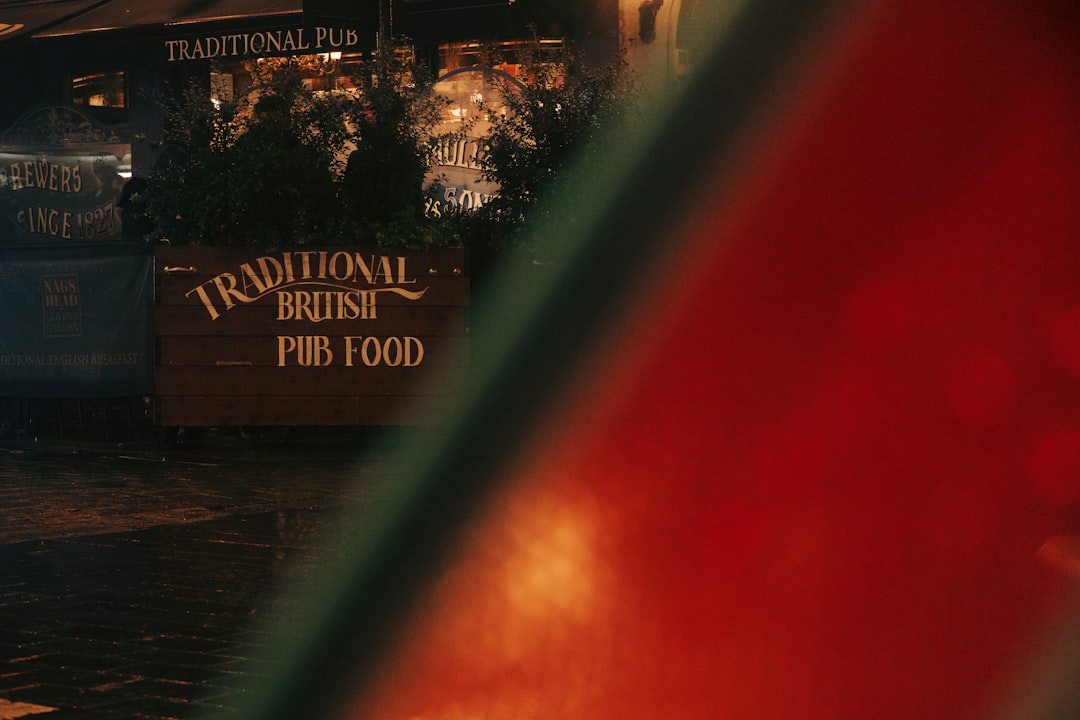
If you want to understand Czech culture, forget the Old Town Square and its crowded selfie sticks. Instead, slip into a dimly lit pivnice (Czech pub) on a rainy Thursday evening, order a half-liter of Pilsner, and watch the real Czech Republic unfold around you. The pub isn’t just where Czechs drink beer—it’s where they think, argue, celebrate, and process their existence. It’s the beating heart of Czech society in a way that few visitors ever truly comprehend.
Why Pubs Matter More Than Tourist Sites
When a Czech person says they’re going to “have a beer,” they rarely mean a quick drink. They mean something closer to what the French do with café culture or what Germans do at their Stammtisch (regular’s table). But the Czech version is uniquely their own—more democratic, more communal, more fundamentally woven into the fabric of how this nation operates.
The pub is where everything happens in Czech culture. Business deals are made. Politics are debated with passionate intensity. Philosophical arguments rage for hours. Friendships are forged and sometimes destroyed over a single hand of cards. Romantic relationships begin and end. The pub is where the Czech national character reveals itself most clearly: pragmatic, sardonic, egalitarian, and deeply skeptical of pretense.
Walk into any traditional Czech pub during evening hours, and you’ll find the same groups occupying the same tables—night after night, year after year. These aren’t casual drinkers. They’re part of the pub’s infrastructure. They are the štamgast (regulars), and they own this place as much as the owner does.
The Štamgast System: More Than Just Regular Customers
The concept of štamgast is crucial to understanding Czech pub culture, and it’s significantly different from what you might find in other European countries. A regular in a Czech pub isn’t simply someone who visits frequently. They have status. They have territory. They have rights.
Each štamgast has their own table. This isn’t an official designation—it’s an unspoken but absolute law. If you sit at the wrong table in a Czech pub, you might not be confronted immediately, but there will be a chill in the air. The regulars will cast glances. The waiter will know something is wrong. And eventually, someone will ask you to move. Or worse, they’ll sit down and make you feel so uncomfortable that you’ll want to.
These tables often have the best positions: near the window, close to the bar, with a good view of the room and the television where the football match is playing. Some groups have occupied the same table for decades. New regulars are rare, and they must earn their place through consistent presence, respectability, and respect for the pub’s unwritten codes.
The benefit of being a štamgast is enormous. Your beer appears before you order. You get special pricing. During football matches, your table is defended with actual vigor. You have a second home. You belong somewhere. In a culture that values pragmatism and directness, this sense of belonging is profoundly important.
The Čárky System: Why Czechs Trust Waiter’s Math
Watch any Czech waiter working a busy pub, and you’ll see something that looks utterly medieval to foreign eyes: they’ll pull out a small piece of paper or a card, and with a quick gesture, mark it with small chalk marks. These marks—čárky (ticks)—represent your beer consumption. One tick equals typically one beer. Sometimes it’s one group of five small lines with a diagonal line through them (the Roman numeral five system).
At the end of the evening, the waiter will count up your čárky and present you with the bill. No computers. No printed receipts. No itemized list. Just marks on a piece of paper and a final number.
This system sounds chaotic and prone to error, but it’s actually brilliant in its simplicity, and Czechs trust it completely. The waiter is betting their income on accuracy—overcharge and you lose a customer; undercharge and it comes out of their pocket. The system is self-policing and fair. And it’s been working this way for over a century.
For visitors, this can be disconcerting. You might wonder if you’re being overcharged. You might not believe they remembered your drinks correctly. But here’s the thing: Czech waiters are professionals. They do this every single night. They don’t need a computer to remember that table six had three beers and one slivovitz. And challenging the čárky is considered deeply rude—questioning a Czech waiter’s honesty is fighting words.
Democracy at the Table: The Great Equalizer
One of the most striking features of Czech pub culture is its radical democracy. In a traditional pivnice, you’ll often see shared tables where strangers sit together. A university professor might find themselves seated across from a truck driver. A retired factory worker sits next to a software engineer. A stay-at-home parent converses with a surgeon.
This happens not because the pub is crowded (though it often is), but because it’s the custom. Shared tables are where casual friendships begin, where information is exchanged, where the Czech national character reveals its most egalitarian side. Nobody pulls rank. Nobody acts superior. The professor doesn’t dominate the conversation just because they have a PhD. The wealthy businessman doesn’t expect better service because he has money.
This is genuinely remarkable if you come from societies that are more stratified or where class boundaries are more rigidly maintained. In a Czech pub, you are simply yourself—judged on your wit, your knowledge, your ability to hold an argument, your sense of humor, your reliability. These are the only currencies that matter.
The Food: Simple, Perfect, and Deeply Satisfying
Czech pub food is not haute cuisine. It’s not meant to be. It’s beer food—designed to accompany alcohol, to provide substance, to remind your stomach that it exists. And it’s absolutely perfect for this purpose.
Utopenec (literally “the drowned man”) is a pickled sausage, usually served with dark bread. It’s pungent, salty, and excellent. Nakládaný hermelín is a wheel of soft cheese marinated in oil, spices, and herbs. It’s rich, fragrant, and wonderful on dark bread. Svíčková is beef sirloin in a creamy root vegetable sauce, typically served with bread dumplings. It’s warming and complex.
Then there are the classics: goulash, tripe soup (sometimes), smoked meat with horseradish, potato pancakes, and bread dumplings that appear in various forms. Nothing is complicated. Everything is honest. Everything pairs perfectly with beer.
The beauty of Czech pub food is that it doesn’t compete with the beer or the conversation. It supports them. It’s there to be eaten in bits while you’re talking, arguing, laughing, and thinking. You’re not having a meal; you’re having an experience that happens to include food.
The Rules of Pub Etiquette (And Why They Matter)
Czech pubs operate on rules that are rarely written down but absolutely binding. Here are the most important ones:
Don’t sit at the štamgast tables. Seriously. Don’t do this.
Hail your waiter or waitress with “Pane” (Sir) or “Paní” (Madam) if you need something. Clicking, snapping fingers, or waving is considered rude.
Don’t ask for the bill loudly. Signal the waiter discreetly. They’ll count your čárky and bring the total.
Order beer by the half-liter or pint. Quarter-liter glasses exist but are considered slightly less serious. Full liters are for celebration or those with specific intentions.
Don’t complain about the beer. It’s fresh, it’s poured correctly, and it’s exactly what beer should be. If you don’t like it, order something else, but don’t insult the establishment.
Stay and chat. If you order something, you’re implicitly committing to staying at least a while. The pub isn’t a quick-stop convenience store. It’s a space to occupy, to exist in, to be part of.
Don’t expect the pub to change to accommodate you. The TV will show Czech football, not what you want to watch. The menu will be in Czech (though menus now often have English). The waiter will speak Czech first and English only if absolutely necessary.
Why This Feels Different: The Czech Pub vs. Other Traditions
You might have been to British pubs, German beer halls, or French cafés. A Czech pub is distinct, and the difference matters.
British pubs tend toward the convivial but reserved. There’s a friendliness, but it’s maintained at a distance. Czech pubs are friendlier and simultaneously less formal—strangers mix more easily, but there’s less small talk. You’ll discuss politics or philosophy immediately, not football or weather.
German beer halls are grand, social spectacles. Czech pubs are often small, intimate, and focused. A German beer hall wants to impress; a Czech pub wants to be honest. A German beer hall is an event; a Czech pub is simply where you are.
French cafés are about being seen, about observing, about the theater of social life. Czech pubs are about being present, about participating, about getting to the point. There’s no pretense. There’s no performance.
A Visitor’s Guide to Pub Behavior
If you want to visit a Czech pub as more than a tourist passing through, here’s how to do it respectfully:
Go in the evening, after work. Daytime pubs are quieter; evening pubs are where the culture lives. Between 6 PM and midnight is ideal.
Go alone or with one friend. Large groups of tourists are disruptive. Small groups are fine.
Order a half-liter of the house beer. Don’t ask for craft variations or cocktails. Drink what they have, and appreciate it for what it is.
Sit at any open table that doesn’t have the telltale signs of being a štamgast table. Regular tables will have ashtrays, well-worn seats, and a general air of habitation.
If someone invites you to sit at their table, accept with genuine gratitude. This is an honor. Sit, listen more than you talk, and participate when the moment seems right.
Don’t photograph the štamgast. They’re people who chose a pub because they value privacy and routine, not Instagram content. Respect that.
Tip modestly. 5-10% is standard. Leave it on the table with the čárka slip.
The Pub as Sacred Space
To truly understand Czech culture, you must understand that the pub is sacred space. Not in a religious sense, but in the sense that it’s protected, revered, and absolutely essential to how Czechs process their world.
When Czechoslovakia was under communism, pubs continued much as they always had. When the Nazis occupied the country, pubs still existed, still functioned, still provided a space where Czech culture persisted. The pub survived the Austro-Hungarian Empire, two World Wars, communism, and every disruption that has struck this nation.
This is because the pub is more fundamental than any government, any economic system, any ideology. It’s where Czechs are most themselves. It’s where they talk, think, argue, laugh, and exist as a community. It’s where the national character is forged and reinforced night after night.
When you walk into a Czech pivnice, you’re not just walking into a bar. You’re stepping into a tradition, a way of being, a values system. You’re entering a place where democracy is practiced daily, where hierarchies dissolve over beer, where strangers become temporary friends through conversation, and where Czech culture—pragmatic, sardonic, egalitarian, and endlessly alive—continues to beat its steady heart.
And that’s something worth understanding, something worth respecting, and something worth experiencing during your time in the Czech Republic.




Leave a Reply