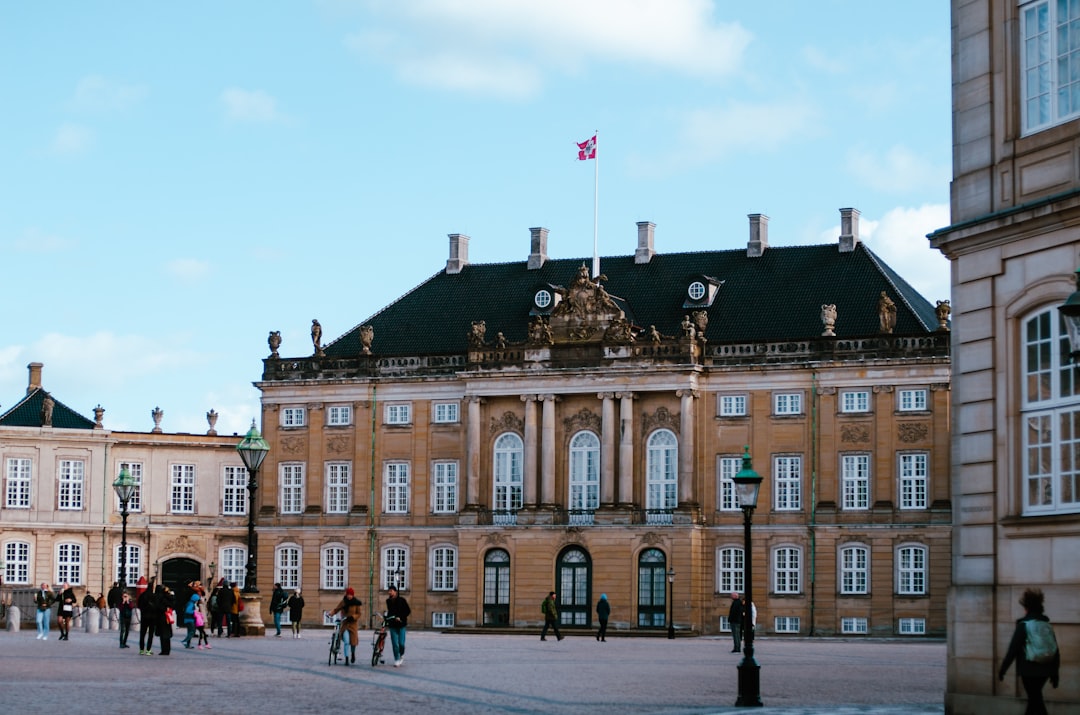
Denmark has the world’s oldest surviving monarchy. The Danish royal house traces back further than any other surviving European royal family, with a continuous line extending back to before the 10th century. Yet Denmark is also one of the world’s most democratic countries, with strong democratic institutions, high civic participation, and a form of government that works remarkably well.
This combination—ancient monarchy and modern democracy—seems contradictory at first, but it reveals something important about Danish political culture. The monarchy and democracy aren’t in tension; they coexist naturally because the monarch’s role is ceremonial while power lies with elected institutions.
Christiansborg Palace: The Physical Heart of Democratic Government
Christiansborg Palace sits on the island of Slotsholmen in Copenhagen. This is not a private royal residence; it’s a working building housing the Folketing (parliament), the Prime Minister’s office, and the royal reception rooms. The palace is partially open to visitors, and you can observe parliament in session from a public gallery.
What’s striking about Christiansborg is how unpretentious it feels for a seat of government. It’s grand but not ostentatious. The interior is elegant but not overwhelming. The parliament chambers are impressive but intimate—you can see and hear the debates clearly.
Visiting Christiansborg and observing parliament gives concrete sense of how Danish democracy functions. The parliament chamber is arranged with the government on one side and opposition on the other—a layout that encourages debate and opposing viewpoints. The chamber is small enough that you feel the personal dynamics between politicians.
The palace also contains the royal reception rooms, which you can visit on tours. These rooms are genuinely beautiful—the Throne Room, the Great Hall, various reception areas decorated with Danish art and design. But even these spaces feel more accessible and less “royal” than similar spaces in other countries.
Queen Margrethe II and the Monarchy’s Role
For 52 years (1972-2023), Denmark had the same monarch: Queen Margrethe II. Her reign was exceptionally long, providing stability and continuity. She was genuinely beloved by Danes and internationally respected. When she abdicated in 2023, passing the throne to her eldest son, King Frederik X, it was a significant moment—but the transition was smooth and widely accepted.
The Danish monarchy is constitutional. The monarch is the head of state but doesn’t govern. Political power is held by the Prime Minister and parliament. The monarch’s role is largely ceremonial but not entirely powerless—they approve laws, appoint the Prime Minister (though this is based on parliament’s preference), and serve as the nation’s symbolic representative.
What’s distinctive about the Danish monarchy is how embedded it is in national identity and how genuinely supported by the population. Polls consistently show high approval ratings for the monarchy. But this approval is not based on fear or propaganda; it’s based on genuine affection and the sense that the monarchy represents something valuable about Danish identity.
The relationship between Danes and their monarch is remarkably informal for a royal family. The Queen (or now, King) appears in public, walks around Copenhagen, is acknowledged warmly but without excessive deference. There’s a sense that the monarch is part of the community, not separate from it.
This reflects the broader Danish value of egalitarianism. Even the monarch operates within the framework of Janteloven—you’re not supposed to think you’re special, even if you were born into the royal family. The monarchy is maintained and supported because of this egalitarian framing, not despite it.
The Folketing: Denmark’s Parliament
The Folketing consists of 179 members elected to four-year terms. There’s no upper house. It’s a unicameral legislature designed around proportional representation, which means that the parliament includes representation from multiple parties.
What’s important about proportional representation is that it makes coalition governments necessary. No single party typically wins a majority, so governments are formed by coalitions of multiple parties. This requires consensus-building, negotiation, and compromise.
This has a major effect on Danish political culture. Rather than winner-take-all politics where one party dominates, Danish government is about finding agreement among multiple parties. This tends to produce more moderate, pragmatic politics. Extreme parties struggle because they need coalition partners to govern.
The result is that politics in Denmark, while certainly competitive, doesn’t have the kind of bitter polarization that characterizes some other democracies. Politicians from different parties often respect each other. Policy doesn’t swing wildly from one government to the next because the coalition nature of government produces continuity.
This consensus-building approach extends to how government functions day-to-day. Decisions are often made after extensive discussion and attempt to reach agreement among multiple stakeholders.
High Voter Turnout and Civic Participation
Denmark has consistently high voter turnout—typically exceeding 85% in national elections, and often exceeding 90% in some constituencies. For comparison, the United States averages around 60% turnout in presidential elections.
This high participation reflects several things: Denmark has compulsory voting (technically, voting is not compulsory, but the culture strongly expects it). Electoral systems make voting convenient. And critically, Danes perceive their vote as mattering—they believe that elections determine government and that government actually responds to citizen preferences.
The high participation rate reflects a broader pattern of civic engagement in Denmark. Danes are generally educated about political issues. They read newspapers with significant coverage of political debate. They participate in public discussions. They vote.
This creates a political culture where government is expected to be responsive and where voters can effectively hold government accountable. If voter turnout drops or civic engagement declines, it’s treated as a concerning sign.
The Trust-Based Social Compact
Underlying Danish democracy is a particular understanding of the relationship between government and citizens. This is based on trust.
Danes pay high taxes—typical rates are 40-55% of income for employed people, with various additional taxes. This is considerably higher than most other countries. Yet there’s relatively little political agitation about taxes. Why?
Because there’s broad agreement that government provides excellent services in return. Public education is free through university. Healthcare is public and universal. Childcare is subsidized. Social insurance covers unemployment, sickness, and disability. Public infrastructure is excellent. Parks, beaches, libraries are beautiful and well-maintained.
The understanding is: we pay high taxes, and in return, the state provides comprehensive services. This isn’t seen as exploitation; it’s seen as a reasonable bargain. The government is trusted to manage resources responsibly, and this trust is generally justified. Corruption is low. Waste is minimal.
This creates a virtuous cycle. Because people trust government, they’re willing to pay taxes. Because taxes are collected, government can provide excellent services. Because services are excellent, trust is maintained.
This is quite different from political cultures where government is viewed with suspicion and tax payment is viewed as an unwilling obligation. The Danish system depends on genuine trust between citizens and government.
How Politics Is Discussed: The Dinner Table Standard
One of the most notable things about Danish political culture is how openly and respectfully politics is discussed. At a dinner party in Denmark, it’s normal for a conversation to turn to politics. People with different political views argue their positions respectfully and listen to counterarguments.
This reflects the broader Danish value of treating people as equals regardless of political views. Your political opinion doesn’t determine your worth as a person. Someone might support a party you disagree with, but you still respect them as a person.
This stands in contrast to some other democracies where political differences can create personal enmity. In Denmark, political disagreement is relatively depersonalized. People argue about policies, not about the moral worth of people holding different views.
This creates space for genuine political debate. People can change their minds when presented with good arguments. Politicians can work across party lines because the political competition doesn’t eliminate the possibility of personal respect.
The Welfare State Compact: High Services, High Taxes, High Trust
The Danish welfare state is organized around a particular understanding of what government should provide and how it should be funded. The goal is universal coverage and high-quality service. The funding mechanism is high taxes with broad participation.
What’s distinctive is that this isn’t means-tested or limited to the poor. Wealthy people receive the same public education, the same public healthcare, the same childcare subsidies as everyone else. The understanding is that public services are for everyone, not just for those who can’t afford private alternatives.
This creates strong political support for the welfare state. Wealthy people support public services because they use them for their own children. The services are good enough that most people have no reason to purchase private alternatives.
This is quite different from welfare state systems where public services are primarily for the poor while the wealthy use private options. In those systems, political support for welfare is weaker because the wealthy don’t benefit directly.
The Danish system also includes strong labor unions and protections for workers. Despite this—or perhaps because of it—Denmark has consistently ranked among the world’s most competitive economies and most business-friendly places to do business. The security provided by strong labor protections and social insurance seems to enable rather than impede business dynamism.
The Consensus Political Culture
Perhaps more than any specific institution, what characterizes Danish democracy is a culture of seeking consensus. Major decisions are made after extensive discussion and attempt to achieve broad agreement.
This extends to constitutional matters. The Danish Constitution has been amended multiple times, but always with broad parliamentary support. Constitutional changes don’t happen through simple majority votes; they require agreement across party lines.
This approach is slower and sometimes more cumbersome than winner-take-all systems where a majority simply imposes its will. But it produces more stable outcomes that survive changes in government.
The consensus approach also extends to international relations. Denmark generally seeks to act through consensus with international partners rather than unilaterally. This reflects the broader cultural value that agreement and collective decision-making are preferable to individual assertion.
What This Reveals About Danish Values
The Danish political system, in its entirety, reflects particular values: equality, trust, consensus, participation, and the belief that government should serve the common good. The system isn’t perfect—no government is—but it successfully embodies these values to an unusual degree.
For visitors, understanding how Danish democracy works provides insight into how the culture operates beyond politics. The same values that guide government—respect for others, seeking agreement, treating people as equals—also guide social interactions, workplaces, and personal relationships.
The monarchy is maintained because it operates within this egalitarian framework. The welfare state is supported because it treats everyone as equally deserving of good services. High taxes are accepted because there’s trust in how government uses them. This is a culture where institutions are legitimate because they’re perceived as serving everyone fairly.
Visiting Christiansborg Palace, observing parliament, or simply talking with Danes about politics reveals a political culture notably different from many other democracies. It’s one where disagreement doesn’t eliminate respect, where government is expected to be responsive, and where participation in democracy is seen as a normal, important part of citizenship.




Leave a Reply