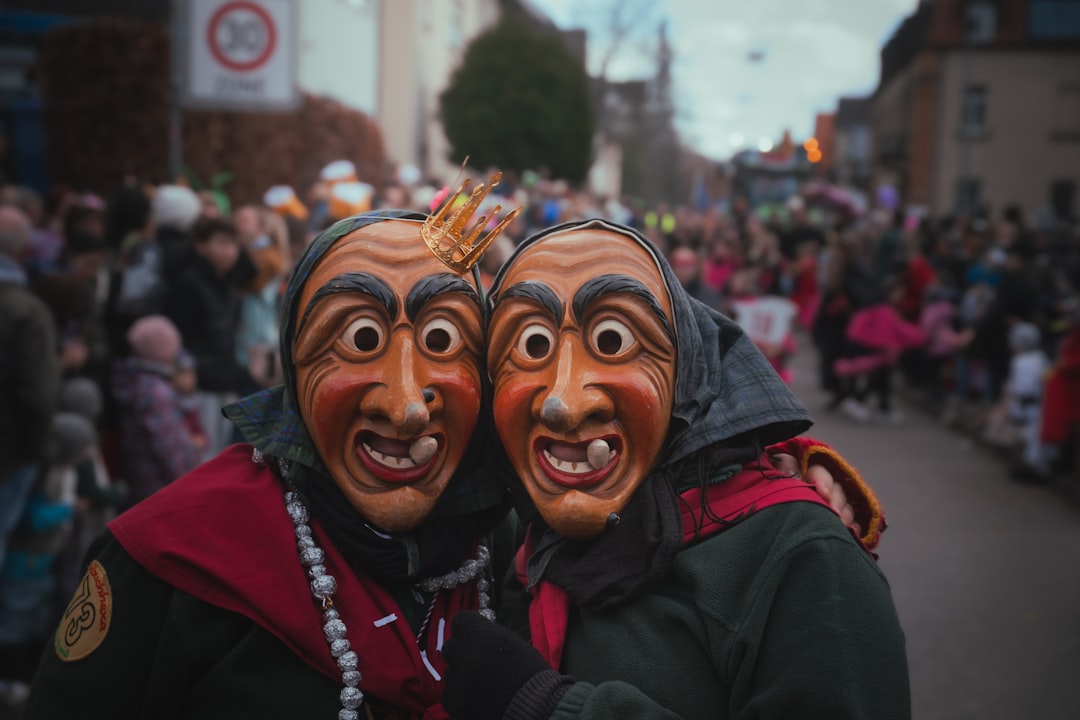
If you have the privilege of being in Germany in the weeks before Ash Wednesday (usually February or early March), you’re going to encounter something that completely contradicts the stereotype of reserved, orderly Germans. You’re going to witness Karneval—a weeks-long celebration of costumes, chaos, dancing, drinking, and genuinely wild public behavior.
Reserved Germans will dress as absurd characters. They’ll drink enormous amounts of beer. They’ll throw eggs at passersby (in a tradition called “Eierwürfe”). They’ll hug strangers. Entire towns will seem to descend into controlled madness. Grown adults will wear completely ridiculous costumes. People who are normally proper will be anything but.
This isn’t a modern invention or tourism-focused event. Karneval traditions stretch back centuries and remain genuinely beloved by Germans as a release before the austere season of Lent. Understanding Karneval is understanding that Germans aren’t always orderly—they’re just orderly most of the time. Karneval is their permission slip to not be.
Regional Variations: Karneval vs Fasching vs Fastnacht
Germany has different traditions in different regions, and the names vary:
Karneval is primarily a Rhine region tradition (Cologne, Düsseldorf, Mainz, surrounding areas). This is the biggest, most famous, most touristy version. Karneval here is massive parades, music, street parties, and organized celebrations.
Fasching is the Bavarian and southern German version, particularly around Munich. It’s slightly different in flavor—more about balls and parties than street parades, though parades exist.
Fastnacht is the Swabian tradition (Black Forest, Stuttgart area). Fastnacht has its own specific character, with traditional costumes and characters (like the “Narrenzünfte”—fool guilds) that are centuries old.
All three are pre-Lent celebrations happening in roughly the same timeframe. All three involve costumes, drinking, and temporary abandonment of normal social rules. The traditions are distinct enough that Germans from different regions might experience Karneval very differently.
The Rhineland Karneval Experience
If you’re experiencing Karneval, you’re probably experiencing the Rhine version. This is the biggest and most accessible to tourists.
Rhineland Karneval operates on a specific schedule and traditions that have evolved over centuries:
11.11 at 11:11 AM in November is when the season officially begins. At 11:11 AM, the mayor symbolically hands over the city to the “Karneval prince, princess, and virgin” (this specific title structure exists—the “virgin” is usually a man in drag). From this moment until Ash Wednesday, the city is theoretically under Karneval rule.
In practice, nothing much happens until after New Year, but the season has officially begun.
Rosenmontag (Rose Monday) is the Monday before Ash Wednesday and the absolute peak of Karneval. The street parades happen Monday and Tuesday. These aren’t small town parades—Cologne’s parade runs for hours with massive floats, dancing, music, and thousands of participants throwing candy and small gifts into the crowds.
Weiberfastnacht (Women’s Carnival) happens on Thursday before Rosenmontag. Traditionally (and actually still, to some extent), this is women’s day when they get to break social rules. The famous tradition is that women cut off men’s ties (Kravattenschnitt). A man in a suit with a cut tie is a Karneval symbol. There’s usually a good-natured chaos to this day.
Veilchendienstag (Violet Tuesday) is Tuesday—the second major parade day.
Aschermittwoch (Ash Wednesday) is when it’s completely over. Like, immediately. The streets go from party to normal. Restaurants serve herring (a traditional Ash Wednesday food). Normal life resumes.
The Parade Floats and Their Satire
This is perhaps the most distinctly German aspect of Karneval: the parade floats are intensely politically satirical.
These aren’t generic parade floats. They’re usually commentary on current events, politicians, social issues, or current controversies. Floats mock government policies, criticize unpopular politicians, comment on international affairs, and use humor as social commentary.
The satire is often biting. If a politician has been unpopular, the float will be vicious. If a policy has been controversial, it will be mocked. This is acceptable because it’s Karneval—criticism is expected and encouraged.
This tradition goes back centuries. Karneval was traditionally a time when normal social hierarchies were inverted and criticism of authority was permitted (and expected). That tradition continues in the floats.
If you’re interested in what Germans think about current events, watching the Karneval parade floats is actually educational.
Costumes and The Concept of “Jecken”
Anyone in Karneval costume is a “Jeck” (fool)—the point is that during Karneval, everyone is supposed to be foolish, which is paradoxically permission to be genuine.
Costumes range from traditional to completely absurd. Some people wear historical Karneval costumes passed down through families. Others dress as current cultural references. Many dress as the opposite of their normal self—office workers as pirates, grandmothers as rock stars.
The key is that costumes are expected. If you’re in Karneval and not in costume, you’re the odd one out. The costume is your permission slip to behave differently than you normally would.
Traditional Karneval costumes in different regions have specific characters. In the Rhine region, you might see variations on traditional Pierrot, Harlequin, or regional character costumes. In the Swabian region (Fastnacht), specific guilds have specific traditional costumes that are taken quite seriously.
The Büttenrede
A Büttenrede is a comedic speech delivered from a special podium (the “Bütt”). These are usually given by well-known local comedians or performers and consist of jokes, social commentary, and political satire.
They’re one of the key entertainment forms during Karneval and are often very funny if you understand German and German current events. If you don’t speak German, you’ll miss the specific jokes but will get the general energy.
These speeches are considered important enough that some are recorded and broadcast on television, and some become legendary within Karneval tradition.
Schunkelei and Dancing
German Karneval is loud, party-oriented, and involves a lot of dancing and group activities.
Schunkeln is a specific dance move—standing together with arms linked, moving from side to side. It’s done to accordion music, beer hall music, and traditional Karneval songs. It looks simple (because it is) but feels genuinely communal.
The most famous song associated with Karneval is “Alaaf!” (exclamation roughly meaning “long live”), which is shouted repeatedly during celebrations. In some regions, it’s “Helau!” Different regions have different exclamations.
The Role of Beer and Drinking
Karneval is accompanied by significant drinking. Beer halls, streets, and parties all feature alcohol prominently. This isn’t unusual in Germany, but Karneval specifically permits (and encourages) more drinking than might be normal.
This doesn’t mean you have to drink heavily to enjoy Karneval. But understanding that substantial drinking is part of the tradition helps you understand the atmosphere. Things are louder, messier, less orderly, and more spontaneous during Karneval because people are drinking.
Alcohol is part of the “permission slip” nature of Karneval—it enables behavior that’s normally unacceptable.
What Actually Happens at Karneval
If you actually attend Karneval, here’s what happens:
You get there early. The crowds are enormous. If you want to see a parade, you need to be at the location hours beforehand and claim a spot. Some people camp out the night before.
You drink a lot. People around you will be drinking substantial amounts of beer, wine, or Glühwein.
You watch the parade. The floats slowly move through the streets. People on floats throw candy and small gifts. You yell “Alaaf!” repeatedly.
You move between parties and beer halls. The streets are closed to traffic and filled with people. There are official beer tents, street parties, and organized celebrations.
You see costumes of every description. They’re not all great costumes—some are genuinely terrible. That’s part of the charm.
You experience controlled chaos. It’s loud, crowded, energetic, and slightly chaotic. But it’s not dangerous or genuinely out of control. German Karneval is wild but organized.
The Swabian Fastnacht Difference
If you’re experiencing Fastnacht in the Swabian region (around Stuttgart, Black Forest), it’s somewhat different from Rhine Karneval.
Fastnacht traditions include specific character costumes from centuries ago. Guilds (Narrenzünfte) have specific traditions, and costumes aren’t interchangeable—they belong to specific towns or guilds.
Fastnacht is often more focused on parades and processions than street parties. It has a specific aesthetic that’s somewhat less touristy than Rhine Karneval, though large cities like Stuttgart have more tourism.
If you’re interested in traditional, authentic Fastnacht, smaller Swabian towns are better than major cities.
A Few Days Before: The Intensity Builds
The days immediately before Rosenmontag are when Karneval intensity reaches its peak. Thursday (Weiberfastnacht) and Friday see major parties. Saturday continues. Then Rosenmontag is the absolute peak.
If you want to experience Karneval but want to avoid the most intense crowds, arriving on Sunday or staying through Tuesday (rather than just appearing for Rosenmontag) gives you the experience with slightly less madness.
Practical Tips for Attending Karneval
Arrive with lower expectations about comfort. Karneval is crowded, loud, and messy. You’ll stand for hours. You might get rained on. You’ll be pressed against strangers. If you’re okay with that, you’ll have fun. If you need personal space, Karneval will be uncomfortable.
Wear a costume. You don’t need an expensive one. A simple mask, silly hat, or basic costume is enough. You’ll feel more included and like you’re part of the tradition rather than observing it.
Bring cash. Street vendors and beer tents operate on cash more often than cards. ATMs exist but queues are enormous.
Dress warmly. February/early March in Germany is cold. You’ll be standing outside for hours. Proper winter clothing is essential.
Go with friends or join a group. Karneval is more fun when you’re with people. If you’re traveling solo, consider joining a Karneval party or tour group so you have people to experience it with.
Use public transportation. Cars can’t drive through the closed streets. The U-Bahn (subway) runs late during Karneval.
Have an exit plan. If you get overwhelmed by crowds, know where quieter areas are or be ready to head back to your hotel.
Understanding What Karneval Means
Karneval isn’t just a party (though it is a party). It’s a controlled inversion of normal social order. It’s permission to be foolish, to criticize authority, to drink too much, to wear ridiculous costumes, and to act in ways that would be completely unacceptable most of the year.
This temporary inversion is important in German culture. Germans are organized and orderly most of the year. Karneval is the pressure release valve—the time when orderliness is explicitly suspended and chaos is not just permitted but encouraged.
It’s actually quite psychologically healthy as a cultural practice. Everyone participates in understanding that normal rules are temporarily suspended, and then when Ash Wednesday comes, everyone returns to order.
After Karneval: The Transition to Lent
After Aschermittwoch (Ash Wednesday), everything stops. The beer tents disappear. The parade floats are dismantled. The streets return to normal. Traditional restaurants serve herring (Heringstopf).
The speed of the transition is striking. Friday people are partying in costume. Wednesday it’s completely over. The contrast emphasizes the ritual nature—Karneval is a specific, bounded season with clear beginning and ending.
For religious Germans, Lent follows, which is more austere. But even for secular Germans, there’s a sense of returning to normal after the Karneval chaos.
Should You Go?
If you can be in Germany in February or early March, Karneval is worth experiencing at least once. It’s genuinely different from other celebrations and shows a side of German culture that contradicts stereotypes.
It’s crowded, loud, chaotic, and at times uncomfortable. But it’s also communal, joyful, and genuinely fun.
Even if you’re not naturally drawn to parties or crowds, experiencing how ordered, reserved Germans temporarily become wild and foolish is interesting on a cultural level.
Plus, the satire is actually clever and the whole thing is historically rooted enough that there’s substance beneath the partying.
Come in costume, lower your expectations about comfort, embrace the chaos, and watch reserved Germans let loose in a tradition that’s been around for centuries.
It’s wild—literally.




Leave a Reply