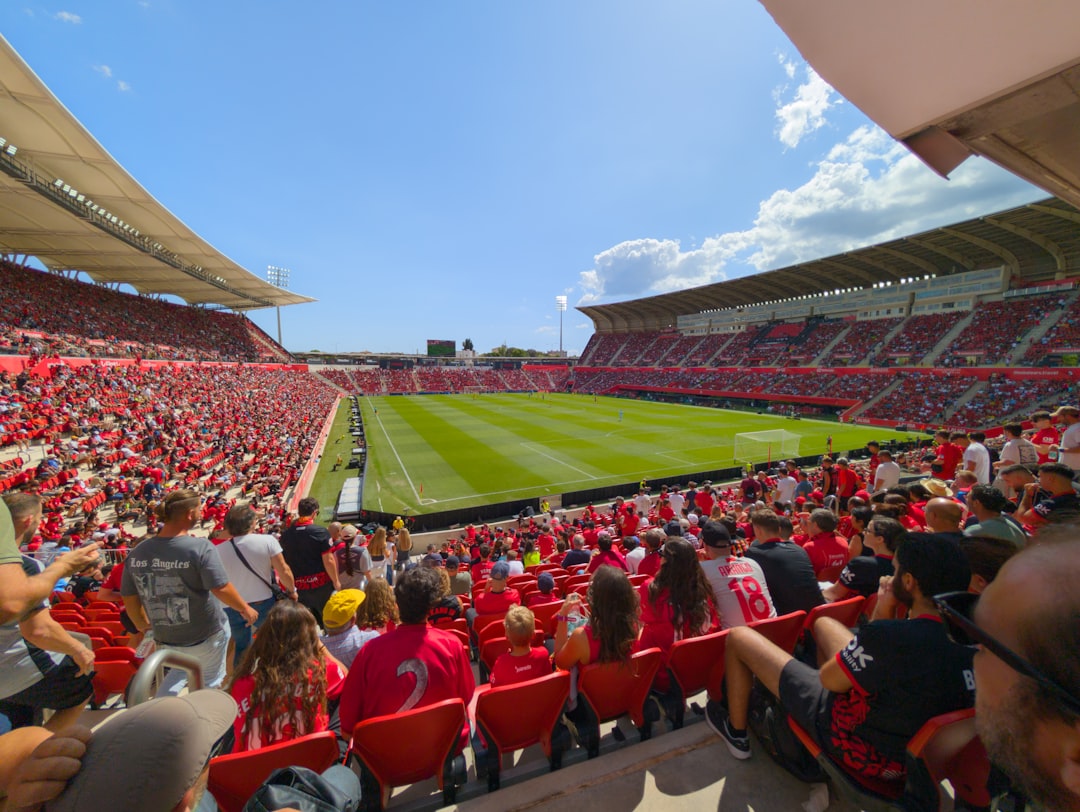
If you want to understand German culture, especially German identity and community, you need to understand football (soccer, to Americans). Football isn’t just a sport in Germany—it’s a fundamental part of how communities organize themselves, how people express identity, and honestly, how many Germans make sense of their place in the world.
German football culture is different from football culture in other countries. It’s organized differently, owned differently, experienced differently, and means something different culturally. And if you have the opportunity to experience a live match in Germany, you’ll understand something about German identity that you can’t understand through reading or casual observation.
The 50+1 Rule: Fans Control Their Clubs
Here’s something that fundamentally separates German football from English or American sports: most German clubs are owned and controlled by their fan members through a 50+1 ownership rule.
In English football (Premier League), clubs are often owned by billionaires, corporations, or investment groups. This creates a particular dynamic where the club is primarily a financial asset, and fans are consumers of a product.
In Germany, this is forbidden. The rule states that a club’s members must own at least 50% plus one share of the club. This means fans have genuine control over their club’s direction, finances, and operations.
What this means practically: when a club makes a major decision (signing a new manager, selling a star player, moving to a new stadium), fan members have a say. The club can’t just make decisions purely for profit maximization. The fans, who care about the club for reasons beyond money, have structural power.
This creates a fundamentally different relationship between fans and clubs. You’re not consuming a product made by billionaires. You’re participating in an institution that your community owns.
For travelers and casual observers, this is relevant because it explains why German football fans are so emotionally invested and why the sport means so much to German identity. The club genuinely belongs to the fans. It’s not just something they consume—it’s something they own and control.
Standing Sections and Affordable Tickets
German Bundesliga (top division) tickets are radically more affordable than Premier League tickets. A ticket to a Bundesliga match costs typically €15-50 depending on location and opponent. This is roughly one-tenth the price of English Premier League tickets.
This affordability is deliberate—German clubs want working-class people to be able to attend matches. The philosophy is that football is for everyone, not just wealthy people.
Additionally, most German stadiums have Stehplätze (standing sections) where fans stand rather than sit. These areas are cheaper and have a different energy—more intense, more communal, more actively engaged.
Standing sections are where the most dedicated, passionate fans are. These are fans who stand for 90 minutes, sing throughout the match, create choreography, and drive the atmosphere of the stadium.
If you attend a German football match, try to get a ticket in a standing section. The atmosphere is much more intense than seated sections, and the ticket will be cheaper. You’re experiencing authentic German football culture.
The Matchday Experience and Kneipe Culture
In Germany, going to a football match is a social event that extends far beyond the 90 minutes of play.
Before the match, fans gather in local Kneipen (pubs/bars). The team’s colors fill the streets. People eat sausages, drink beer, chat about the upcoming match. There’s anticipation and community building.
The Kneipe before the match is where you experience football culture at ground level. These are local gathering spaces where fans from the same area gather. The conversation might be tactical (discussing likely team formations and strategy) or it might be social (catching up with friends while the match plays).
Many Germans go to the Kneipe regularly on match days, whether or not they’re attending the actual match. This is where German football culture happens at the community level.
If you want to experience authentic German football culture, go to a local Kneipe on a match day. Order a beer, watch the match on TV, observe how Germans discuss football, and understand how integral football is to local social life.
The Ultras and Stadium Atmosphere
German football stadiums have intense atmospheres driven by organized fan groups called the Ultras.
Ultras are organized supporter groups that bring choreographed displays to matches—coordinated singing, flag waving, the creation of visual spectacles using thousands of coordinated fans. They’re dedicated, passionate, and crucial to the atmosphere of German football.
The Ultras are taken seriously by the clubs and the German Football Association (DFB). They’re influential in the community and on the club’s direction. They organize travel to away matches, manage supporter sections, and drive the emotional energy of the stadium.
If you attend a Bundesliga match, you’ll see Ultras in action—likely in the standing sections, creating visual spectacles, driving singing and chanting, and creating an atmosphere that’s genuinely electric.
This is different from casual fans watching a game. These are dedicated supporters organizing and coordinating the emotional experience of the match. It’s not random noise—it’s intentional, powerful, and genuinely moving if you understand what’s happening.
Borussia Dortmund’s Yellow Wall
The most famous standing section in German football is Borussia Dortmund’s Yellow Wall (Die Gelbe Wand) in their Westfalenstadion.
This is the largest standing section in Europe—approximately 25,000 fans in a single section. When these fans stand and sing in unison, it creates one of the most powerful atmospheres in all of sports. It’s genuinely awe-inspiring if you experience it.
Watching 25,000 people in yellow standing and singing together, creating visual coordinated displays, and driving their team forward is an experience that many people describe as life-changing.
If you have the opportunity to attend a Dortmund match, especially a match with high stakes, you’re experiencing German football culture at its most intense.
Affordable, Accessible Football
The entire structure of German football is oriented toward making it accessible to regular people. Cheap tickets, standing sections, local Kneipen culture, community ownership through the 50+1 rule—all of this adds up to football being genuinely accessible to working-class Germans.
You don’t need to be wealthy to be a serious football fan in Germany. You can attend matches, be part of a supporters’ group, participate in the culture. The sport is structured to belong to regular people, not just wealthy consumers.
This is genuinely different from the Premier League, where football has increasingly become a luxury good for wealthy people and tourists.
The Bundesliga Structure
The Bundesliga (top division) has 18 clubs that play each other twice (home and away) over a season. It’s a straightforward league structure—you accumulate points for wins and draws, and the club with the most points at the end of the season wins the title.
Unlike some European leagues, the Bundesliga is relatively competitive. The same few clubs don’t always dominate. Different clubs win the title in different years.
Bayern Munich has won many titles (they’re historically the most successful club), but other clubs win regularly. Borussia Dortmund, Bayer Leverkusen, and others all have successful seasons. This competitive balance is part of what keeps German football interesting.
National Team Identity and the “Summer Fairy Tale”
German national team football (the DFB—Deutscher Fußball-Bund team) has a particular place in German identity.
Most significantly, the 2006 World Cup (held in Germany) was a transformative moment for German identity. Germany had been a bit nationally fragmented and melancholic about its history. The 2006 World Cup, with the slogan “Das Sommermärchen” (The Summer Fairy Tale), created a moment where Germans could be proud of their team and their country without the historical baggage.
It was a moment of national catharsis and pride that was genuinely important. For many Germans, the 2006 World Cup is remembered as a time when national pride felt good and uncomplicated.
Germany’s success in world tournaments is deeply tied to German identity. National team matches create enormous gatherings in public squares, streets fill with German flags, and there’s genuine national investment in the team’s success.
If you’re in Germany during a major international tournament (World Cup, European Championships), you’ll see this national identity on display. It’s worth experiencing.
Club Rivalries and Derbies
German football has intense rivalries based on geography and history.
Der Klassiker is the rivalry between Bayern Munich and Borussia Dortmund. These matches draw enormous attention and have high stakes most seasons.
Der Kampf um den Süden (Battle of the South) is the rivalry between various southern clubs, most notably Bayern Munich and Stuttgart.
The Rhineland Derby involves clubs from the Cologne/Düsseldorf region.
The Ruhr Valley rivalries involve Dortmund, Schalke, and other clubs in the industrial Ruhr region.
These rivalries are serious. When rival clubs play, the stakes feel higher, the atmosphere is more intense, and the passion is more evident.
Experiencing a Live Match: Practical Information
If you want to attend a Bundesliga match:
Get tickets through official club websites. You can buy tickets online, though some matches sell out. Away team tickets are often available even when home team tickets are sold out.
Arrive early. The atmosphere builds as the match approaches. Arriving 30-60 minutes before kickoff lets you experience the buildup.
Go to a local Kneipe beforehand. Ask locals where the supporter Kneipe is. Even if you don’t speak German well, you’ll understand the atmosphere and feel the community of football fans.
Bring cash if you’re buying food or drinks at the stadium. Some vendors are card-only, but cash is still common.
Wear team colors if you want to blend in. If you’re supporting a club, wearing their colors helps you be part of the community. If you’re neutral, wearing neutral colors is fine—but being loudly supportive of the opposing team in the wrong section can be uncomfortable.
Understand the standing section is intense. If you get a standing section ticket, expect to stand for 90 minutes, possibly in close proximity to others, and in an emotionally intense environment. It’s amazing, but it’s not for people who want a quiet, comfortable experience.
Respect the Ultras and the culture. Don’t mock the atmosphere or the passion. These fans are deadly serious about their team. If you’re respectful, you’ll be fine. If you’re dismissive, you might create conflict.
The Philosophy Behind German Football
What you’re really learning when you engage with German football culture is a particular set of values: community ownership, accessibility, fan power, and the belief that sports should belong to regular people, not just wealthy investors.
This philosophy extends beyond football. It reflects German values about democracy, worker power, and the importance of community institutions.
German football culture is saying something about how Germans believe institutions should be organized and who should control them. It’s not accidental—it’s deliberate and deeply important to German identity.
The Bottom Line
If you have the opportunity to attend a German Bundesliga match, do it. It’s genuinely worth experiencing.
You’ll see an atmosphere that’s more intense than many American sports events. You’ll understand why football is so important in German culture. You’ll experience community in a way that’s direct and powerful.
The 50+1 rule, the standing sections, the affordable tickets, the Kneipe culture, the Ultras—all of this combines to create a football culture that’s genuinely different from the Premier League or American sports.
You’ll probably see something that challenges your assumptions about German people and culture. Reserved Germans are capable of creating genuinely electric, passionate atmospheres. Community and fan power matter more than corporate profit. Football can be a genuine expression of local identity and community.
That’s worth experiencing in person.
Go to a match. Stand in a standing section. Sing along if you can. Watch how Germans express passion, community, and identity through football.
You’ll understand Germany better for it.




Leave a Reply