Italy doesn’t just have holidays. It has festivals that transform entire regions, that are planned a year in advance, that generate the kind of passion usually reserved for family events or football matches. These festivals are central to Italian life — they’re how communities celebrate themselves, how history is kept alive, how the sacred and profane are intertwined in a uniquely Italian way.
If you can arrange your travel around a major Italian festival, do it. You’ll see Italy differently. You’ll understand something about how the country celebrates and what it values.
Venice Carnival: Masks and History
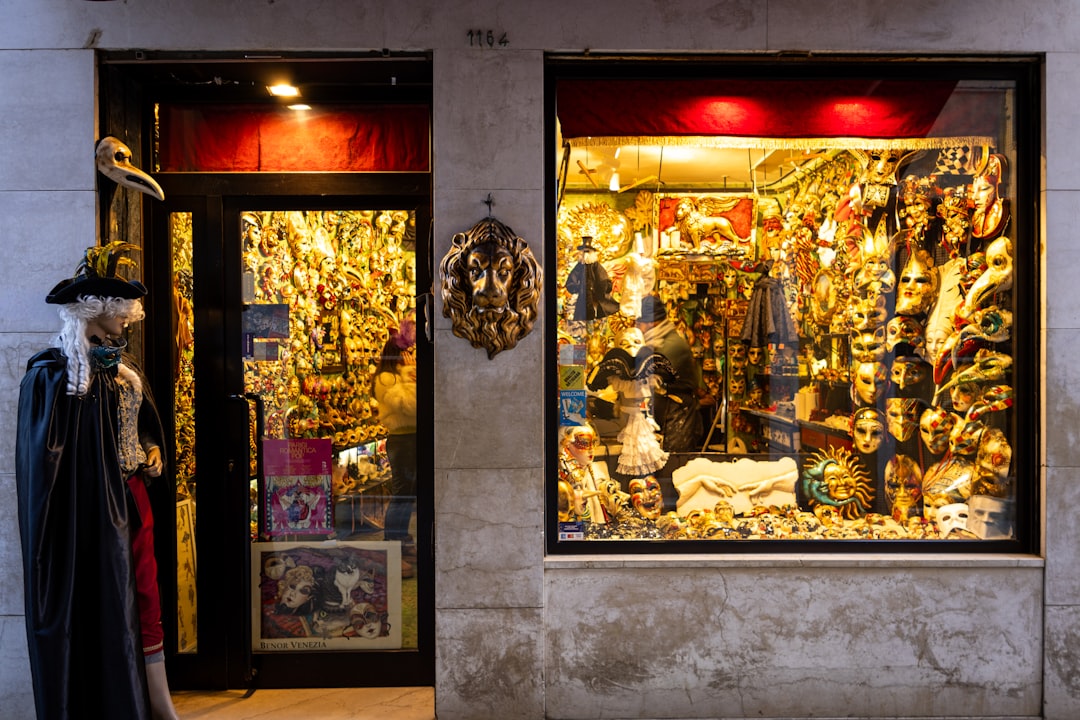
Venice Carnival (Carnevale di Venezia) happens in the weeks before Lent (February/March). It transforms Venice into a city of masks, costumes, and mystery.
The history is fascinating: Venice’s Carnival was originally a time when social rules were suspended. The poor could dress as the rich. Women could venture out in public masked and (relatively) unsupervised. For a brief period, the rigid hierarchy of Venetian society was inverted. It was liberation and catharsis.
The Fascist regime banned Carnival in 1931, seeing it as decadent. It wasn’t revived until 1979, when the city deliberately brought it back as a cultural event and tourism draw.
Modern Carnival is not what it was historically — too many tourists, too much commercialization, too many fake masks sold to visitors. But it’s still enchanting. People in elaborate period costumes walk the streets. The canals are filled with decorated boats. The Basilica di San Marco is a fairytale backdrop.
The floods (acqua alta) add drama. Venice floods regularly in winter, and Carnival often happens during flooding season. Streets become canals. Tourists wade through water. It’s surreal and beautiful.
Is modern Carnival authentic? Partly. Is it tourist-heavy? Very. But the tradition of masks, mystery, and social inversion is real, and the city does transform itself in a visually stunning way.
If you visit: Go during Carnival if you like crowds and theater. Skip it if you prefer authentic Venice without massive tourist throngs. The real magic of Venice Carnival is in small moments — finding a beautifully costumed couple in a quiet campo (square), stumbling on a masked ball in a palace, seeing water reflections of costumes in darkened canals.
Siena’s Palio: Horse Racing as Civic Religion
The Palio is held twice a year in Siena — July 2 and August 16. It’s the most dramatic and important festival in Italy. It’s not just a horse race; it’s a ritual that encapsulates how Italian communities understand loyalty, pride, and belonging.
Here’s what you need to know: Siena is divided into seventeen contrade (neighborhoods). Each contrada has its own identity, its own church, its own social center, its own traditions, and its own fierce loyalty. If you live in the Contrada dell’Oca (Goose), that’s your identity. You’re an Oca person.
The Palio is a horse race around the Piazza del Campo (the famous shell-shaped square). Ten contrade compete in each Palio. The horse that crosses the finish line first wins. The contrada whose horse won is the winner.
But this is where it gets intense: the contrade have feuds that go back centuries. The Oca and the Civetta (Owl) have been rivals forever. The Torre and the Bruco have a rivalry. These aren’t new rivalries; they’re deep, historical, and taken very seriously.
The Preparation: Contrade spend the months before Palio preparing. They practice their chants. They decorate their neighborhoods. They commission new banners and flags. The investment in preparation is enormous.
The Blessing: Before the race, horses are blessed in the contrade’s church. This is serious — the horse is sprinkled with holy water. Priests give blessings. It’s a religious ceremony for a sporting event. This signals how important and sacred the Palio is.
The Race Itself: The race is fast (about 90 seconds). The course is only around the piazza, so it’s short and intensely competitive. Horses sometimes fall. Jockeys sometimes get thrown. It’s dangerous and dramatic.
The Aftermath: The winning contrada celebrates for days. They install a palio (a banner) in their church. They parade. They feast. The loss is mourned seriously. The rivalry continues until the next Palio.
The Politics: Yes, there’s actual corruption. Contrade try to bribe jockeys or sabotage rival horses. There are police. There’s drama off the field as well as on it.
Is the Palio authentic? Absolutely. It’s genuinely important to Sienese people. Is it theatrical? Yes. Is it somewhat influenced by tourism and outsiders’ expectations? Sure. But the underlying passion and history are real.
If you visit: Book hotels well in advance. Plan to arrive days early. Walk the city and soak in the atmosphere. Visit the contrada museums. Watch the preparation. Attend the race. Understand that you’re witnessing something that matters deeply to people, not just watching a quaint spectacle.
The Infiorata: Flower Festivals
Multiple towns in Italy host Infiorata festivals, where streets are decorated with elaborate designs made entirely from flower petals. The most famous is in Genzano (near Rome), but others happen in Spello, Noto, and other towns.
Hundreds of volunteers spend days creating designs on streets using only flower petals — no glue, no artificial materials. You might have a design depicting the Pietà, with the flowers creating the image. Or an abstract pattern. Or a historical scene.
The Infiorata happens in May or June and requires enormous work. Flowers must be gathered. Designs must be planned. Volunteers must work early morning through midday before the sun wilts the petals. By evening, the designs are trampled by crowds. By the next morning, it’s gone.
It’s ephemeral beauty — flowers carefully arranged into art that will last less than 24 hours. This transience is part of the point. The festival is about the process, the community work, the collective creation. The final product is beautiful, but it’s not meant to last.
If you visit: Go early in the morning to watch the designs being created. The work is meditative and stunning. If you go during the day, you’ll see the finished product but miss the creation. The designs themselves are photographically beautiful.
Religious Processions
Throughout southern Italy, especially in Sicily and Calabria, you’ll find intense religious processions during Holy Week (the week before Easter) and for other religious occasions.
These are not subtle events. Large statues of saints or of Christ are carried through the streets. Robed figures (some in authentic medieval robes that are centuries old) walk in formation. Bands play. Thousands of people participate and watch.
The processions in Sicily are particularly intense. In some towns, there are processions on Palm Sunday, Maundy Thursday, Good Friday, and Easter Sunday. Each has its own character and traditions.
These are genuine religious events, not performances for tourists. Participants take them seriously. The tradition and faith are real. As a visitor, watch with respect. Photography is usually allowed, but be discreet about it.
Ferragosto: The National Shutdown
August 15 is Ferragosto, the Assumption of Mary (Assunzione di Maria). It’s a public holiday throughout Italy, but it’s more than that — it’s the signal for the entire country to shut down and go to the beach.
For weeks before Ferragosto, Italians in cities make plans to escape. They book hotel rooms on the coast. They arrange time off work. When August 15 arrives, cities empty. Everyone heads to the sea.
Beaches are packed. Every beach destination fills up. Restaurants are busy. Hotels are full. The whole country is in beach mode.
This is partly practical (summer break) and partly cultural. There’s an expectation that you leave the city in August if you can. Staying in your apartment in a hot, empty city is considered sad. You should be at the beach with family and friends.
For visitors, Ferragosto presents a choice: avoid August 15 and the weeks around it because everywhere is crowded, or embrace it and experience Italy at peak summer beach mode.
The Sagre: Local Food Festivals
Throughout Italy, especially in small towns, you’ll find sagre — local food festivals. A typical sagra celebrates one specific food and happens over a weekend (or sometimes longer).
You might find a spaghetti sagra in one town, a truffle sagra in another, a wine sagra, a mushroom sagra, a chestnut sagra, a pumpkin sagra. The format is similar: locals cook a traditional dish with that ingredient, set up long tables in the town square, and sell meals to visitors and locals. There’s wine, there’s music, there’s socializing.
Sagre are wonderfully authentic. They’re not primarily for tourists; they’re for locals to celebrate their local product and maintain community traditions. Tourists are welcome, but you’re joining something that’s genuinely local.
If you visit: Ask locals about sagre happening in the area. Search online for “sagre + region + date.” Show up on a Saturday evening, buy a meal, sit at the long tables, eat, drink wine, listen to local musicians, and enjoy the simplicity and authenticity of it.
Sagre are some of the most authentic Italian experiences you can have. They’re not famous or Instagram-worthy, but they’re where real Italian community life happens.
Other Notable Festivals
The Verona Opera Festival (June-September): Performances in the ancient Roman amphitheater. Grand, dramatic, and stunning if you like opera.
Lucca Comics & Games (October/November): A massive comic book and gaming convention in medieval Lucca. It’s huge and worth visiting if you’re into comics and geek culture.
The Festival of Two Worlds in Spoleto (June/July): An arts festival combining Italian and American art and culture.
Ravenna Festival (various months): A music festival in the ancient city of Ravenna.
The Festa di Sant’Efisio in Cagliari, Sardinia (May 1): A major religious procession on Sardinia involving thousands of people in traditional costumes.
Planning Around Festivals
If you can arrange your travel around a major festival, you’ll see Italy differently. Here’s how to do it:
- Decide what kind of festival appeals to you (historic, religious, food, cultural, sporting)
- Research which festivals align with your travel dates
- Book accommodations well in advance (hotels fill up during major festivals)
- Plan to arrive early to experience the build-up and preparation
- Understand that crowds and higher prices are normal during festivals
- Respect that these are often genuine community events, not performances for tourists
The Deeper Meaning
Italian festivals reveal something fundamental about Italian culture: the importance of ritual, tradition, community, and celebration. Italians invest enormous energy into festivals because they’re not just about fun or tradition. They’re about maintaining community identity, connecting with history, and celebrating what makes a place unique.
The Palio isn’t just a horse race; it’s Siena affirming its identity as a collection of contrade with centuries of rivalry and loyalty. Venice Carnival isn’t just masks and costumes; it’s Venice reclaiming a tradition that defines the city. The Infiorata isn’t just flowers; it’s a community spending days creating something beautiful that will disappear, because the beauty and community effort matter more than permanence.
These festivals reveal what Italians value: community, tradition, spectacle, history, food, passion, and the sacred. They’re cultural mirrors that show you how Italy understands itself.
Make time for festivals if you can. They’re not side activities; they’re among the most authentic and meaningful experiences you can have in Italy.




Leave a Reply