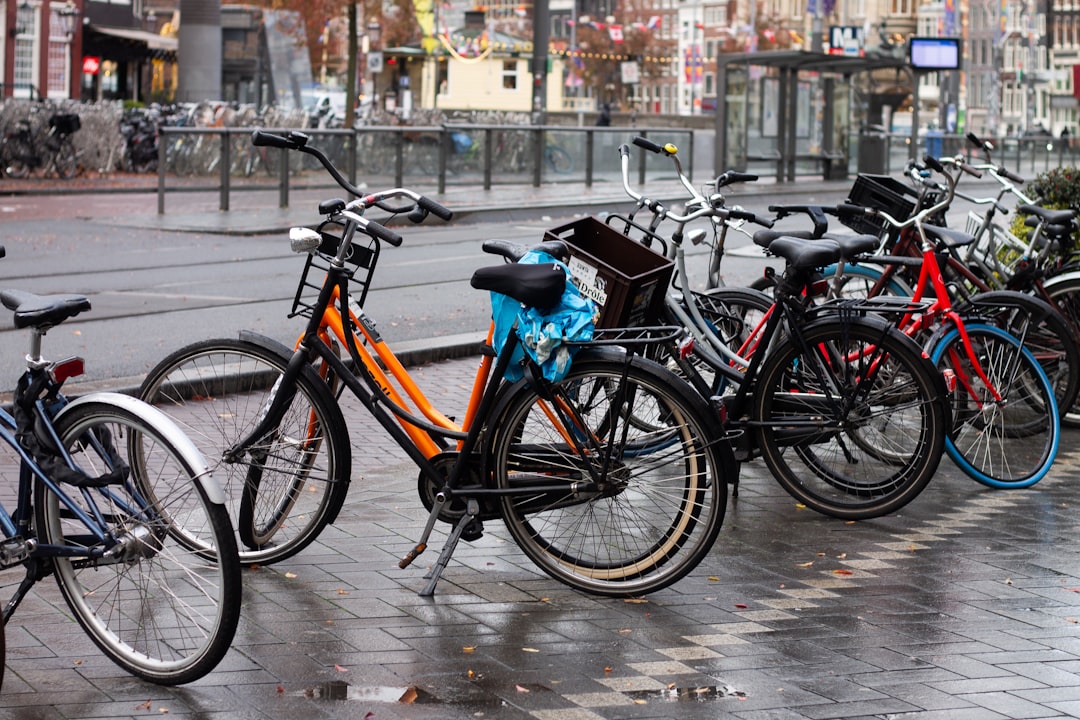
There’s a moment that hits most visitors to the Netherlands within their first hour: the realization that bicycles outnumber cars, that traffic lights have special bike signals, and that a 70-year-old woman in a floral dress just passed you going 30 km/h while carrying a full grocery load, a bag of groceries, and seemingly unbothered by the rain.
Welcome to Dutch cycling culture — the most normalized, integrated, and revolutionary cycling infrastructure in the world.
The Bicycle That Saved a Generation
To understand why bikes are so sacred in the Netherlands, you need to go back to the 1970s. After World War II, the Dutch celebrated their liberation by embracing cars with the same enthusiasm as everyone else. By the early 1970s, car culture was booming, children were being hit by traffic, and the country seemed locked on a path to become just another car-dependent nation.
Then something extraordinary happened.
In 1971, a traffic accident killed a 6-year-old girl named Marjan Minne in Amsterdam. Her death catalyzed a movement called “Stop de Kindermoord” — “Stop the Child Murder” — a radical activist campaign demanding that the streets be reclaimed for people, not cars. The slogan was stark. The message was simple: children have the right to play safely outside.
The movement exploded. Dutch parents took to the streets. They blocked traffic. They demanded change. And the government listened.
What followed was one of the most successful urban planning revolutions in history. The Netherlands didn’t just decide to allow cycling — they completely redesigned their cities and countryside around it. Protected bike lanes. Separate traffic lights. Roundabouts with cycle tracks. By the 1980s, the infrastructure had been fundamentally reimagined.
Today, the Netherlands has over 22,000 kilometers of designated cycling paths. That’s not just bike lanes painted on streets — these are actual separated infrastructure, often physically divided from car traffic by barriers, curbs, or greenery. In cities like Amsterdam, Utrecht, and Copenhagen, the bike paths are often cleaner and better maintained than the roads.
The Infrastructure That Changed Everything
When you first cycle in the Netherlands, the infrastructure feels almost alien in its thoughtfulness. Every intersection has been designed with cyclists in mind. You’ll notice:
Separate traffic lights for bikes — a red bike symbol, a green bike symbol. These aren’t suggestions; they’re law. Cyclists follow their own signal, often different from car traffic. This separation keeps everyone safer and creates a predictable flow.
Protected bike lanes — on major streets, the cycling path isn’t squeezed between parked cars and traffic. It’s either a fully separated track or, at minimum, protected by a curb or line of parked cars acting as a buffer. In Amsterdam, many of the most-trafficked routes have two-way cycle tracks.
Bike parking everywhere — and I mean everywhere. Train stations have multi-story bike parking facilities. Shopping centers have designated bike parking. Even small towns have racks designed to fit hundreds of bikes. The Dutch recognize that a bike is only useful if you can safely park it.
Roundabout logic — at roundabouts, cyclists have their own dedicated path that goes around the perimeter. Car drivers know to yield to cyclists in the roundabout. It seems simple when you see it, but it’s a complete reimagining of how traffic circles can work.
Sloped curbs and smooth transitions — the Dutch have perfected the transition between street, sidewalk, and bike path. No scary drop-offs that make pushing a bike difficult. Everything flows.
The Unwritten Rules (But Please Do Learn Them)
The Dutch are polite cyclists, but there are absolutely iron-clad rules. Break them and you’ll get disapproving looks, angry bell rings, or worse — becoming the subject of an angry Dutch cyclist’s lecture about safety.
The bell is your friend — Dutch bikes come with a bell, and people use it constantly. It’s not aggressive; it’s informational. Ding-ding means “I’m here,” and it’s actually quite charming.
Hand signals matter — before turning, cyclists extend an arm clearly. Left arm out to the left, right arm out to the right. Before stopping or slowing, a brief hand wave downward. These aren’t optional decorative gestures; they’re how cyclists communicate.
Never, ever block the bike lane — not even for a second. Even car drivers know this. If your car breaks down, you get it out of the bike lane immediately. The bike lane is sacred. Tourists walking in the bike lane is one of the few things that makes Dutch cyclists genuinely angry.
Right of way goes right — in the Netherlands, traffic coming from the right has priority unless otherwise signed. This applies to cyclists too. At intersections without signals, a cyclist approaching from your right has the right of way. Learn this quickly.
Slow down near pedestrians — cyclists are expected to respect walkers and actually brake for them, even in shared spaces. This isn’t the USA; there’s a culture of mutual respect.
Path discipline — if you’re cycling slowly or unsteadily, stay on the right side of the path. Faster cyclists will expect to pass on the left. Don’t weave.
No headphones or phones — cyclists are expected to stay alert. Using a phone while cycling, wearing headphones that block traffic sounds, or cycling while clearly intoxicated will earn you a fine or at minimum a scare from nearly clipping a car.
Cargo Bikes: The Substitute for Cars
One of the most visually striking elements of Dutch cycling culture is the prevalence of bakfiets — cargo bikes. These aren’t toys; they’re serious transportation vehicles that parents use to take kids to school, transport groceries, and move small furniture.
A typical Dutch bakfiets has a large rectangular cargo box in front, big sturdy wheels, and often an electric motor to help with weight. You’ll see them loaded with children (sometimes two, sometimes three under canopies), groceries, or construction materials. A single parent might own a car for occasional long trips, but daily? The bakfiets handles it.
Electric cargo bikes have boomed in popularity since the 2010s, making the heavy lifting much easier. A parent can load two kids and a week’s shopping and powered pedal to school or the market without breaking a sweat.
This isn’t nostalgia or environmentalism — though those play a role. It’s pure practicality. A bakfiets is cheaper than a car, parking is free, fuel costs nothing, and you get exercise. For a family living in a Dutch city, it makes complete sense.
As a tourist, seeing these loaded bikes carrying entire families is one of those moments where Dutch pragmatism and lifestyle choices become suddenly visible.
Renting a Bike as a Tourist
Renting a bike in the Netherlands is essential for the full experience, and it’s incredibly easy. Train stations and city centers have multiple rental companies. You’ll typically pay €8-15 per day for a basic Dutch bike.
Here’s what you need to know:
Get a real Dutch bike — not a fancy mountain bike or racing bike. A Dutch bike is heavy, upright, comfortable, and has internal gears (no derailleurs to break). They’re designed for practical riding through weather, not speed.
OV-fiets is genius — at major train stations, there’s a system called OV-fiets (OV = public transport). You can reserve a bike at one station and return it at another for a small fee. It’s perfect for exploring multiple cities.
Lights are legally required — if you’re cycling at night, you need lights front and rear. Rental bikes have them built-in, but if yours don’t work, fix it before dark or face a €100+ fine.
Helmets are optional (and rare) — despite what safety experts elsewhere might say, Dutch cyclists almost never wear helmets. Not the kids, not the professionals, not anyone. The infrastructure is designed so well that helmets aren’t considered necessary. As a tourist, you can rent one if you’re nervous, but you’ll feel quite out of place.
Practice on quiet streets first — if you’ve never cycled seriously, spend an hour on quieter paths before attempting Amsterdam’s rush hour traffic.
Lock your bike properly — the Netherlands has the highest bike theft rate in the world. Always use the integrated lock or bring a heavy lock. If renting from a company, they’ll provide a good lock.
The Daily Culture of Cycling
Cycling in the Netherlands isn’t a hobby or a sport — it’s how people live. You’ll see:
- Office workers in business attire cycling to work in the rain without apparent concern
- Teenagers cycling one-handed while eating a bun from their other hand
- Families of five on a single bike with a trailer
- Elderly couples cycling together at a leisurely pace
- Dogs in special boxes attached to cargo bikes
The Dutch have a word for this casual, integrated cycling: fietsculture — bike culture. It’s not a subculture or a trend. It’s just how life works.
This means cycling etiquette is baked into daily behavior. Rush hour on a busy street is organized chaos, but it flows. Everyone knows the rules. Everyone follows them. Conflicts are rare because expectations are clear.
Why This Matters for Your Visit
Understanding and respecting Dutch cycling culture will dramatically improve your visit. It’s not just about staying safe (though that’s paramount), it’s about participating in the culture in a way that locals respect.
When you cycle like a Dutch person — predictable, attentive, respectful of the infrastructure — you become part of the community. You move at the pace of the city. You see neighborhoods and experience the landscape the way Dutch people actually do.
The bicycle is the key to understanding the Netherlands. It reflects Dutch values: pragmatism, equality (everyone uses the same infrastructure), environmental consciousness, and a design philosophy that prioritizes safety and efficiency.
Rent a bike. Follow the rules. Respect the bell. And embrace the beautiful simplicity of human-powered transportation that 18 million Dutch people have made look easy.
Welcome to a country where, yes, someone will tell you if you’re doing it wrong — but they’ll also help you get it right.




Leave a Reply