Almost a quarter of the Netherlands sits below sea level. The lowest point, in the province of Groningen, is 7 meters below sea level. The most populated areas — including parts of Amsterdam, Rotterdam, and much of the western provinces — are essentially perched on a carefully managed holding action against the North Sea and major rivers.
This fundamental geography has shaped Dutch character, values, and identity in ways that foreign visitors often don’t recognize until they understand the stakes. The Dutch relationship with water isn’t romantic or recreational. It’s existential. It’s about survival, cooperation, and the kind of pragmatism that comes from knowing that one storm, one broken dike, one miscalculation could literally flood your home.
Building a Nation on Water: The Water Boards
Long before the Netherlands had a parliament or a king, it had water boards — the waterschappen.
These are local governmental bodies dedicated solely to water management: maintaining dikes, managing water levels, clearing canals, and preventing flooding. Some of the oldest waterschappen date back to the 13th century, making them among the oldest democratic institutions in Europe — older than many parliaments.
What’s remarkable about the water boards is how they function: they bring together farmers, property owners, and local officials in a strictly focused organization with one job: keep the water out and keep the water managed. No ideological debates. No party politics. Just practical problem-solving.
For visitors, understanding the water boards reveals something essential about Dutch culture: the Dutch developed democratic institutions specifically because they needed collective decision-making for survival. You can’t argue about water management while your neighbor’s land is flooding. You need consensus. You need to trust the system.
This institutional innovation — creating cooperative bodies to solve shared problems — became the template for Dutch governance more broadly. The Dutch approach to democracy emphasizes consensus, coalition-building, and pragmatic problem-solving over winner-take-all politics. You can trace this directly to centuries of having to work together to literally survive.
Today, every Dutch citizen belongs to at least one water board and pays taxes to support them. Most Dutch people barely notice this; it’s so integrated into daily life that they don’t think of it as remarkable. But the concept — people from different political parties, economic classes, and perspectives working together on essential infrastructure — is revolutionary compared to many democracies.
Dikes and the Art of Staying Dry
To understand Dutch engineering, look at a dike.
Dutch dikes aren’t simple walls. They’re sophisticated constructions: earthen slopes built at specific angles, with clay layers, reed beds, and complex water-management systems. Modern dikes have monitoring systems, reinforced sections, and backup systems. Some are thousands of meters long.
The famous expression “God created the world, but the Dutch created the Netherlands” captures the scale of this engineering feat. Without the dikes, much of the country would be underwater.
This massive infrastructure project — maintained daily, constantly monitored, perpetually improved — shapes how the Dutch think about:
Planning ahead — you can’t build and maintain dikes without long-term thinking. The Dutch are famous for planning decades into the future. Sustainability, climate change, and infrastructure aren’t abstract concerns; they’re existential necessities.
Maintenance culture — things are built to last, but they require constant care. The Dutch are meticulous about maintaining infrastructure because neglect has catastrophic consequences.
Engineering excellence — the Dutch have become world-class engineers partly because they have to be. A small mistake in dike construction could have massive consequences.
Collective responsibility — everyone from the farmer to the city dweller has a stake in keeping the water out. This shared vulnerability creates a sense of collective purpose.
The Legendary Elfstedentocht: Skating on Frozen History
Every winter, many Dutch people hope for the same thing: ice.
Specifically, ice thick enough for the Elfstedentocht — the “Eleven Cities Tour” — a legendary 200-kilometer skating race across the frozen canals and lakes of Friesland (the northern province) linking eleven historic cities.
The Elfstedentocht is only held when the natural ice is thick enough, which happens only a few times per decade. When conditions are right, the Dutch participate in what can only be described as a national obsession. Tens of thousands of people skate the entire route — some in under four hours, others taking most of the day. It’s part race, part pilgrimage, part celebration of winter.
For the Dutch, the Elfstedentocht is more than a sporting event. It represents:
A connection to their past — the route follows ancient trade routes and waterways that have defined Dutch geography for centuries.
A reminder of interdependence with nature — the race only happens when nature cooperates. You can’t force it. You have to wait. This teaches patience and respect for natural cycles.
A cultural moment — cities along the route celebrate with music, food, and festive crowds. The entire nation watches updates. When someone finishes, their achievement is genuinely celebrated.
The seasonal rhythm — in a country with dark winters, the ice brings joy and natural community gathering.
The last Elfstedentocht was held in 1997 (with another in 2018). The waiting — the knowledge that it might not happen for years — makes it precious. When it does happen, Dutch people drop nearly everything to participate.
Weather as Daily Conversation
Walk up to any Dutch person and ask them about the weather. They’ll have an opinion, an observation, and often a philosophical thought.
This isn’t small talk filler in the Netherlands. The weather is genuinely important to daily life. Rain might be an inconvenience in other places; in the Netherlands, it’s a constant planning factor. Wind is discussed as a serious consideration. Temperature shifts get noticed and commented on.
This constant weather awareness reflects the historical reality: the Dutch have always had to pay attention to atmospheric conditions. Rain threatens dikes. Wind can be dangerous. Temperature affects water quality and ice thickness.
You’ll notice:
No one is really surprised by rain — the Dutch just adapt. Waterproof coats are standard. Carrying an umbrella is expected. Most Dutch people don’t have a conversation about whether to go outside in the rain; they just go and deal with it.
Sunshine is celebrated — when the sun comes out in the Netherlands, people genuinely notice. Parks fill within minutes. Outdoor café seating — even wet from morning rain — becomes coveted. Summer weather is anticipated and appreciated because winter darkness is long.
Wind is discussed in practical terms — “it’s quite windy” isn’t a complaint; it’s information. Wind affects cycling, outdoor activities, and even how buildings function.
The sky is constantly changing — the flat landscape means the sky dominates the visual field. Cloud formations, light quality, and weather fronts are genuinely beautiful to observe.
Water and Urban Design
The relationship with water shapes how Dutch cities look.
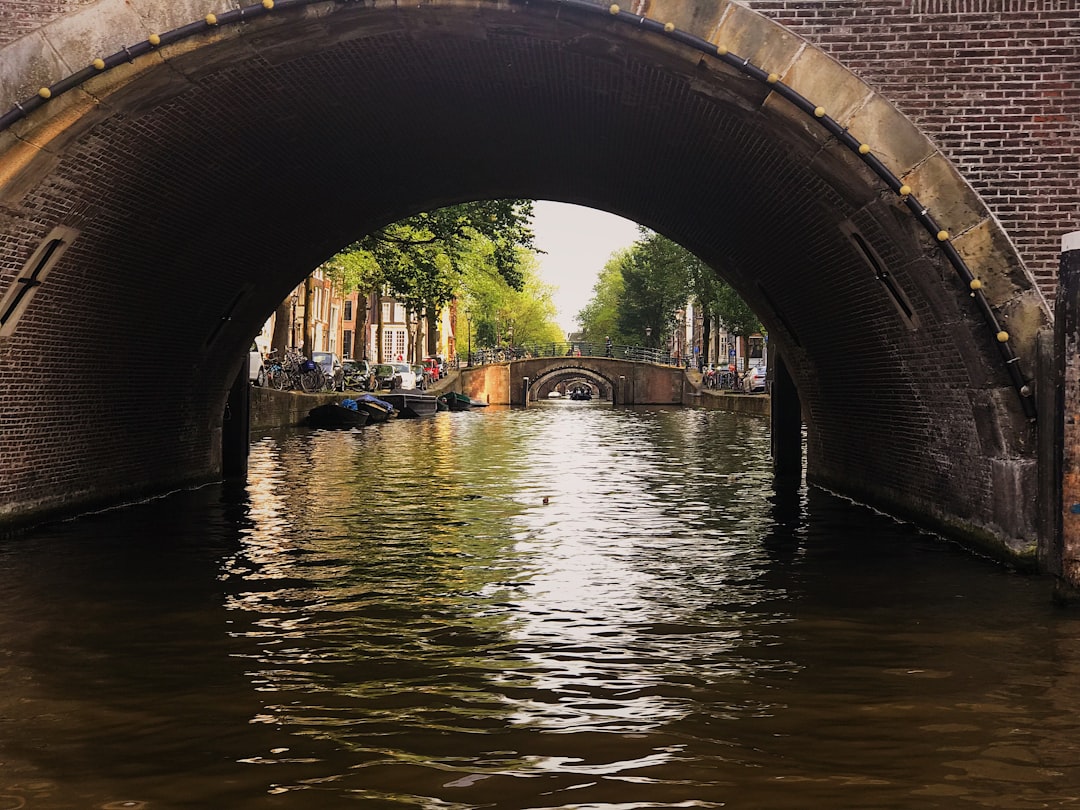
Amsterdam, built on canals, is a visible example: 1,600 kilometers of canals crisscrossing the city, serving as water management systems, transportation routes, and recreational spaces all at once. The canals aren’t pretty accessories; they’re essential infrastructure that became beautiful.
Many Dutch towns are built around water in similar ways:
Venice comparisons — Amsterdam is often called the “Venice of the North,” but the Dutch approach is different. Where Venice embraced water as a romantic feature, Dutch cities treat water as a practical infrastructure that happens to create beauty.
Bridges as essential infrastructure — thousands of bridges aren’t architectural flourishes; they’re how you cross the water systems that run through your city. The sheer number of bridges reflects how thoroughly water permeates Dutch geography.
Low buildings for water flow — Dutch buildings were historically built low and with sloped roofs. This isn’t just aesthetic; it’s practical — water management requires easy flow and rapid drainage.
Flood-resistant basements — modern Dutch buildings in flood-prone areas have flood-resistant ground floors. Pumping systems are standard infrastructure.
The relationship is visible even in something as simple as architecture: Dutch buildings reflect centuries of adaptation to a waterlogged landscape.
The Delta Works: Engineering at a Massive Scale
The Deltawerken (Delta Works) is a system of dikes, locks, dams, and sluices built throughout the 20th century to protect the southern provinces from storm surge and river flooding. It’s one of the most ambitious hydraulic engineering projects ever undertaken.
For tourists, the Delta Works represents something crucial: the Dutch don’t see nature as something to enjoy unchanged. They see it as something to cooperate with, manage, and engineer in partnership with. This pragmatic approach — neither pure conservation nor pure exploitation — is distinctly Dutch.
The famous phrase “fighting against water” (strijden tegen het water) captures this: it’s not about defeating nature; it’s about the ongoing effort to maintain balance.
Climate Change and Future Water
Today, the Dutch face a new water challenge: climate change.
Rising sea levels, changing precipitation patterns, and more severe storms threaten the delicate balance that’s been maintained for centuries. The Dutch response is characteristically pragmatic: they’re not just defending against higher water levels, they’re reimagining cities to coexist with more water.
Programs like “Room for the River” actually allow rivers to flood certain areas (with compensation for landowners) rather than building ever-higher dikes. This represents a philosophical shift: instead of fighting water, work with it.
Visiting the Netherlands now, you might see:
Water squares in cities — public spaces designed to temporarily hold rainwater, becoming playgrounds when dry.
Floating neighborhoods — buildings that can rise and fall with water levels.
Wetland restoration — rewilding areas that were previously drained, allowing them to absorb excess water naturally.
This approach — pragmatic, forward-thinking, and willing to adapt — reflects something essential about Dutch character. They’ve learned over centuries that you can’t defeat water. You have to live in relationship with it.
Understanding Dutch Character Through Water
When you understand the Dutch relationship with water, you understand Dutch character:
Pragmatism — the Dutch don’t dream about defeating nature; they solve problems within reality.
Long-term thinking — you can’t maintain dikes by thinking quarter-to-quarter; you think in decades and centuries.
Cooperation — survival depends on working together, which shapes governance and social norms.
Collective responsibility — everyone contributes to maintaining the systems that keep everyone safe.
Respect for expertise — engineers, water managers, and specialists are trusted because their work keeps society safe.
Adaptation over resistance — when circumstances change, the Dutch adjust rather than cling to tradition.
This is why the Dutch talk about weather constantly, why water boards matter politically, and why infrastructure maintenance is a national priority. It’s not bureaucracy; it’s survival.
For visitors, understanding this reframes the experience. Those canals aren’t quaint decorations. That flat landscape isn’t simple; it’s an engineered achievement. That Dutch directness and pragmatism isn’t coldness; it’s the communication style of a people who’ve had to solve problems practically to survive.
The Dutch created themselves through water. That fact shapes everything about their culture.




Leave a Reply