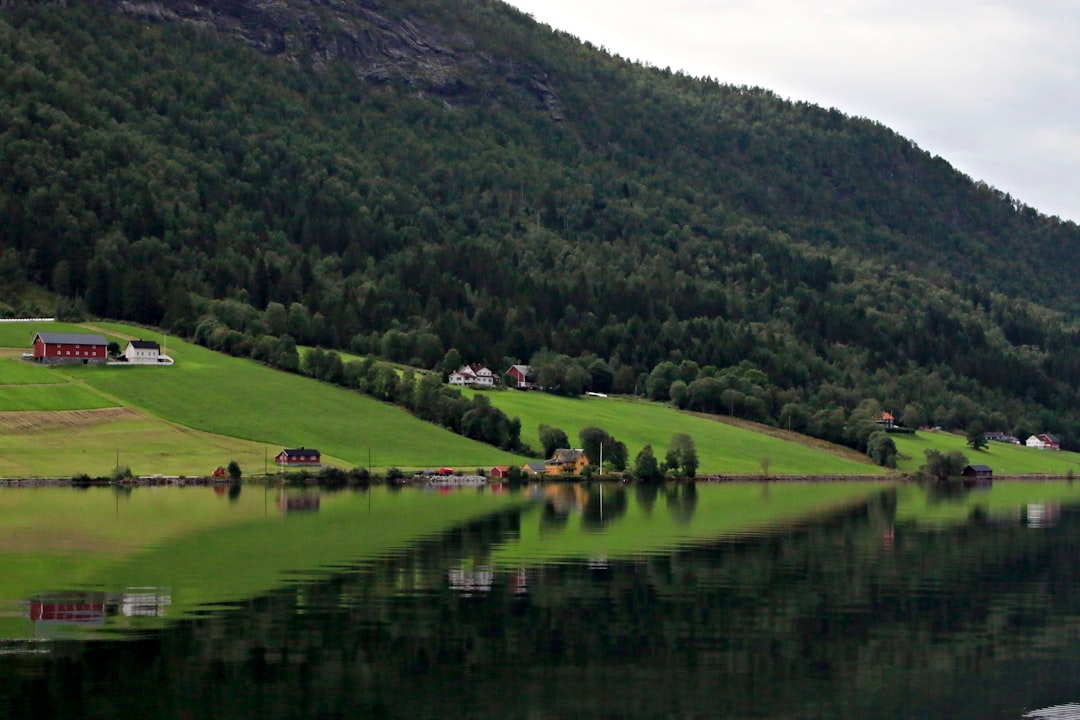
In Norway, there’s a word that encompasses so much of the national character that it almost cannot be translated: friluftsliv. Literally, it means “free air life”—but that painfully minimal translation misses the point entirely. Friluftsliv is a philosophy, an identity, and a way of being that has shaped Norwegian culture for nearly two centuries. It’s the reason a Norwegian family will happily hike in a snowstorm, why children as young as three are taken into the mountains, and why retirement often means spending even more time outdoors.
To understand Norway, you must understand friluftsliv. It’s woven into everything: work schedules are designed around it, childhood development revolves around it, and national identity is built upon it. As a traveler, grasping this concept will open doors to understanding why Norwegians seem to have cracked some fundamental code about living well.
The Roots: Romanticism, Literature, and National Identity
Friluftsliv didn’t emerge from thin air—it was born from 19th-century Norwegian Romanticism and the nation’s struggle for independence from Sweden. As Norway began envisioning itself as a distinct nation (independence wasn’t achieved until 1905), artists, writers, and musicians turned to nature as the expression of Norwegian identity.
Writers like Henrik Ibsen and Edvard Grieg (the composer, not a writer, but equally important to the movement) drew inspiration from the Norwegian landscape. Painters like Caspar David Friedrich and Odd Nedelmann captured the sublime drama of fjords and mountains. These weren’t pastoral landscapes or tamed nature—they were wild, imposing, and fundamentally Norwegian. The message was clear: this landscape, this nature, is what makes us Norwegian.
Friluftsliv became a democratic antidote to Europe’s romantic notion of nature as something only the wealthy could enjoy. There was something powerful in the idea that anyone—a worker, a peasant, a city dweller—could access the mountains, the forest, and the sea. Nature wasn’t a luxury; it was a birthright. This egalitarian spirit became embedded in friluftsliv from the beginning.
By the early 20th century, friluftsliv had transformed from an artistic and intellectual concept into a lived practice. Hiking clubs emerged. The Norwegian DNT (Den Norske Turistforening, or Norwegian Hiking Association) was founded in 1868 and began building mountain cabins. Skiing, which had practical roots in transportation and hunting, became a recreational activity and marker of Norwegian identity.
Friluftsliv wasn’t just about enjoying nature—it was about becoming yourself through nature. It was seen as morally good, spiritually rejuvenating, and essential to being a well-rounded human being.
“There’s No Bad Weather, Only Bad Clothing”
To truly understand friluftsliv, you must embrace this core Norwegian saying: “Det finnes ikke dårlig vær, bare dårlige klær”—there is no bad weather, only bad clothing.
This isn’t optimistic rhetoric. It’s practical philosophy. Norwegians don’t skip hiking because it’s raining, snowing, or freezing. They just put on appropriate gear and go. This attitude, ingrained from childhood, fundamentally changes your relationship with the outdoors. You’re not waiting for the “perfect” weather day. You’re engaging with nature as it actually is.
Watch Norwegians hike, and you’ll see this in action. A family sets out on a trail in conditions that would send most Europeans indoors: heavy rain, near-freezing temperatures, dense fog that reduces visibility. They’re moving slowly, methodically, but they’re out there. The children are equipped with rain gear and warm layers. There’s no sense of sacrifice or hardship—this is normal. This is friluftsliv.
The practical benefit of this attitude is that Norwegians spend far more time outdoors than people in countries with “nicer” climates. If you waited for perfect weather in Norway, you’d be inside nine months a year. Instead, you develop the skills, clothing, and mindset to be outside almost regardless of conditions. This builds incredible resilience and a profound comfort with nature.
For travelers, this is liberating. You don’t need perfect weather to experience Norwegian nature. Some of the most memorable experiences happen in rain, snow, or wind. Come prepared with good gear, embrace the weather, and you’ll have access to landscapes many tourists miss because they’re waiting for sunny skies.
The DNT: 900+ Cabins and an Honor System
If friluftsliv is the philosophy, the DNT is the infrastructure that makes it possible. The Norwegian Hiking Association maintains a network of approximately 900 cabins throughout the Norwegian mountains and countryside. Some are staffed year-round. Many are unmanned, self-service refuges where hikers can shelter for the night.
This is where friluftsliv becomes genuinely radical. Many DNT cabins operate on an honor system. You arrive, you let yourself in (using a combination code available to DNT members), you use the shelter, you leave money in the box, and you leave. There’s no staff to check credentials, no locked doors, no suspicion. The system assumes basic human goodness and personal responsibility.
For a traveler, the DNT cabin system is a gateway to experiencing real Norwegian nature. You can hike for days in the mountains, staying in cabins designed for shelter rather than comfort. Many cabins have no electricity, minimal heating, and basic sleeping arrangements. Some have just blankets and a wood stove. This is intentional—the Norwegian philosophy is that you’re in nature to experience it, not to bring the comforts of home into the wilderness.
Staying in a DNT cabin is deeply koselig in a way that luxury mountain lodges can never be. You’re stripped of distractions. You’re warm enough, fed enough, and safe—everything friluftsliv requires. There’s a profound contentment in this simplicity.
The cost is minimal (often £15-25 per night for basic cabins), and the experience is distinctly Norwegian. You’re participating in a system built on trust and mutual respect, which feels radical in our contemporary world.
Skiing as Identity
You cannot discuss friluftsliv without discussing skiing, because in Norwegian culture, they’re nearly synonymous. Skiing isn’t a sport or a recreational activity in Norway—it’s an expression of identity, a connection to history, and a fundamental part of friluftsliv.
Norway has archaeological evidence of skiing dating back over 4,000 years. Ancient rock carvings depict people on skis, suggesting that skiing was not invented in Norway but has been present there since pre-historical times. When other European countries discovered skiing as a sport in the 19th century, Norway had already been doing it for millennia.
The romantic narrative is powerful: Norwegians are “born with skis on their feet” (nordmenn er født med ski på beina). Children learn to ski before they can walk. The Birkebeinerrennet, one of the world’s oldest ski races, commemorates a 13th-century moment when two soldiers carried the infant prince Haakon across the mountains on skis to protect him. Skiing, in the Norwegian imagination, is connected to survival, heroism, and national identity.
Today, cross-country skiing (langrenn) is the soul of Norwegian winter culture. It’s not the dramatic downhill skiing that dominates international attention—it’s the quieter, more intimate experience of propelling yourself across snowy landscapes. Entire trails are groomed and maintained for public use. Weekend mornings, you’ll see Norwegians of all ages on these trails, moving through forests with the kind of meditative focus that friluftsliv cultivates.
For travelers, even basic skiing ability opens a door into Norwegian life. Participating in this activity, sharing the trails with locals, understanding the effort and joy involved—this is direct access to friluftsliv.
The Sunday Tur and Daily Friluftsliv
While hiking cabins and ski trails represent friluftsliv at its most dedicated, the philosophy permeates daily life through what Norwegians call the “tur”—an outing or walk, usually on a Sunday.
The Sunday tur is sacred in Norwegian culture. Families block out afternoon time for a walk in nature—a forest hike, a walk along the coast, a ski trail in winter. Schools schedule “friluftslag” (outdoor days) throughout the year. Even in summer when daylight stretches until 11 p.m., Norwegians make time for a tur after dinner.
The tur isn’t about fitness (though it accomplishes that). It’s about presence and connection. A family on a Sunday tur isn’t moving quickly or competing for time—they’re walking together, observing nature, perhaps stopping to pick berries or enjoy a view. Children learn to notice things: where the mushrooms grow, how the light changes through the seasons, the names of trees and birds.
This regular, unstructured time outdoors becomes foundational to how Norwegians see themselves and their relationship with the world. It’s not that Norwegians are inherently more outdoorsy than other Europeans—it’s that their culture systematizes nature-time as essential to being human, not as a luxury hobby.
Friluftsliv in Work and Retirement Culture
One of the most striking aspects of Norwegian culture is how friluftsliv is protected in law and work culture. Norwegian workers have strong traditions of taking time for outdoor activities. Some companies explicitly encourage staff to take “friluftsliv breaks.” The culture says: you need this. It’s not indulgent. It’s necessary.
Retirement takes on a particular character in Norway. While many cultures see retirement as a transition to leisure, Norwegians often see it as an opportunity to pursue friluftsliv more intensively. Retirees invest in cabins, take extended hiking trips, and spend seasons in nature pursuing the outdoor activities they’ve perhaps constrained during working life.
This has profound implications for aging and wellness. Instead of a cultural narrative that retirement is a decline into sedentary life, Norway offers a vision of life’s later chapters as an opportunity to deepen your relationship with nature and movement. Norwegian seniors are, on average, far more active and engaged with outdoor life than their counterparts in countries without strong friluftsliv cultures.
A Philosophy for Modern Life
In our contemporary world of screens, indoor work, and controlled environments, friluftsliv feels almost radical in its simplicity: go outside, regularly, in all weather, for no reason other than to be there. Connect with nature, with other people, with yourself.
For a traveler in Norway, friluftsliv is an invitation: don’t just visit the mountains, don’t just see the views. Participate. Walk in the rain. Hike without an agenda. Sit in a cabin’s silence. Ski slowly through a forest. Let the experience change you the way it changes Norwegians.
This is why Norway, despite its high cost of living and challenging climate, consistently ranks among the world’s happiest countries. Friluftsliv isn’t a wellness trend or a marketing concept—it’s a philosophy so embedded in the culture that it shapes how people see themselves and spend their precious time on earth.
There’s no bad weather, only bad clothing. Now get dressed and go outside.




Leave a Reply