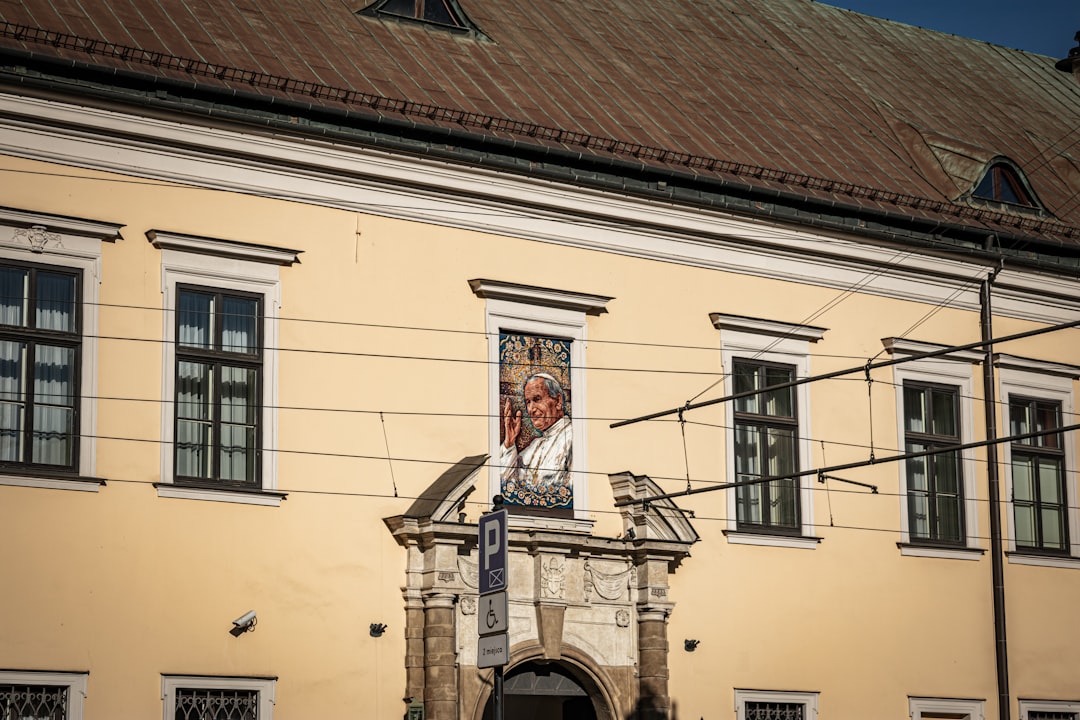
On October 16, 1978, the world received unexpected news: a Polish cardinal named Karol Wojtyła had been elected Pope. For Poland, it was almost incomprehensible. A Pole—someone from a country that had been under Soviet occupation for decades—was now the leader of the Catholic Church. The election felt less like a religious appointment and more like a cosmic correction of injustice.
“Be not afraid!” were his first words to the world as Pope John Paul II. Those words would come to define not just his papacy but an entire era of Polish resistance, Polish identity, and Polish transformation.
The story of John Paul II and Poland is inseparable from the story of modern Poland itself. His elevation changed how Poland saw itself, gave Polish Catholics a global figurehead who spoke their language and understood their culture, and ultimately became one of the central figures in bringing down Soviet communism. To understand contemporary Poland, you need to understand JP2—as Poles call him—and the way his life, his words, and his symbolic power reshaped a nation.
The Election: An Impossible Hope
Karol Wojtyła was born in 1920 in Wadowice, a small town near Kraków. He lived through both Nazi and Soviet occupations. He was a priest, a bishop, a cardinal. But he wasn’t a leading global figure. He wasn’t from Italy, which broke a 455-year tradition of Italian popes. He was from Poland, a country that much of the Western world considered permanently under the Soviet boot.
When he was elected—at just 58 years old—Poles experienced something almost religious themselves: a restoration of possibility. If a Pole could be Pope, maybe other things were possible too. Maybe Poland didn’t have to accept Soviet rule forever. Maybe resistance wasn’t futile.
The world media didn’t quite understand the magnitude of this moment for Poland. They covered it as a religious story. For Poles, it was a political and existential story. It was their country being suddenly and unexpectedly lifted onto the world stage by one of their own.
The 1979 Visit: Two Million in One Crowd
In June 1979, John Paul II returned to Poland for the first time as Pope. The Soviet authorities tried to limit and control his visit. They failed spectacularly.
When he appeared in Warsaw, two million people gathered in one location—one of the largest crowds in Polish history. In a country where public gatherings were controlled and monitored, where people were accustomed to Soviet constraint, two million Poles showed up to see their pope.
What John Paul II did with that moment was brilliant and audacious. He didn’t directly attack the Soviet system. He didn’t tell Poles to rebel. Instead, he did something more powerful: he validated Polish identity and Polish spirituality. He spoke in Polish. He acknowledged Polish suffering. He implicitly said: your faith, your culture, your national identity matter, and no government can take that away.
He visited Jasna Góra, the most important pilgrimage site in Poland. He went to Kraków, where he had served as a bishop. He was, in essence, reconnecting Poland to itself through Catholic faith and national pride, but in a way that was acceptable to international observers because it wasn’t explicitly political.
But everyone understood what was happening. Poles understood. The Soviet authorities understood. The effect was electrifying. After this visit, the Solidarity movement—a grassroots labor movement that became the vanguard of Polish resistance—became possible in ways it hadn’t been before. Polish Catholics and Polish nationalists had been given permission, by the Pope himself, to take their identity seriously.
The Solidarity Connection: Spiritual Power Meets Political Reality
Solidarity (Solidarność) emerged in 1980 as a trade union and quickly became a movement for democratic change. Its leader, Lech Wałęsa, was a devout Catholic. The movement’s symbols were explicitly Catholic—the image of Mary, the Black Madonna of Czestochowa, religious iconography.
John Paul II didn’t directly create Solidarity, but his 1979 visit created a spiritual and psychological environment where it could flourish. He had shown that Polish identity and Catholic faith were not things the Soviet state could erase or suppress. He had shown that the Pope—the leader of a billion Catholics worldwide—cared about Poland specifically and validated its resistance.
When Soviet authorities declared martial law in Poland in 1981, trying to crush Solidarity, John Paul II’s words of support mattered. He was a voice from outside the Soviet sphere, saying that what Poles were doing was right and important. He was validation that resistance wasn’t futile or illegitimate—it was a moral imperative.
The role of the Catholic Church in Polish resistance was crucial. Church buildings became gathering places. Catholic networks became resistance networks. And John Paul II was the spiritual figurehead of all of this, even as he remained officially diplomatic and didn’t publicly call for revolution.
The Assassination Attempt: A Moment That Shook Poland
On May 13, 1981, John Paul II was shot in St. Peter’s Square by a gunman named Mehmet Ali Ağca. The Pope survived. Poland held its breath. The shooting seemed to confirm something Poles already believed: that JP2 was a figure of such importance and danger to the Soviet system that someone would try to kill him.
(There were and remain conspiracy theories that the Soviet KGB orchestrated the assassination attempt. The evidence is inconclusive, but the fact that Poles believed it was possible—that the Soviets would go to such extremes—reveals the weight they attributed to JP2’s role in their resistance.)
The assassination attempt became part of the mythology of JP2 in Poland. It made him a martyr figure without him having to actually be a martyr. It deepened the sense that what he was doing mattered, that it was dangerous, that it was important enough to kill for.
The Role in Communism’s Fall: Spiritual Power in Political Transformation
When communism collapsed in Poland in 1989, John Paul II was in Poland within days. He didn’t cause the collapse—that was the result of economic failure, Solidarity, Polish resistance, and geopolitical shifts. But he was there at the moment of transformation to validate it and celebrate it.
By the time the Berlin Wall fell and communism collapsed across Eastern Europe, John Paul II had been Pope for over a decade. He had visited Poland multiple times. He had become, for Poles, the living embodiment of the possibility that the Soviet system was not eternal, that change was possible, that faith and national identity could overcome totalitarian rule.
He didn’t cause these changes alone. But he created a spiritual and psychological space where they became thinkable and possible. He showed that resistance was not futile, that the world was watching, that a Pole on the world stage could declare that Polish identity and Polish spirituality mattered.
The Cult of JP2: From Religious Figure to Cultural Icon
In contemporary Poland, John Paul II is everywhere. Streets are named after him. The airport in Kraków is the John Paul II Airport. His image is in churches, on religious items, even in somewhat irreverent memes shared by young Poles on social media.
There’s a fascinating mix of genuine religious devotion and pop culture celebrity in how JP2 is treated in modern Poland. Some Poles revere him as a saint (he was canonized in 2014). Others enjoy him ironically, sharing JP2 memes and references as a way of expressing Polish identity and cultural pride.
This dual relationship with JP2—as both religious figure and cultural symbol—is very Polish. It reveals how thoroughly he’s been integrated into Polish identity. He’s not just a pope anymore. He’s a symbol of Polish resilience, Polish spirituality, Polish pride, and Polish connection to the wider world.
The Complicated Legacy: Beneath the Celebration
JP2’s legacy in Poland is celebratory, but it’s not uncomplicated. In recent years, with the emergence of multiple clergy abuse scandals, JP2’s handling of abuse cases has come under scrutiny. While he was Pope, his management of predatory priests was, by modern standards, inadequate. He prioritized the Church’s reputation and the accused priests’ rehabilitation over victims’ protection and justice in many cases.
Conservative Catholics and Polish nationalists often downplay or ignore this aspect of his legacy. Progressives and abuse survivors criticize him for it. The full, honest assessment of John Paul II requires holding both truths simultaneously: he was a figure of enormous importance to Poland’s liberation, and he also failed to adequately protect vulnerable people from abuse by priests under his authority.
This tension is visible in how modern Poland discusses JP2. Older Poles tend to emphasize his role in ending communism. Younger Poles are more likely to acknowledge his failures. Progressive Poles resist the quasi-religious devotion many Poles have toward him.
Sites Connected to JP2: If You Want to Understand His Relevance to Poland
Wadowice: His birthplace, about 40 kilometers from Kraków. There’s a museum dedicated to his life and a church where he was baptized. It’s not grand, but it’s moving because it shows his ordinary origins.
Kraków: Where he served as Archbishop before becoming Pope. The cathedral there is full of references to him. The city feels, in many ways, like his spiritual home.
Jasna Góra: The pilgrimage site he visited in 1979. It remains one of the most important Catholic sites in Europe.
John Paul II Airport in Kraków: Named after him, it’s a constant reminder of his importance to Poland.
Practical Information for Travelers
If you’re interested in JP2’s connection to Poland:
Visit Wadowice: It’s a short trip from Kraków and gives you a sense of where he came from.
Go to Kraków cathedral: See the places where he served as a priest and bishop.
Visit during his feast day: October 22nd is the date of his election as Pope. Poles often gather in major cities to commemorate it.
Be respectful: While JP2 is culturally celebrated, discussions of his abuse scandal legacy should be handled with sensitivity.
Conclusion: The Pope Who Made Poland Possible
John Paul II’s impact on Poland—and through Poland, on the collapse of communism in Eastern Europe—is one of the most significant geopolitical and spiritual events of the late 20th century. He showed that a Pole could stand on the world stage and change the course of history. He validated Polish resistance. He connected Polish Catholicism to a global movement. He made communism seem not inevitable but temporary.
That legacy remains central to how Poles understand themselves. JP2 proved that Poland could matter on a global scale, that Polish identity was worth asserting, that resistance was possible. That’s why his image is everywhere in Poland. That’s why streets and airports bear his name. That’s why young Poles share JP2 memes even as they acknowledge his failures.
He was a figure who shaped not just Poland’s future but Poland’s sense of itself. And that’s something Poles will be grappling with, celebrating, and complicating for generations to come.




Leave a Reply