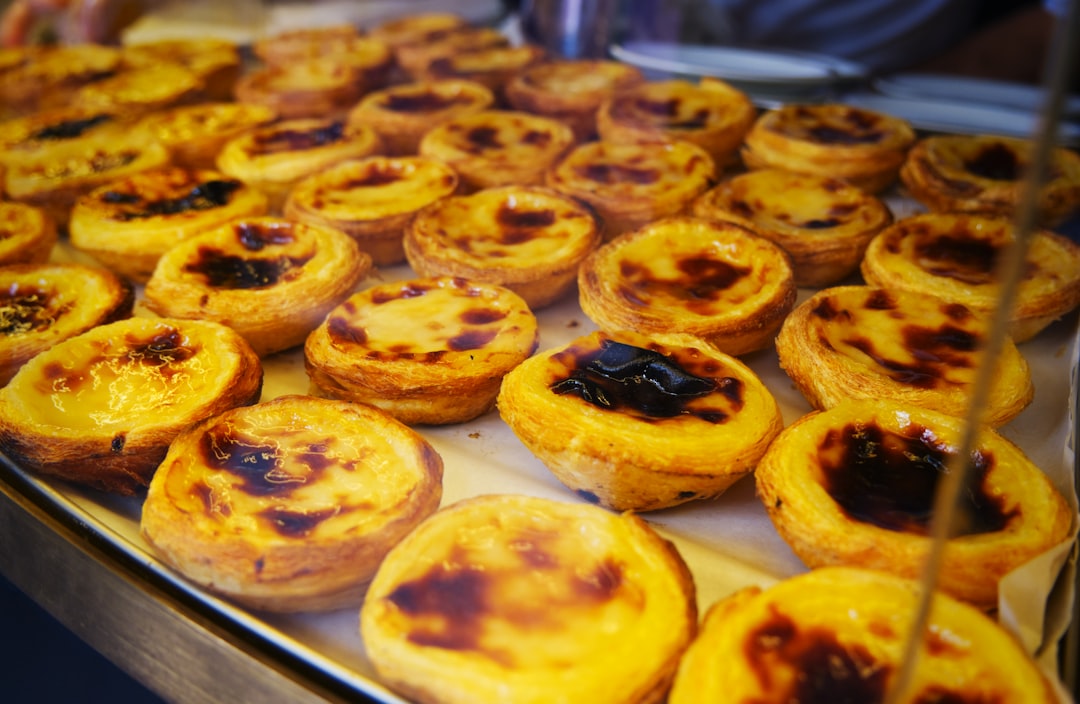
There’s a pastry in Portugal that has become something of a global phenomenon, yet the best versions you’ll ever eat are still consumed in the neighborhoods where they’re made, by people who’ve been eating them their entire lives. The pastéis de nata—a small, impossibly flaky pastry case filled with creamy custard and dusted with cinnamon and sugar—is more than just a dessert. It’s a cultural artifact, a point of pride, a ritual, and for many Portuguese people, the taste of home itself.
The story of the pastéis de nata is the story of Portugal itself: monks and secrets, tradition and commerce, a simple recipe that turns out to be nearly impossible to replicate properly, and a fierce protective pride about how things should be done. If you want to truly understand how Portuguese people think about quality, tradition, and the relationship between simplicity and perfection, you need to understand the pastéis de nata.
The Monastery Origins: A Monks’ Secret
The true origin of pastéis de nata is lost to history, but the most widely accepted story traces these pastries back to the monks of the Jerónimos Monastery in Belém, just outside Lisbon. Though there are competing claims from other Portuguese convents, the Jerónimos version is the one that stuck.
According to the story, the monks created these pastries as a way to use egg yolks. Portuguese convents in the medieval and Renaissance periods used large quantities of egg whites for starching laundry and other monastery tasks, which meant they had mountains of leftover yolks. Rather than waste them, the monks combined the yolks with sugar, milk, and flour, wrapped the mixture in pastry, and baked it. These humble ingredients created something transcendent.
For centuries, the recipe remained confined to the monastery, a closely guarded secret that made the Jerónimos pastries locally famous. Pilgrims would visit the monastery and return home with stories of these remarkable pastries. They became a sought-after treat, a delicacy associated with one of Portugal’s most significant architectural and cultural monuments.
The recipe remained secret until the 1970s, when Portugal’s industrial revolution began transforming the country and the monks could no longer sustain themselves purely on agricultural income. The decision was made to commercialize the pastries, and in 1974, the recipe was licensed to a commercial bakery in Belém: Pastéis de Belém (originally called Fábrica de Pastéis de Belém). The rest became history.
Pastéis de Belém: The One True Source
Today, the Pastéis de Belém bakery is something of a pilgrimage site for pastry lovers. Located just a few blocks from the Jerónimos Monastery, in a building that was actually part of the former monastery grounds, it has been producing these pastries continuously since 1837—and officially using the monks’ recipe since 1974.
Here’s the thing about Pastéis de Belém: there’s always a line. Often a long line. But here’s the secret the locals know: the line moves fast, and it’s worth the wait. The bakery is extremely efficient, the staff is practiced, and there’s a rhythm to it. You’ll be holding a warm pastry in a small cardboard boat within fifteen minutes, usually.
The inside of the shop hasn’t changed much since the 1950s. There’s a counter where you order, tiles on the walls, a café area where you can sit down if you want, though most people take their pastries to go or find a spot on the nearby waterfront to enjoy them immediately. The whole experience is utilitarian and charming in equal measure.
The pastries you get from Pastéis de Belém are small—about the size of a large golf ball—with a dark, caramelized exterior, a delicate pastry shell that crackles when you bite it, and an interior of smooth, creamy custard. The exact recipe is still a secret, though it’s thought to contain egg yolks, sugar, milk, corn starch, cinnamon, and possibly a touch of vanilla. The exact proportions and technique remain known only to the bakery’s employees.
What Makes a Good Nata vs. a Tourist Trap
Now, pastéis de nata have become widely available. You can buy them in supermarkets, in bakeries throughout Lisbon and Porto and every other Portuguese city, and increasingly in bakeries and restaurants worldwide. This has created a hierarchy of quality that’s immediately apparent to anyone who eats more than one.
The fundamental markers of a good pastéis de nata are three: the custard, the caramelization, and the pastry.
The Custard: Real pastéis de nata should have a custard that’s creamy and smooth, but with a slight wobble to it—not dense, not pudding-like. The custard should taste of egg and vanilla with subtle sweetness, not aggressively sugary. It should coat your mouth but not feel heavy. If it’s dense, stodgy, or tastes overly sweet, you’ve got an inferior version. Some tourist-trap versions substitute a simpler custard filling that’s either overly firm or oddly gelatinous. Avoid these.
The Caramelization: The exterior should have distinct brown spots and dark caramelized edges, looking almost burnt in places but tasting sweet and caramelized, not actually burnt. This caramelization process happens when the tart is baked at very high heat. It creates a complex flavor that differentiates authentic pastéis de nata from inferior versions, which often have pale, pale pastry that looks anemic and undercooked.
The Pastry: The pastry shell itself should be crispy and flaky—genuinely flaky, with layers you can see and feel. When you bite into it, it should crackle. If it’s dense, uniformly thick, or doesn’t shatter, it’s not right. The pastry should be so delicate that it’s almost hard to eat—you’ll have crumbs everywhere, which is exactly as it should be.
The difference between an excellent pastéis de nata and a mediocre one is immediately obvious on first bite. The excellent one is a complete sensory experience: the shattering pastry, the smooth creamy custard, the caramelized sweetness, the spice of cinnamon. The mediocre one tastes like you’re eating a commercial pastry that’s been slightly better than a donut, but not by much.
The Great Cinnamon and Sugar Debate
One of the most contentious topics in Portuguese pastry culture is the cinnamon and sugar topping, which is traditionally sprinkled liberally on the top of each pastéis de nata before serving.
There are two camps. One believes that the cinnamon and sugar is essential to the pastéis de nata experience—it provides texture contrast, adds warmth and spice to the sweetness of the custard, and creates a crunch with the pastry shell. The other camp believes that too much cinnamon and sugar masks the delicate flavors of the custard and the caramelization, and that a light dusting is preferable.
At Pastéis de Belém, they give you a moderate amount of cinnamon and sugar—enough to be noticeable, but not enough to overwhelm. This is generally considered the “correct” way. That said, you’ll see considerable variation throughout Portugal. Some bakeries go heavy, some light, some almost none at all.
The honest truth is that the cinnamon and sugar is entirely a matter of personal preference. If you want more, ask. If you want less, ask. The beauty of buying your pastéis de nata at a proper bakery is that the baker can customize the topping to your taste.
Other Portuguese Pastries You Shouldn’t Miss
While the pastéis de nata are the superstars, there’s an entire universe of Portuguese pastries worth exploring, each one with its own character and devoted following.
Travesseiros (literally “pillows”) are large, rectangular pastries filled with custard and almond cream, topped with sliced almonds and powdered sugar. They’re crispier and denser than pastéis de nata, with a more pronounced almond flavor. They’re absolutely delicious, though they’re less well-known internationally.
Pastéis de Tentúgal are another custard-based pastry, but this one features ultra-thin layers of crispy pastry (usually made with a specific type of phyllo-like pastry from the town of Tentúgal) wrapped around sweet custard. They’re more delicate than pastéis de nata and have a different texture—all crispness and thinness rather than the substantial flakiness of the nata.
Bola de Berlim is Portugal’s take on the cream-filled donut. It’s a ball of fried dough filled with custard and topped with chocolate and coconut. It’s an everyday pastry in Portuguese bakeries, less fancy than the nata but deeply comforting and delicious.
Milfolhas (literally “thousand leaves”) are pastry layers with cream in between—Portugal’s version of the classic French mille-feuille. The best ones have genuinely flaky, crispy pastry and a creamy filling that’s not overly sweet.
Pastéis de Noz are pastries filled with walnuts and honey, often with a spiced filling. They’re less sweet than the custard-based pastries and perfect if you want something with a bit more complexity.
Regional Pastry Specialties
Like any country with serious food traditions, Portugal has regional pastry specialties. If you’re traveling beyond Lisbon and Porto, keep an eye out for these.
The Alentejo region in southern Portugal is known for its honey-based pastries, including pastéis de mel (honey pastries) that are sweet and aromatic. The Algarve has seafaring traditions reflected in pastries with nautical names and shapes. The Douro Valley, famous for wine, also produces pastries that incorporate local ingredients like almonds and port wine.
Northern Portugal, particularly around Porto, has its own distinct pastry culture. Pão de Ló is a sponge cake that’s quite popular, and Bolo de Travesseiro (which is actually different from the Travesseiros mentioned above) is another regional specialty.
The best approach is to ask locals what the specialty pastry is in wherever you are. People are always delighted to recommend their local pride, and you’ll inevitably discover pastries that don’t have much presence outside their home region but are absolutely delicious.
The Global Expansion and the Fight to Maintain Standards
The pastéis de nata have gone global. Portuguese bakeries have opened in major cities worldwide. Commercial producers have started manufacturing them in industrial quantities for supermarkets globally. The pastry has become a kind of unofficial symbol of Portugal, a portable piece of Portuguese culture.
This global expansion has created a problem. Many pastéis de nata sold internationally are, frankly, not very good. They’re made with industrial efficiency rather than craft. The custard is wrong, the pastry is wrong, the whole experience is flattened into something that’s technically a pastéis de nata but misses the point entirely.
The monastery and Pastéis de Belém have become something of a quality standard. The recipe itself was registered with a Protected Designation of Origin (PDO) designation in 2007, which means that to be legally called “Pastéis de Belém,” the pastries must be made in Portugal using specific ingredients and methods. This doesn’t prevent inferior pastries from being called something else (like “Portuguese custard tarts”) but it does protect the name.
For travelers, this means that the safest bet for excellent pastéis de nata is still to eat them in Portugal, preferably at a respected local bakery that’s been making them for decades. The flavor difference between an excellent pastéis de nata eaten in Lisbon and a mediocre one bought at a supermarket in London is so stark that it’s worth planning part of your Portugal trip around seeking out the good ones.
Where and How to Eat Them
The traditional way to eat a pastéis de nata is standing up, preferably in a café, with a small black coffee (called a “bica” in Lisbon or a “cimbalino” in Porto). The warm, crispy pastry with the smooth custard, paired with the slight bitterness of the coffee, is one of the great flavor combinations of world cuisine.
You should also try them at different times of day. Fresh from the oven in the morning is magical. Afternoon pastéis de nata are still excellent. Evening ones, less so—they lose that magical crispness as they cool through the day, so morning is genuinely the best time.
If you’re visiting Pastéis de Belém, go early morning if you can. The line will still be there, but the pastries will be fresher. And then sit on the nearby waterfront with your pastry and coffee, looking at the Jerónimos Monastery, thinking about monks and secrets and the way something simple—flour, eggs, sugar—can be transformed into something absolutely unforgettable.
That’s the final lesson the pastéis de nata teaches you: excellence isn’t about complexity. It’s about doing a few simple things perfectly, caring deeply about quality, protecting tradition while allowing it to live and be shared. It’s about understanding that food is culture, that ritual matters, and that some things—like pastry shells so flaky they shatter at a touch—are worth standing in line for.




Leave a Reply