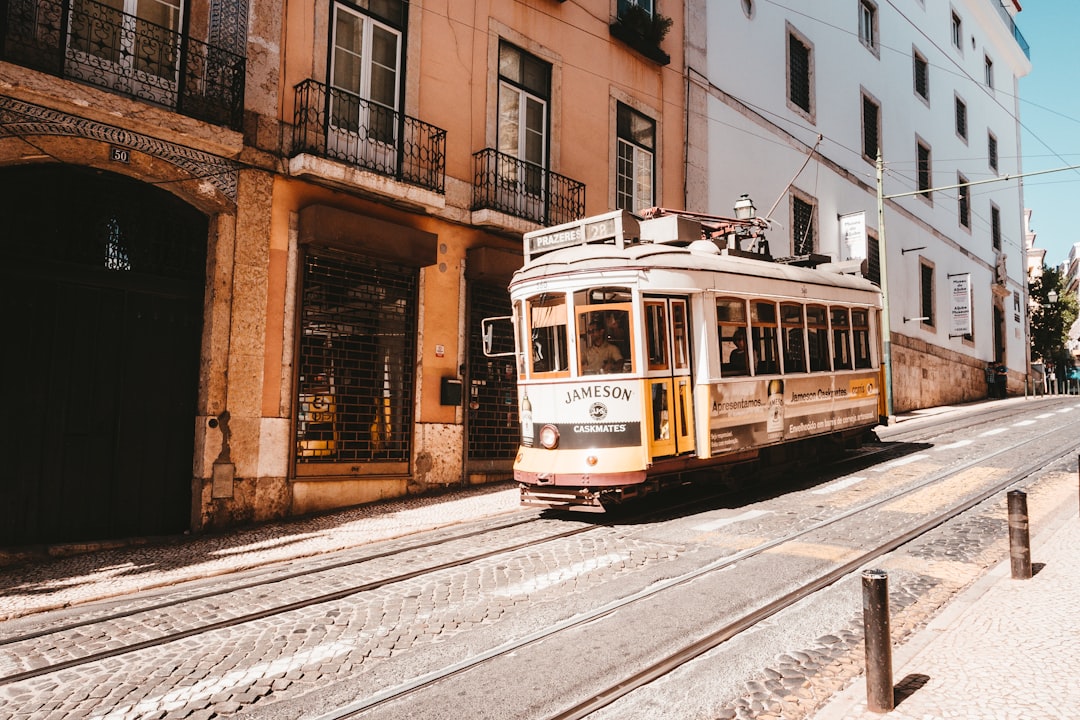
If you visit Portugal in June, you’ll encounter something that might seem chaotic at first—entire neighborhoods have taken over the streets. There are decorations everywhere: paper lanterns hanging between buildings, plastic pots of basil (manjerico) on every corner, hand-painted banners with messages of love, strings of lights, and tables set up in the middle of streets serving grilled sardines and cheap wine. There’s music, sometimes live, sometimes canned but turned up loud. There are plastic hammers being wielded, paper crowns being worn, and a general atmosphere of joy that feels almost anarchic in its energy.
This is Santos Populares—the Popular Saints festivals that take over Portuguese cities every June. It’s less organized than a planned event and more like a cultural tradition that’s so deeply embedded in Portuguese life that the entire country spontaneously celebrates it every year, in roughly the same way, using the same symbols and rituals, without anyone needing to send out invitations or instructions. It’s democracy in its most chaotic, joyful form: hundreds of thousands of people agreeing, without formal coordination, to transform their cities into celebrations of joy, community, and tradition.
The Three Saints and the Dates
The Santos Populares celebrates three Catholic saints, each with their own day in June: Santo António (Saint Anthony) on June 13, São João (Saint John) on June 24, and São Pedro (Saint Peter) on June 29. Of these, Santo António is most important in Lisbon, while São João dominates in Porto.
The Catholic church gave these three saints to the people of the Iberian Peninsula centuries ago, and the people took them and transformed them into something distinctly their own. The religious element is there—you’ll see processions and religious services—but the festivals themselves have become something much broader: celebrations of summer, community, romantic love, playful friendship, the transition from spring to the heat of summer, and the joy of being alive.
The festivals used to last the entire month of June, the period known as Santo António month. While the official celebrations are most intense around the specific dates, the spirit of the festivals spills before and after, particularly in Lisbon, where the entire month of June takes on a different character.
Santo António in Lisbon: June 13
Santo António is Lisbon’s saint, and the city celebrates him with particular fervor. The neighborhood of Alfama, the oldest part of the city, essentially shuts down to traffic and becomes a giant street party. But it’s not just Alfama—throughout Lisbon, neighborhoods organize their own celebrations. Every bairro (neighborhood) has its own Santo António festivities, its own decorations, its own processions and parties.
The celebrations in Alfama are the most famous, and deservedly so. The narrow medieval streets are decorated with paper lanterns and garlands. Long tables are set up in the streets with local volunteers serving grilled sardines (a staple of the celebration), corn bread, wine, beer, and simple appetizers. There’s live music—traditional fado singers often perform, but also modern musicians playing contemporary songs. There are impromptu dancing and singing in the streets.
The religious element includes a procession of the saint’s image through the neighborhood, church services, and a general sense of spiritual celebration. But what most people focus on is the community celebration: the food, the music, the chance to dance and sing with neighbors and strangers alike.
One of the most charming traditions is the manjerico (basil pot) with love poems. Young people give small pots of basil to their crushes, with romantic poems attached. The basil is meant to be a symbol of love (inspired by Shakespeare’s “Othello,” where basil is mentioned as a love symbol, though the tradition predates the play in Portugal). You’ll see these little pots everywhere during June—hanging from balconies, placed on windowsills, decorating neighborhood gathering spots.
São João in Porto: June 24
If Santo António belongs to Lisbon, São João belongs to Porto. The celebrations in Porto are equally enthusiastic, with a particular tradition that’s completely unique: the São João hammer tradition.
In Porto, during São João celebrations, people run around bonking others on the head with plastic hammers, hitting them with plastic fish, or striking them with leeks. Yes, leeks. It sounds chaotic and strange, but it’s actually a beloved tradition that speaks to something deep in Portuguese culture—the permission to engage in playful, physical interaction with strangers, to have fun at someone else’s expense in a way that’s completely good-natured and devoid of malice.
The hammers started as wooden mallets and have evolved into plastic versions that can’t actually cause harm. The tradition supposedly originated in a historical event (there are competing stories), but the exact origin doesn’t matter. What matters is that it’s become a way for Porto residents to engage with each other—a playful street greeting where you hit someone with a hammer and they laugh.
Beyond the hammer tradition, São João in Porto shares many of the same elements as Santo António in Lisbon: grilled sardines, wine, decorations, music, and street parties that transform the city into a celebration of community and joy.
São Pedro: June 29
São Pedro is celebrated throughout Portugal but is less prominent than his fellow saints. However, in some neighborhoods and smaller towns, particularly in coastal areas, São Pedro celebrations are quite significant.
The traditions are similar to the other two celebrations: street parties, food, music, and a sense of community. In coastal towns, São Pedro celebrations sometimes have a maritime element, reflecting his status as a fisherman’s saint.
The Grilled Sardine Tradition
Of all the elements of Santos Populares, the one you’ll encounter most immediately is the grilled sardine. The smell is unmistakable—charcoal-grilled fish with a slightly smoky, salty aroma that fills entire neighborhoods.
Sardines are cheap, widely available, and symbolic of Portuguese working-class food culture. They’re traditionally eaten with corn bread, boiled potatoes, and simple salads. During Santos Populares, volunteer groups cook massive quantities of sardines over charcoal grills in the streets and serve them for a few euros per serving.
The funny thing about grilled sardines is that they look intimidating if you’ve never eaten one (they have eyes, they’re whole), but they’re actually perfectly easy to eat once you understand the technique. You hold them by the head or tail, and the meat strips away cleanly from the spine. They’re best eaten with your fingers, standing up at a street table, with wine or beer. There’s something about eating like this—not fancy, not neat, just standing in a street with strangers, eating good food with your hands—that feels deeply Portuguese.
By the time you’ve eaten several sardines and drunk some wine, you feel like part of the community in a way that no tour or organized activity could create.
The Manjerico Tradition
The basil pots (manjerico) are found everywhere during June, and they’re worth understanding. These are small clay or ceramic pots of basil decorated with paper flowers, ribbons, and most importantly, hand-written love poems or romantic messages.
The tradition is that you give a manjerico to someone you’re interested in romantically. The poem written on it is your declaration of feelings—sometimes genuine declarations of love, sometimes humorous, sometimes gently suggestive. The basil itself is meant to smell sweet, to grow at home, and to serve as a reminder of the person who gave it to you.
If you receive a manjerico, it’s considered good luck. Even if you don’t receive one, seeing them everywhere—on balconies, in windows, on neighborhood walls—reminds you that love is celebrated openly during this time, that romantic feeling is something to express rather than hide.
There’s something beautiful about a culture that has a specific tradition, a specific time of year, dedicated to openly expressing romantic interest. It creates a social framework where saying “I like you” becomes not dramatic but traditional, expected, normal.
The Arraiais: Neighborhood Street Parties
An “arraial” is a neighborhood street party or street fair. During Santos Populares, neighborhoods throughout Lisbon and Porto organize their own arraiais. These are usually run by neighborhood associations or local volunteers, with the goal of bringing neighbors together.
Arraiais typically feature grilled sardines and other food, drinks, music (often a DJ or live band), dancing, decorations, and a general carnival atmosphere. They range from small, intimate neighborhood gatherings (with maybe 50-100 people) to larger organized events that draw thousands.
The beauty of the arraiais is that they’re deeply local. You can experience Santos Populares in a small neighborhood in the suburbs just as legitimately as in famous Alfama. The scale might be smaller, the crowd less touristy, and the experience more genuinely Portuguese—these are your neighbors, not necessarily people performing for tourists.
If you want the most authentic experience of Santos Populares, skip the famous tourist-focused celebrations and instead ask your hotel or locals where the neighborhood arraiais are happening. Show up as the sun sets, try the food, watch people dance, experience the genuine community celebration.
Marchas Populares: The Processions and Parades
The Marchas Populares are the most visually spectacular element of Santos Populares. These are large processions of people in costume, often organized by neighborhood or cultural groups, that parade through the streets with music, choreography, and elaborate floats.
The marches are colorful, loud, joyful, and absolutely packed with people. Each march has its own theme, its own costume design, its own music. Some are traditional, some are contemporary. Some are serious, some are humorous. Some tell stories through their parade format, others are simply celebrations of color and sound.
The Lisbon Marches typically happen the night of June 12 (the eve of Santo António), with thousands of people parading from Baixa (downtown Lisbon) through the streets, with crowds lining the sidewalks to watch. It’s not as organized or choreographed as a big carnival—there’s a spontaneity and participatory element that means people watching from the sidewalk might suddenly decide to join in. If you’re there, you might end up joining a march without meaning to. This is considered completely normal and acceptable.
The Porto Marches happen around São João and are similarly spectacular.
If you’re in Lisbon or Porto during Santos Populares and there’s a March happening, it’s worth going, even if you don’t think parades are your thing. The energy is infectious, and being surrounded by thousands of people celebrating joy in their city is genuinely moving.
The Practical Experience of Santos Populares
If you’re planning to be in Portugal in June, Santos Populares is genuinely worth timing your trip around. Here’s what to know about experiencing it:
Accommodation fills up quickly. June is peak season in any case, but Santos Populares makes it even more crowded. Book early if you want to stay in Lisbon or Porto during the festivals.
The celebrations are evening-focused. While some things happen during the day, the real action happens after dark, typically from around 6 PM until midnight or later. Come prepared to stay out late.
Neighborhood celebrations are better than tourist ones. The famous Alfama celebrations are worth seeing, but they’re also very crowded and can feel touristy. Your best bet is to find a local arraial in a neighborhood where actual Lisboetas are celebrating with their neighbors.
Dress casually. You’ll be standing in the street, potentially eating with your hands, dancing, possibly getting bumped into by hammers. Casual, comfortable clothes are appropriate.
Bring cash. While some places take cards, many of the street stalls serving food and drinks operate on cash only.
The smell of grilled sardines is everywhere. This is not a complaint—it’s wonderful. But if you’re vegetarian or have fish aversions, be prepared for the pervasiveness of sardine-related odors.
People are friendly. The spirit of Santos Populares is genuinely joyful and community-oriented. Strangers will talk to you, invite you to join them, share food and drink. This is how the festivals work.
Why Santos Populares Matters
On one level, Santos Populares is just a party—a chance to eat, drink, dance, and have fun. But it’s also something deeper: a cultural moment where Portuguese society collectively agrees that joy, community, tradition, and spontaneity matter more than the usual productivity and efficiency that govern daily life.
In an increasingly globalized, standardized world, Santos Populares represents Portugal’s commitment to its own traditions, its own calendar, its own way of celebrating. It’s a reminder that there are other ways to organize society, other ways to create meaning and community.
For travelers, Santos Populares offers a chance to see Portugal not as a museum of history but as a living, breathing culture where traditions are actively created and recreated every year by ordinary people who care deeply about community and celebration.
Visit Portugal in June, stay for Santos Populares, and you’ll understand the country in a way that no guidebook could teach you. You’ll eat sardines with strangers, hear live fado music in the street, see neighborhoods transformed into celebrations, and remember why traditions matter. By the time you leave, you’ll be planning when you’ll come back to celebrate again.




Leave a Reply