If you want to understand Portuguese culture, don’t go to a museum. Go to a café. Sit down. Order a coffee. Spend a few hours doing absolutely nothing in particular, and you’ll learn more about how Portugal actually works than you would from any guide or travel book.
The café (pastelaria in Portuguese) isn’t just where you get coffee in Portugal. It’s the living room of Portuguese society. It’s where business deals are made, where friends meet, where people go to think, where time stops being a resource to optimize and becomes something to experience. It’s where loneliness is interrupted by the simple presence of other people. It’s where the rhythm of Portuguese life is literally played out, hour by hour, day by day, year by year.
The café is so central to Portuguese culture that understanding café culture is essentially understanding Portugal itself. How Portuguese people drink coffee, how long they stay, what they order, who goes where, how much they’re willing to pay—all of this reveals something profound about Portuguese values, relationships, and ways of being in the world.
The Neighborhood Pastelaria as Social Hub
In any Portuguese neighborhood, no matter how small, there’s a pastelaria. It’s not a fancy café—it’s usually modest, with a counter where you order, a few small tables (sometimes just inside, sometimes with seating on the sidewalk), and a sense of being perpetually busy even when it’s not visibly crowded.
The pastelaria is the pulse of the neighborhood. It’s where neighbors see each other every morning. It’s where the same people sit in the same seats in the same order every day, such that the seats begin to feel like they belong to specific people. If someone’s regular seat is taken by a stranger, the regular will sometimes stand and wait rather than sit elsewhere—the social order is that important.
The pastelaria is not just a place to get food and drink. It’s a place where informal social rules are communicated and enforced. It’s where reputation is built or damaged. It’s where gossip circulates. It’s where, if you come regularly and you’re friendly and you respect the unwritten codes, you become part of the community.
For travelers, the neighborhood pastelaria is infinitely better than any tourist café. It’s cheaper, the quality is often better, and you’ll actually experience Portuguese life rather than performing tourism.
Coffee Vocabulary: Bica, Cimbalino, Galão, Meia de Leite
One of the most delightful aspects of Portuguese café culture is the vocabulary that’s developed around coffee. The names vary by region, which is part of the charm. Understanding these variations is your entry point to understanding Portuguese café culture.
In Lisbon, a small espresso is called a “bica” (roughly the size of a standard espresso). This is the default coffee—what you get if you just order “um café.” It’s strong, dark, served hot, meant to be consumed quickly in one or two sips, often while standing at the counter.
In Porto, the same drink is called a “cimbalino.” The word comes from the name of a famous espresso machine (Cimbali), and the term stuck. A cimbalino is essentially the same as a bica—a small, strong espresso—but in Porto, you ask for it by a different name.
A “galão” is a large coffee with a lot of milk (the word means “gallon,” hinting at the proportion). It’s more similar to what you’d get if you ordered a “café com leite” (coffee with milk) in France or Spain. A galão is meant to be lingered over, not gulped. It’s bigger, warmer, more milk than coffee, comfort in a cup.
A “meia de leite” (literally “half milk”) is a medium coffee with milk, bigger than a bica but smaller than a galão. It’s somewhere between the strong intensity of a bica and the milky comfort of a galão. It’s a compromise drink, perfect if you want coffee flavor but also want it to last more than thirty seconds.
The regional variations in coffee terminology are charming and important. They represent the way that even within a small country, different regions develop their own cultures, their own vocabularies, their own ways of doing things. A bica is not a cimbalino, even though they’re essentially the same drink. The name marks where you are, signals your understanding of local culture, shows respect for regional identity.
When you’re in Lisbon, order a bica. When you’re in Porto, order a cimbalino. Locals notice these things, and ordering the correct regional term is a small sign that you’re trying to understand and respect the local culture.
The Pastelaria Tradition: Coffee Plus Pastry
The fundamental unit of café culture in Portugal is not just coffee—it’s coffee plus pastry. You don’t go to a café just to drink coffee. You go to drink coffee and eat a pastry.
This pairing is so culturally embedded that it’s almost unthinkable to do one without the other. If you order a coffee without ordering a pastry, you might get a raised eyebrow. You’re doing café culture wrong.
The pastries available in a typical pastelaria range from the famous pastéis de nata to croissants, donuts, small cakes, and savory pastries like cheese and ham pastries. They’re cheap—typically €0.80 to €2 per pastry—and good. Often quite good, especially if the pastelaria does its own baking, which many do.
The ritual is: arrive at the pastelaria, greet the people behind the counter, decide what coffee you want (and at what size), scan the pastry selection (which is usually displayed in cases), point at what you want, pay your €2-€4 for coffee and pastry combined, find a spot to sit (or stand at the counter), and spend anywhere from five minutes (if you’re in a hurry) to an hour (if you’re not) enjoying your coffee and pastry.
There’s something profound about this ritual. It removes decision-making about what to eat—the café decides what’s available, you pick what appeals to you. It puts a cap on how much you spend. It creates structure and predictability in your day. It’s democratic in the sense that the rich and the poor eat the same pastries at the same café.
For travelers, embracing the coffee-and-pastry tradition is a way of living like a local. Do it every morning of your trip. Find a neighborhood café, establish a small routine, become a regular for a few days. By the end, you’ll feel less like a tourist and more like someone who actually lives in Portugal.
Why Café Culture Survived the Chains
Europe has been invaded by coffee chains—Starbucks, Costa, Caffè Nero, and numerous local chains have colonized city centers everywhere. Yet in Portugal, the neighborhood pastelaria has survived more robustly than in almost any other European country. Why?
The answer is partly economic. Chain cafés are more expensive, more standardized, less socially connected. Portuguese people saw what they offered and largely decided it wasn’t better than what they already had. Why pay more for a worse experience?
But it’s also partly cultural. The pastelaria is not primarily a commercial space—it’s a social space that happens to serve coffee. You can sit in a pastelaria for an hour, nursing a €1.50 bica, and nobody will bother you or ask you to leave. The café owner benefits from your presence (you create atmosphere, you might buy a pastry, you might order another coffee), and you benefit from having a place to sit and think.
In chain cafés, there’s an implicit transactional relationship. You buy your overpriced drink, you consume it, you leave. You’re a customer, not a community member. In a pastelaria, you’re part of the neighborhood ecosystem, and this is valued.
For travelers, this means you can actually use cafés as social spaces without feeling guilty or rushed. Sit. Read. Write in your journal. Watch people. Nobody’s trying to get you to leave. This is what the space is for.
The Esplanada Way of Life
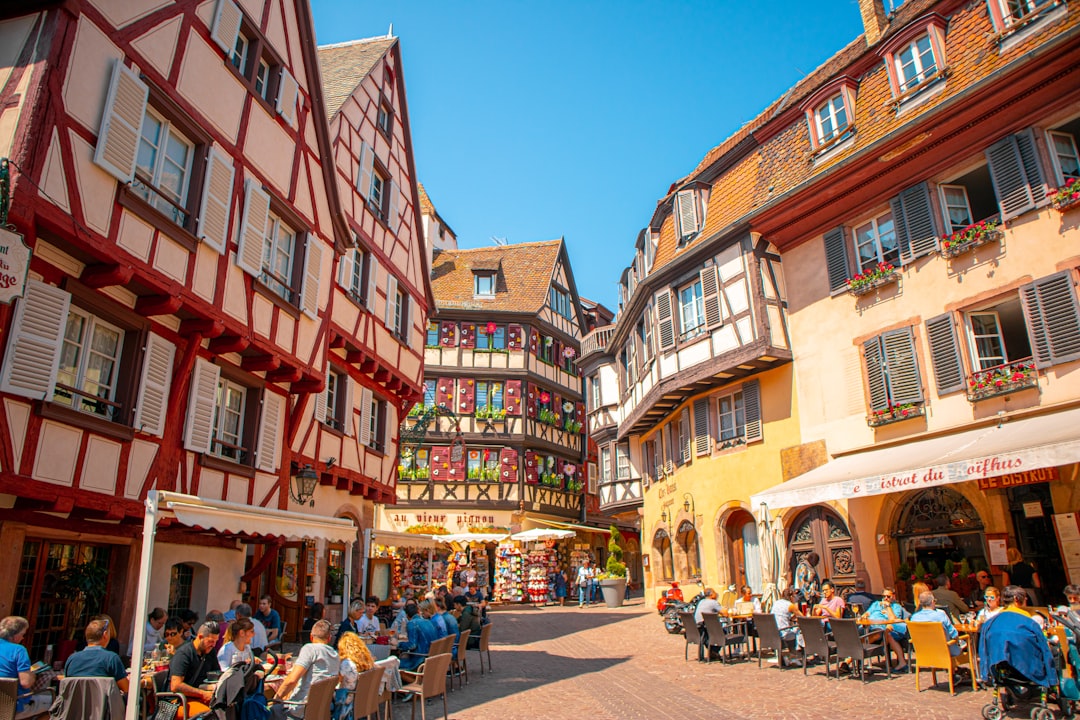
An “esplanada” is a terrace or sidewalk café—tables and chairs arranged outside on the pavement, usually with umbrellas for sun protection. The esplanada is where you see Portuguese café culture in its most visible, most social form.
People sit at esplanadas for hours, often nursing a single drink. They read, they watch people, they chat with companions, they see and are seen by their neighbors. An esplanada is a stage, and sitting at an esplanada is a form of public existence—you’re part of the visual fabric of the neighborhood, you’re participating in the street life.
Esplanadas are particularly prevalent in Lisbon’s Baixa district, in major plazas, and along riverfront areas. They’re often more expensive than interior café seating (you pay for the location and the ambiance), but they’re worth the premium for the experience.
Watching an esplanada in the late afternoon, as the light gets golden and people are finishing work, settling in for an evening drink, talking with friends—this is one of the most quintessentially Portuguese sights in the country. If you’ve got time, sit at an esplanada for a couple of hours and just observe. You’ll learn more about how Portuguese people spend their time and relate to each other than you could from any tour guide.
The Old Men at the Café All Day
One of the most charming aspects of café culture is the presence of older men who seem to be at the café almost all day, every day. They’ll be there in the morning with their bica and pastry. They’ll be back at lunch for a bifana (pork sandwich) and a beer. They’ll return in the afternoon for another coffee. In the evening, perhaps one more drink.
This isn’t laziness or lack of productivity—or rather, it is, but it’s not a flaw. It’s a deliberate choice about how to spend time in a culture that values social connection and presence more than constant productivity.
These men are often retired, sometimes widowed or living alone. The café is their social life. They see the same people every day. They know the café staff. They’re part of the community. The café gives structure to their days and meaning to their existence.
For younger Portuguese people, the café serves some of the same function. You might pop in between appointments, or you might spend an afternoon working at a café table (increasingly common with remote work), or you might meet friends there.
The key insight is that in Portuguese culture, being in a café is not wasted time. It’s valid time, social time, time spent in community. The café is not simply a place to consume products; it’s a place to exist publicly, to be part of neighborhood life, to maintain social bonds.
As a traveler, give yourself permission to do the same. Spend an afternoon at a café without guilt. This is not laziness; this is cultural understanding.
Historic Cafés Worth Visiting
Portugal has some legendary historic cafés that have been around for over a century and are worth visiting for their atmosphere and history as much as for their coffee.
Café Brasileira in Chiado, Lisbon, opened in 1905 and is famous as a meeting place for Portuguese intellectuals. The poet Fernando Pessoa was famously a regular, and there’s a bronze statue of him outside the café (which tourists constantly photograph). Inside, the original art deco décor is preserved. The coffee is good, but you’re paying partly for the history and the atmosphere. It’s touristy, but it’s genuinely historic, and worth a visit.
Majestic Café in Porto, opened in 1921, is another historic beauty. The Belle Époque interior is stunning, with mirrors, intricate woodwork, and a sense of stepping back in time. It’s expensive (a coffee might cost €3-€4, which is significantly above neighborhood pastelaria prices), but it’s a cultural experience worth the cost.
Livraria Lello Café in Porto (in the famous bookstore) offers coffee in one of the world’s most beautiful bookstores.
Pastelaria Suíça in Lisbon’s Baixa is less famous than Brasileira but equally historic, with more reasonable prices and a less touristy feel.
Visiting a historic café is an experience distinct from the everyday neighborhood pastelaria, but it’s worth doing. You’re seeing Portuguese café culture at its most beautiful and historically layered.
Portuguese Café as Escape
Beyond all the cultural observations, the Portuguese café serves a fundamental human function: it’s a place to escape. You escape your small apartment (many Portuguese live in small spaces). You escape your work. You escape the demands of productivity and efficiency. You escape into a small zone of peace and human connection.
This might seem like a luxury to people from cultures that valorize constant productivity, but in Portuguese culture, it’s recognized as a necessity. Human beings need rest, need community, need to be in each other’s presence without needing to accomplish anything. The café is where this happens.
For travelers, particularly those from high-stress, high-productivity cultures, the Portuguese café offers something valuable: permission. Permission to slow down. Permission to sit still. Permission to spend time without an agenda. Permission to exist in public without consuming, without performing, without achieving.
Spend enough time in Portuguese cafés, and you might start to think about what you’re rushing toward in your home country. You might start to question whether the pace and productivity are really serving you. You might come home and try to recreate some version of this café lifestyle in your own life.
This, perhaps, is what Portugal’s café culture teaches most profoundly: that there are other ways to live, other rhythms to follow, other definitions of a good use of time. The café is not just a place to get coffee. It’s a statement about what a society values, about how people should relate to time and to each other.
So when you’re in Portugal, don’t rush through the cafés on the way to tourist attractions. Make the café itself an attraction. Sit. Order a bica and a pastéis de nata. Read something, or read nothing. Watch people. Let time move at a different pace. Notice how it feels.
By the time you leave Portugal, you might have discovered that the café is the real Portugal—not the historic monuments or the natural beauty, as wonderful as those are, but the simple human activity of sitting together, drinking coffee, being present to each other. That’s what café culture teaches, and it’s a lesson worth learning.




Leave a Reply