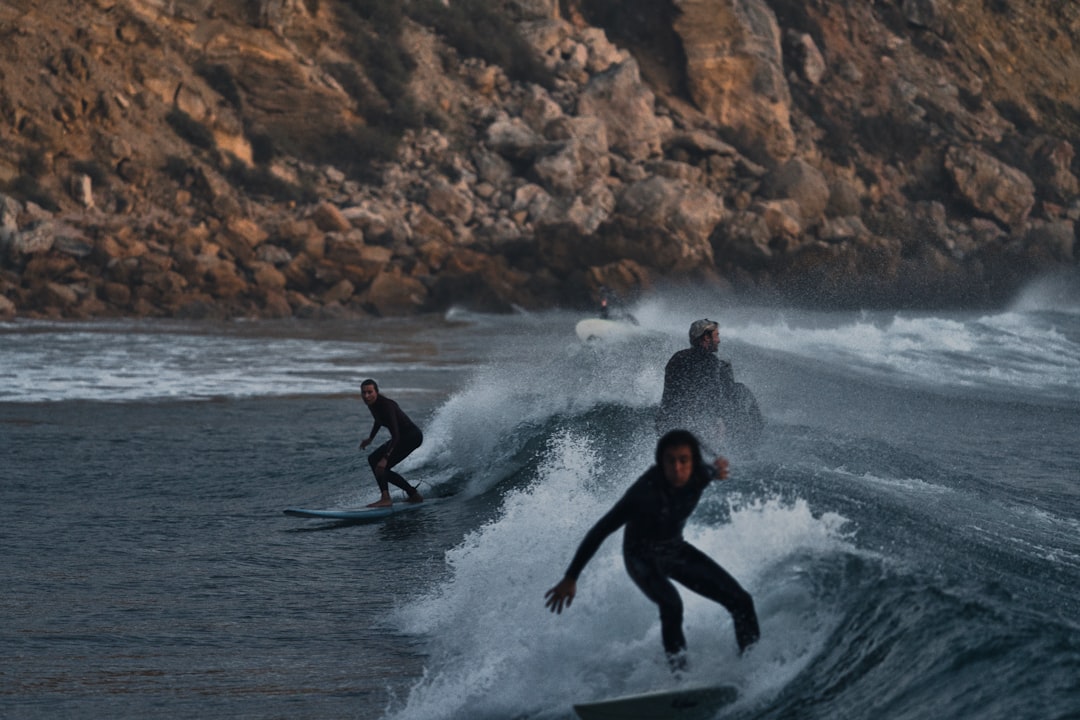
On the surface, it makes sense: Portugal has nearly 1,300 kilometers of Atlantic coastline, consistent swell, and a Mediterranean climate that keeps the water swimmable most of the year. But there’s something deeper that explains why Portugal has transformed from a nation of fishermen into Europe’s premier surf destination.
Portugal embraced surfing not despite its cultural identity as a maritime nation but because of it. The ocean is fundamental to Portuguese consciousness—it represents adventure, danger, freedom, and the unknown. That the Portuguese would take to surfing with fervent enthusiasm seems, in hindsight, inevitable.
Today, Portugal is recognized as one of the best surf destinations in the world. International competitions draw the world’s best surfers. Sleepy fishing villages have been transformed into thriving surf towns. Surf culture has become woven into Portuguese identity, particularly among younger generations. And for travelers, this transformation has created something remarkable: a country where you can experience world-class waves, authentic coastal communities, high-quality surf instruction, and an emerging surf culture that’s still rooted enough in Portuguese values that it hasn’t lost its soul to commercialism.
Nazaré: Where Legends Are Made
If there’s a single place that defines modern Portuguese surfing, it’s Nazaré, a small town north of Lisbon that has become the epicenter of big wave surfing in the world.
For most of history, Nazaré was just another small Portuguese coastal town. But in the 1990s, surfers discovered something remarkable: underwater canyons and ridges off the coast of Nazaré create unusual wave dynamics that result in waves sometimes exceeding 20 meters (65 feet). These are not waves you swim in. These are waves you ride with jet skis, towing surfers in, because paddling would be impossible. These are waves where one mistake is potentially fatal.
The most famous moment in Nazaré’s surfing history came in 2011, when American surfer Garrett McNamara rode what was then the largest wave ever surfed—a wave officially measured at over 23 meters (78 feet). The photograph of McNamara on that wave, looking impossibly small against a mountain of water, became iconic. It put Nazaré on the world map and made big wave surfing mainstream.
Today, Nazaré hosts the Big Wave Challenge, an international competition where the world’s best big wave surfers come to attempt rides that would be unthinkable almost anywhere else. The town itself has been transformed: there are surf hotels, restaurants catering to surfers, equipment shops, and a genuine surf culture that’s visible everywhere.
For most travelers, actually surfing at Nazaré is not feasible—you need to be an expert tow-in surfer with access to jet skis and support crews. But you can visit the town, watch the waves (from far away and behind barriers), visit the Nazaré Promenade (an excellent viewpoint), and soak in the surf culture. There’s a museum dedicated to Garrett McNamara and big wave surfing. There are restaurants where surfers and wave-watchers gather. There’s something genuinely exciting about being in a place where human beings are attempting to do something so extraordinary.
Ericeira: A World Surfing Reserve
While Nazaré is about extreme big wave surfing, Ericeira, a beach town about 30 kilometers north of Lisbon, represents something different: accessible, diverse, quality waves in a place with a genuine surf community.
In 2011, the same year McNamara rode that record wave at Nazaré, Ericeira was designated as Europe’s first World Surfing Reserve by the Association of Surfing Professionals. This designation recognizes that Ericeira has consistently good waves, environmental quality, and a committed local surf community.
What makes Ericeira special is that it’s not dominated by either beginners or experts. It’s a place where surfers of all levels can find appropriate waves. Some breaks are perfect for learning, others are for intermediate surfers, others appeal to advanced surfers. The variety of breaks around Ericeira means that even if the swell is coming from a particular direction, you can usually find somewhere with good waves.
Beyond the waves, Ericeira is a charming Portuguese beach town. The fishing village center is still active—you’ll see fishermen and fish being sold from small shops. There are excellent seafood restaurants. There’s a genuine community of people who live there and aren’t primarily focused on tourism.
Staying in Ericeira, you can take surf lessons, rent boards, spend mornings surfing, afternoons eating seafood and drinking coffee at local cafés, and evenings watching the sunset over the Atlantic. You’ll meet surfers from all over the world, but you’ll also encounter actual Portuguese life in a way that heavily touristed locations don’t offer.
Peniche and Supertubos: The Tube Ride
On the central Portuguese coast, about 90 kilometers north of Lisbon, is Peniche, a fishing town that’s become a major surf hub. Peniche has several nearby breaks, but it’s most famous for Supertubos, a beach break that produces perfect barrel waves.
A barrel wave (or tube) is what every surfer dreams of: a wave that’s hollow enough that the surfer can ride inside it, surrounded by falling water. Supertubos produces these conditions consistently, and it’s the reason surfers travel to Peniche from around the world.
Like Ericeira, Peniche has the dual character of being both a functional fishing community and a growing surf destination. You can buy the morning’s catch fresh from the harbor, then head out to catch afternoon waves. The prices are lower than heavily developed beach towns, and the food is excellent and authentic.
The Algarve’s Beginner Waves
If you’re a beginner surfer or just interested in learning, the Algarve in southern Portugal has several excellent spots with gentle, consistent waves perfect for beginners.
Beaches like Praia da Rocha, Lagos, and various breaks around the Algarve coast have calm, warm water, good instruction, and a relaxed beach vibe. The Algarve is also where you’ll find most of Portugal’s surf schools and camps. Several of these are legitimate and well-run, offering instruction ranging from absolute beginner lessons to intermediate coaching.
The Algarve is also warmer and more developed than the central coast, which can be good if you want more amenities, or less appealing if you want to avoid the typical beach resort atmosphere. The water is also warmer in the Algarve than in Ericeira or Peniche, making the experience more comfortable for beginning surfers.
How Surfing Transformed Coastal Towns
Travel to a Portuguese coastal town that surfing has touched, and you see clear evidence of economic and cultural transformation.
Towns like Ericeira and Peniche, which were primarily fishing communities with declining populations, have been revitalized by surf tourism. Young people who would have left for Lisbon or other cities are staying because there’s an economy built around surfing. Hotels and restaurants have opened. The town centers, which had felt slightly depressed, have gotten new investment and new energy.
But the interesting thing is that the transformation hasn’t completely erased the original culture. You still see fishing happening. The harbor is still an active, functional space. The market where locals buy fish is still there. It’s not been completely replaced by a theme-park version of itself. There’s been actual synthesis—fishing culture and surf culture coexisting, learning from each other.
This is particularly true in Ericeira, which has been more careful than some places about managing its growth. You can eat breakfast with real fishermen, then surf some of the world’s best waves, then watch the sun set from a traditional Portuguese café. The two cultures are still distinct, but they share the same space.
Surf Culture and Portuguese Values
What’s interesting about how Portugal has embraced surfing is that it’s not entirely foreign to Portuguese cultural values. There’s something about the freedom, the relationship with the ocean, the physical risk, and the embrace of natural beauty that aligns with how Portugal understands itself.
The surfers in Portugal are drawn to the sport for reasons similar to why the Portuguese embraced maritime exploration centuries ago: the call of the ocean, the desire to push limits, the understanding that nature is both beautiful and dangerous. The language of surfing—the emphasis on reading conditions, on respect for the power of the sea, on acknowledging human smallness against nature’s vastness—echoes in Portuguese literature and culture.
There’s also something aligned about surfing and saudade (that deep Portuguese longing we discussed earlier). Surfers themselves describe a kind of ache—a drive to find the perfect wave, to experience that moment of flowing with power beyond yourself, knowing it will pass. It’s not exactly saudade, but it’s not unrelated either.
The Atmosphere of Surf Towns
If you visit a surf town in Portugal, you’ll notice a particular atmosphere. It’s related to beach towns everywhere, but there’s something specific about a place where surfing is the primary activity:
There’s excitement—people are focused on conditions, on waves, on the possibility of perfect days. There’s also camaraderie—surfers from different countries, different backgrounds, are united by their shared passion. There’s a meritocratic element where what matters is your skill in the water, not your background or wealth.
But there’s also a certain earnestness and lack of cynicism that’s refreshing. People care about something—improving their surfing, finding good waves, maintaining community—and they don’t apologize for that caring.
For travelers, spending time in a surf town, even if you don’t surf, exposes you to this atmosphere. You might not understand the intricacies of wave dynamics or the techniques of different surfing styles, but you can appreciate the genuine passion and the way it’s transformed these places.
Practical Surfing in Portugal
If you’re interested in actually surfing while in Portugal, here are the practical details:
Boards and Equipment: You can rent surfboards at shops in any major beach town. Quality varies, but most rental shops have functional boards. If you’re serious about surfing, bring your own board or buy a cheap one locally and leave it there (several Portuguese beaches are developing used board markets).
Lessons: Legitimate surf schools are available throughout Portugal, particularly in Ericeira, Peniche, and the Algarve. A two-hour lesson costs roughly €50-€70 and will teach you enough to get in the water safely. Multi-day camps are also available if you want more intensive instruction.
Water Temperature: In summer, the Atlantic along the Portuguese coast is warm enough to wear just boardshorts. In winter, it gets cold (around 10-12°C), requiring a 4/3 millimeter or thicker wetsuit. In between seasons, a 3/2 millimeter wetsuit usually works.
Conditions: The best swell typically comes in autumn and winter when Atlantic storms generate consistent waves. Summer can be smaller and less reliable, though the warmer water and less crowded beaches offset this for beginners.
Crowds: Popular breaks do get crowded, particularly at peak swell times and in summer. Less famous breaks nearby often have better conditions and fewer people.
Visiting Without Surfing
You don’t need to surf to appreciate Portuguese surf culture. Visiting a surf town, watching surfers in action, experiencing the seaside atmosphere, and eating excellent fresh fish at restaurants overlooking the beach is a complete experience.
Watch the sunrise over the Atlantic. See the ocean in various moods—calm, powerful, dangerous, glassy-smooth. Talk to surfers about why they come to Portugal. Sit in a café and soak up the atmosphere. Buy fresh fish from a fisherman. Walk through towns where two cultures (traditional fishing and contemporary surfing) coexist.
Understanding how a nation can embrace something new (surfing) while maintaining its cultural identity (fishing, maritime heritage) is a valuable insight into how culture actually works. Portugal isn’t a museum where things are preserved unchanged. It’s a living culture that grows and adapts while keeping its roots.
The Broader Significance
What’s happened in Portugal’s coastal towns is a kind of successful cultural adaptation. Tourism has come, but it hasn’t destroyed the places it’s touched. Surfing has been adopted, but it hasn’t erased the fishing heritage. Young people have opportunities without having to leave their hometowns.
This is not universal. Many places that become surf destinations become ruined by commercialism and lose their character. The fact that Portugal has largely managed to avoid this (though the risk isn’t gone) says something about Portuguese culture and values.
It also makes Portugal an excellent place to experience surfing culture without the downsides of typical resort beach towns. You get world-class waves, excellent instruction, affordable prices, great food, and actual Portuguese culture, not a tourism simulation.
If you have any interest in surfing—or even if you don’t—spending time at a Portuguese beach town during good swell season is worthwhile. You’ll experience the Atlantic in its power, see humans using skill and courage to engage with it, enjoy the food and hospitality of Portuguese coastal communities, and understand how a nation can hold both fishing heritage and surfing modernity in the same place, the same time, the same identity.




Leave a Reply