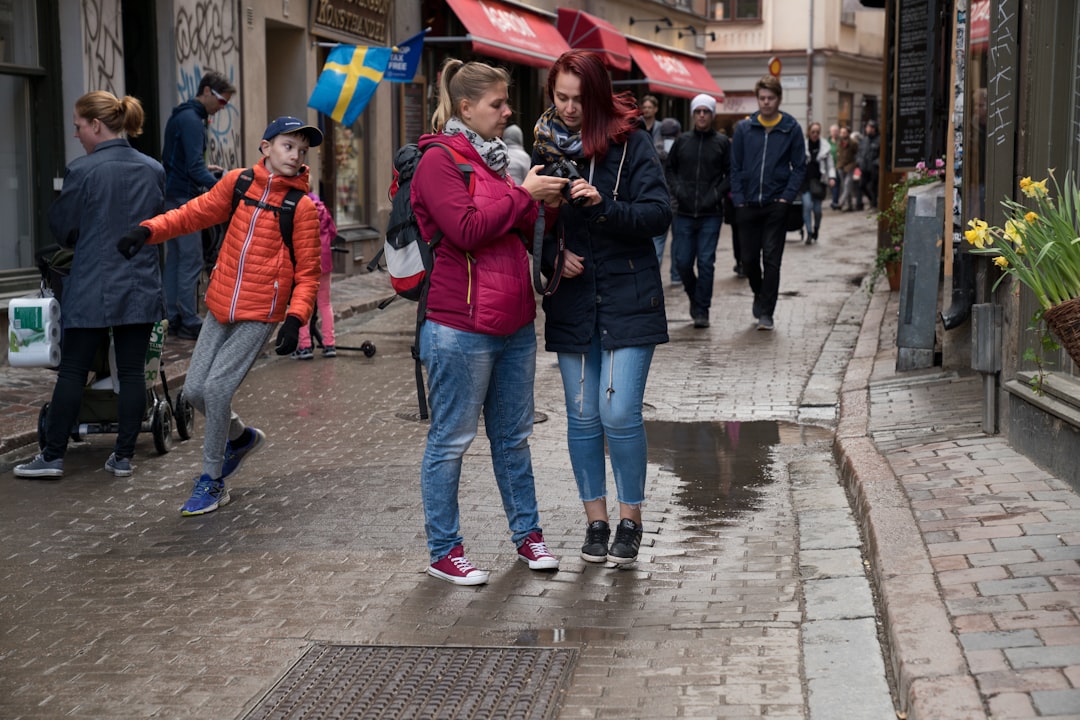
There’s a cultural stereotype about Scandinavians, particularly Swedes: they’re cold, unfriendly, and keep to themselves. This is largely untrue, but like many stereotypes, it contains a kernel of observation that’s been misunderstood. Swedes aren’t cold; they’re reserved. They don’t dislike strangers; they respect personal space. They’re not unfriendly; they distinguish carefully between public-life interactions and private-life friendships. Understanding this distinction is key to actually connecting with Swedish people and navigating Swedish social culture successfully.
Swedish social culture isn’t antisocial—it’s differently social. It follows rules, but the rules are often invisible to outsiders. Breaking these rules inadvertently can make you seem intrusive or aggressive. Understanding them opens doors to genuine connection with Swedish people, who are warm, funny, and fascinating once you get past the initial reserve.
The Cultural Reserve: Not Coldness, But Respect
When foreigners describe Swedes as cold, what they’re often observing is a particular approach to public interaction. On public transport, Swedes don’t chat with strangers. In shops, interactions are professional but minimal. On the street, you don’t strike up conversations with people you don’t know. There’s a formality to public interactions that can read as unfriendly.
But this isn’t coldness; it’s a form of respect for others’ personal space and autonomy. The Swedish logic is: you don’t know this person, so you shouldn’t assume they want to interact with you. Initiating conversation with a stranger might be imposing your sociability onto someone who prefers solitude. Respecting them means giving them the option to engage or not.
This is fundamentally different from the cultural approach in many other countries, particularly the United States, where striking up a conversation with a stranger is often seen as friendliness. In Sweden, it can be seen as a form of violation—an imposition of your social needs onto someone who hasn’t agreed to interact with you.
This shows up in small ways. Swedish shopkeepers are efficient but don’t engage in small talk. Public transport doesn’t echo with conversation. Waiting in line, Swedes stand quietly, don’t make eye contact, and certainly don’t comment on the weather or ask questions. This isn’t coldness; it’s a form of social contract—we’re all strangers here, we’ll all move through our day more smoothly if we respect each other’s solitude.
The Bus Stop Rule
There’s a semi-famous (and somewhat exaggerated) observation about Swedish culture called the “bus stop rule.” The rule is that if you’re waiting for a bus and another person is waiting, you should position yourself as far away from them as physically possible. If there’s a bus stop bench, you sit at one end. If another person arrives, you position yourself as far away as possible—at the other end of the bench, or standing some distance away.
If a third person arrives, they sit in the middle, equidistant from both. The principle is clear: you’re trying to maximize distance between people. It’s not hostility; it’s respect for personal space and an acknowledgment that you don’t know each other.
The bus stop rule is somewhat exaggerated as a cultural description, but it points to something real: Swedes are very conscious of personal space and tend to maintain distance from people they don’t know. This can seem strange to people from more physically close-contact cultures, but it’s fundamental to Swedish social comfort.
For visitors, the practical implication is simple: don’t stand too close to Swedes you don’t know. Give people space. Respect the boundaries people establish. If someone steps back from you, it’s not because they dislike you; it’s because they need more personal space.
How Alcohol Transforms Swedes: The “Two Beer” Theory
Here’s an interesting paradox about Swedish culture: Swedes are reserved in public, but alcohol has a transformative effect. Many observers have noted the “two beer” theory—the idea that after two beers, Swedes become noticeably more sociable, more willing to talk, more relaxed about personal boundaries.
This isn’t unique to Sweden, but it’s particularly pronounced. One explanation is that alcohol functions as social permission. In sober public contexts, Swedes follow strict rules about not imposing on strangers. Alcohol removes the expectation that you maintain those boundaries. Suddenly, talking to strangers is acceptable. Telling jokes is fine. Physical space can be negotiated differently.
Some Swedish people report that they drink specifically to facilitate social interaction—not to get drunk, but to have permission to relax their normal social constraints. This creates an interesting situation where Swedish social culture in bars and at parties is quite different from Swedish social culture in everyday public settings.
For visitors, this means that Swedish people in social settings (bars, parties, organized social events) are often much more open, talkative, and friendly than they appear on the street or on public transport. If you meet a Swedish person at a social gathering rather than on a bus, you’re meeting them in a context where they’re allowed to be more socially engaged.
Public versus Private Swedes
The distinction between public and private Swedes is crucial. In public, Swedes follow strict rules about distance and interaction. In private, among friends and family, they’re warm, engaged, and sociable.
The transition from public to private Swede can seem abrupt. Someone who ignores you on the bus might be warm and funny when you’re invited to their home. A Swedish colleague who seems standoffish at work might be genuinely friendly once you’ve spent some time in a social setting with them.
This isn’t hypocrisy; it’s a compartmentalization based on context. In public, you follow public rules. In private, among people who have chosen to spend time with you, a different set of rules applies—more warmth, more openness, more relaxation of formal distance.
For visitors, the implication is that you shouldn’t judge Swedish friendliness based on public interactions. The reserved bus rider might be genuinely warm and friendly in a private setting.
Breaking the Ice: How to Talk to Swedes
Given these social rules, how do you actually connect with Swedish people if you’re a visitor? Here are practical strategies:
Use structured social settings. Organized events, classes, workplaces, and social activities are contexts where interaction is expected and appropriate. If you’re taking a Swedish language class, you can talk to classmates. If you’re at a work event, talking to colleagues is normal. If you’re at a party, social interaction is the point.
Establish mutual context first. Rather than approaching a random Swedish person and starting a conversation, find a reason to interact. You’re both in line at a café, so commenting on something relevant to that context (the pastries, how long the line is) creates a frame for interaction.
Be direct about your intentions. Swedes appreciate directness. Rather than trying to smooth into a conversation, be clear: “I’m visiting from [country] and I’m trying to meet Swedish people. Do you have time to chat?” This directness is respected and makes it clear that you’re not imposing—you’re asking.
Ask questions and listen. Once you’ve established interaction, asking questions and genuinely listening to answers is effective. Swedes appreciate being asked about themselves, and they’ll open up to someone who seems genuinely interested.
Find common interests. Swedes are often passionate about specific topics—design, outdoor activities, food, environmental issues. Finding a common interest provides a frame for conversation and gives you something to discuss.
Don’t try too hard to make them like you. Swedes can sense when someone is performing friendliness. Being genuine is more effective than being enthusiastically friendly. If you’re friendly but authentic, Swedes will respond.
Accept that some people won’t want to interact. Not all Swedes will want to chat. Some value their solitude and prefer not to engage. This isn’t personal; it’s cultural. Don’t pressure someone who’s uninterested.
Swedish Humor
Swedish humor is often described as dry, self-deprecating, and sardonic. Swedes are funny, but their humor tends toward the subtle. A Swedish joke might be so understated that you miss it if you’re not paying attention. Self-deprecating humor is common—Swedes will make fun of themselves rather than punch down at others.
This has implications for interaction. Laughing appreciatively at Swedish humor signals that you understand Swedish culture. Self-deprecating humor about your own mistakes and cultural awkwardness often lands well. Loud, physical humor, or humor that involves mocking others, typically doesn’t resonate as strongly.
When Swedes are joking, they often don’t signal it with tone of voice or facial expression the way some cultures do. This can lead to misunderstandings—a Swede might make a joke in a completely deadpan tone, and a visitor doesn’t realize they’re joking. Err on the side of assuming dryness might be humor.
The Role of Organized Social Activities
One reason Swedes have created a culture with so much organized socializing (clubs, classes, group activities) is that organized contexts remove the awkwardness of initiating social interaction. Instead of having to decide whether to talk to a stranger, you’re all there for the same purpose, and interaction happens naturally.
For visitors wanting to meet Swedes, organized activities are ideal. Join a gym, take a class, attend a club meeting, participate in a group activity. The structure provides a context for interaction without requiring you to breach the personal-space boundaries that exist in public.
Long-Term Relationships
Once you’ve moved from acquaintance to actual friend, Swedish friendships are often deep and committed. Swedes are selective about who they allow into their inner circle, but once you’re in, you’re in. A Swedish friend is a genuine friend who will support you, spend time with you, and engage with you meaningfully.
The stereotype of Swedish coldness usually comes from observing the gap between Swedish public reserve and Swedish private warmth. The reserve is real. The warmth is equally real. Understanding both is key to appreciating Swedish culture.
Practical Visitor Advice
If you’re visiting Sweden and want to connect with Swedish people:
- Join organized activities (tours, classes, clubs).
- Be direct about your intentions and respect people’s choice not to interact.
- Ask genuine questions and listen to answers.
- Don’t expect to make best friends quickly—Swedish friendships develop slowly.
- Be authentic rather than overly friendly.
- Understand that public reserve doesn’t mean private coldness.
- Find people in social contexts (parties, group settings) rather than trying to initiate random conversations.
- Accept that some Swedes will be warm and some won’t, and this is normal.
- Appreciate Swedish humor and dryness.
Once you understand and accept Swedish social rules, rather than seeing them as coldness, you’ll find that Swedes are thoughtful, interesting, and capable of deep connection. The reserve isn’t a barrier; it’s just a different way of organizing social space. Respect it, work within it, and you’ll discover the warm, funny, genuine people beneath the cultural reserve.




Leave a Reply