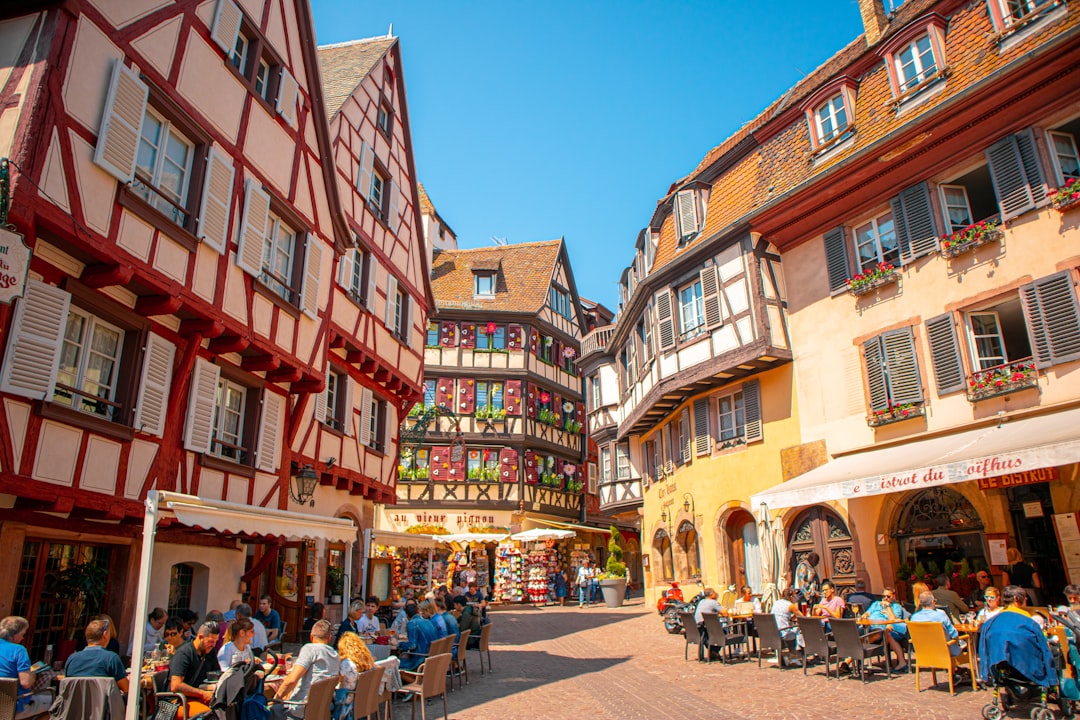
Introduction: A Director’s Love Letter to European Journalism and French Eccentricity
Wes Anderson’s The French Dispatch (2021) is set in a fictional French city called Ennui-sur-Blasé, but it was actually filmed in the real French city of Angoulême. The film follows a bureau of an American newspaper operating in a fictional France, focusing on the journalists and artists who populate the city. It’s a love letter to journalism, to France, to the aesthetics of mid-20th-century Europe, and to the particular magic that comes from outsiders living within foreign cities.
What makes The French Dispatch extraordinary for location enthusiasts is that Wes Anderson is famous for his meticulous, controlled visual style, and he applied this exacting approach to a real city. Rather than building elaborate sets, Anderson used Angoulême’s existing architecture and streets, transforming them through costume, production design, and cinematography into something that feels both deeply real and distinctly Anderson. The result is a film where the city itself becomes a character and a work of art.
Angoulême, a medieval city in southwestern France that was previously famous primarily for its comic book museum and comic book industry, became a destination for film enthusiasts and Wes Anderson fans wanting to walk the streets where the film was shot.
The City of Angoulême: Medieval Charm and Comic Book Culture
Angoulême is a city of about 40,000 people located in the Charente department of southwestern France, about 450 kilometers from Paris. The city is built on a hill and is surrounded by impressive medieval ramparts. The old town features narrow medieval streets, Renaissance buildings, and a well-preserved castle at the highest point.
Prior to The French Dispatch filming, Angoulême was known primarily as the capital of French comics and graphic novels (bandes dessinées or BD). The city hosts an annual International Comics Festival (Festival International de la Bande Dessinée) in January, one of Europe’s largest comics festivals. The city’s industry focus on comics and illustration meant it had a creative, artistic community already in place—a perfect match for Wes Anderson’s aesthetic.
What to expect when visiting Angoulême:
The city is charming and walkable, with most attractions concentrated in the old town on the hill. The medieval ramparts offer views across the Charente Valley. The Cathedral of Saint-Peter, the Château de Marguerite, and various squares provide focal points for exploration. The city is less touristy than Paris or other major destinations, which makes it feel more authentically French.
How Wes Anderson Transformed Angoulême
Wes Anderson’s visual style is distinctive: symmetrical compositions, bright color palettes, carefully designed spaces, and a sense of theatrical artificiality. When filming The French Dispatch on location in Angoulême, Anderson used the city’s existing architecture but added layers of production design to make it feel like something out of a Wes Anderson film.
This involved:
Color manipulation: Anderson’s films often feature specific, carefully chosen color palettes. For The French Dispatch, he used warm tones—yellows, pinks, soft purples—that evoke 1950s and 1960s European aesthetics.
Production design: Storefronts, signage, and interior spaces were designed or modified to fit Anderson’s aesthetic. This wasn’t removing or replacing the city but augmenting it.
Staging and composition: Anderson is famous for framing shots symmetrically and carefully controlling what appears in frame. He uses depth, positioning actors and objects precisely.
Costume and character: The actors in the film are dressed in carefully chosen costumes that evoke mid-20th-century European fashion.
The result: A Wes Anderson film that is still recognizably Angoulême, still uses the city’s real architecture and geography, but is transformed into something distinctly theatrical and artistic. Visiting Angoulême after watching the film means trying to see the city as Anderson saw it—understanding his eye and his interpretive choices.
Key Filming Locations in Angoulême
The Old Town (Vieille Ville): The medieval center of Angoulême is where most of the film was shot. The narrow streets, historic buildings, and small squares provided the settings for the characters’ movements through the city.
The Ramparts: Angoulême’s famous medieval ramparts encircle the old town. These stone walls, rebuilt and reinforced over centuries, offer views and walking paths. Scenes in the film use the ramparts as backdrops.
Place Halles: A square in the old town that appears in various scenes. This is a real square where locals gather and where the film’s action takes place.
The Cathedral of Saint-Peter (Cathédrale Saint-Pierre): The massive Romanesque cathedral dominates the visual landscape of Angoulême. The cathedral appears in the film and is a stunning piece of architecture worth visiting for its own sake.
Address: Place Saint-Pierre, 16000 Angoulême
Visiting: The cathedral is open to visitors (free entry for the interior). The Romanesque facade, with its intricate stone carvings, is particularly impressive.
Château de Marguerite: A medieval castle at the highest point of Angoulême, offering panoramic views of the surrounding region. The castle is partially open to the public and hosts various exhibitions.
The Charente River: The river that flows beneath Angoulême provides the city’s geographical setting. Walking along the riverbanks or crossing the bridges offers perspectives on the city.
The Themes of The French Dispatch
The French Dispatch is ostensibly about journalists reporting on a foreign city. However, it’s really about several interrelated themes:
Outsider perspectives: The American journalists in the fictional France are outsiders who see the city with fresh eyes. Their interpretations of French culture are subjective and sometimes wrong, but they capture something genuine about how outsiders experience foreign places.
Artistic expression: The film celebrates artists, illustrators, and creative people. One of the stories focuses on a famous artist and a protestor falling in love. The film suggests that beauty and meaning can emerge in unexpected places and through unexpected relationships.
Journalism and truth: The film is also about journalism, about the responsibility and challenge of reporting truthfully on the world. The newspaper bureau represents a commitment to understanding and documenting reality.
The irreplaceable nature of particular places: Anderson’s love for Angoulême comes through in the film. He suggests that specific places—with their particular histories, architecture, and character—are irreplaceable and worth celebrating.
Visiting Angoulême: A Walking Tour
Here’s how to structure a visit to Angoulême, following The French Dispatch locations and experiencing the city Anderson filmed:
Morning (8-10 AM):
Start at the top of the old town, near Château de Marguerite. Walk the ramparts, enjoying the views and the medieval walls. Take photographs from various angles—the medieval architecture is beautiful and photogenic.
Late Morning (10 AM-12 PM):
Enter the old town proper. Walk the narrow streets, exploring small plazas and noticing architectural details. Stop at the Cathedral of Saint-Peter. Observe the Romanesque facade and enter to see the interior. Spend time noticing the stonework, the layout, and the way light falls through windows.
Lunch (12-2 PM):
Eat lunch at a neighborhood restaurant or café in the old town. Angoulême has various restaurants ranging from casual to slightly upscale. Look for local specialties: the region produces cognac and produces good wine.
Afternoon (2-5 PM):
Continue exploring the old town. Visit the Comics Museum (Cité Internationale de la Bande Dessinée et de l’Image) if you’re interested in comics and graphic novels. The museum (€10) provides context for understanding Angoulême’s role in French culture beyond the film.
Late Afternoon (5-7 PM):
Walk along the Charente River, crossing bridges and observing the city from below. The perspective from the river is different from the perspective from above and offers a complete picture of Angoulême’s geography.
Evening:
Have dinner at an upscale restaurant if you’re treating yourself, or at a casual place if you prefer a lower-key meal. Watch the sunset over the city if weather permits.
Understanding Wes Anderson’s Style
To fully appreciate The French Dispatch, understanding Wes Anderson’s cinematic approach is helpful:
Anderson’s signature elements include:
- Symmetrical, carefully composed shots
- Bright, carefully selected color palettes
- Mix of humor and pathos
- Attention to production design and detail
- Eclectic ensembles of characters
- Often whimsical or fantastical premises treated with deadpan seriousness
- European aesthetics and settings (particularly in films like The Grand Budapest Hotel, Darjeeling Limited)
Anderson’s approach is theatrical—he acknowledges and embraces the artificiality of cinema rather than trying to hide it. Watching his films trains your eye to notice composition, color, and design in ways that carry into real-world experience.
Applying Anderson’s eye to Angoulême: After watching The French Dispatch, visit Angoulême looking for what Anderson found beautiful: the symmetries of the medieval streets, the colors of the buildings, the way characters move through the space, the layered history and humanity of the place.
Other Wes Anderson Films with European Locations
The French Dispatch isn’t Anderson’s only film with strong European connections:
The Grand Budapest Hotel (2014): Set in a fictional Central European country, filmed in various European locations including Germany. The film uses European 1930s-1960s aesthetics extensively.
Darjeeling Limited (2007): While set in India, the film’s aesthetic draws heavily on European modernist design and European sensibilities.
Moonrise Kingdom (2012): While set in America, the film’s visual style incorporates European (particularly European children’s literature and design) influences.
Asteroid City (2023): Anderson’s most recent film, set in a fictional American desert city but influenced by European aesthetics and concerns.
Anderson’s visual sensibility is influenced by European design, architecture, and cinema. Understanding this helps contextualize The French Dispatch within his broader body of work.
French Journalism and the Real Context
The French Dispatch satirizes and celebrates journalism—particularly foreign correspondence and journalism about culture. Anderson is interested in the question: how do outsiders understand and represent places? How do journalists balance objectivity with interpretation? What’s the responsibility of those who tell stories about the world?
These are real questions in journalism. American and international newspapers did (and do) maintain foreign bureaus with correspondents living in cities like Paris, Rome, Berlin, and others. These correspondents develop complicated relationships with the places they cover—simultaneously insiders (because they live there) and outsiders (because they’re foreigners and professional observers).
Anderson’s imagined American newspaper bureau in the fictional Ennui-sur-Blasé reflects this real tradition of foreign correspondence and the particular aesthetic and culture of American journalists abroad.
Practical Information for a Visit to Angoulême
Getting there:
From Paris, take a train to Angoulême (about 2.5-3 hours). Regular SNCF trains depart from Paris Montparnasse station. The train journey itself is pleasant and passes through French countryside.
Where to stay:
Angoulême has modest hotel options. Budget €60-120 per night for decent accommodation. The old town is the best place to stay if possible.
When to visit:
Spring (April-May) and fall (September-October) offer pleasant weather and moderate crowds. Summer can be hot; winter can be rainy.
Duration:
A full day is sufficient to see Angoulême’s main attractions. Two days allows for a more relaxed pace and exploration of the surrounding region (the Charente Valley has other charming towns).
Budget:
€20-30 for train from Paris, €60-120 for hotel (per night), €20-30 for meals per day, €10 for comics museum (optional), modest restaurant meal €15-25. Total: €100-200 per day all-in for a budget-conscious visitor.
What to bring:
Comfortable walking shoes (the medieval streets are cobblestone and hilly), a camera, a jacket (weather changes quickly).
Language:
English is spoken in some tourist contexts but less widely than in Paris. Learning basic French phrases is helpful.
Films to watch before:
Watch The French Dispatch before visiting, and ideally at least one other Wes Anderson film to understand his stylistic approach. This primes you to see Angoulême through Anderson’s eyes.
The Deeper Experience
Visiting Angoulême after watching The French Dispatch is an exercise in seeing place through an artist’s eyes. Wes Anderson’s interpretation of Angoulême isn’t objective—it’s deeply subjective, filtered through his aesthetic sensibilities and artistic vision. But it’s valid and reveals something true about the place: its charm, its history, its potential for beauty and meaning.
The film suggests that places are not passive backdrops for human action; they’re active participants in meaning-making. A medieval French city can be beautiful, can inspire artistic expression, can generate stories and human connection. Anderson fell in love with Angoulême and translated that love into film. Visiting the real city after experiencing his artistic interpretation deepens appreciation for both the film and the place.
Angoulême isn’t famous. It won’t show up on most Paris itineraries. But that’s precisely its appeal. It’s a real French city, with real history and real character, waiting to be discovered and interpreted through whatever lens—artistic, touristic, personal—you bring to it. Wes Anderson’s interpretation is one of many possible ways of seeing and understanding Angoulême.




Leave a Reply