Steven Spielberg’s “Bridge of Spies” (2015) represents a particular kind of Cold War cinema—the espionage thriller that uses historical events as the framework for exploring questions of principle, sacrifice, and the moral ambiguities of international politics. The film tells the true story of American lawyer James Donovan, who negotiates the exchange of captured Soviet spy Rudolf Abel for downed American pilot Gary Powers on the Glienicke Bridge between East and West Berlin in 1962. It’s a film about the Cold War at its most intense, when ideological conflict threatened to transform into nuclear conflagration.
What makes “Bridge of Spies” essential for understanding Cold War Berlin cinema is how Spielberg uses the city’s divided geography as both literal setting and symbolic landscape. Berlin, more than any other city on Earth, embodied the Cold War’s physical and ideological division. The city was divided into four occupation zones by the Allied powers, partitioned between communist East and capitalist West, and eventually carved in half by the Berlin Wall. For decades, Berlin was the frontline where two incompatible systems faced each other directly, separated by concrete and barbed wire.
The Glienicke Bridge: Berlin’s Most Famous Cold War Location
The Glienicke Bridge (colloquially known as the “Bridge of Spies,” though it had other names during the Cold War) spans the Havel River between Wannsee in West Berlin and Potsdam in East Germany. Built in the nineteenth century to connect Berlin’s western districts with Potsdam, the bridge became one of the most symbolically charged locations of the Cold War when it was chosen as the site for major prisoner exchanges between the Soviet Union and the United States.
The bridge is a modest structure—an elegant but unassuming steel bridge with classical elements. Its understated design contrasts dramatically with its historical significance. During the Cold War, the bridge became a forbidden zone, accessible only with special permission. The bridge’s center line effectively represented the border between East and West, a liminal space where the two superpowers conducted delicate negotiations and exchanges.
The photograph of the Glienicke Bridge exchange in 1962 (the specific incident depicted in Spielberg’s film) became iconic: a solitary figure walking across the bridge in one direction while another walked in the opposite direction, two men embodying the ideological division of the world. Spielberg’s film recreates this image with meticulous historical accuracy, using the actual bridge as filming location. The scene of the exchange is shot with minimal dramatic accompaniment—the camera observes the two men crossing, allowing the location itself to carry the emotional weight.
Visiting the Glienicke Bridge today offers a poignant and somewhat haunting experience. The bridge has been fully restored and is now a normal crossing point between Berlin and Potsdam. The Cold War’s physical division has been completely erased—you can walk across the bridge without restriction, move freely between the two halves. Yet the bridge retains its historical resonance. Information plaques on both sides document the bridge’s Cold War history and the various prisoner exchanges that occurred there.
Checkpoint Charlie and the Geography of Division
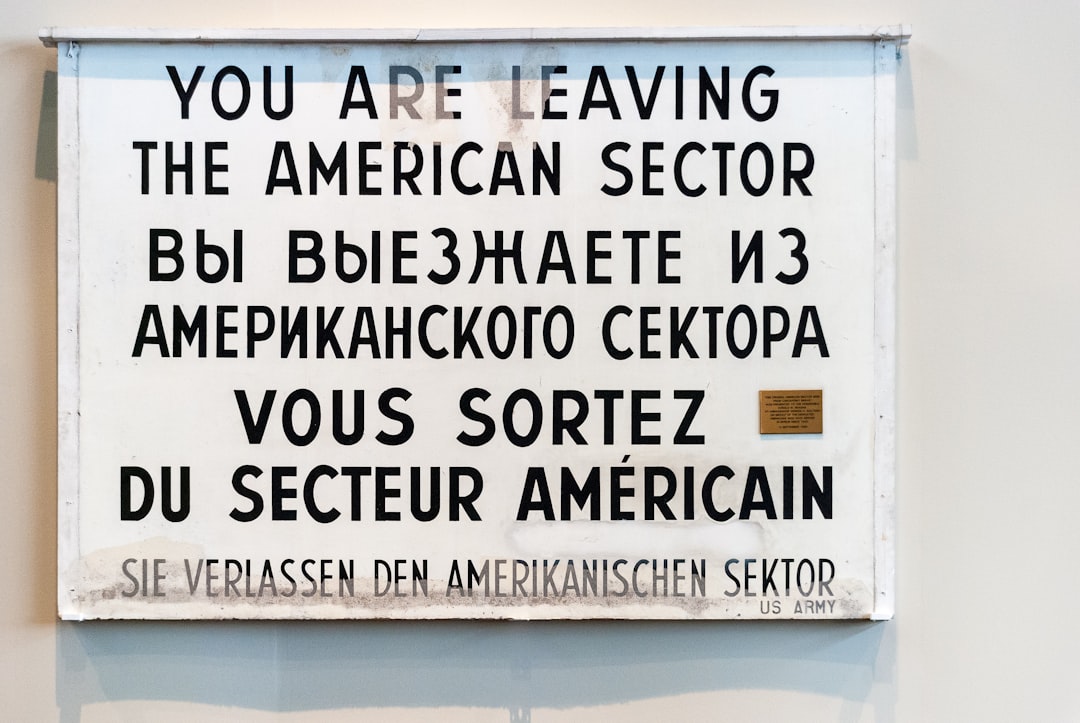
While “Bridge of Spies” focuses primarily on the Glienicke Bridge exchange, the film necessarily engages with the broader geography of Cold War Berlin, including the city’s most famous crossing point: Checkpoint Charlie. Located in the Mitte district at the border between American and Soviet sectors, Checkpoint Charlie served as the primary checkpoint for foreigners and diplomats crossing between East and West Berlin.
Checkpoint Charlie has become one of Berlin’s most visited tourist attractions, though the authentic Cold War structure has been replaced by a replica built for tourists. The site is lined with souvenir shops, street performers, and tour groups, creating a somewhat commercialized atmosphere. Yet the location itself retains historical importance: this is where the most dramatic confrontations between American and Soviet forces occurred during the Cold War, where families were torn apart by division, where the ideological conflict between East and West was most visibly enacted.
For travelers interested in Cold War Berlin beyond the tourist attractions, understanding Checkpoint Charlie’s historical role is essential. The checkpoint represents not just a physical border but a psychological and ideological one—the boundary between two fundamentally different systems and worldviews.
Cold War Berlin’s Urban Landscape
Spielberg’s “Bridge of Spies” uses Berlin’s post-war landscape to create a visual expression of division and ideological conflict. The film depicts West Berlin—surrounded by East Germany, accessible only by air or across heavily guarded border crossings—as a vibrant but psychologically isolated Western enclave. The cityscape of early-1960s West Berlin is depicted with careful historical accuracy, using surviving buildings and locations from the period.
East Berlin, by contrast, is portrayed as austere, controlled, and psychologically oppressive. The contrast between the two halves of the city—the architectural styles, the density of consumer goods, the freedom of movement—visually expresses the ideological differences that the Cold War was ostensibly about. Spielberg uses these contrasts without heavy-handed commentary; the visual language of the locations themselves carries the meaning.
Tempelhof Airport features prominently in “Bridge of Spies” as the point where American planes depart for and arrive from West Berlin. Located on the grounds of the former Nazi airfield, Tempelhof served as West Berlin’s main international airport during the Cold War. The airport’s massive Nazi-era terminal building still stands today, a remnant of the Third Reich that was repurposed for Cold War use. The airport was closed to commercial traffic in 2008 and has since been partially converted into a public park, making the enormous runways and building accessible to visitors.
The significance of Tempelhof for Cold War Berlin cannot be overstated: the airport was West Berlin’s lifeline during the Soviet blockade of 1948-1949, when American and British planes flew in supplies for months while the city was sealed off by Soviet forces. Tempelhof represents both the technological modernity of the Cold War era and the precarious geopolitical situation of West Berlin.
Other Cold War Espionage Films in Berlin
“Bridge of Spies” belongs to a lineage of Cold War espionage films set in Berlin. John le Carré’s “The Spy Who Came In from the Cold,” adapted to film in 1965, depicts the grim realities of espionage during the Cold War, including scenes set in Berlin. The film presents espionage not as glamorous adventure but as morally compromising work in a divided, paranoid city.
“Atomic Blonde” (2017), directed by David Leitch, is a more contemporary action film set in 1980s Cold War Berlin. The film uses the city’s neon-lit streets, its division, and its role as a Cold War flashpoint as backdrop for an espionage thriller that emphasizes style and action sequences. While less historically grounded than “Bridge of Spies,” “Atomic Blonde” captures the particular aesthetic of 1980s Berlin—the punk and electronic music scene, the counterculture, the sense of a city on the edge of something transformative.
Berlin as Cold War Cinema’s Most Important Location
More than any other city, Berlin has served as the setting for cinematic explorations of the Cold War. The city’s division was so complete, so visually stark, so symbolically charged that it became cinema’s primary location for representing ideological conflict. Whether in spy thrillers, political dramas, or action films, Berlin’s split geography provides an ideal visual language for exploring the Cold War’s psychological and geopolitical dimensions.
Visiting Cold War Berlin Today
For travelers interested in experiencing the locations depicted in “Bridge of Spies” and other Cold War films, contemporary Berlin offers a complex and sometimes contradictory experience. The physical division that defined the Cold War has been completely eliminated, yet the psychological and cultural legacy remains.
The Glienicke Bridge: Located in the Wannsee district of Berlin, the bridge is easily accessible via S-Bahn. The bridge itself is unremarkable in appearance but carries tremendous historical weight. Visiting the bridge and walking across it (freely, in either direction) offers a powerful meditation on the Cold War’s end. Information plaques on both sides document the bridge’s history. The surrounding area includes parks and lakeside walks that provide pleasant context for historical reflection.
Checkpoint Charlie: While the site has become overly commercialized, it remains worth visiting for its historical significance. The authentic Checkpoint Charlie has been replaced by a replica, but the location itself—the boundary between Mitte (formerly Soviet sector) and Kreuzberg/Tempelhof (formerly American sector)—retains meaning. Visitors can see the site without purchasing any tourist merchandise; simply standing at the checkpoint and understanding its role in Cold War history is worthwhile.
East Side Gallery: This 1.3-kilometer section of the Berlin Wall, preserved as an open-air art gallery, offers the most extensive surviving portion of the wall. The gallery features murals by artists from around the world, transforming what was once a barrier of death into a canvas for artistic expression and commentary. Walking the length of the East Side Gallery provides a visceral sense of the wall’s scale and the division it represented.
The Cold War Museum (Kalter Krieg Museum): Located in Mitte near Checkpoint Charlie, this museum documents the Cold War’s history through artifacts, photographs, and documents. The museum provides crucial context for understanding the historical period depicted in films like “Bridge of Spies.”
Tempelhof Airport and Park: The massive terminal building and runways of the former airport are now a public park. The scale of the runway—three kilometers long—conveys something of the infrastructure required to sustain West Berlin during the Soviet blockade. Visitors can cycle, walk, or skateboard on the runways, creating a surreal experience of using military infrastructure for leisure.
Visiting Tips:
- Most Cold War sites are accessible via Berlin’s efficient public transportation system (U-Bahn and S-Bahn).
- Allow at least a full day to visit multiple sites and absorb their historical significance.
- Reading about the Berlin Blockade, the construction of the Berlin Wall, and major Cold War events before visiting will significantly enhance your understanding.
- Consider visiting in the late afternoon or early evening to experience the atmospheric lighting that many Cold War films exploit.
- The streets of East Berlin, particularly in Mitte and Friedrichshain, retain architectural elements from the GDR era that provide visual context for understanding Cold War division.
Cold War Berlin as Cinematic Landscape
Steven Spielberg’s “Bridge of Spies” uses Berlin’s Cold War geography as more than mere backdrop; the divided city becomes a character in itself, expressing through its architecture and spatial organization the ideological conflict that the film depicts. The Glienicke Bridge, modest and understated, carries the symbolic weight of the entire Cold War confrontation—two men walking in opposite directions, representing the fundamental division that separated the world into opposing camps.
For travelers and film enthusiasts, engaging with these locations offers more than entertainment tourism. It’s an opportunity to stand in places where history was made, to appreciate how cinema uses real locations to explore complex historical moments, and to reflect on how the Cold War’s most visible division—the split of Berlin—has been healed, yet its traces remain visible in the city’s architecture, memory, and cultural identity.
Berlin remains the Cold War’s most important cinematic city, and the Glienicke Bridge remains its most symbolically charged location—a bridge that once divided the world, now reconnecting the two halves of a reunited city.




Leave a Reply