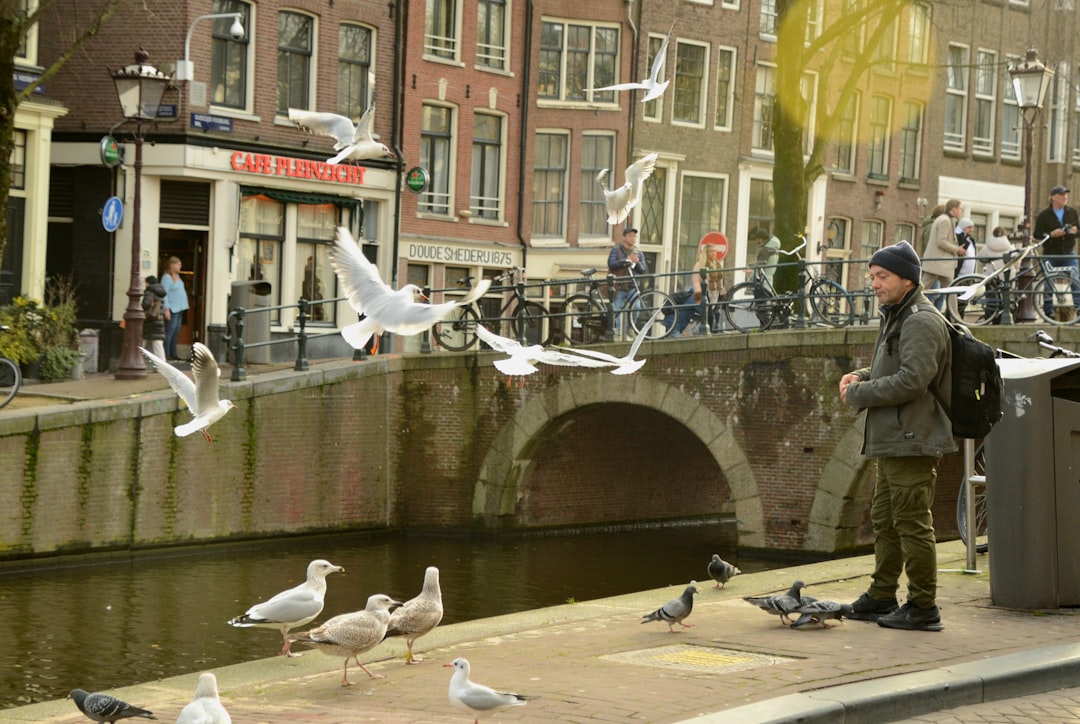
A quiet moment by an Amsterdam canal as a man stands by the water feeding birds, while seagulls and pigeons gather and fly overhead. Framed by historic brick buildings, a small bridge, and soft afternoon light, the scene captures everyday life and calm urban rhythm in the heart of the city.

The Hitman’s Bodyguard: Amsterdam’s Action-Packed Filming Locations

Photo by Minu Ahmadian on Unsplash

·

·

Introduction

When action cinema comes to European cities, filmmakers face a challenge: how to create dynamic, explosive sequences that don’t damage or disrespect the cultural and architectural heritage of historic towns. “The Hitman’s Bodyguard” (2017), starring Ryan Reynolds and Samuel L. Jackson, solved this problem by making Amsterdam’s defining feature—its canal system—central to its action sequences. The result is a film that delivers adrenaline-pumping entertainment while showcasing the city’s unique geography and architectural beauty.

This guide takes you through the actual filming locations of “The Hitman’s Bodyguard,” from the iconic canal boat chases to the Amsterdam landmarks that served as backdrops for action sequences. Whether you’re an action film enthusiast or simply interested in how contemporary cinema uses European cities as settings, this journey reveals how a small Dutch city provided the perfect canvas for a major Hollywood action-comedy.

The Hitman’s Bodyguard: Overview and Context

Plot and Premise

“The Hitman’s Bodyguard” follows Michael Bryce (Ryan Reynolds), a cynical, washed-up bodyguard who reluctantly agrees to protect Darius Kincaid (Samuel L. Jackson), a notorious hitman. The two embark on a cross-Europe mission involving gangsters, government conspiracies, and the kind of physical comedy that ensues when mismatched characters are forced to work together. The Amsterdam sequences, which form a major portion of the film, emphasize the unique opportunities the city’s canals and architecture provide for action sequences.

Why Amsterdam?

Filmmakers chose Amsterdam for several specific reasons:

  • Unique Geography – The canal system is unlike any other major European city, offering distinctive visual opportunities
  • Architectural Beauty – The city’s preservation of 17th-century architecture provides an elegant backdrop to mayhem
  • Practical Infrastructure – Modern filmmaking support services exist in the Netherlands
  • International Appeal – Amsterdam is recognizable and appealing to global audiences

The film uses the tension between Amsterdam’s peaceful, sophisticated reputation and the explosive violence of action cinema to create dynamic visual contrast.

Major Filming Locations and Action Sequences

Central Station and Surroundings (Centraal Station)

Location Overview:
Central Station serves as a major filming location, particularly for establishing shots and some of the film’s early action sequences. The station’s distinctive architecture—its red-brick Dutch Renaissance design with soaring interior spaces—provides a recognizable landmark that anchors the narrative.

Address: Stationsplein 9, 1012 AB Amsterdam

Action Sequences:
While specific chase sequences aren’t explicitly detailed in the film, the area around Central Station and the waterfront serve as primary action locations. The proximity of the station to Amsterdam’s waterfront, canals, and the ferry system makes it ideal for scenes where characters move rapidly through the city.

Visiting Central Station:

  • The station remains fully operational and is freely accessible during business hours
  • The main hall is architecturally stunning and worth exploring regardless of film interest
  • The waterfront area (waterfront east of the station) offers views of the IJ River and ferry terminals
  • Surrounding areas include museums, shops, and restaurants
  • Nearby Attractions:

  • Amsterdam Museum – Just south of Central Station
  • Bike Rental Shops – Multiple operators near the station
  • Ferry Terminal – Ferries depart from behind Central Station to Amsterdam Noord
  • The Canal System and Boat Chases

    The Heart of the Film’s Action:
    The most iconic sequences in “The Hitman’s Bodyguard” involve pursuits and action scenes on Amsterdam’s canals. The film capitalizes on the canal system’s unique features:

  • Narrow waterways requiring maneuverability
  • Multiple bridges creating obstacles and visual complexity
  • Historic buildings framing the action
  • The contrast between the canals’ peaceful daytime aesthetic and the chaos of action sequences
  • Which Canals?
    The primary canals used for filming include:

    Prinsengracht (Prince’s Canal):

  • One of Amsterdam’s four main canals, part of the UNESCO-listed Canal Belt
  • Approximately 3 kilometers long with bridges, cafés, and museums along its length
  • The combination of narrow passages, historic facades, and abundant bridges makes it ideal for action sequences
  • Famous residents have included Anne Frank (at Prinsengracht 263)
  • Home to numerous galleries, restaurants, and cultural institutions
  • Keizersgracht (Emperor’s Canal):

  • The second of the four main canals
  • Similar characteristics to Prinsengracht
  • Features the famous Six Collection (an art museum in a private mansion)
  • Lined with restaurants and boutique shops
  • Herengracht (Gentlemen’s Canal):

  • The largest of the main canals
  • Approximately 3.4 kilometers long with particularly grand 17th-century mansions
  • The canal’s width and length made it suitable for various filming angles
  • Canal Belt in General (Grachtengordel):
    The entire system of concentric canals forms Amsterdam’s defining feature. Walking or biking along any of these canals provides a sense of the filming environment. The combination of:

  • Narrow waterways
  • Historic architecture
  • Multiple bridges
  • Water reflections creating visual interest
  • All contribute to why the canals proved perfect for action cinema.

    Experiencing the Canals:

    Canal Boat Tours:
    Multiple tour operators offer canal boat tours (typically 50-75 minutes) that traverse the main canal system:

  • Blue Boat Company
  • Amsterdam Canal Cruises
  • Hop-On, Hop-Off Canal Buses (multiple stops, flexible duration)
  • Tours typically cost €15-20 and depart from various points around the city. Evening tours (departing around 7-9 PM) offer a different aesthetic, with the canals illuminated and less crowded.

    Biking Along the Canals:

  • Bike rentals cost €10-15 per day
  • The canals are surrounded by extensive bike paths
  • Biking allows you to pause and photograph locations, explore side streets, and move at your own pace
  • Recommended route: Make a loop through the Canal Belt (Herengracht-Keizersgracht-Prinsengracht-back to starting point) for approximately 5-6 kilometers
  • Walking the Canals:

  • The entire Canal Belt is walkable
  • Walking allows for detailed observation of architecture, galleries, and street-level details
  • Estimated time: 2-3 hours for a complete circuit
  • Multiple cafés along the way offer rest and refreshment
  • Amsterdam Bridges

    Bridges feature prominently in the film’s action sequences, serving as obstacles, dramatic settings, and visual markers. Amsterdam has approximately 1,281 bridges, with notable ones including:

    Magere Brug (Skinny Bridge)

  • Location: Spanning the Amstel River near the Hermitage Museum
  • Character: An iconic wooden bridge with distinctive design
  • Cinematic Significance: The bridge’s unique appearance and location make it visually striking and likely to have been considered for or featured in filming
  • How to Experience It: Walk or bike across the bridge; it’s one of Amsterdam’s most photogenic locations, especially at night when illuminated
  • Blauwbrug (Blue Bridge)

  • Location: Spanning the Amstel River
  • Character: A cast-iron bridge with ornate design
  • How to Experience It: Walk the surrounding area; the bridge is visible from the Hermitage Museum and nearby cafés
  • Multiple Canal Bridges:
    Throughout the Canal Belt, hundreds of smaller bridges create a distinctive landscape. These bridges in the film serve as:

  • Obstacles for vehicles or characters
  • Vantage points for action
  • Visual markers establishing the canal system’s complexity
  • Walking Bridge-to-Bridge:
    An engaging activity is walking through the Canal Belt and noting the variety and design of bridges. No two are identical, and each contributes to the district’s distinctive character. A self-guided bridge tour can last 1-2 hours depending on pace and exploration depth.

    Amsterdam Landmarks and Skyline

    While specific landmarks may not feature prominently in action sequences, they appear in establishing shots and provide visual context:

    Westertoren (Western Church Tower)

  • Location: Prinsengracht at Westermarkt
  • Character: A historic church tower with a distinctive lantern crown
  • Significance: Visible from many canal locations; Anne Frank could see this tower from her hiding place
  • How to Experience It: Walk to Westermarkt Square and explore the surrounding neighborhood; climb the tower for panoramic city views (approximately 85 steps)
  • Amsterdam Canal Houses:
    The 17th- and 18th-century townhouses lining the canals are architectural treasures. Walking along the canals, note:

  • The distinctive gabled roofs (crow-step gables, bell gables, cornice gables)
  • The narrow street-level facades with large windows
  • The traditional Dutch door (split horizontally)
  • The way buildings lean slightly forward (intentional design to facilitate hauling goods with pulleys)
  • Dam Square and Surrounding Areas

    Dam Square Overview:
    While not a major action filming location, Dam Square represents central Amsterdam and appears in establishing shots. The square is the geographic and cultural heart of the city.

    Address: Dam, 1012 NP Amsterdam

    Features:

  • Royal Palace (Koninklijk Paleis) – A stunning 17th-century building now serving as the king’s official reception location
  • The New Church (Nieuwe Kerk) – A Gothic church dating to the 14th century
  • War Monument – A solemn memorial to WWII victims
  • Surrounding shops, restaurants, and cultural institutions
  • Visiting:

  • The square is freely accessible
  • The Royal Palace is open for tours on certain days (check in advance)
  • The New Church hosts art exhibitions and cultural events
  • Multiple cafés and restaurants surround the square
  • Day or evening visits both offer distinct atmospheres
  • Vondelpark Area

    Amsterdam’s major urban park appears in various establishing shots and serves as a location representing Amsterdam’s recreational culture and green spaces.

    Address: Vondelpark, Amsterdam (south of the Canal Belt)

    Features:

  • Open meadows, tree-lined paths, and small ponds
  • Multiple cafés and open-air restaurants
  • Museums bordering the park:
  • Van Gogh Museum
    Rijksmuseum (Dutch national museum)
    Stedelijk Museum (modern and contemporary art)

    How to Experience It:

  • Walk or bike through the park
  • Sit at a café and observe the park’s social dynamics
  • Visit the museums
  • Estimated time: 2-3 hours for a leisurely park visit
  • Red Light District (De Wallen)

    While not explicitly highlighted in “The Hitman’s Bodyguard” plot, the Red Light District represents Amsterdam’s unique cultural character and appears in establishing shots of the city. The area is also a major tourist attraction with historical significance beyond its contemporary function.

    Location: Between Central Station and the Dam in central Amsterdam

    Character:

  • Historic neighborhood with 14th-century buildings
  • Distinctive window displays reflecting the neighborhood’s famous sex work industry
  • Vibrant nightlife, restaurants, and bars
  • Museums dedicated to various aspects of Amsterdam culture
  • Despite its reputation, a legitimate historic and cultural area
  • Respectful Visiting:

  • The neighborhood is heavily touristed; evening visits are more atmospheric than daytime
  • Photography of window workers is strictly prohibited and culturally disrespectful
  • Multiple cafés and bars provide places to experience the neighborhood’s social character
  • Museums (like the Red Light Secrets Museum) offer contextualized education about the neighborhood’s history and present
  • The Film’s Relationship to Amsterdam

    Using the City as Character

    “The Hitman’s Bodyguard” exemplifies how action cinema can integrate location into narrative rather than simply using it as backdrop. The film’s boat chases on the canals, the architectural framing of action sequences, and the use of Amsterdam’s distinctive geography make the city integral to the story rather than interchangeable with any other European city.

    The Contrast Between Serenity and Chaos

    A central visual theme is the contrast between Amsterdam’s peaceful, sophisticated reputation and the explosive violence of action cinema. This creates dynamic visual interest:

  • Elegant canal houses become backdrops to car chases
  • Peaceful waterways transform into action sequences
  • The contrast itself becomes thematically interesting
  • Practical Visitor’s Guide for Action Film Fans

    Best Times to Visit

    Seasonal Considerations:

  • Spring (April-May): Mild weather, moderate crowds, blooming flowers
  • Summer (June-August): Peak season with long daylight hours (sun until 10 PM in late June), but also crowded
  • Fall (September-October): Excellent weather, fewer crowds than summer
  • Winter (November-February): Fewer tourists, shorter days, occasional ice on canals
  • For film location tourism, any season is appropriate, though spring through fall offers better weather and longer daylight for exploration.

    Getting Around Amsterdam

    By Foot:

  • The Canal Belt is compact and highly walkable
  • 2-3 hours can cover a complete circuit of the main canals
  • Walking offers detailed observation of architecture
  • By Bicycle:

  • Amsterdam is a cycling city with extensive bike infrastructure
  • Rentals: €10-15 per day
  • Biking allows covering larger distances while maintaining flexibility
  • Exercise caution with traffic; Amsterdam cyclists are assertive
  • By Canal Boat:

  • Guided tours: €15-20 per person for approximately 50-75 minutes
  • Self-guided options available
  • Daytime tours offer different light than evening tours
  • By Public Transportation:

  • Tram and bus system covers the entire city
  • Day pass: €9.00 for unlimited travel
  • Less necessary for Canal Belt exploration than in larger districts
  • A Suggested Itinerary (1-2 Days focused on Action Film Locations)

    Half-Day (4 Hours):

    1. Start at Central Station (30 minutes)

    – Explore the architecture and waterfront
    – Orient yourself to the city’s geography

  • Canal Boat Tour (1 hour)
  • – Experience the canals as they appear in the film
    – Understand the geography of boat chase sequences
    – Photographers should note bridge locations and angles

  • Walk the Canal Belt (2 hours)
  • – Stroll along Herengracht, Keizersgracht, and Prinsengracht
    – Note bridge locations and architecture
    – Visit cafés along the route

  • Visit Magere Brug (30 minutes)
  • – Walk to this iconic bridge
    – Photograph from different angles
    – Visit the Hermitage Museum if interested

    Full Day (8 Hours):

  • Morning: Canal Exploration (as above)
  • Midday: Lunch and Museum (2 hours)
  • – Eat at a canal-side restaurant
    – Visit Van Gogh Museum, Rijksmuseum, or Stedelijk Museum if interested

  • Afternoon: Vondelpark (1.5 hours)
  • – Walk through the park
    – Sit at a café
    – Observe Amsterdam’s recreational culture

  • Late Afternoon: Dam Square and Red Light District (1.5 hours)
  • – Visit Dam Square
    – Explore the Red Light District (evening visit is more atmospheric)
    – Browse shops and museums

  • Evening: Dinner and Nightlife (2+ hours)
  • – Eat dinner at an upscale restaurant
    – Experience Amsterdam’s nightlife

    Extended Visit (2-3 Days):

    Add to the above:

  • Ferry to Amsterdam Noord and explore the contemporary art scene
  • Visit specific museums in greater depth
  • Take an evening canal cruise to see the city illuminated
  • Rent a bike and explore neighborhoods beyond the city center
  • Visit historical locations related to other films (Anne Frank House, Dutch Resistance Museum)
  • Accommodation

    Canal Belt (Most Atmospheric):

  • Luxury: Pulitzer Amsterdam, The Dylan Amsterdam
  • Mid-Range: Ambassade Hotel, Estherea Hotel
  • Budget: Various guesthouses and hostels
  • Near Central Station (Most Convenient for Arrival/Departure):

  • Luxury: Conservatorium Hotel
  • Mid-Range: Amsterdam Museum Hotel
  • Budget: Travelodge Amsterdam Central
  • Contemporary Amsterdam (Noord, De Pijp):

  • Boutique Hotels: Scattered throughout trendy neighborhoods
  • Generally quieter and less touristy than Canal Belt
  • Dining and Entertainment

    Canal-Side Dining:

  • Café de Jaren – Popular café with Amstel River views
  • Zeno – French-Italian cuisine overlooking canals
  • Bries – Upscale French in the Canal Belt
  • Multiple casual cafés serving Dutch food and international cuisine
  • Nightlife:

  • Leidseplein – Major nightlife district with clubs and bars
  • Rembrandtplein – Another significant nightlife hub
  • Brouwerij ‘t IJ – Craft brewery with bohemian atmosphere
  • Multiple brown cafés (traditional Dutch bars) throughout the city
  • Museums and Cultural Venues:

  • Van Gogh Museum – Works by the Dutch master
  • Rijksmuseum – Dutch national museum with medieval through modern collections
  • Stedelijk Museum – Modern and contemporary art
  • Eye Film Museum – Devoted to cinema history (north of Central Station)
  • Conclusion: From Screen to Pavement

    “The Hitman’s Bodyguard” delivers action-comedy entertainment, but it also showcases Amsterdam in a way that invites exploration. By visiting the film’s locations—the canals where chases unfold, the bridges that create visual obstacles, the landmarks that anchor the city—you experience both cinema and destination simultaneously.

    Amsterdam’s unique geography and well-preserved historic character make it an ideal location for action cinema while also making it a rewarding destination for travelers. The canal system, the architecture, the bridges, and the overall aesthetic that drew filmmakers to the city are yours to explore at your own pace.

    Whether you come as an action film enthusiast retracing the film’s scenes or simply as a traveler appreciating one of Europe’s most distinctive cities, Amsterdam’s canals and streets offer endless discovery. Walk where the characters ran, float on the waters where they chased, and experience the peace and energy of a city that seamlessly blends 17th-century heritage with 21st-century vitality.


    Free Newsletter!

    Join the Europetopia Newsletter for free tips on travel, history, and culture in Europe!

    We promise we’ll never spam! Take a look at our Privacy Policy for more info.


    Jonathan Avatar

    Written by

    Related Articles

    Comments

    Leave a Reply

    Your email address will not be published. Required fields are marked *

