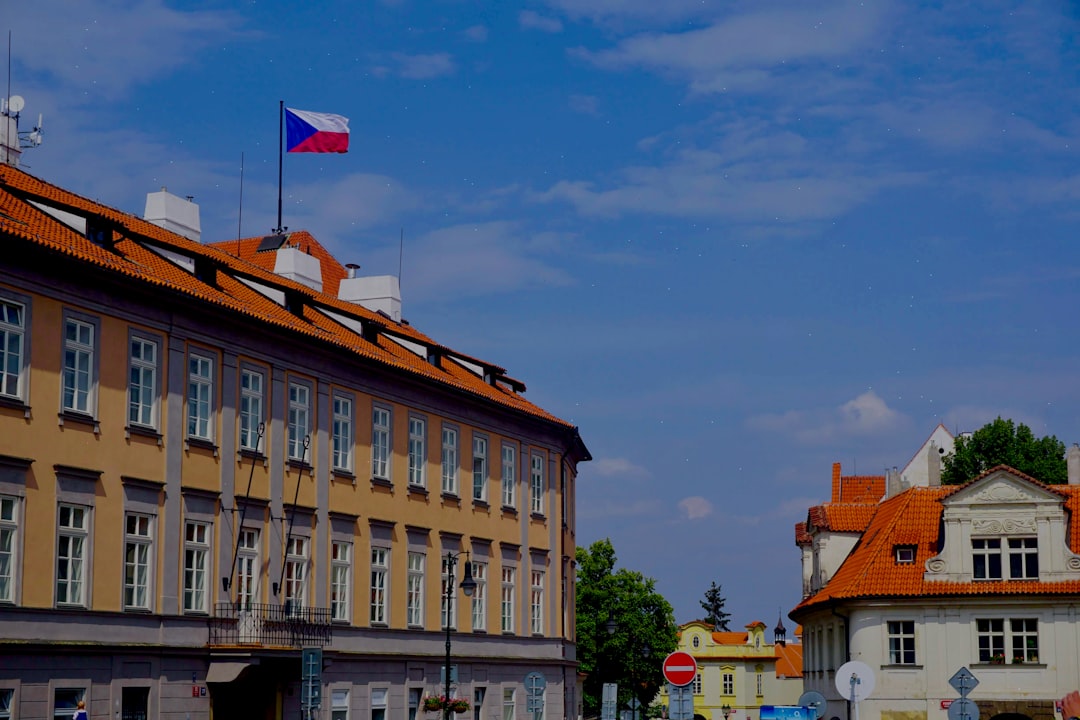
A Summer Day in Prague

Czech Visa & Residency Options for Americans: Every Path Explained

Photo by R M on Unsplash

·

·

Introduction: Navigating Czech Immigration

The Czech Republic’s immigration system can seem complex at first glance, but it’s actually well-structured and transparent. Americans have multiple pathways to legal residency, each suited to different life situations. Understanding which option fits your circumstances is the critical first step in your relocation.

This article breaks down every realistic visa and residency option for American citizens moving to the Czech Republic, including timelines, requirements, costs, and pros and cons of each approach.

The 90-Day Tourist Visa (Schengen)

Duration: 90 days within any 180-day period
Cost: Free for US citizens
Application: No application required; automatically granted upon entry
Employment: Not permitted
Family: Dependents not automatically included; each person enters independently

How It Works

As a US citizen, you automatically receive a 90-day visa-free period upon entering any Schengen country. This allows you to stay in Czechia, along with all other Schengen countries, for 90 days without a visa.

Pros

  • Simple, no paperwork
  • Gives you time to explore and decide
  • Works for short-term visits or extended tourism

Cons

  • Cannot work, so you must have savings or remote income from a non-Czech employer
  • Cannot legally extend beyond 90 days
  • Leaves you vulnerable if your income stream disappears
  • Not suitable as a long-term strategy
  • Best For

  • Short-term visitors evaluating whether to relocate
  • Digital nomads with non-Czech income sources (though this exists in a legal gray area)
  • Those planning to return to the US but want an extended European visit
  • Long-Term Visa Type D

    Duration: Typically 1 year; extendable
    Cost: €10-20 (approximately CZK 250-500) for the visa; additional costs for medical insurance and registration
    Application: At the nearest Czech embassy in your home country; processing 4-6 weeks
    Employment: Only with specified employer listed on visa
    Family: Dependents can be included on family reunification basis

    Subcategories of Type D

    The Long-Term Visa Type D is an umbrella category with several specific purposes:

    D – Employment (zaměstnání)

  • For those offered a job by a Czech employer
  • Requires employment contract and employer verification
  • Medical insurance and valid accommodation required
  • Processing time: 4-6 weeks
  • D – Business/Trade License (podnikání)

  • For self-employed individuals with a živnostenský list
  • Requires business registration
  • Lower barrier to entry than employment visa
  • Highly popular among freelancers
  • D – Study (vzdělání)

  • For enrollment in Czech university or school
  • Requires acceptance letter and proof of funds
  • Typically valid for duration of studies plus one year
  • Renewable based on enrollment status
  • D – Family Reunification (rodinný stav)

  • For those with a Czech spouse, partner, or family member
  • Requires proof of relationship and valid accommodation
  • Processing is typically straightforward once documentation is complete
  • D – Private Means (soukromé zdroje)

  • For those with sufficient financial resources (no employment)
  • Requires proof of monthly income (approximately €1,000+ per month)
  • Must have valid health insurance
  • Requires valid accommodation contract
  • Less common but available for investors or retirees
  • Pros

  • Legal work authorization
  • Can be extended annually
  • Family-friendly
  • Generally well-established process
  • Cons

  • Requires Czech embassy visit in home country
  • 4-6 week processing time
  • Some subcategories (employment) require job offer before applying
  • Medical insurance is mandatory and adds cost (€100-200/month)
  • Best For

  • Those with secured employment
  • Entrepreneurs willing to establish business structure
  • Students
  • Those with family connections in Czechia
  • Anyone seeking legal, long-term status
  • The Employee Card (Zaměstnanecká Karta)

    Duration: 1-3 years depending on employment contract length
    Cost: Approximately CZK 2,500 (€105) processing fee; employer may cover
    Application: Through employer at Ministry of Interior
    Employment: Yes, with sponsoring employer
    Family: Dependents eligible for dependent residence permits

    How It Works

    The Employee Card is a residence permit specifically designed for third-country nationals working in the Czech Republic. Your employer applies for it through the Ministry of Interior (OAMP—Odbor azylové a migrační politiky), not through an embassy.

    This is attractive because:

  • The employer submits the application in Czechia, not at an embassy abroad
  • Processing is often faster (2-4 weeks within the country)
  • It ties your residency directly to employment
  • Requirements

  • Valid job offer/employment contract
  • Proof of qualifications
  • Medical insurance
  • Valid accommodation
  • Employer proof of financial stability and Czech business registration
  • Pros

  • No embassy visit required (can apply from within Czechia on tourist visa)
  • Faster processing than embassy D visa
  • Demonstrates employer commitment
  • Competitive advantage over tourist visa for those already in-country
  • Cons

  • Residency tied to employment (changing jobs requires new application)
  • Employer bureaucratic cooperation required
  • Still requires health insurance
  • Specific to employment relationship
  • Best For

  • Those offered employment by Czech companies
  • Those already in Czechia on tourist visa who secure job
  • Those preferring to apply from within-country
  • The Business License and Self-Employment (Živnostenský List)

    Duration: Indefinite (renewable annually)
    Cost: CZK 1,000-2,000 (€40-85) registration fee; no visa fees
    Application: At city hall (Živnostenský úřad) with valid residence address
    Employment: Self-employment; own and operate business
    Family: Family can be covered as dependents

    Understanding the Živnostenský List

    The trade license (živnostenský list) is one of the most accessible paths to Czech residency for Americans. It’s a registration that allows you to be self-employed or run a small business. Categories include:

  • Trades requiring qualifications (skilled trades, accounting, legal services)
  • Trades not requiring qualifications (consulting, writing, digital services, freelancing)
  • Most Americans use unqualified trades, particularly “management consulting” or “provision of IT services” as the business category.

    Process

    1. Secure residence address in Czechia (even short-term rental works initially)
    2. Visit the city hall živnostenský úřad office
    3. Complete form and pay CZK 1,000-2,000 fee
    4. Receive license within days
    5. Register with tax authority (finanční úřad)
    6. Register with social insurance (ČSSZ) and health insurance

    Obtaining a Long-Term Visa with a Trade License

    The trade license alone doesn’t grant residency. However, it enables you to:

  • Apply for a Type D visa for self-employment/business (podnikání)
  • Demonstrate self-sufficiency when applying for residency extension
  • Apply for long-term residence permit based on business operation
  • Pros

  • Relatively easy and fast to establish
  • Minimal cost
  • Demonstrates financial independence
  • Enables work authorization
  • Flexible business structure
  • Renewable year after year
  • Cons

  • Requires Czech accountant for tax filing (adds €50-150/month to costs)
  • Self-employment taxes and insurance are higher than salaried employment
  • Doesn’t automatically grant residency on its own
  • Requires annual renewal
  • Business income is scrutinized for visa extension eligibility
  • Pro Tip: Invoice Requirements

    Once you have a trade license, you can invoice clients—including foreign clients and previous US employers. However, the Czech tax authority expects to see that you’re actually conducting business and generating revenue. Having zero income will raise red flags during visa extension. A modest monthly income (€500-1,000) demonstrates genuine business operation.

    Best For

  • Freelancers and consultants
  • Remote workers seeking legal status
  • Those wanting business independence
  • Digital workers (writers, designers, developers)
  • Creative professionals
  • The EU Blue Card

    Duration: 2-3 years
    Cost: Processing fees vary; employer typically covers
    Application: Through employer at Ministry of Interior in Czechia
    Employment: Yes, with sponsoring employer
    Family: Dependents eligible

    Who Qualifies

    The Blue Card is designed for highly skilled workers. Requirements include:

  • University degree (or equivalent 3+ years experience for specific professions)
  • Employment contract offering salary at least 1.5x Czech average wage (approximately CZK 54,000+/month or €2,250+)
  • Relevant field work experience
  • Advantages

  • Pathway to permanent residence faster than standard employment
  • Family mobility in other EU countries
  • Higher salary threshold provides financial security
  • EU-wide reciprocal recognition
  • Cons

  • Only for specialized, well-paid positions
  • Employer bureaucracy required
  • Limited applicability (tech, engineering, senior management primarily qualify)
  • Best For

  • Highly qualified professionals in demand fields
  • Those with university degrees and strong experience
  • Tech professionals, engineers, scientists with Czech job offers
  • Student Visa

    Duration: Duration of studies plus 1 year
    Cost: No visa fee; tuition varies (€0-3,000+/year depending on institution and program)
    Application: At Czech embassy with university acceptance letter
    Employment: Limited to 20 hours/week during school year
    Family: Dependents not typically included

    How It Works

    If you’re pursuing education in Czechia, universities facilitate the visa process. Most universities have international student coordinators who guide you through requirements.

    Requirements:

  • University acceptance letter
  • Proof of financial resources (approximately CZK 200,000/€8,400 per year)
  • Comprehensive health insurance
  • Valid passport
  • Pros

  • Path to developing career in Czechia
  • EU degree credentials
  • Generally low tuition at public universities
  • Opportunity for integration through student community
  • Possible path to employment after graduation (20-month job search visa available)
  • Cons

  • Limited work hours
  • Visa tied to enrollment status
  • Requires academic commitment
  • Language barrier in Czech-taught programs (English programs available in English)
  • Best For

  • Those seeking advanced education
  • Career changers wanting academic credentials
  • Those willing to invest 1-4 years in study for residency
  • Family Reunification (Rodinné Viděníí)

    Duration: 1-3 years; extendable
    Cost: Standard visa fee (minimal)
    Application: Through Czech family member or from abroad
    Employment: Yes (covered by residence permit as spouse/partner)
    Family: Yes; eligible dependents can be included

    Eligibility

    You can apply for family reunification if you have:

  • Czech spouse (married)
  • Registered partner (Czech law recognizes same-sex partnerships)
  • Common-law partner (cohabitation of 2+ years can be recognized)
  • Czech children (in limited circumstances)
  • Sponsoring Czech citizen/resident willing to provide proof of income and accommodation
  • Process

  • Sponsoring Czech family member initiates process
  • Proof of relationship (marriage certificate, lease showing cohabitation)
  • Financial proof (income 1.5-2x living costs)
  • Medical insurance
  • Valid accommodation documentation
  • Pros

  • Straightforward if relationship is genuine
  • Good path for those with Czech partners
  • Generally faster processing
  • Strong legal basis
  • Cons

  • Dependent on relationship status
  • Requires Czech family member’s cooperation
  • Income requirements for sponsor
  • Relationship must be legitimate (inconsistent cohabitation can raise questions)
  • Best For

  • Those married to/partnered with Czech citizens
  • Those in serious relationships planning to build life in Czechia
  • Those with Czech family members
  • Long-Term Residence Permit (Dlouhodobý Pobyt)

    Duration: 10 years; indefinitely renewable
    Cost: Approximately CZK 3,000-5,000 (€125-210)
    Application: At Ministry of Interior after meeting residency requirements
    Employment: Yes
    Family: Dependents can be included

    Eligibility Paths

    You can apply for a long-term residence permit after meeting one of these conditions:

    Path 1: Continuous Legal Residence (5 years)

  • 5+ years of continuous legal residence in any capacity (student visa, employment, self-employment, etc.)
  • Proof of financial resources
  • Proof of accommodation
  • Health insurance
  • Czech language competence (basic level A1 recommended though not always strictly required)
  • Path 2: Employment

  • Stable employment for extended period
  • Employer confirmation
  • Financial resources
  • Path 3: Business Operation

  • Successful trade license/business for 3-5 years
  • Tax returns demonstrating income
  • Financial resources
  • Pros

  • Long-term security (10-year permit)
  • Flexibility in employment
  • Strong legal position
  • Pathway to permanent residence
  • Can be basis for citizenship application
  • Cons

  • Requires 5 years initial continuous residency
  • Bureaucratic application process
  • Must maintain residency requirements (cannot leave country for extended period)
  • Language competence expected
  • Financial resources still required
  • Best For

  • Those committed long-term to Czechia
  • Those who have spent 5+ years building residency
  • Permanent Residence Permit

    Duration: Permanent (technically renewed every 10 years, but automatic unless legal grounds for revocation)
    Cost: CZK 2,000-3,000 (€85-125) application fee
    Application: At Ministry of Interior after qualifying residency
    Employment: Yes, unrestricted
    Family: Dependents automatically covered

    Eligibility

    Permanent residence is possible through several paths, most commonly:

  • Long-term resident for 5+ years with clean legal record
  • Married to Czech citizen for 3+ years with stable cohabitation
  • Investment or business excellence (limited, requires significant investment)
  • Timeline

    Permanent residence typically becomes viable 8-10 years after initial relocation.

    Pros

  • Permanent, secure status
  • No ongoing visa requirements
  • Foundation for citizenship
  • Maximum employment flexibility
  • Strong legal protection
  • Cons

  • Long timeline
  • Requires sustained continuous residency
  • Citizenship still separate (10 years minimum)
  • Must maintain Czech ties
  • Best For

  • Those with 5+ years Czech residency
  • Those committed to permanent life in Czechia
  • Gateway to citizenship
  • Czech Citizenship

    Duration: Permanent
    Cost: Minimal application fee (CZK 1,000-2,000)
    Timeline: 10 years residence typically (can be reduced to 5 years in certain circumstances: marriage to Czech citizen, Czech ancestry, business excellence)
    Process: Complex; professional legal assistance recommended (€1,000-2,500)

    Eligibility (Standard Path)

  • 10+ years continuous Czech residence
  • Clean legal and criminal record
  • Czech language competence (B1 level—conversational)
  • Proof of integration
  • Willingness to renounce other nationalities (Czech law requires this)
  • Eligibility (Shortened Path – 5 Years)

  • Married to Czech citizen for 3+ years with cohabitation
  • Czech ancestry (one Czech parent)
  • Stateless person
  • Exceptional service or contribution
  • Dual Citizenship Note

    Czech law requires renunciation of other citizenship before granting Czech citizenship. However, compliance varies; some Americans quietly maintain US citizenship. This is a legal gray area and not recommended.

    Pros

  • Full EU citizen rights
  • Unrestricted employment throughout EU
  • Right to vote in Czech elections
  • Educational opportunities
  • Maximum security and legal standing
  • Cons

  • Lengthy timeline (10 years minimum)
  • Citizenship renunciation (unless obtained through shortened path)
  • Language proficiency required
  • Expensive legal process
  • No guarantee of acceptance
  • Best For

  • Those committed to permanent Czech life
  • Those intending to remain indefinitely
  • Those comfortable with renouncing US citizenship
  • Pro Tip: The Visa Strategy

    Many Americans use a staged approach:

  • Year 1: Enter on 90-day Schengen, explore, consider options
  • Years 1-3: Live on Type D visa (employment, business, or study)
  • Years 3-5: Transition to self-employment with trade license or shift to employment; maintain continuous legal residence
  • Year 5+: Apply for long-term residence permit
  • Year 8-10: Consider citizenship if desired
  • This staged approach provides flexibility while building toward permanent status.

    Comparing Your Options

    | Path | Timeline | Cost | Employment | Ease | Best For |
    |——|———-|——|————|——|———-|
    | 90-Day Tourist | Immediate | Free | No | Very Easy | Exploration |
    | Type D (Employment) | 4-6 weeks | Low | Yes | Moderate | Job-seekers |
    | Employee Card | 2-4 weeks | Low | Yes | Moderate | Employed persons |
    | Trade License | 1-2 weeks | Low | Yes (self) | Very Easy | Freelancers |
    | Blue Card | 2-4 weeks | Low | Yes | Moderate | Specialists |
    | Student Visa | 4-6 weeks | Varies | Limited | Moderate | Students |
    | Family Reunification | 4-8 weeks | Low | Yes | Moderate | Partnered persons |
    | Long-Term Residence | Months | Low | Yes | Moderate | 5+ year residents |
    | Permanent Residence | Months | Low | Yes | Moderate | 8+ year residents |
    | Citizenship | Months | Moderate | Yes | Difficult | 10+ year residents |

    Key Ministry of Interior Information

    All visa and residence permit matters are handled by the Ministry of Interior, Department of Asylum and Migration Policy (OAMP).

  • Website: www.mvcr.cz (Czech) or check your nearest embassy
  • Foreign Police (Cizinecká Policie): Handles registration of residence for visa holders
  • Processing Times: 4-6 weeks for embassy; 2-4 weeks for in-country applications
  • Appeal: Decisions can be appealed to administrative courts
  • Common Questions Answered

    Q: Can I work remotely for a US company on a tourist visa?
    A: Technically, no. Tourism visa prohibits employment. However, enforcement is limited. Many digital nomads operate in this gray area. For legitimate long-term residency, you should obtain proper work authorization.

    Q: Which visa is easiest?
    A: The trade license (živnostenský list) and Type D self-employment visa combined is quickest and most accessible. You can have a license within days and be legally self-employed.

    Q: Can my family come with me?
    A: Yes, most visa types allow family. Dependent visas are processed alongside principal applicant visas.

    Q: What happens if my visa expires?
    A: If you don’t extend, you’re technically in overstay status. This can result in fines and difficulties leaving the country. Always apply for extension before expiration.

    Q: Do I need a lawyer?
    A: For straightforward cases (employment, self-employment), no. For complex situations (family reunification with custody issues, citizenship), professional legal assistance is wise.

    Conclusion

    The Czech Republic offers multiple accessible pathways to residency for Americans. The key is choosing the option that matches your life circumstances—whether that’s employment, self-employment, study, family ties, or investment.

    Most Americans find success through either securing employment and using the Employee Card/Type D visa, or establishing a trade license for self-employment. Both paths are straightforward and lead logically toward long-term residence and eventual citizenship.

    Start with the visa option that fits your current situation, execute methodically, and plan your long-term path. The bureaucracy is manageable with organization and patience.


    Free Newsletter!

    Join the Europetopia Newsletter for free tips on travel, history, and culture in Europe!

    We promise we’ll never spam! Take a look at our Privacy Policy for more info.


    Jonathan Avatar

    Written by

    Related Articles

    Comments

    Leave a Reply

    Your email address will not be published. Required fields are marked *

