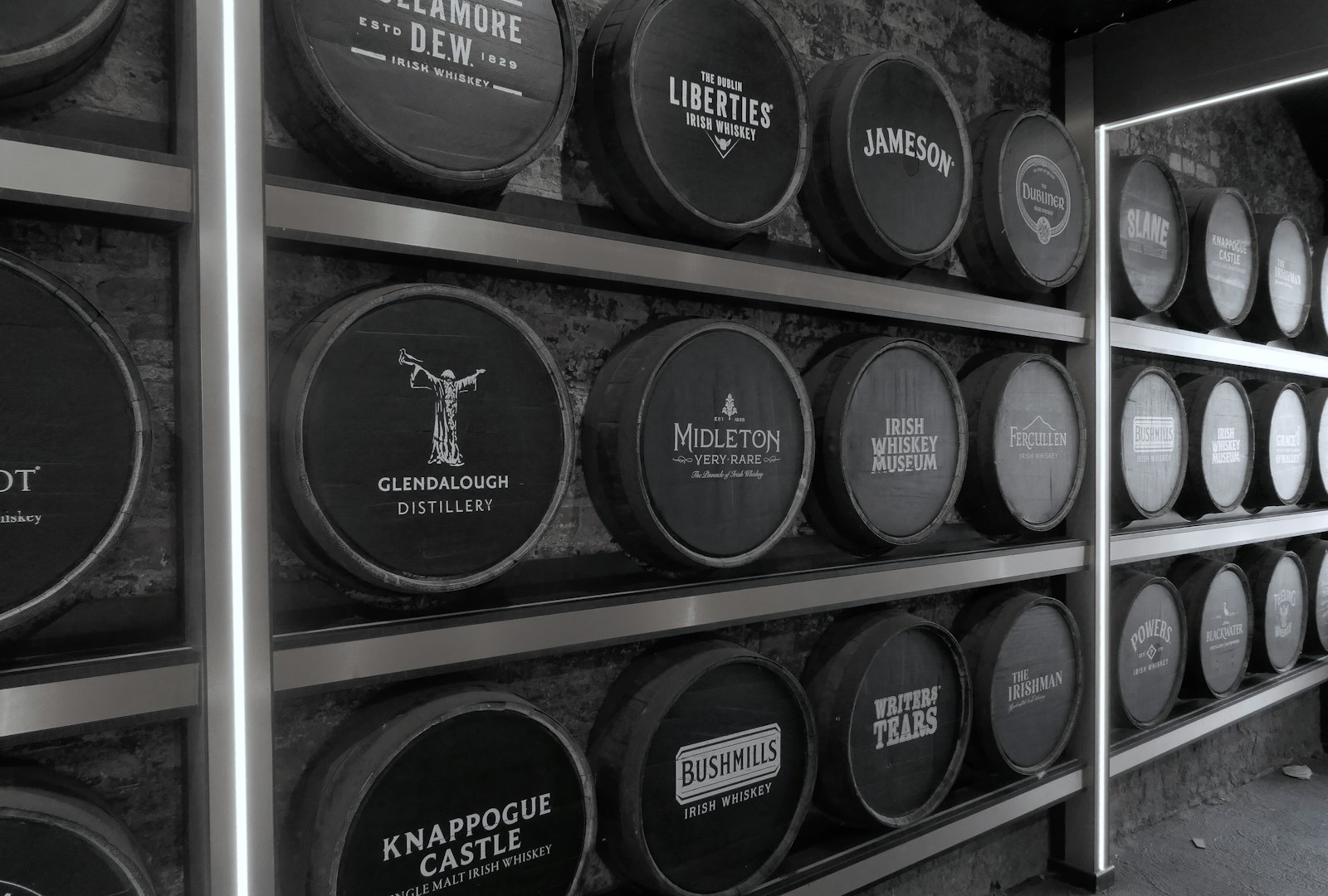
Ireland‘s relationship with whiskey is deep, historic, and absolutely essential to understanding Irish culture. What was once the world’s most popular spirit has experienced a remarkable renaissance in recent years, and Irish whiskey is now hotter than it’s been in over a century. If you’re planning to visit Ireland or simply want to explore what makes Irish whiskey special, this guide will help you appreciate the complexity and character of Ireland’s most celebrated spirit.
A Brief History: From Dominance to Decline to Revival
Irish monks were distilling whiskey as early as the 12th century, and by the 18th and 19th centuries, Ireland was the whiskey capital of the world. Dublin had more distilleries than any other city on Earth. Irish whiskey was exported globally and considered superior to Scotch whisky.
Then came the Irish War of Independence, Prohibition in the United States, and a brutal tariff war with Britain. By the mid-20th century, Irish whiskey had nearly disappeared. At its lowest point in the 1980s, only three distilleries remained operational in all of Ireland.
But over the past two decades, Irish whiskey has experienced an extraordinary resurrection. Today, there are more distilleries operating in Ireland than at any time in the country’s history, with dozens more in development. Irish whiskey sales have tripled in the past decade, and it’s become a source of national pride and economic importance.
What Makes Irish Whiskey Different?
The key differences between Irish whiskey and other whiskeys come down to tradition, regulation, and philosophy.
Triple Distillation: The defining characteristic of traditional Irish whiskey is triple distillation. While most Scotch whiskies are distilled twice, Irish whiskey goes through three distillations, which creates a smoother, lighter spirit. This gives Irish whiskey its characteristic smoothness and accessibility—even people who think they don’t like whiskey often enjoy Irish whiskey.
Minimal Peat: While Scotch whisky often uses peat smoke to dry the malted barley (creating those distinctive smoky, medicinal flavors), Irish whiskey traditionally uses little to no peat. This results in a cleaner, more delicate flavor profile that highlights the grain and other ingredients.
The Spelling: There’s an interesting detail in the name itself. “Whiskey” (with an ‘e’) is Irish and American, while “whisky” (without an ‘e’) is Scottish and Canadian. This isn’t just semantic—it reflects a genuine historical distinction and remains a point of pride for Irish distillers.
Regulations: Irish whiskey must be produced in Ireland, distilled to at least 80 percent ABV, aged in wooden casks for a minimum of three years, and bottled at minimum 40 percent ABV. Beyond that, modern Irish distillers have significant creative freedom.
The Major Distilleries
Jameson is by far the most famous Irish whiskey internationally and the best-selling Irish whiskey in the world. Located in Midleton outside Cork, Jameson is smooth, accessible, and perfect for introducing people to Irish whiskey. The Jameson Distillery in Dublin is one of Ireland’s most visited tourist attractions, offering tastings and tours. For many Americans, Jameson is their gateway into Irish whiskey.
Bushmills is technically the oldest licensed distillery in the world (established 1608) and is located in Northern Ireland. Their whiskeys are smooth and approachable, and Bushmills is particularly known for their blends. A visit to the Bushmills Distillery is worthwhile for the history and setting alone.
Midleton Distillery is the spiritual heart of Irish whiskey production. Located in County Cork, it’s one of the most advanced distilleries in the world and produces both Jameson and premium single pot still whiskeys. The Midleton Very Rare is considered one of the finest Irish whiskeys available, though it comes with a price tag to match.
Tullamore Dew has a long history in Ireland and remains popular both domestically and internationally. Their whiskey is smooth and slightly sweet, making it approachable for newcomers.
The Craft Whiskey Boom
The most exciting development in Irish whiskey over the past decade has been the explosion of craft distilleries. These newer players are experimenting with new techniques, different wood finishes, and creative approaches that are pushing Irish whiskey into unexpected territory.
Teeling Whiskey in Dublin is one of the most innovative craft distilleries. They’re experimenting with ex-bourbon casks, Cognac casks, and other unique finishes that create whiskeys with surprising complexity and flavor.
Dingle Distillery in County Kerry has become a pilgrimage site for whiskey enthusiasts. Their single malts are rich and flavorful, and the distillery itself is stunning. The Dingle Bar in the distillery is perfect for a proper tasting experience.
Powerscourt Distillery in County Wicklow is one of the country’s most beautiful distilleries, located in a historic estate with views of the Wicklow Mountains. Their whiskeys are still new to market, but early releases show promise.
Other notable craft distilleries include Glenveagh in Donegal, Roe & Co. in Dublin, and numerous smaller operations throughout the country. The beauty of this craft movement is that you can taste the creativity and experimentation in every bottle.
How to Taste Irish Whiskey
Tasting whiskey properly enhances the experience significantly.
The Glass: Use a proper whiskey glass—a Glencairn glass is ideal. It’s designed to concentrate the aromas and allow you to appreciate the full sensory experience.
Neat vs. Water: The classic Irish approach is to drink whiskey neat (without ice or water). However, many distillers recommend adding a small splash of water. Water opens up the flavors and reduces the burn of the alcohol, allowing you to taste the subtle notes more clearly. Try it both ways and see which you prefer.
Color: Look at the color. Whiskeys aged in ex-bourbon casks tend to be pale gold, while those aged in Cognac or sherry casks are darker. Color provides clues about the aging process and what flavors you might expect.
Nose: Hold the glass up and smell it. What do you detect? Vanilla from the oak? Fruit? Spice? This is where much of the appreciation of whiskey happens. The aroma often reveals more than the taste.
Palate: Take a small sip. Don’t rush it. Let it coat your mouth and explore different taste areas. Some flavors emerge on the front of the palate, others as you swallow. Common notes include vanilla, honey, fruit, spice, and oak.
Finish: The finish is what lingers after you swallow. Does it fade quickly or linger? Is it warm or cool? The finish tells you about the quality of the distillation and aging.
The Irish Whiskey Trail
If you’re visiting Ireland, several distilleries offer tours and tastings. The “Irish Whiskey Trail” isn’t a single route but rather a collection of distilleries you can visit.
In Dublin, you can visit Teeling Distillery, Roe & Co., and the Jameson Distillery. The Jameson experience is the most polished and tourist-friendly, but Teeling offers a more intimate craft distillery experience.
Cork’s Midleton Distillery is world-class and worth the trip. The tour is excellent, and the single pot still whiskeys produced there are among Ireland’s finest.
Bushmills in Northern Ireland combines excellent whiskey with historical significance. The distillery sits in a beautiful setting in County Antrim.
Dingle Distillery in County Kerry offers perhaps the most scenic distillery experience in Ireland, and their whiskeys are innovative and delicious.
Proper Ways to Enjoy Irish Whiskey
Neat or with Water: The traditional Irish way. A glass of whiskey, perhaps with a small splash of water, sipped slowly while enjoying conversation.
Hot Whiskey: A distinctly Irish preparation, especially popular in winter. Hot whiskey is made with whiskey, hot water, honey, and sometimes lemon. It’s warming, comforting, and delicious. You’ll find it in pubs throughout Ireland, especially during cold months.
Irish Coffee: Perhaps the most famous Irish whiskey preparation. Irish coffee combines hot coffee, whiskey, sugar, and topped with whipped cream. It’s a complete experience—the warmth, the bitterness of coffee, the smoothness of whiskey, and the luxury of cream. The Irish Coffee should be sipped slowly, alternating between drinking the coffee and tasting the cream.
Cocktails: Modern bartenders have embraced Irish whiskey in creative cocktails. In Dublin and other cities, you’ll find contemporary takes on whiskey cocktails that go well beyond the traditional.
Bringing Irish Whiskey Home
If you’ve fallen in love with a particular Irish whiskey while visiting, you can bring a bottle home (most countries allow one or two liters for personal consumption). Many Irish whiskeys are also available in American liquor stores, though prices tend to be higher than in Ireland.
Duty-free shops at Irish airports offer significant savings if you’re planning to buy whiskey to bring home. If you’ve discovered a smaller craft distillery whiskey, you might want to buy there, as these can be hard to find internationally.
The Future of Irish Whiskey
The Irish whiskey industry is experiencing unprecedented growth and innovation. Major international spirits companies are investing heavily in Irish distilleries. Whiskey tourism is booming. And the quality of whiskey being produced is exceptional.
For visitors and enthusiasts, this is the golden age of Irish whiskey. There’s more variety, more quality, and more creativity than ever before. Whether you’re a seasoned whiskey connoisseur or someone discovering whiskey for the first time, Irish whiskey offers something remarkable.
The next time you raise a glass of Irish whiskey, you’re not just enjoying a delicious spirit—you’re participating in a tradition that stretches back centuries and is being reinvented for the future. Sláinte.




Leave a Reply