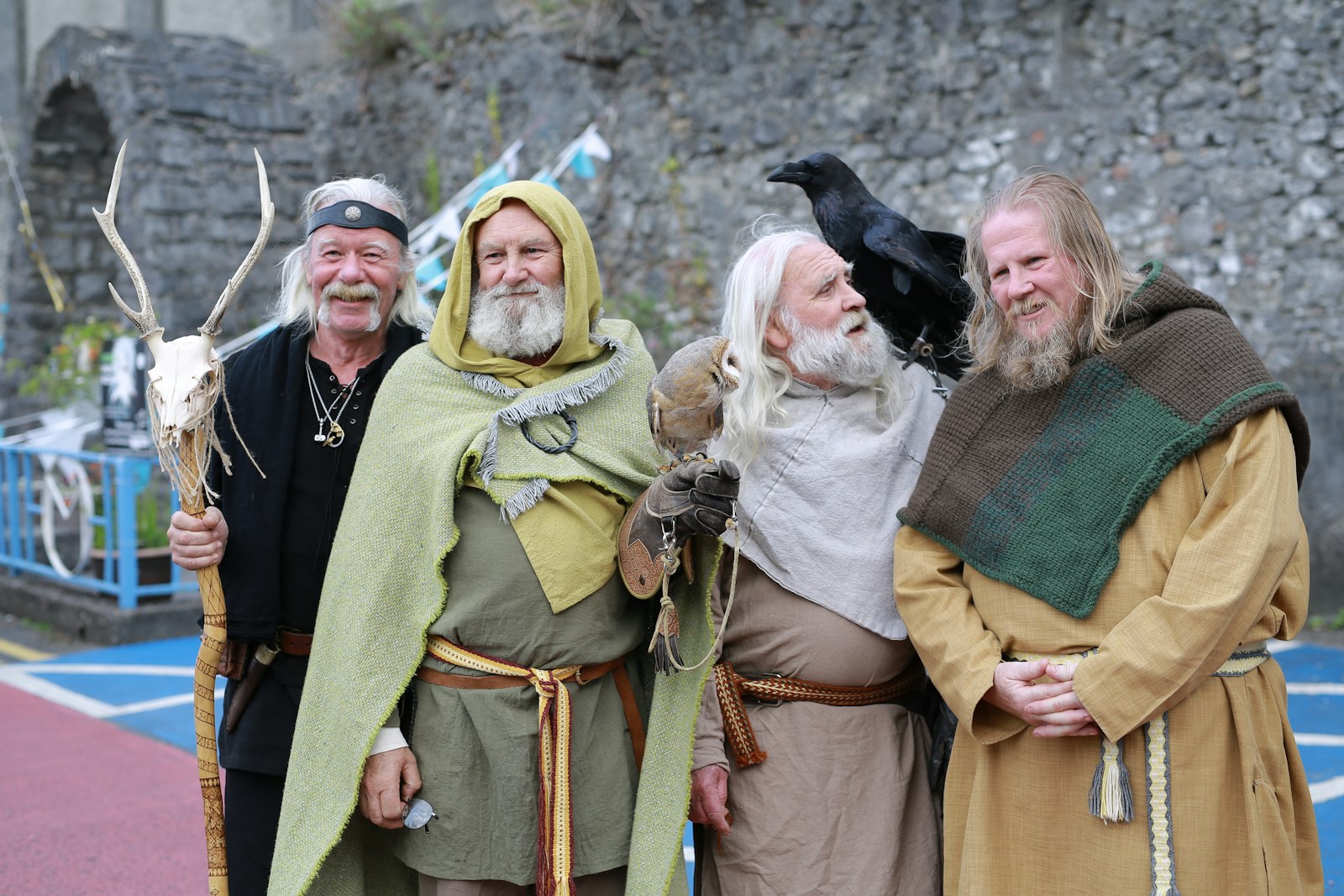
The History Channel’s Vikings (2013-2020), created by Michael Hirst, became a cultural phenomenon that reintroduced audiences to Viking history, Viking culture, and the ways that Nordic expansion shaped medieval Europe. While the series depicts Vikings and Scandinavian culture, much of the later seasons featured Viking interactions with Ireland, and significantly, the show was filmed extensively in Ireland, particularly in County Wicklow. This intersection—a show about Vikings filmed in Ireland using Irish locations—creates an interesting opportunity to explore both Viking history in Ireland and the Irish filming locations that brought this history to screen.
Vikings, Ashford Studios, and Irish Production
Vikings was filmed primarily at Ashford Studios, located in County Wicklow, which provided the show’s production facilities and numerous outdoor filming locations. Ashford Studios is a major film production facility in Ireland, consisting of soundstages, outdoor sets, and facilities capable of supporting large-scale television and film production. The studio was built specifically to support major productions and has become one of Europe’s most important production centers for large television series and films.
The fact that Vikings was filmed at Ashford Studios represents the significant role that Ireland has come to play in international television and film production. Major series like Vikings, along with other productions like the Game of Thrones prequel and various other major productions, are filmed in Ireland because of the combination of excellent facilities, skilled crew, financial incentives through tax credits, and the physical landscape’s suitability for productions depicting various historical periods and settings.
The decision to use Wicklow as a filming location for Vikings is particularly apt, as the county’s dramatic landscapes provided perfect settings for Viking scenes and medieval Irish settings. The show created a kind of Viking settlement and medieval Irish village on the Ashford Studios backlot, with sets constructed to represent Viking settlements and Irish monastic communities.
Lough Tay: The Viking Lake
One of the most visually stunning locations featured in Vikings is Lough Tay, a pristine mountain lake in County Wicklow. The lake, nestled in a valley surrounded by mountains, provided the perfect backdrop for scenes depicting the Vikings’ maritime activities and their relationship to Ireland. The lake’s dramatic landscape—dark water, steep mountain sides, and generally moody atmosphere—suited the show’s aesthetic perfectly.
Lough Tay is accessible to visitors and is one of Ireland’s most photographically striking natural locations. The lake, combined with the surrounding Wicklow Mountains landscape, creates an environment that genuinely does feel otherworldly and suitable for historical drama. Visiting Lough Tay allows you to see the landscape that the show’s producers chose as a backdrop for Viking Ireland.
The lake is sometimes called “Guinness Lake” because it was used in a Guinness advertising campaign in the 1980s, and there’s a legend that it’s the lake mentioned in the Guinness slogan “There’s magic in a Guinness.” Whether this is true or not, the lake’s visual drama is undeniable.
Luggala Estate: Medieval Irish Grandeur
Luggala Estate, also in County Wicklow, served as a filming location for scenes depicting Irish nobility and medieval Irish architecture. The estate, a 19th-century neo-Gothic mansion set in stunning grounds, was used to represent Irish royal and aristocratic settings. The building itself, while not medieval, has the kind of imposing architectural grandeur that suits medieval drama.
The estate is privately owned but offers limited visitor access for tours, making it potentially accessible to fans interested in visiting Vikings filming locations. The surrounding landscape is spectacular—rolling hills, woods, and valleys create the kind of romantic Irish landscape that makes Wicklow particularly attractive for filming.
Wicklow as Filming Destination
Beyond Vikings, County Wicklow has become one of Ireland’s most important filming locations. The county’s combination of dramatic mountain landscapes, accessible proximity to Dublin, existing studio facilities at Ashford Studios, and various historical sites make it ideal for productions requiring both period settings and practical production infrastructure.
For visitors interested in Vikings filming locations, Wicklow provides access to the primary production areas. The county is easily reached from Dublin and offers numerous attractions beyond film locations—hiking in the Wicklow Mountains, visits to historical sites like Glendalough, and the scenic beauty of the county itself.
Viking History in Ireland: Fact vs. Fiction
While Vikings is fictional entertainment rather than historical documentary, it’s based on actual Viking history. The Vikings did raid and eventually settle in Ireland, establishing trading ports and eventually towns like Dublin, Waterford, and Limerick. Understanding the real Viking history of Ireland helps contextualize what the show depicts.
Viking raids on Ireland began in the late 8th century and continued through the early medieval period. The Vikings initially came as raiders, targeting monasteries and coastal settlements for plunder. Over time, some Vikings established permanent settlements and integrated into Irish society, creating a hybrid culture that blended Scandinavian and Irish elements.
The Vikings’ maritime technology and trading networks allowed them to establish trading posts that eventually became the first towns in Ireland. Dublin, which began as a Viking settlement called Dubh Linn, became one of medieval Ireland’s most important centers. The Vikings introduced urban development, commerce, and maritime technology that shaped medieval Ireland’s development.
The show Vikings takes considerable fictional license with historical events and timelines, combining historical elements with invented characters and storylines for dramatic effect. The show’s portrayal of Vikings is somewhat romanticized—emphasizing their warfare and exploration while necessarily simplifying the complex reality of Viking society, culture, and interaction with existing populations.
Connecting to Actual Viking Sites in Dublin and Waterford
If you’re interested in actual Viking heritage in Ireland, visiting Dublin’s medieval center offers tangible connections to the Viking past. The Temple Bar area and medieval Dublin, while heavily developed with tourist facilities, sits on the location of the original Viking settlement. The National Museum in Dublin has Viking artifacts and exhibits explaining Viking settlement in Ireland.
Waterford, another major Viking settlement, offers more tangible connections to medieval Viking history. The city has preserved medieval walls and has established itself as a heritage destination emphasizing its Viking roots. Visiting Waterford allows you to see how a Viking settlement developed into a medieval city and how that heritage shapes contemporary Irish identity.
Limerick, the third major Viking settlement, similarly has medieval sites and museums dedicated to medieval history, though the Viking-specific heritage is somewhat less emphasized than in Waterford.
The Show’s Impact on Wicklow Tourism
Vikings has significantly boosted tourism to Wicklow. Fans of the show traveling to Ireland specifically to visit filming locations has become a substantial tourism category. This has benefited the Wicklow tourism industry and has raised the profile of the county as a filming destination for international productions.
The show has created what we might call “production tourism”—visitors traveling specifically to visit locations where entertainment media was filmed. While this can sometimes feel like a secondary or less “authentic” form of tourism compared to visiting historical sites for their own sake, it has real economic impacts and can introduce visitors to locations and regions they might not otherwise visit.
Understanding Medieval Irish Society Through Vikings
Engaging with Vikings and subsequently visiting Irish historical sites creates an interesting opportunity to compare fictional dramatization with historical reality. The show depicts Vikings and Irish people in conflict, negotiation, and eventual integration. Understanding how the show portrays these interactions and then visiting actual historical sites that represent medieval Irish-Viking coexistence provides layered understanding of how these societies actually functioned.
The medieval period in Ireland was complex, involving multiple overlapping cultures and power structures. The Vikings represented one force among many—there were also various Irish kingdoms and dynasties, each with their own territorial claims and powers. The integration of Viking and Irish elements over time created the cultural foundation for medieval and contemporary Ireland.
Visiting Ashford Studios and Production Facilities
While Ashford Studios is primarily a working film and television production facility rather than a tourist attraction, the studio occasionally opens for tours or special events. Visiting the studio provides insight into contemporary Irish film and television production infrastructure.
The existence of high-quality production facilities in Ireland has transformed the country’s role in international entertainment. Rather than just being a filming location for foreign productions, Ireland has developed the technical expertise and infrastructure to support large-scale productions. This represents significant economic development and cultural impact for regions like Wicklow that host these facilities.
The Broader Context: Large-Scale Production in Ireland
Vikings represents one example of large-scale international television production filmed in Ireland. The show’s success and longevity (it ran for six seasons) demonstrates the viability of major production investments in Ireland. Other significant productions like various Marvel films, Game of Thrones prequels, and other major television series have similarly chosen Ireland as a filming location.
This represents a significant shift in how Irish geography and Irish production infrastructure are used in global entertainment. Rather than Ireland being merely scenic backdrop (as in some of the romantic dramas discussed earlier), Ireland is becoming a major production hub where complex, large-scale productions with significant budgets and international casts are filmed.
The Takeaway
Vikings, while fictional entertainment, offers viewers a window into both real Viking history and contemporary Irish film production. For visitors interested in this intersection, County Wicklow provides access to filming locations while also offering the dramatic natural landscape that made the county attractive for production.
More broadly, understanding Vikings and its filming in Ireland represents understanding how contemporary global entertainment production uses Ireland—both for its landscape and its production infrastructure. This represents one significant way that Irish culture and Irish geography intersect with global entertainment media in the 21st century.
For history enthusiasts, engaging with the show and then visiting actual Viking heritage sites in Dublin, Waterford, and Limerick provides layered understanding of how Vikings shaped medieval Ireland and how that history continues to shape Irish identity and Irish cities today.




Leave a Reply