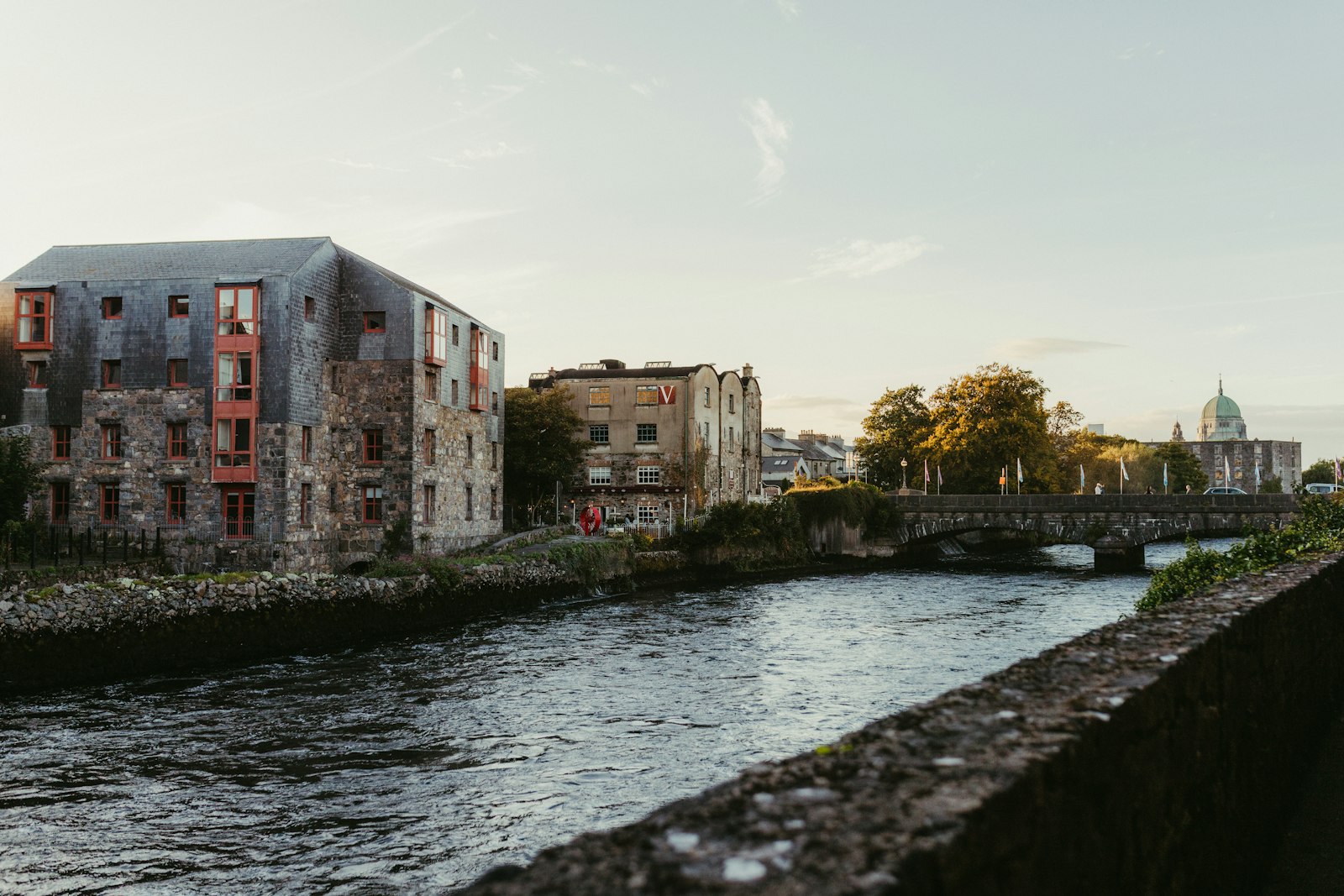
River flowing past old buildings with a bridge

Getting Around Ireland: Transport Phrases & Practical Tips

Photo by Jonathan Borba on Unsplash

·

·

Getting from point A to point B in Ireland requires more than just understanding geography—it requires understanding Irish logic, Irish directions, and a whole vocabulary specific to Irish transportation. Irish people have a unique way of describing distances, directions, and travel that will either delight or deeply confuse you. Probably both.

Understanding Irish Directions

The Fundamental Problem with Irish Directions

Here’s what you need to know: when an Irish person says “It’s just up the road,” they could mean:

  • 500 meters
  • 2 kilometers
  • 5 kilometers
  • Actually just up the road

Distance is meaningless in Irish directions. Time is equally unreliable.

“Five minutes” might mean 5 minutes, 15 minutes, or “about that time.” Irish people estimate distance and time the way Americans estimate how much they’ll spend at Target: optimistically and without basis in reality.

Best approach: Ask specifically: “How long would the walk be?” or “What’s the distance?” or “Would I need a car?” Get specifics, not vague directions.

Common Direction Phrases

  • “Just up the road” = Somewhere in that direction (distance unknown)
  • “Down the way” = That direction (also distance unknown)
  • “Round the corner” = Near, but potentially very near or moderately far
  • “Not far” = Could be 500 meters or 3 kilometers
  • “You can’t miss it” = You will absolutely miss it
  • “Straight ahead” = Probably keep going straight
  • “Take the next left/right” = The immediate next left/right, or possibly the one after
  • “Follow the road” = Keep going
  • “It’s past the shop” = After you pass a shop (there will be many shops)
  • Navigating by Landmark

    The Irish navigate by landmarks, not by distance or direction numbers.

    Typical Irish directions:
    “Go down the road past the church—but the old church, not the new one—and you’ll see a corner shop. Your man’s place is past that, after the bus stop, before the petrol station. You’ll see a green gate. That’s it.”

    This seems impossible but actually works once you understand it.

    American approach: Use Google Maps. Just do it. Irish people use it too now, so don’t feel bad.

    Public Transportation Vocabulary

    Bus Services

    Bus Éireann – The national bus service operating throughout the country (outside Dublin).

    Context:

  • “When’s the next Bus Éireann?” = When’s the next regional bus?
  • “Where’s the Bus Éireann station?”
  • Dublin Bus – The bus service operating in Dublin and surrounding areas.

    Context:

  • “I need a Dublin Bus to the city center”
  • “Dublin Bus is frequent”
  • Luas (pronounced “LOO-us,” meaning “speed” in Irish) – The light rail/tram system in Dublin, operating in two lines (Red and Green).

    Context:

  • “Take the Luas to the city center”
  • “Which Luas line goes to…?”
  • “Red Luas or Green Luas?”
  • Rail Services

    DART (Dublin Area Rapid Transit) – The train service connecting Dublin and surrounding towns.

    Context:

  • “Take the DART to Howth”
  • “The DART is quick”
  • “DART station”
  • Irish Rail – The national train service connecting Dublin to other cities and towns.

    Context:

  • “Irish Rail to Cork”
  • “What time’s the next Irish Rail?”
  • “Irish Rail is expensive but reliable”
  • General Public Transport Phrases

  • “How much is a ticket?” = Self-explanatory
  • “One adult, please” = One ticket for an adult
  • “A child ticket” = Reduced fare for children
  • “Do you have a return?” = Do you have a round-trip ticket?
  • “To [destination], please” = I need a ticket to…
  • “Is this the right platform?” = Confirming you’re at the correct place
  • “Does this bus go to…?” = Asking the driver for confirmation
  • “Next stop?” = What’s the next stop?
  • “Leap Card”

    This is a prepaid card used on Dublin buses, DART, and Luas. It’s cheaper than buying individual tickets.

    Context:

  • “Do you have Leap Cards?”
  • “I’d like to load credit on my Leap Card”
  • “Leap Card, please” (paying with it)
  • If you’re spending more than a few days in Dublin, get a Leap Card. It saves money and time.

    Driving Terminology

    Car Hire vs. “Renting”

    Americans “rent” cars. Irish “hire” cars. The concept is the same.

    Context:

  • “I need to hire a car for a week”
  • “Car hire desk”
  • “Where’s the car hire company?”
  • Never say “rent a car” to Irish people—they won’t understand you’re talking about cars. “Rent” in Ireland means to lease a house or apartment long-term.

    Critical Driving Information

    Drive on the left side of the road. This is obvious once you think about it, but Americans constantly get this wrong initially.

    Roundabouts:

  • Give way to cars already in the roundabout
  • Go clockwise around the roundabout
  • Exit when you reach your direction
  • “Take the second exit” = count exits as you go around
  • If the Irish description says “second exit,” they mean the second exit you encounter going around.

    Road Types

  • Motorways (M-roads): “M1,” “M2,” etc. These are highways. Generally well-maintained.
  • National roads (N-roads): “N1,” “N2,” etc. Larger roads, but not always well-maintained. Can be surprisingly narrow.
  • Regional roads (R-roads): “R151,” etc. Smaller roads, scenic, sometimes very narrow.
  • Local roads: Small country roads, often single-lane with passing spots.
  • Context:

  • “Take the M4 to the M7” = Take these motorways
  • “The N5 is scenic”
  • “Country roads are gorgeous but slow”
  • Parking

  • “Car park” = Parking lot
  • “Parking meter” = What you pay for parking
  • “Parking ticket” = Both the receipt and the fine
  • “No parking” = Don’t park here
  • “Permit holder only” = You need a permit
  • Petrol (Gas)

  • “Petrol” = Gasoline (the fuel)
  • “Diesel” = Diesel fuel
  • “Petrol station” or “Filling station” or “Garage” = Gas station
  • “Fill it up, please” = Fill the tank
  • “20 euro of petrol” = €20 worth of gas
  • Price shock warning: Irish petrol is expensive compared to American gas. Much more expensive. Budget accordingly.

    Car Parts and Maintenance

  • “Bonnet” = Hood (engine cover)
  • “Boot” = Trunk
  • “Wing mirror” = Side mirror
  • “Windscreen” = Windshield
  • “Tyre” = Tire
  • “Gearbox” = Transmission
  • “Clutch” = Clutch pedal (for manual cars)
  • Most Irish rental cars are manual transmission. If you can’t drive stick, specifically request automatic.

    Driving Phrases

  • “Driving on the left feels backwards” = True, but you’ll get used to it
  • “I need to adjust the mirrors” = You’ll need to do this immediately
  • “The roads are narrow” = Welcome to Ireland
  • “What’s the speed limit?” = Usually 50 km/h in towns, 100 km/h on national roads, 120 km/h on motorways
  • “Is this road safe?” = Some Irish country roads are genuinely sketchy
  • “I need directions” = Use your GPS; don’t rely on locals
  • Driving Warnings

    1. Irish drivers are aggressive. They tailgate, overtake in risky places, and drive fast. Don’t take it personally.
    2. Speed cameras everywhere. They issue fines by mail to your home address if you’re renting.
    3. Narrow roads have no margin for error. Some country roads are barely wide enough for one car.
    4. Weather changes fast. Rain can make roads treacherous within minutes.
    5. Sheep on roads. In rural areas, livestock sometimes wanders onto roads. Slow down.
    6. Drunk driving laws are serious. The limit is very low, and penalties are severe. Designate a driver or use taxis/Ubers.

    Taxi and Ride-Share

    Traditional Taxis

  • “Taxi rank” or “Taxi stand” = Where taxis wait
  • “Can you call a taxi?” = Ask staff to request a taxi
  • “To [address], please” = Your destination
  • Uber and Ride-Shares

    Uber operates in Dublin and some other cities. Use the app like anywhere else.

    Context:

  • “I’ll call an Uber”
  • “Where’s the Uber pickup?”
  • Phrases

  • “How much will it cost?” = Asking about fare
  • “Is there a meter?” = Confirming they’re using proper pricing
  • “Can you take me to…” = Your destination
  • “Receipt, please” = For expense reporting
  • Train Travel

    Booking and Buying Tickets

  • “Single” = One-way ticket
  • “Return” = Round-trip ticket
  • “What time is the next train to…?”
  • “How long is the journey?” = How long will the trip take?
  • “First class” or “Standard” = Ticket type
  • On the Train

  • “Is this seat taken?” = Polite way to ask before sitting
  • “Which stop is…?” = Asking about a specific destination
  • “Excuse me, is this the train to…?” = Confirming you’re on the right train
  • “Buffet car” = The food and drink area on the train
  • “Dining car” = The restaurant car on longer trains
  • Walking Directions

    Pedestrian Phrases

  • “Footpath” = Sidewalk
  • “Pavement” = The road surface (not the sidewalk; confusing!)
  • “Pedestrian crossing” = Crosswalk
  • “Zebra crossing” = Striped pedestrian crossing
  • “Traffic lights” = The lights controlling traffic flow
  • “Keep right” = Walk on the right side (opposite of America)
  • Walking Tips

  • Irish pedestrians have right of way. Drivers respect this, mostly.
  • Footpaths can be narrow or nonexistent in rural areas. Walk carefully.
  • Weather changes quickly. Always bring a rain jacket.
  • Walking is a major activity in Ireland. Many Irish towns are best explored on foot.
  • Some Confusing Irish vs. American Transportation Terms

    | Irish | American | Meaning |
    |——-|———-|———|
    | Petrol | Gas | Fuel |
    | Diesel | Diesel | Diesel fuel |
    | Hire a car | Rent a car | Get a car for temporary use |
    | Motorway | Highway | Major road |
    | National Road (N-road) | State highway | Large road |
    | Regional Road (R-road) | County road | Medium road |
    | Car park | Parking lot | Where you park |
    | Boot | Trunk | Back storage |
    | Bonnet | Hood | Engine cover |
    | Wing mirror | Side mirror | Side mirror |
    | Windscreen | Windshield | Front window |
    | Tyre | Tire | Wheel rubber |
    | Footpath | Sidewalk | Pedestrian path |
    | Pavement | Pavement/asphalt | Road surface |
    | Zebra crossing | Crosswalk | Pedestrian crossing |
    | Roundabout | Traffic circle | Circular intersection |

    Pro Tips for Getting Around Ireland

  • Get Google Maps offline maps. Internet can be spotty in rural areas.
  • Embrace roundabouts. They’re efficient and everywhere.
  • Bus travel is affordable. Consider coaches for longer distances.
  • Irish Rail is scenic. Some journeys are worth taking just for the views.
  • Walk when possible. You’ll see things you’d miss driving.
  • Ask locals for recommendations about routes. They often know good scenic routes.
  • Don’t rely on verbal directions. Use your phone GPS.
  • Be patient with traffic. Irish roads handle volume differently than American highways.
  • Enjoy the journey. Irish travel is as much about the experience as the destination.
  • Final Thoughts

    Getting around Ireland requires patience, flexibility, and a sense of humor. The directions might not make sense, the roads might be narrower than your car, and “just up the road” might mean anything. But that’s part of the Irish experience.

    The best travelers embrace the confusion, laugh at the vagueness, use their GPS, and enjoy the journey. The chaos of Irish transportation is a feature, not a bug—it’s part of what makes Ireland uniquely Irish.

    Now stop asking for directions and use your phone. Even Irish people do it now.

    Free Newsletter!

    Join the Europetopia Newsletter for free tips on travel, history, and culture in Europe!

    We promise we’ll never spam! Take a look at our Privacy Policy for more info.


    Jonathan Avatar

    Written by

    Related Articles

    Comments

    Leave a Reply

    Your email address will not be published. Required fields are marked *


