When American travelers touch down in Britain, they’re stepping into a land that was once the edge of one of history’s greatest empires. For nearly 400 years, Roman legionaries marched these misty islands, building towns, roads, and fortifications that would shape the British landscape forever. Today, you can walk the same ancient stones they laid, soak in the bathhouses they built, and stand at the northern frontier of empire that kept them guessing for centuries.
The Invasion: Caesar to Conquest
The Romans first got serious about Britain in 43 AD, when Emperor Claudius launched an invasion that would last four centuries. This wasn’t the first time they’d shown interest—Julius Caesar had raided the island nearly a century earlier—but Claudius came to stay. His legions crossed the Channel, defeated the British tribes in a series of battles, and established Londinium (modern-day London) as their administrative capital around 50 AD.
For most travelers, London is where your Roman journey begins, though the remains are often hidden beneath the medieval and modern city. The Romans were ruthless in their efficiency: they built a fort, then a trading post, then a proper city with temples, forums, and administrative buildings. The settlement quickly became the commercial heart of Roman Britain, and it’s where the real story of the island’s Romanization takes hold.
What makes Roman Britain so compelling isn’t just the military conquest—it’s what happened next. The Romans didn’t annihilate British culture; they blended with it, creating something new. British nobles adopted Roman dress and titles. Romano-British villas emerged in the countryside, showcasing the wealth that came from trade and agriculture. By the 2nd century AD, Britain was producing wheat, tin, lead, and iron that helped fuel the empire’s great machine.
Londinium: The Gateway City
Walking through central London today, most people have no idea they’re treading on Roman foundations. But beneath the Bank of England, the Tower of London, and countless Victorian buildings lies the ghost of Roman London. The Museum of London in Barbican holds some of the finest artifacts you’ll see in Britain—pottery, glass, jewelry, and even graffiti scratched on walls by merchants nearly 2,000 years ago.
If you want to touch something genuinely Roman, head to the Museum of London and look for items from the Mithras temple, discovered during post-World War II rebuilding. Or visit the remains of the Roman fort at Tower Hill, where you can see the actual walls that once protected the garrison. Standing there, imagining legionaries in their armor, watching merchant ships navigate the Thames, connects you to a Britain that most visitors never see.
The Northern Frontier: Hadrian’s Wall
But the real symbol of Roman Britain, and the site that stopped the empire’s expansion, is Hadrian’s Wall. Built beginning in 122 AD under Emperor Hadrian, this 73-mile-long stone barrier stretches across northern England from the North Sea to the Irish Sea. It remains one of the most dramatic monuments of Roman ambition ever constructed—a line drawn in the landscape declaring “this far, no further.”
For American travelers, there’s something almost incomprehensible about building such a massive structure just to mark a boundary. But Hadrian’s Wall did more than that. It was a military installation, a customs checkpoint, and a powerful symbol of Roman control. Garrisoned with around 9,000 soldiers, the wall regulated trade, controlled movement, and served as a base for operations against the Caledonians (the Celtic tribes of Scotland) to the north.
Today, you can walk sections of the wall, and many travelers find it one of their most moving experiences in Britain. The landscape is raw and windswept; you understand immediately why the Romans found this frontier so challenging. The wall climbs and descends with the terrain, sometimes disappearing beneath later stone walls built by medieval farmers, but emerging again with astonishing frequency.
The best place to start is Hadrian’s Wall Country, centered around the market town of Hexham. Visit the Roman Army Museum at Vindolanda fort to see the remains of a fully-excavated auxiliary fort, and more importantly, to see the Vindolanda Tablets—fragments of wooden writing tablets that provide an intimate window into Roman military life. Shopping lists, personal correspondence, duty rosters: these 2,000-year-old notes are genuinely moving.
Housesteads Fort offers perhaps the most dramatic remains on the wall itself, sitting on a high ridge with views that make you understand the Romans’ strategic brilliance. You can walk through the gates, see the headquarters building, the barracks, and the latrines—yes, the Romans were nothing if not practical. Chesters Roman Fort, near the Tyne River, showcases the remains of a cavalry fort with its bathhouse still partly visible.
The Baths: Roman Comfort at Its Finest
If you want to understand how far ahead of their time the Romans were, head to Bath (Aquae Sulis in Latin), about two hours west of London. The Roman Baths are among the best-preserved Roman remains in the entire empire, and they’re extraordinary.
The Romans discovered hot springs in this location and built an elaborate complex of baths around them—a health resort and social center rolled into one. Walking through the Great Bath, with its green mineral water (the color comes from algae in natural light, though the Romans never saw it this way), you’re seeing essentially the same structure that Roman citizens enjoyed nearly 2,000 years ago. The architectural sophistication is stunning: the hypocaust system (heating pipes running beneath the floors), the engineering that managed the hot springs, the intricate mosaics and carvings.
Even more affecting is standing in the bathing rooms themselves and imagining the social life that happened here. The Romans were far from prudish; the baths were places where people gathered, socialized, exercised, and found some of the few public spaces where different classes might interact. For modern visitors, it offers a very human connection to the past.
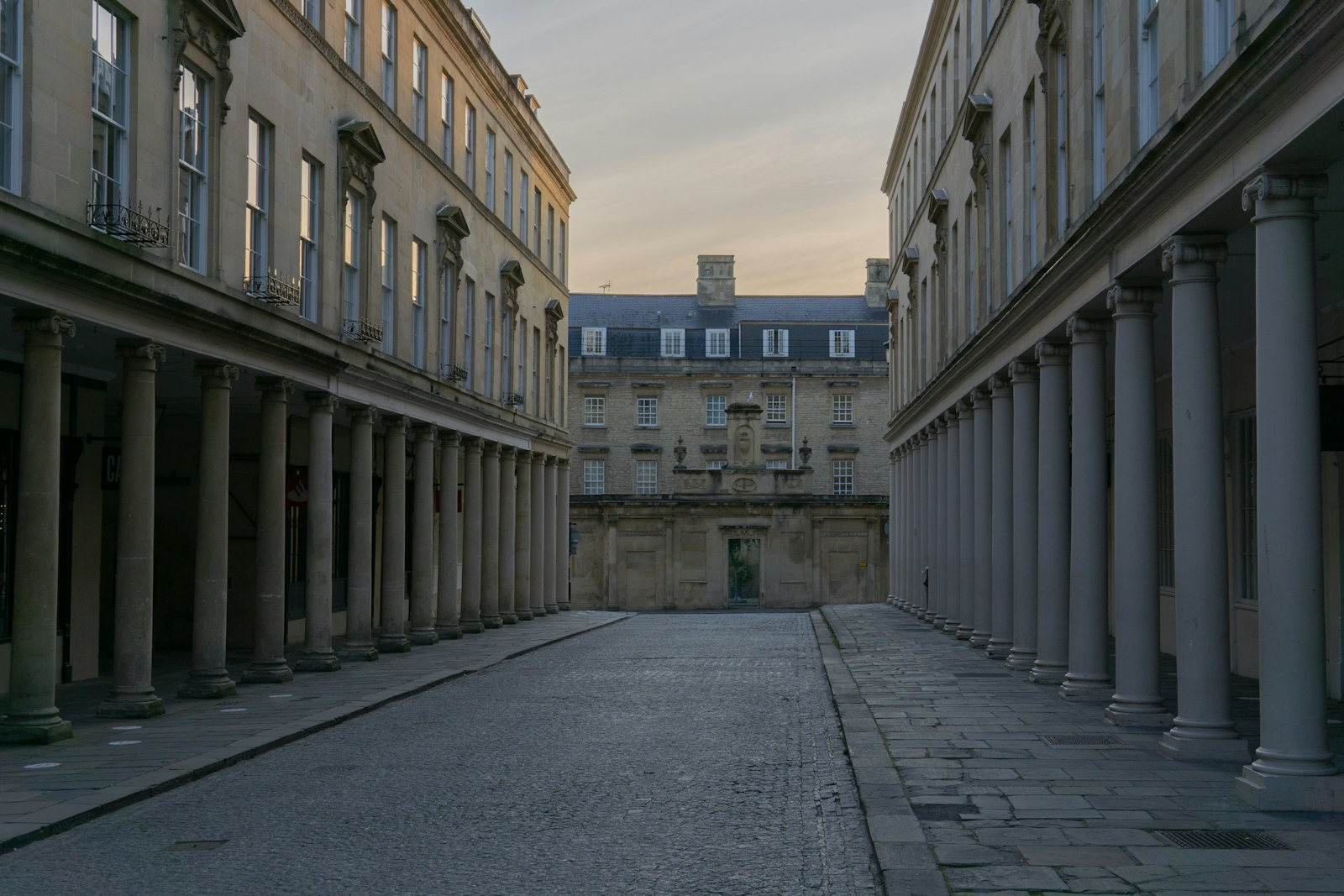
Bath itself—one of England’s loveliest cities—grew up because of those Roman springs. Later Georgian architecture sits comfortably alongside Roman foundations, creating a beautiful layering of history.
Roads, Towns, and the Infrastructure of Empire
Beyond the major sites, Roman Britain’s greatest legacy might be the infrastructure that still shapes the landscape. The Romans built roads with mathematical precision, many of which still form the backbone of modern Britain. Watling Street, which ran from Dover to London to the northwest, follows roughly the same route as modern roads today. The engineering was so good that medieval builders often used Roman roads as the foundation for their own highways.
Throughout Britain, you can visit Roman towns beyond Bath and London. Caerleon, in Wales, held a legionary fortress and had an amphitheater—one of only two permanent stone-built amphitheaters in Roman Britain. Chester (Deva) was another major fortress town, and you can see the remains of the Roman walls incorporated into the medieval city walls that still encircle Chester today. Colchester (Camulodunum) was the capital of Roman Britain before Londinium took over, and it preserves remarkable remains including a temple.
The Withdrawal and Legacy
The Roman story in Britain ends suddenly in 410 AD. As the empire collapsed under pressure from invasions elsewhere, the Roman legions withdrew to defend Rome itself. The letter from the Roman government to Britain essentially said: “You’re on your own now.” It’s a poignant moment in history—the departure of 350 years of military and administrative presence.
What followed was centuries of confusion and conflict that gave birth to the Anglo-Saxon kingdoms. But the Romans never truly left. Their roads remained. Their cities continued to exist. Romano-British culture blended with Anglo-Saxon culture to create something new.
Planning Your Roman Britain Journey
The best strategy is to base yourself in London for the Roman Baths Museum and surrounding sites, then take a longer trip north to the Wall. Many tour operators offer guided Hadrian’s Wall walks, or you can do it yourself by car, visiting the various forts and museums. Summer is ideal for walking the wall itself; winter brings dramatic skies but challenging conditions.
Bring comfortable walking shoes, expect variable weather even in summer, and be prepared for the windswept romance of standing on the edge of empire. The Romans left Britain behind, but they left behind enough that you can still touch their world and understand the people who built it.
When you stand on Hadrian’s Wall watching the Northumberland hills stretch toward Scotland, or when you descend into the Roman Baths and see the mineral water that Roman soldiers once soaked in, you’re connected across nearly 2,000 years to people who traveled just as far from home as you did, just as eager to explore a distant land that would forever bear their stamp.




Leave a Reply