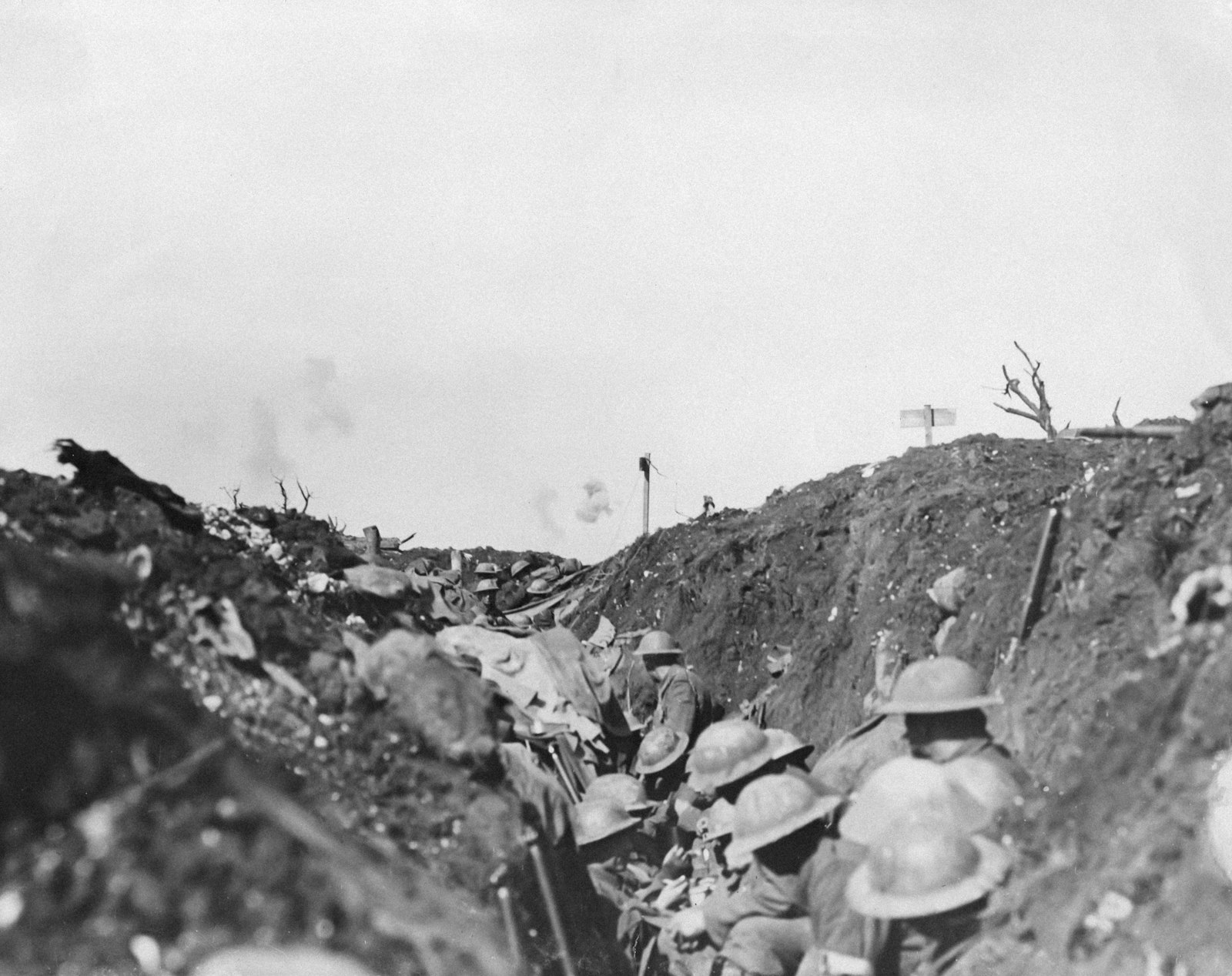
World War I was the Great War, the War to End All Wars, the catastrophic conflict that transformed Britain forever. It began as a distant crisis in the Balkans and ended with millions dead, empires collapsed, and a generation of young men lost. For Britain, the war meant nearly a million soldiers killed, the end of the empire’s absolute dominance, the loss of certainty about the future, and a deep wound to the national psyche that has never entirely healed.
For American travelers, understanding British World War I experience is crucial because it shaped everything that followed: British policy in the interwar period, British response to the rise of Hitler and fascism, Britain’s role in World War II, the eventual end of the British Empire. American soldiers fighting in Europe in 1917-1918 encountered British soldiers who had already been fighting for three years. Understanding what those British soldiers had experienced helps you understand the war and its impact.
World War I also created a particular British culture of remembrance that persists today. The annual Remembrance Day on November 11 (Armistice Day) is central to British culture in a way that many Americans might not immediately understand. To understand modern Britain, you need to understand the war that created this culture of remembrance.
Britain Before the War: Imperial Confidence and Hidden Vulnerability
At the start of the 20th century, Britain was the world’s dominant power. The Royal Navy ruled the seas. The British Empire sprawled across the globe. London was the financial center of the world. British industry was advanced. British culture was influential.
Yet beneath this confidence were vulnerabilities. Germany was industrializing rapidly and challenging British industrial dominance. Germany’s navy, expanded under Kaiser Wilhelm II, was becoming a serious rival to British naval supremacy. Rising German nationalism and militarism posed a political threat. And the Balkans—the region where World War I would actually start—was a powder keg of instability as the Ottoman Empire declined and nationalist movements stirred.
Britain was also deeply divided internally. Ireland was demanding independence and moving toward rebellion. The women’s suffrage movement was becoming increasingly militant. Labor disputes were growing more contentious. The social divisions revealed by the Industrial Revolution and never fully healed were creating political instability.
Into the War: August 1914
When Archduke Franz Ferdinand of Austria was assassinated in Sarajevo in June 1914, it set off a cascade of events that led to war. Austria attacked Serbia. Russia mobilized to support Serbia. Germany mobilized against Russia. France mobilized against Germany. Germany invaded Belgium (which Britain had guaranteed to protect) and France simultaneously.
Britain entered the war on August 4, 1914, honoring its commitment to defend Belgian neutrality. It was supposed to be a short war; many people believed it would be “over by Christmas.” Instead, it lasted four years and became the bloodiest conflict in human history to that point.
The Trenches and the Western Front
For the first two years of the war, the Western Front barely moved. Millions of soldiers on each side faced each other across trenches that stretched from the English Channel to Switzerland. Neither side could break through. Attacks that cost hundreds of thousands of lives gained a few miles of muddy ground.
The trenches are difficult for modern people to imagine. They were not neat lines but elaborate networks of trenches, barbed wire, machine-gun positions, and fortifications. The ground between opposing trenches (no man’s land) was devastated, torn up by artillery, full of corpses, impossible to cross without enormous casualties. During the day, soldiers sheltered in the trenches. During night, they might go over the top—climb out of the trenches and attack across no man’s land.
The casualties were staggering. The Battle of the Somme, which lasted from July to November 1916, saw British casualties of nearly 500,000 and German casualties of similar magnitude, for territorial gains that could be measured in hundreds of yards. On the first day of the Somme, July 1, 1916, the British Army suffered nearly 20,000 killed—the worst day in British military history.
The young men who went over the top knew, often, that they would be killed. Machine guns cut down waves of soldiers as they advanced. Artillery had churned the landscape into a lunar mudscape. Gas attacks (introduced later in the war) added chemical horrors to the mechanical slaughter. And yet the attacks continued, ordered by generals who seemed to have no other strategy besides “more men, more attacks.”
The Poets of War
This horror found expression in poetry. Wilfred Owen, one of the most important poets of the war, wrote poems about the reality of trench warfare that contrasted sharply with the patriotic propaganda from home. Owen’s famous poem “Dulce et Decorum Est” describes the reality of a gas attack and ends with the bitter assertion that the Latin phrase meaning “it is sweet and fitting to die for one’s country” is “the old lie.”
Other war poets—Siegfried Sassoon, Rupert Brooke, Isaac Rosenberg—also wrote about the war, some expressing patriotic sentiment, others expressing horror at the senselessness of the slaughter. These poets gave voice to the moral crisis of the war. The poetry they produced remains extraordinarily powerful and is still widely read and studied.
The Home Front: War and Society
While soldiers fought in the trenches, the war transformed British society. The government introduced conscription (the draft) to feed men into the army. Rationing was introduced, with food and materials strictly limited. Factories switched to war production. Women worked in factories, hospitals, and farms, taking on roles previously reserved for men.
The war created labor shortages that gave workers new bargaining power. It also created the conditions for women to prove their capabilities beyond the domestic sphere. The sight of women working in factories and serving as nurses demonstrated that women could do more than just be wives and mothers. While women didn’t gain the right to vote until after the war (and initially, only women over thirty), the war accelerated the momentum toward women’s suffrage.
Air raids, including attacks on London, meant that civilians experienced the war too. Londoners crowded into the Underground (Tube stations) for shelter during air raids. Cities were damaged. Civilians died. The war was not just something happening somewhere else; it was happening at home.
Gallipoli: Tragedy in Turkey
Not all of Britain’s military campaigns happened on the Western Front. In 1915, hoping to break the stalemate and knock the Ottoman Empire out of the war, British and ANZAC (Australian and New Zealand) forces attempted an amphibious landing at Gallipoli in Turkey. It was a disaster. The terrain was difficult, the Ottoman resistance was fierce, and the British command was inept. Thousands of soldiers were killed or wounded in what became one of the war’s famous defeats.
For Australians and New Zealanders, Gallipoli became a defining national moment—a display of courage and solidarity that helped forge national identities distinct from Britain. For Britain, it was a failure and an example of how the command structure (often generals who never visited the front or understood conditions there) made disastrous decisions.
The War Ends: November 1918
By late 1918, Germany was exhausted. The American entry into the war in April 1917 (after Germany resumed unrestricted submarine warfare) had turned the balance. Germany was facing defeat on all fronts. Revolution threatened internally as workers and soldiers demanded an end to the war.
The Armistice was signed on November 11, 1918, at 11 a.m. Guns fell silent. After four years of horror, the war was over. The reaction in Britain was joyous and ecstatic. People poured into the streets. Strangers embraced. Church bells rang. The nightmare was finally ending.
But underneath the joy was a profound trauma. Nearly a million British soldiers had been killed (1.1 million including the entire empire). More than twice that many had been wounded. Every street in every town in Britain had lost young men. Almost everyone had lost a friend, a brother, a son, or a husband. The scale of the loss was incomprehensible. An entire generation had been decimated.
The Cenotaph and Remembrance Culture
In the aftermath of the war, Britain developed a culture of remembrance without equal in the world. The most famous symbol is the Cenotaph in Whitehall, London, designed by Edwin Lutyens and unveiled in 1920. The Cenotaph is deliberately abstract: not a memorial to a specific person, but an empty tomb representing all the unknown dead.
The Cenotaph became the focus for Remembrance Day (November 11), when the nation gathers to remember the war dead. A two-minute silence is observed. The monarch lays a wreath. It’s a solemn ceremony that reflects the profound loss the nation experienced.
Throughout Britain, nearly every town and village has a war memorial, usually a stone cross or obelisk inscribed with the names of local men who died. These memorials are often in the center of town, near the church or town hall, making the loss constantly visible. Walking through British towns, you’ll see these memorials everywhere. They’re usually well-maintained and often have wreaths left during remembrance occasions.
The Imperial War Museum in London, originally opened in 1920 to commemorate the war, remains one of Britain’s most important museums. Its exhibits are powerful and moving, documenting not just the military history but the personal stories of soldiers and the impact on civilians.
The War’s Consequences
World War I fundamentally altered Britain’s position in the world. Britain was on the winning side, but the war had exhausted British resources. The economy was damaged. The national debt was enormous. The certainty about British imperial dominance had been shattered. American power, enhanced by the war, was rising.
The war also set the stage for future conflicts. The peace treaty (the Treaty of Versailles) imposed harsh penalties on Germany, creating resentment that would feed German nationalism in the 1930s. The Ottoman Empire was dismantled, with Britain taking control of Palestine and Iraq as League of Nations mandates. These decisions would create instability that persists today.
At home, the war accelerated social change. Women gained voting rights (initially limited to those over thirty, full suffrage not achieved until 1928). Labor unions became more powerful. Radical political movements grew. The war that was supposed to preserve the old order ended up destabilizing it.
Visiting the War Memorials
For American travelers wanting to understand British World War I experience, visiting the major sites is important. The Imperial War Museum in London is essential. The Cenotaph in Whitehall, though just a stone monument, is the emotional heart of British remembrance. The trenches themselves are mostly gone, but you can visit museums at surviving trench sites.
In Belgium and France, you can visit the Western Front. Many towns have preserved sections of trenches and constructed museums. Walking through a preserved trench, understanding the conditions soldiers endured, is a sobering experience. Cemeteries contain thousands of white headstones marking Commonwealth soldiers’ graves.
Back in Britain, the small town memorials scattered across the nation tell individual stories. Many towns have museums documenting local participation in the war. Some have preserved soldiers’ letters or diaries. These personal accounts bring the history alive in ways that grand narratives cannot.
The Legacy of Remembrance
One distinctive aspect of British culture is the prominence of remembrance. Unlike Americans, who remember their wars primarily on specific holidays, British people wear poppies throughout the Remembrance season (the month leading up to November 11). The poppy, which grows in fields where the battles of World War I were fought, has become the symbol of remembrance in Britain.
This culture of remembrance reflects the profound impact the war had. For Britain, World War I was not a historical event; it’s a living presence. To understand modern Britain, you need to understand that World War I created a trauma that shaped the nation’s identity and sense of itself.
For American travelers, understanding the British perspective on World War I—the scale of loss, the shock to national confidence, the complex feelings about the war’s necessity and justification—provides insight into British character and British sensibilities. It explains some of the caution with which Britain approached World War II, some of the reluctance to become involved in military conflicts afterward, and the continuing emphasis on remembrance and peace.
The Great War didn’t end all wars, as was hoped. But it did fundamentally reshape Britain and the world, and that reshaping remains central to understanding the Britain that exists today.




Leave a Reply