Americans have a peculiar fascination with the British royal family. Perhaps it’s the combination of tradition, ceremony, spectacle, and drama—or perhaps it’s that royalty represents something we rejected in 1776 but still find captivating. Understanding the British monarchy means understanding nearly a thousand years of English (and then British) history. The current King Charles III is part of a line that stretches back to William the Conqueror, a continuity that few institutions on Earth can match.
For American visitors, the royal family offers a window into British culture, architecture, and the historical events that shaped the nation. Walking through royal palaces and understanding the monarchs who lived there brings British history into vivid focus.
The Normans and Plantagenets: Building the Foundation
Our story begins in 1066 when William of Normandy invaded England and became William the Conqueror. He claimed he had a distant relation to the previous English king, Harold Godwinson, who conveniently died at the Battle of Hastings. William established a dynasty that would rule for centuries. His successors consolidated power, expanded the realm, and created the foundations of medieval England.
The most famous early monarchs for Americans are probably King John and King Richard the Lionheart from the Robin Hood legends. Richard I (1189-1199) spent most of his reign on Crusade in the Holy Land, leaving England in the hands of regents. When he returned, he was captured and held for ransom (a massive sum that nearly bankrupted the kingdom). His younger brother John inherited a kingdom weakened by crusading expenses and military defeats in France.
King John’s reign (1199-1216) is remembered for two things: his loss of Norman lands in France and his forced acceptance of the Magna Carta in 1215. The Magna Carta, a charter limiting royal power and establishing that the king was subject to law, became the foundation of English legal tradition and later inspired American concepts of limited government and constitutional rights. Though the document wasn’t quite the democratic triumph later generations imagined, it was revolutionary for its time.
The Plantagenet dynasty, which ruled from 1154 to 1485, includes some of England’s most famous and infamous monarchs. Henry II expanded the realm and established an extensive legal system. Edward I (the conqueror of Wales and Scotland) was militarily brilliant but nearly bankrupted the kingdom through endless warfare. Edward III claimed the French throne, initiating the Hundred Years’ War with France.
The late Plantagenets saw increasing instability. The Wars of the Roses between the houses of York and Lancaster (two branches of the Plantagenet family) nearly destroyed the monarchy. The fighting ended when Henry Tudor defeated Richard III at the Battle of Bosworth Field in 1485.
The Tudors: Drama, Dynasty, and Divorce
If medieval monarchs were serious and military-focused, the Tudors were theatrical and transformative. Henry VII, the first Tudor, established a strong, centralized monarchy and married the daughter of the previous royal line, uniting the warring roses. But his son, Henry VIII, became the most famous—or infamous—English monarch.
Henry VIII (1509-1547) is remembered for two things: his break with Rome and his six marriages. After the pope refused to annul his marriage to Catherine of Aragon (who hadn’t produced a male heir), Henry established the Church of England with himself as supreme head. This wasn’t just about marriage; it was about asserting English independence from papal authority.
Henry’s wives tell their own stories: Catherine of Aragon (divorced), Anne Boleyn (beheaded), Jane Seymour (died), Anne of Cleves (divorced), Catherine Howard (beheaded), and Catherine Parr (survived). The phrase “divorced, beheaded, died, divorced, beheaded, survived” helps English schoolchildren remember. For American visitors, Henry VIII represents the drama of monarchy—tremendous power combined with personal obsession and ruthlessness.
Henry’s daughter Elizabeth I (1558-1603) became perhaps England’s greatest monarch. Ruling during a time when female rulers were considered unnatural, Elizabeth navigated religious conflict, foreign invasion, and the emergence of England as a naval power. Her reign saw the defeat of the Spanish Armada in 1588—a turning point that made England a major international power.
Elizabeth’s court was intellectually vibrant, producing Shakespeare, Marlowe, and other literary giants. She skillfully managed her image, dressing magnificently, using the power of ceremony and spectacle to consolidate her rule. Her decision to remain unmarried—unusual for female monarchs—was partly political. By not marrying, she remained the symbolic center of her nation rather than being subsumed into marriage politics.
Elizabeth’s reign, the Elizabethan Age, is remembered as a golden age of English culture, exploration, and emerging power. That she was a woman seemed, by the end of her reign, almost irrelevant—her genius at statecraft transcended gender expectations.
The Stuarts: Conflict and Complexity
Elizabeth died without children, and the throne passed to James VI of Scotland, who became James I of England, uniting the crowns. The Stuart dynasty (note the spelling change from Stewart) ruled from 1603 to 1714 and presided over England’s most turbulent century.
James I believed in the divine right of kings—the idea that his authority came directly from God and couldn’t be questioned. This put him in conflict with Parliament, which was developing its own sense of authority. His son, Charles I, inherited both the belief in divine right and the conflict with Parliament.
The 1640s saw civil war between Royalist forces loyal to Charles I and Parliamentarian forces led by Oliver Cromwell. Charles lost, was tried for treason, and was executed in 1649—a shocking moment in European history. A regicide (king-killing) had been committed.
Cromwell’s subsequent rule was grim. He was a Puritan who closed theaters, banned celebration of Christmas, and imposed strict religious conformity. When he died in 1658, the English rapidly decided monarchy was preferable to puritanical authoritarianism, and invited Charles I’s son, Charles II, back to the throne.
Charles II (1660-1685) was called the Merry Monarch, and his restoration brought back theater, music, and celebration. But he also had illegitimate children and died without legitimate heirs. His Catholic brother, James II, inherited the throne, but his attempts to promote Catholicism prompted the Glorious Revolution of 1688, where Parliament invited his daughter Mary and her husband William of Orange (from the Netherlands) to rule jointly as William III and Mary II.
For Americans, the Glorious Revolution is important because it established parliamentary supremacy over monarchy. The Bill of Rights of 1689 (not to be confused with the American Bill of Rights) established that the king couldn’t rule without Parliament’s consent, that Parliament had rights to free speech, and that succession was Parliament’s to determine. This was the ideological foundation that American colonists would later draw on when they rebelled against George III.
The Hanoverians: From George to Victoria
When Queen Anne (James II’s daughter, who’d ruled after Mary) died childless in 1714, the English throne passed to her German cousin, George I of Hanover, to maintain Protestant succession. George spoke little English, an amusing fact that seems to have delighted his subjects.
George I and his successor, George II, were somewhat distant from governance, which allowed England’s Parliament and Prime Ministers to develop significant power. By the end of George II’s reign, the Prime Minister had become the real head of government, and the king a more ceremonial figurehead—a model that persists today.
George III (1760-1820) is remembered by Americans as the king they rebelled against, but he was actually a serious, capable monarch who worked hard at his job. His mental illness in his later years (possibly porphyria) was tragic, and his son, George IV, ruled as Regent during this period.
George IV was notorious for scandal and poor judgment. He married an unsuitable woman, scandalized society, and earned the resentment of the public. When he died in 1830, the throne passed to his younger brother, who became William IV. William had no legitimate children, so the throne passed to his teenage niece, Victoria.
Victoria’s reign (1837-1901) is called the Victorian Age, and it saw Britain at the height of its imperial power. Victoria married her cousin Albert, had nine children (who married into royal families across Europe), and created the model of respectable, morally serious monarchy that shaped the modern British crown.
Albert’s death in 1861 devastated Victoria, and she withdrew from public life for years. Eventually, she reemerged, and her long reign gave Britain stability and continuity at a time of radical social change. Victoria’s descendants married into the royal families of Prussia, Russia, Scandinavia, and elsewhere, creating family connections that shaped European politics (though they couldn’t prevent World War I, despite family ties between monarchs).
Victoria’s great-grandchildren included Kaiser Wilhelm II of Germany and Tsar Nicholas II of Russia—cousins fighting each other in World War I, a dramatic symbol of how family bonds couldn’t transcend national interest.
The Windsors: From Empire to Modern Monarchy
Victoria’s grandson, George V, inherited a throne in a world transformed by the industrial revolution and becoming democratized. He changed the royal family name from Hanover to Windsor during World War I (to distance from the German Hanover name).
George V had three surviving sons. The eldest, Edward VIII, became king in 1936 but abdicated after less than a year because he wanted to marry Wallis Simpson, an American divorcee. The abdication crisis was shocking—no English king had voluntarily given up the throne before. Edward’s younger brother became George VI, ruling through World War II and the beginning of decolonization. George VI’s courage in remaining in London during the Blitz and his support for the war effort made him beloved.
George VI’s daughter became Elizabeth II, reigning from 1952 to 2022—the longest-reigning British monarch in history. Elizabeth II’s reign saw the transformation of the British Empire into the Commonwealth, Britain’s declining international power, the Cold War, and the emergence of the modern welfare state. She was a symbol of stability and continuity for 70 years. Her Coronation in 1953 was the first coronation broadcast on television, bringing the ceremony into homes across Britain and the Commonwealth.
Elizabeth II married Prince Philip, a Danish-born Greek prince, in 1947. Their son, Charles, became heir apparent and eventually King Charles III following his mother’s death in September 2022. Charles has lived a more controversial public life than his mother, involving his marriage to Lady Diana (which ended in divorce), his activism on environmental and social issues, and his public statements on political matters—something the previous queen carefully avoided.
Visiting Royal Residences
For American visitors, royal sites are among the most visited places in Britain.
Buckingham Palace in London is the official London residence. The exterior is familiar to everyone, but you can visit parts of the State Rooms during summer when the royal family is at Balmoral in Scotland. The ceremony of the Changing of the Guard occurs regularly at the gates and is a quintessentially British spectacle—elaborately uniformed guards changing positions with precise choreography.
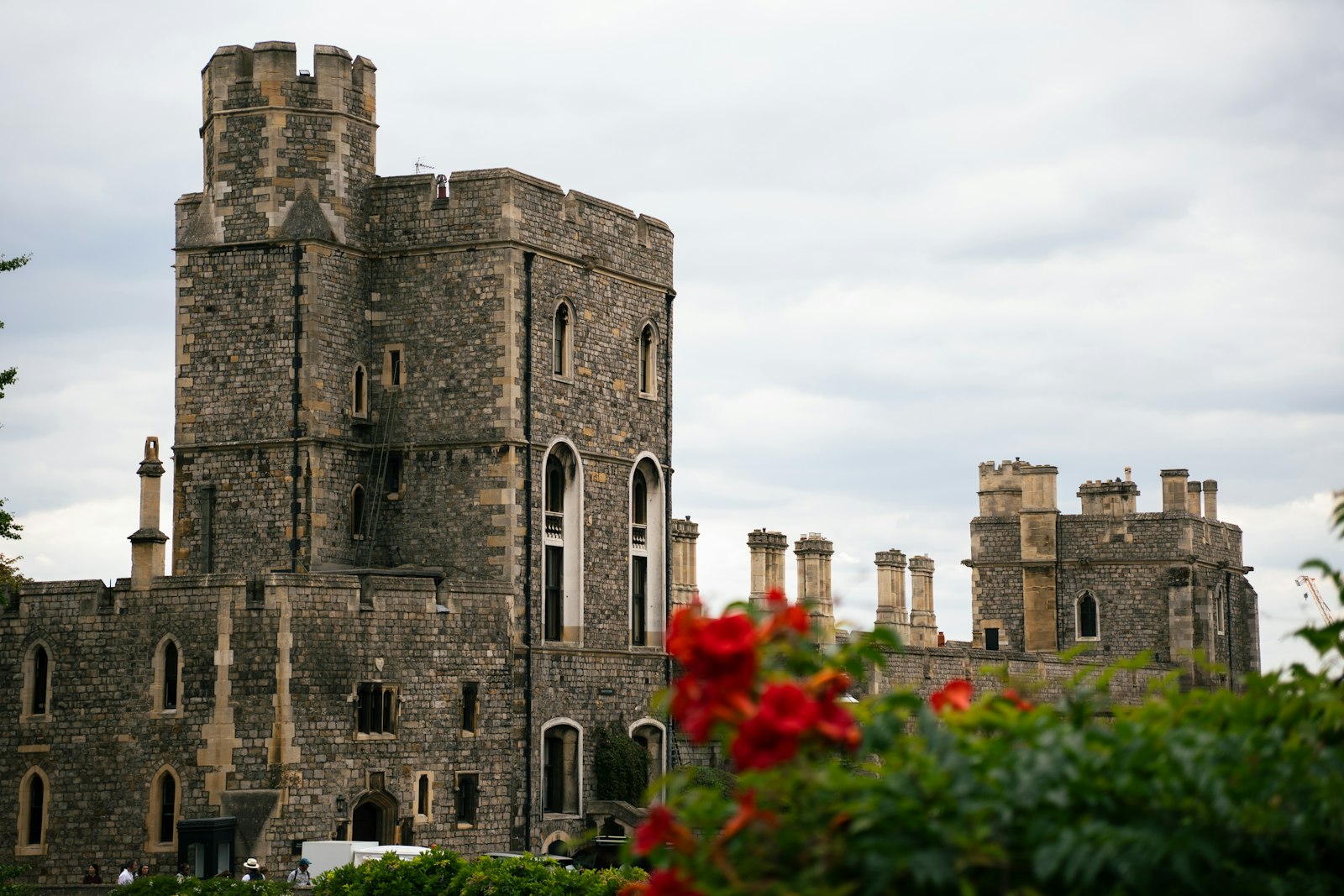
Windsor Castle, about 20 miles west of London, is the oldest continuously inhabited castle in the world and a royal residence for nearly 1,000 years. The castle is dramatically positioned on the Thames and contains royal apartments, chapels, and museums. The grounds are spectacular, and you can understand why monarchs have preferred it as a retreat from London.
Kensington Palace in London, adjacent to Hyde Park, is smaller and more intimate than the other palaces. It was home to Princess Diana and her sons, and parts of it are open to the public. The rooms are beautifully decorated and offer insight into royal domestic life.
The Palace of Holyroodhouse in Edinburgh is the royal residence in Scotland. You can tour most of the palace and stand in the rooms where Mary Queen of Scots lived and suffered her greatest tragedies.
The Crown Jewels at the Tower of London are displayed in a heavily secured vault. The Crown, Scepter, and Orb are objects of such historic and symbolic importance that viewing them is a genuinely moving experience—these physical objects represent centuries of monarchy and power.
Balmoral Castle in the Scottish Highlands is the royal family’s private residence, not open to the public, but you can visit the grounds. The castle epitomizes romantic Victorian Scotland and remains the place where the royal family retreats for privacy.
Understanding Monarchy Today
For American visitors accustomed to elected leadership and skeptical of inherited power, the British monarchy seems anachronistic. Yet it persists and maintains genuine public support. This is partly because the monarchy has been dramatically reduced in actual power. Modern monarchs are constitutional monarchs—they reign but don’t rule. The Prime Minister and Parliament exercise executive and legislative power.
The monarchy survives because it provides continuity, ceremony, and symbolic national unity. The monarch embodies the nation in a way a president can’t. The monarchy is also deeply woven into British law, culture, and tradition. The British coronation ceremony, with roots stretching back nearly a thousand years, connects the new monarch to a chain of predecessors and gives the office a spiritual and historical weight.
The royal family’s image was damaged in recent decades by scandals, divorces, and public controversies, but the institution endured. The death of Elizabeth II in 2022 and accession of Charles III brought both continuity (the line unbroken) and change (a new personality and vision at the top).
For American visitors, understanding the monarchy requires accepting that Britain values tradition, continuity, and ceremony differently than America does. Where Americans democratically elect leaders, the British accept inherited monarchy balanced with parliamentary democracy. It’s a different system, not necessarily worse or better, just profoundly different—and that difference itself is worth understanding.
Walking through these palaces and seeing the objects of royal power, you’re touching a thousand years of history and understanding a worldview that shaped both Britain and, ironically, modern America.




Leave a Reply