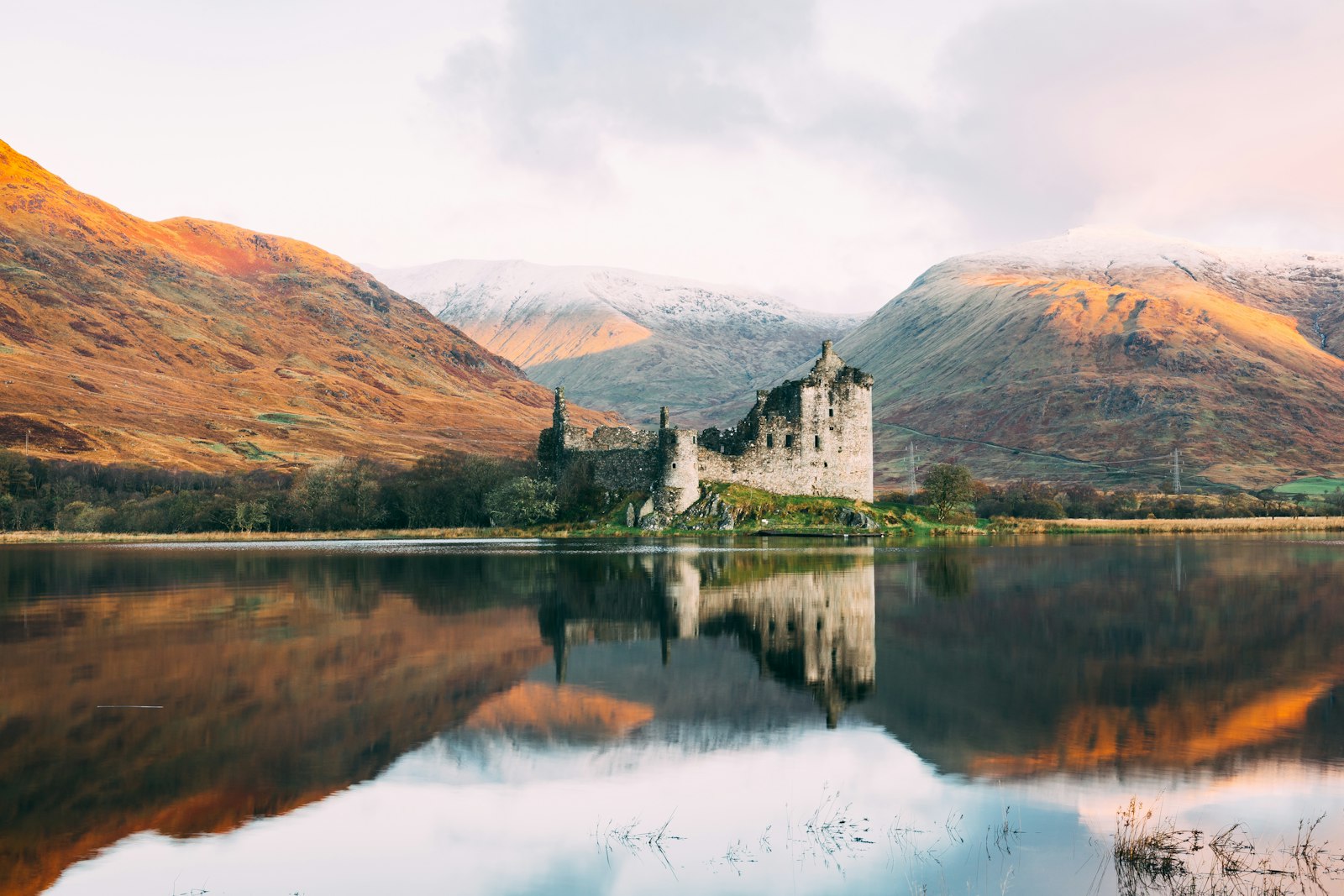
The Scottish Highlands represent some of the most dramatic and historically fraught landscape in Britain. Mountains, glens, lochs, and windswept moorland create scenery of breathtaking beauty. Yet this beautiful land is haunted by a tragic history. The Highlands were the home of the Scottish clans, a distinctive culture that survived for centuries, but was destroyed in less than a century between 1746 and 1850. The Highland Clearances represent one of history’s most striking examples of cultural genocide achieved through economic rather than military means.
For American visitors, the Highlands offer stunning scenery, but understanding the history behind that landscape transforms the experience. The empty glens aren’t empty because the land is worthless; they’re empty because people were systematically removed.
Clan Culture: The Highlands Before Clearance
The Scottish Highlands were organized around clans—extended kinship groups led by a chief who claimed descent from a common ancestor. Major clans included the Campbells, MacLeods, MacKenzies, Camerons, Macdonalds, and dozens of others. Loyalty to the clan was paramount; the chief was expected to protect his people, and the people were expected to support the chief militarily and economically.
This clan system was fundamentally different from the feudal system that governed the Lowlands and England. In feudalism, land was held from the king by nobles, and peasants worked the land. In the Highlands, the relationship was more familial—the chief was the father figure, and the people were family members. The relationship had legal components, but it retained a personal quality that feudalism lacked.
Clan lands were held in common. Individuals worked specific plots, but the land ultimately belonged to the clan and the chief. This communal system was efficient for herding cattle (the primary Highland enterprise) and for maintaining the military organization necessary to defend against rivals. The cattle raids between clans—rustling cattle from neighboring clans—were a regular part of Highland life and provided both wealth and entertainment.
The clan system fostered a distinctive Highland culture. Gaelic was the language (not Scots, which was spoken in the Lowlands). Distinctive dress developed—the kilt and tartan—though these weren’t universal until the 18th century. Poetry, music, and storytelling traditions created a rich oral culture. Bards were valued members of Highland society, and genealogies were preserved through poetry and memorization.
This culture was different from Lowland and English culture, and that difference created tension. Lowlanders and English viewed Highlanders as wild, uncivilized, and dangerous. Highlanders viewed Lowlanders as soft and lacking the martial courage of the Highlands. These prejudices would matter during the Jacobite rebellions and afterward.
The Jacobite Risings: The Beginning of the End
The last significant challenge to Highland independence came through the Jacobite rebellions, the final one occurring in 1746 at Culloden. After the Highlanders’ defeat at Culloden, the English crown took systematic steps to destroy clan power and impose Lowland and English culture on the Highlands.
Laws banned the wearing of Highland dress (tartan and kilt). The Gaelic language was discouraged in schools. The clan system was declared illegal. Chiefs were stripped of their traditional feudal authority. These laws were intended to transform the Highlands from a distinct culture into part of a unified British state.
However, the economic transformation that followed was far more devastating than legal prohibition. After 1746, many Highland chiefs became landowners in the modern British sense. Instead of viewing their lands as clan territory to be held in trust for their people, they viewed them as property to be exploited for maximum profit.
The agricultural revolution was transforming British farming. Enclosure—dividing communal lands into individual holdings—increased productivity. In the Lowlands and England, enclosure dispossessed peasants but increased overall agricultural production. In the Highlands, the same process would prove catastrophic.
The Highland Clearances: Eviction and Ethnic Cleansing
The clearances began around 1760 and continued through the 1850s. Highland landowners, discovering that large-scale sheep farming was more profitable than sustaining their traditional clan populations, began evicting tenants. Entire families and communities who’d lived on the land for generations were forced out to make way for sheep farms.
The evictions were often brutal. Landlords or their agents would arrive at a village and inform people they had days to vacate. Homes were sometimes burned to prevent reoccupancy. Tenants who resisted were sometimes imprisoned or physically removed. Elderly people, children, and the sick were forced from their homes.
The numbers are staggering. Over 30,000 people were cleared from the Highlands between 1760 and 1850. Some areas lost 50-70% of their population. Entire glens that had sustained human communities for centuries were emptied.
The economic logic was clear: a large workforce living on subsistence wages produced less profit than sheep. Sheep farming required few workers (a shepherd and dogs could manage huge flocks), and the profits went entirely to the landowner. From a pure profit perspective, sheep farming was superior to supporting a peasant population.
The tragedy is that this wasn’t necessary. Highlanders could have adapted to new economic systems. Population pressures could have been managed through emigration or economic diversification. But instead, landowners chose eviction, destroying the clan system and emptying the Highlands to maximize their own wealth.
The Role of Landowners and Factors
Some Highland chiefs were directly involved in the clearances. The Duke of Sutherland hired factor Patrick Sellar to clear the estates. Sellar was brutal, earning the title “the infamous Sellar” for his aggressive evictions. Even when Sellar was tried for the violent clearances, he was acquitted. Justice didn’t reach the victims.
Some landowners claimed they were “improving” the Highlands by introducing capitalist agriculture. They built new planned villages in the Highlands, expecting to create industrial or fishing communities. Some of these, like Ullapool, succeeded. Most failed, and the people displaced had few places to go.
The intellectual justification came from 19th-century economic ideology. Adam Smith and other economists argued that private property and profit motive drove economic progress. By this logic, replacing communal clan lands with privately owned sheep farms represented progress. That this destroyed centuries of culture and displaced hundreds of thousands of people was regrettable but necessary for economic development.
To modern sensibilities, the clearances look like ethnic cleansing—the systematic removal of an ethnic and cultural group (the Gaelic-speaking Highlands) to replace it with a different economic system (sheep farming) that benefited outsiders. Some historians now describe the clearances explicitly as ethnic cleansing or cultural genocide.
Emigration and the Scottish Diaspora
Cleared Highlanders couldn’t stay in Scotland. Landowners controlled housing and employment. Many moved to Lowland cities, becoming an urban working class. But many emigrated to America, Canada, Australia, and other colonies.
The emigration was often heartbreaking. Landlords charged exorbitant emigration fees or refused to rent ships. Families were split up. Entire clan groups would emigrate together, seeking to reconstruct their communities in the New World.
The Scottish diaspora became one of the largest immigrant groups to America. Highlanders settled throughout the Americas: in the Carolinas, in the Canadian Maritimes, in Australia. They maintained Highland culture—the language, the clan system, the traditions—in their new homes. Scottish immigrants became central to building North America, and the Highland experience shaped their identity as immigrants.
This is why many Americans have Scottish ancestry and why Highland heritage is celebrated in America. The Highlands that exist in the American imagination are partly the Highlands of the past, reconstructed through the memories and traditions of emigrants. The tartans, the kilts, the bagpipes, the clan gatherings—these survive in America partly because they were lost in Scotland.
Modern Highland Culture: Reconstruction and Recovery
After the clearances ended in the mid-19th century, the Highlands were left largely empty. What population remained was often marginalized. The Highlands became a place of extraction—hunting estates for wealthy Lowlanders and English nobles, crofting communities surviving on subsistence farming, fishing villages dependent on the sea.
The 20th century saw cultural revival. The Gaelic language, nearly extinct by 1900, experienced a modest revival through educational programs. Highland games, ceilidhs (traditional social gatherings), and other cultural practices were maintained, though often in commercialized forms for tourists.
The myth of the Highlands was reconstructed in the 19th century through literature, poetry, and tourism. Sir Walter Scott’s novels romanticized Highland history. Queen Victoria fell in love with Scotland and purchased Balmoral Castle in the Cairngorms, making Highland culture fashionable among the British elite. The invented traditions of Highland dress and tartan became markers of Scottish identity and tourist attractions.
Today, the Highlands are economically dependent on tourism. Visitors come for the scenery and the romantic history. They stay in converted castles and shooting lodges, eat traditional Scottish food, and buy tartan souvenirs. This tourism keeps Highland communities alive economically, but it commercializes and commodifies the very culture that was nearly destroyed.
Visiting the Cleared Highlands: Sites of Memory
For American visitors wanting to understand the clearances, several sites are particularly meaningful.
The Highland Folk Museum in Newtonmore recreates 18th and 19th century Highland life through buildings, artifacts, and exhibits. Walking through a row of cottages similar to those cleared, you get a sense of how people lived before eviction.
Culloden Battlefield near Inverness is essential for understanding the events that triggered the clearances. The visitor center explains the battle and its aftermath, including the military campaigns that led to Highland repression.
Glencoe is a dramatic glen that was cleared in the 19th century. Today it’s one of the most beautiful places in Scotland, but its beauty masks tragedy. The glen sustained people for centuries; now it’s largely empty, visited by tourists and hikers.
Glenelg, in the northwest, offers both archaeological sites (an Iron Age broch—ancient stone tower) and the landscape of cleared communities. You can see ruins of stone cottages scattered across hillsides, abandoned for 150+ years.
Tain Distillery and other Highland whisky distilleries tell the economic history of the region after clearing. Highland whisky became famous, and distilleries became major employers, though nothing compared to the population that once lived there.
Isle of Skye and the Outer Hebrides: These islands were heavily cleared, and many communities were depopulated. Today they’re sparsely populated, with distinct Gaelic culture preserved. Visiting shows the isolation and fragility of surviving Highland communities.
Understanding the Clearances as an American
For Americans, the Highland Clearances raise uncomfortable questions about progress and property rights. The clearances happened in the name of economic improvement and private property rights. Those are values Americans celebrate. Yet the outcome was human tragedy and cultural destruction.
The clearances also connect directly to American history. Many American settlers in the 18th and 19th centuries were Highland Scots—people pushed out of their homes by the same economic forces that were clearing the Highlands. The very nation that displaced them became a destination for them and their descendants.
Additionally, the Highland Clearances presage later patterns of displacement through economic change: indigenous peoples pushed out by settlers seeking to “develop” land, agricultural workers dispossessed by industrialization, and communities destroyed by capitalism’s pursuit of profit. The Highlands weren’t the first or the last place where this happened, but they offer an early, well-documented example.
The Persistence of Highland Memory
What’s remarkable about the Highlands is how their memory persists despite physical emptying. The myths, the stories, the cultural traditions—these survived in the diaspora and have been reconstructed at home.
Highland regiments remain important in British military tradition. Highland games are celebrated globally, particularly in America. Bagpipes, originally used as Celtic military instruments, are now associated worldwide with Scottish culture. The kilt and tartan have become universal symbols of Scottish identity, despite being nearly extinct 250 years ago.
This memory is partly nostalgic and invented. Modern Highland identity isn’t continuous with pre-clearance Highland culture but rather a reconstruction based on fragmentary traditions and invented traditions. Yet the reconstruction matters—it keeps Highland identity alive, it reminds people of what was lost, and it maintains connection to the past.
Walking through the empty glens of the modern Highlands, you’re walking through landscape shaped by historical tragedy. The beauty of the mountains, the wildness of the lochs, the emptiness of the glens—these are products of human history, not nature. Understanding that history transforms how you experience the landscape.
For Americans with Highland ancestry, visiting Scotland means visiting the land their ancestors were forced to leave. That encounter with ancestral geography carries emotional weight that simple tourism doesn’t capture. The Highlands are beautiful, but they’re beautiful in part because they’ve been emptied—a stunning but tragic landscape bearing witness to a lost culture.




Leave a Reply