Introduction
British food vocabulary is its own language. The words are different, the portions are different, and the meal schedules are absolutely confusing. An American arriving in Britain expecting to “order lunch” and get a sandwich might instead find themselves in the middle of an existential conversation about whether they’re having “tea” or “dinner.”
This guide decodes British food culture through the vocabulary lens. Because understanding that “chips” aren’t potato chips and “biscuits” aren’t a breakfast item could make or break your UK dining experience.
Fundamental Vocabulary Differences
Before we dive into actual food, let’s establish the basics that will confuse you immediately:
| British | American | What It Actually Is |
|———|———-|———————|
| Chips | French fries | Thick-cut fried potatoes |
| Crisps | Chips | Thin, crispy snack wafers |
| Biscuits | Cookies (sometimes) | Sweet or savory crackers |
| Cookies | Chocolate chip cookies | Sweet baked treats |
| Takeaway | Takeout/To-go | Food ordered to eat elsewhere |
| Pudding | Dessert (formal) | Dessert (any dessert) |
| Sweet | Candy (British English) | Candy/sweet treat |
| Portion | Size | Amount of food served |
Got it? No? That’s fine. You’ll learn through confusion and possibly some disappointed meals.
The Full English Breakfast
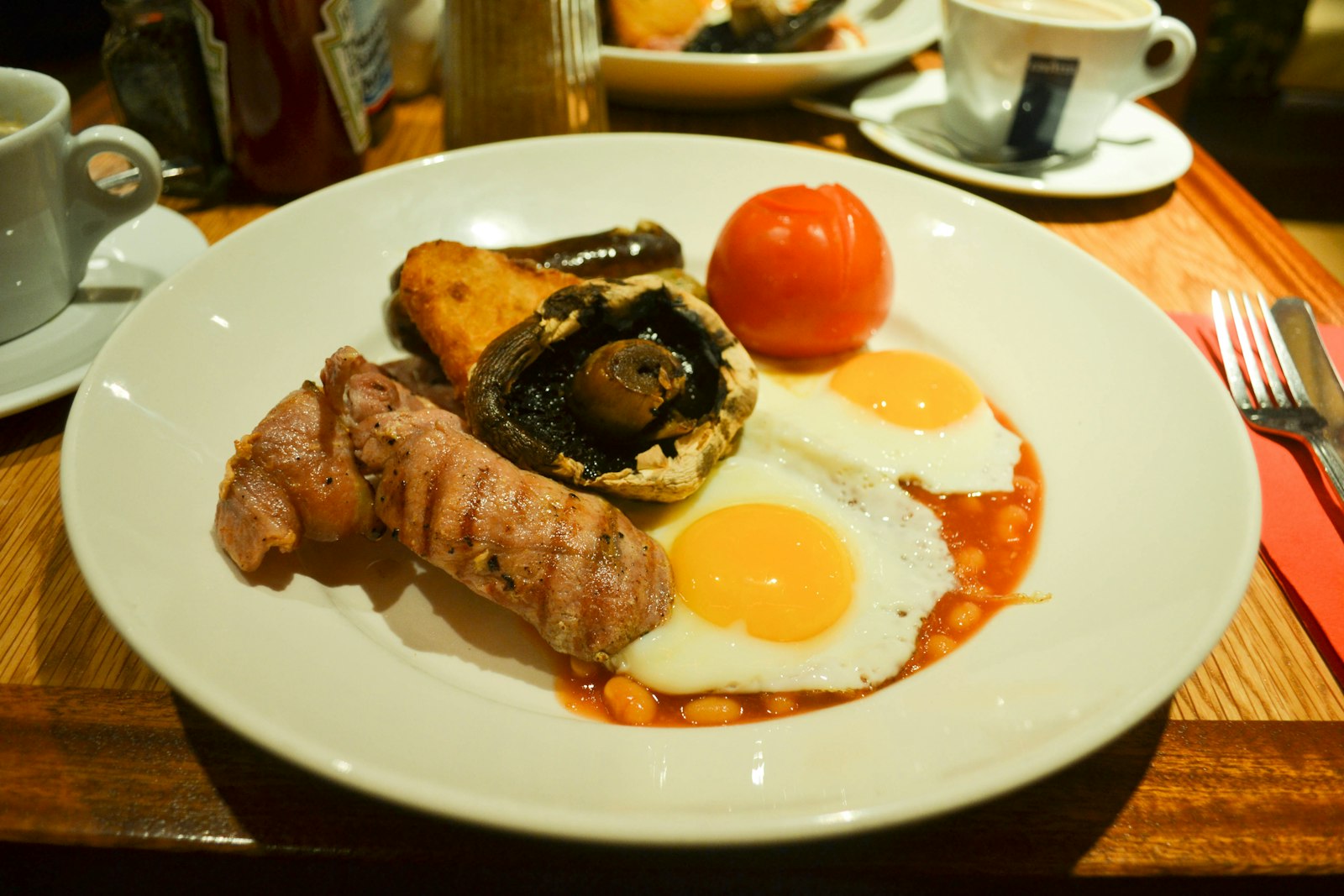
The Full English Breakfast is not just food—it’s a cultural experience, a ritual, and the answer to hangovers.
Components:
- Bacon – Back bacon, which is less crispy and meatier than American bacon. It’s cut from the loin, not the belly.
- Sausages – Pork sausages, usually called “bangers” (especially when they’re old and prone to bursting in the pan).
- Eggs – Fried, over-medium, or scrambled. Ordering “scrambled” is acceptable.
- Beans – Baked beans in tomato sauce. Heinz brand is standard. Americans find this horrifying. British people find your confusion hilarious.
- Mushrooms – Usually button mushrooms, grilled or fried.
- Tomatoes – Grilled or fried tomato halves.
- Chips – Yes, thick fried potatoes at breakfast. It’s decadent.
- Black pudding – A blood sausage. Don’t ask questions. Just eat it.
- Hash brown – Yes, Brits have adopted this, usually the frozen kind. It’s become standard.
- Toast – Buttered, essential for soaking up the bean juice.
Ordering: “I’ll have the full English, please.” Or “Can I get a Full English with extra beans?”
Cultural note: This meal is called “breakfast” in the morning, “brunch” if you’re being fancy, and “a fry-up” casually. Older Brits call it “a cooked breakfast.”
Vegetarian note: Ask for “vegan Full English” and most places will accommodate with veggie sausages and extra vegetables.
Pub Food: British Classics
Fish and Chips
The meal: Battered fish (usually cod or haddock) and thick chips (fries) served wrapped in paper, often with vinegar and salt.
Ordering: “Fish and chips, please.” Or “One fish and chips meal.”
Eating tradition: Traditionally eaten with your hands from the paper, standing on a street or sitting on a bench. Very casual. Very British.
Condiments: Malt vinegar (different from American vinegar—it’s darker and different flavored), salt, tartar sauce, mushy peas on the side.
Vocabulary note: “The chippy” = the fish and chips shop. “Let’s go to the chippy” = we’re getting fish and chips for dinner.
Bangers and Mash
The meal: Pork sausages and mashed potatoes, usually with gravy and onions.
Why “bangers”: Old sausages would burst/bang in the pan when cooked, hence “bangers.”
Modern version: Bangers are now better quality, so they don’t actually explode, but the name stuck.
Ordering: “Bangers and mash, please” or “Sausage and mash.”
Serving: Comes with thick onion gravy and sometimes peas. Very comforting. Very British working-class food.
Ploughman’s Lunch
The meal: A British tradition that’s essentially a deconstructed meal. It includes cheese, ham, cold meats, pickle, crusty bread, butter, and sometimes apple or salad.
History: Originally what farm workers (“ploughmen”) would eat in the fields.
Why you should know about it: It’s on every pub menu, Americans don’t know what it is, and when you order it, you’ll get an experience.
Ordering: “I’ll have the ploughman’s lunch” or just “a ploughman’s.”
What’s in it varies: Different pubs do different versions. You might get Cheddar cheese, ham, pickled onions, crusty bread, butter, and apple. Some include pâté.
Cultural experience: It’s not really “lunch” in the American sense—it’s more of a snack/light meal you’d have mid-day.
Pie, Pies, Always Pies
British pub culture revolves around pies. Meat pies, steak and ale pies, chicken pies, seafood pies. They’re everywhere.
Common varieties:
Ordering: “I’ll have the steak and ale pie” or “What pie do you recommend?”
Serving: Usually comes with “chips” (fries) or mash (mashed potatoes) and peas, or mushy peas.
Sunday Roast
The meal: Roasted meat (beef, chicken, or lamb), roasted potatoes, Yorkshire pudding, vegetables, and gravy.
Why it’s special: Traditionally a Sunday meal, it’s considered the pinnacle of British home cooking. If a British person invites you for Sunday Roast, accept immediately.
Components:
The Yorkshire pudding confusion: Americans see “pudding” and expect dessert. It’s not. It’s a savory baked good made from eggs, flour, and milk, traditionally baked in the pan with roasting meat fat. It’s crispy, golden, and absolutely essential to the experience. Do not expect sweetness.
Ordering: “I’ll have the Sunday roast” or “Can I get the roast beef with all the trimmings?”
Cultural note: “Trimmings” = all the sides included. This is a big meal. Eat lightly before it.
Ordering Drinks in British Pubs
Beer & Cider Terminology
Pint: The standard serving. A full serving glass. “I’ll have a pint of bitter.”
Half: Half of a pint. “Can I get a half of lager?”
Types of beer:
Cider:
Ordering examples:
Important note: Pints in the UK are bigger than American “pints.” A UK pint is 568 mL while a US pint is 473 mL. British pints are about 20% more beer. Plan accordingly.
The Shandy
Definition: A beer and lemonade mix, usually half beer and half lemonade or ginger beer.
Why you should know about it: If you want less alcohol or are feeling fancy, it’s a legitimate order.
Ordering: “Can I get a shandy?” or “A beer and lemonade, please.”
Popularity: More popular in summer, considered slightly old-fashioned by younger Brits.
Tea: The National Obsession
British people are absolutely obsessed with tea. It’s not just a beverage—it’s a ritual, a comfort mechanism, and a solution to all problems.
Types of Tea Service
Morning Tea / Early Tea: Cup of tea in bed, brought by someone else. The height of luxury.
Breakfast Tea: Standard hot tea you’d have with breakfast. Typically a strong black tea blend.
Elevenses: A midday tea break around 11 AM. Accompanied by biscuits or cake. It’s basically second breakfast.
Afternoon Tea: The famous “Tea” service that Americans think is high tea. It’s actually not. It’s light snacks, small sandwiches, scones, clotted cream, jam, and tea. Typically 3-4 PM. This is what tourists experience in fancy hotels.
High Tea: Actually a working-class evening meal eaten around 5-6 PM. It includes meat, vegetables, bread, and tea. It’s more substantial than “afternoon tea.” Confusingly named.
Supper: A light evening meal before bed.
Tea: Can mean either afternoon tea OR supper, depending on region and class. This is what confuses Americans the most.
Making and Ordering Tea
Vocabulary:
The milk debate:
Some Brits add milk first (to protect delicate china), some add milk after (most people). This is a surprisingly contentious issue. It doesn’t matter. The taste is the same.
Ordering in cafes:
Cultural note: Brits drink an average of 100 million cups of tea per day. It’s genuinely part of the culture. Offering tea is offering hospitality.
Takeaway Culture
The Chippy
Definition: Fish and chips shop, usually the most common takeaway.
What to order: “Fish and chips” with specified size (regular/large), salt and vinegar optional.
Experience: You’ll often wait in a queue while watching fish being battered and fried. The smell is incredible. The food is hot and fresh.
Kebab Shops
Definition: Turkish/Middle Eastern fast food serving kebabs, doner meat, falafels.
Very British experience: Going to a kebab shop late at night after drinking. It’s almost a rite of passage.
What to order: “A doner kebab” or “a falafel wrap.”
Curry House
Definition: Indian restaurant serving curry, rice, naan bread. British curry is its own unique thing—British people have adapted Indian food to British tastes and it’s genuinely excellent.
What to order: Ask for recommendations for your spice level. “What would you recommend for medium spice?”
Very British: Chicken tikka masala was essentially invented in Britain and is now considered a British classic.
Vocabulary:
Meal Schedule & Names Confusion
This is where Americans get genuinely confused.
The meals:
The confusing part: A working-class British person says “dinner” for lunch and “tea” for supper. A middle-class British person says “lunch” for mid-day meal and “dinner” for evening. This is a class marker and it’s genuinely confusing.
Example scenario:
Just ask: “What time is the evening meal?” and you’ll always be understood.
Biscuits vs. Cookies vs. Crackers
British “biscuits” are what Americans call “cookies.” But not all biscuits are sweet.
Sweet biscuits: Think cookies. Usually dunked in tea.
Savory biscuits: Crackers essentially.
You’ll hear: “Fancy a biscuit?” at 3 PM with tea. Say yes. It’s a biscuit, not a scone or cake.
Scones, Cream, and Jam Confusion
Scone: A baked good, slightly crumbly, traditionally made with flour, butter, and milk.
How to eat it: Cut in half, add jam (jelly), then clotted cream (thick whipped cream).
The order debate: Jam first or cream first?
This is a serious regional debate. Choose a side and defend it passionately.
Clotted cream: Not like American whipped cream. It’s thicker, richer, almost like butter. It’s a Cornish/Devon specialty. Try it.
Condiments and Extras
Ordering Like a Local
Quick phrases:
Final Thoughts
British food culture is deeply connected to its vocabulary. Learning the language helps you understand not just what to order, but why it matters culturally. A Sunday Roast isn’t just a meal—it’s tradition. A Full English isn’t just breakfast—it’s a life experience.
Navigate this new food vocabulary with curiosity and humor. Ask questions. Try the weird stuff (kidney pie is genuinely good). Say “lovely” when something is good.
And remember: chips are not potato chips, beans at breakfast are normal, and tea is both a beverage AND a meal time. You’ll figure it out eventually, probably after ordering chips when you meant something else, and that’s okay.
That’s the British food experience.




Leave a Reply