Introduction
London is one of the world’s great cities, and three days gives you just enough time to experience the highlights while avoiding the exhaustion of trying to see everything. This guide is designed specifically for Americans, with practical tips on transport, money, food, and navigating London’s unique quirks.
Whether this is your first visit to the UK or you’re considering a longer stay, these three days will give you an authentic taste of London’s history, culture, and contemporary energy.
Day 1: East London & the Thames
Morning: Tower of London
Start early at the Tower of London, one of England‘s most important historical sites. Arrive when it opens (9 AM) to beat the crowds. You’ll need 2-3 hours to properly explore this 1,000-year-old fortress.
The Crown Jewels are the main attraction—these are worth the visit alone. You’ll see the coronation regalia, including crowns dating back centuries. Allow at least 45 minutes for the Jewel House queue. The guards who protect the jewels wear traditional red uniforms and are surprisingly good-natured about photos.
Don’t miss the White Tower (the original keep), the Medieval Palace, and the Beauchamp Tower with its prisoner carvings. The costumed Yeoman Warders (Beefeaters) offer entertaining guided tours if you want the full story. Admission includes access to the whole complex.
Tip: Book tickets online in advance to save money (around £30-35 vs. £35-40 at the gate). Your American passport works for ID.
Midday: Tower Bridge
Walk across the iconic Tower Bridge—it’s literally steps from the Tower of London. The bridge itself is free to cross; you can upgrade to pay for access to the high-level walkway and engine room (around £12) if you want spectacular views and don’t mind heights.
Afternoon: Borough Market & South Bank
Head south via the bridge to Borough Market, London’s oldest food market. This is food-lover territory. Grab lunch from one of the many stalls—try a Scotch egg, fish and chips, or gourmet sandwiches. Everything is priced higher than regular restaurants but the quality is exceptional. Budget £10-15 for lunch.
Walk along the Thames Path toward the South Bank. This is London’s cultural heart, with museums and theaters lining the river. The Shakespeare’s Globe Theatre is here (reconstructed in 2000)—tour the building even if you’re not catching a show.
Late Afternoon/Evening: London Eye & Southbank
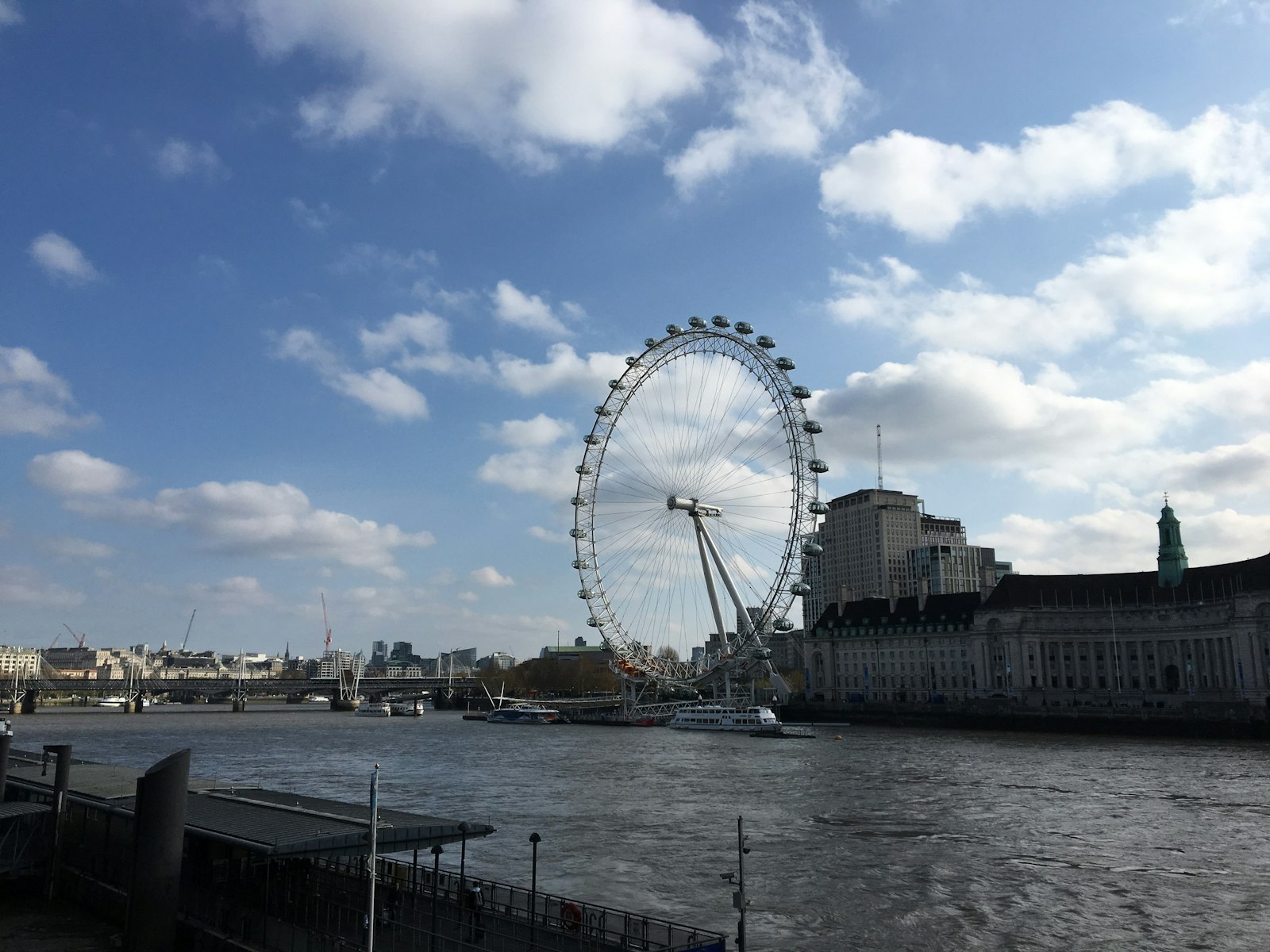
Ride the London Eye (the giant Ferris wheel) for 360-degree views. Book tickets in advance online (about £22, rather than £30 at the gate). A rotation takes 30 minutes and you’ll see the entire city. Go later in the afternoon; the light is better for photos.
After the Eye, explore the Southbank Centre. The Royal Festival Hall, Hayward Gallery, and National Theatre are all here. Walk along the riverside promenade with locals—this is where Londoners actually spend their time.
Dinner: South Bank
Stay in the area for dinner. There are dozens of restaurants along the river, from casual to upscale. Budget £15-30 per person for casual dining, more for restaurants. Try fish and chips at a proper chippy or grab Thai, Indian, or Middle Eastern food—London’s diversity is reflected in its food scene.
Day 2: Westminster & West London
Morning: Westminster Abbey & Buckingham Palace
Start at Westminster Abbey, the magnificent Gothic cathedral where British monarchs are crowned and buried. This is one of the oldest buildings in London and deeply significant to British history. Allow 1.5-2 hours. Admission is around £25.
The interior is staggering—soaring ceilings, intricate stonework, and dozens of monuments to famous Britons (Charles Darwin, Isaac Newton, and countless others rest here). The Chapter House, Cloisters, and Abbey Museum are included with admission.
From the Abbey, it’s a short walk to Parliament Square, where you’ll see the Houses of Parliament and Big Ben (officially the Elizabeth Tower—it’s currently undergoing renovation but is still impressively visible). You can walk around the outside for free.
Late Morning: Changing of the Guard & Buckingham Palace
If the Changing of the Guard is happening (usually 11 AM on Monday, Wednesday, Friday, and Sunday—check the schedule), head to Buckingham Palace. This ceremonial event involves about 45 minutes of marching, music, and pageantry. It’s very British and worth seeing, though you might be crammed in with crowds.
The Palace itself isn’t open to tourists in the traditional sense, but you can see the exterior, the gates, and the forecourt. Walk around the perimeter—the back portion facing Constitution Hill is less crowded and quite beautiful.
Afternoon: Hyde Park & Kensington
Walk through Hyde Park, one of London’s great green spaces. Rent a paddleboat on the Serpentine (the lake) for about £10, or just stroll. The park is enormous—you could spend hours here. It’s where Londoners come to escape the city.
Cross into neighboring Kensington Gardens and visit the Diana, Princess of Wales Memorial Fountain. The whole park area is perfect for a leisurely walk. On a nice day, this is quintessential London.
From Kensington, you can pop into the Victoria & Albert Museum (V&A) or Natural History Museum—both are free, though donations are requested. If you have energy, the museums are world-class and you could easily spend 2-3 hours in either.
Late Afternoon: Shopping & Tea
Knightsbridge is nearby with upscale shopping. Harrods is the famous department store—it’s worth a quick visit for the sheer spectacle of it, even if you’re not buying anything. The food hall is impressive.
Alternatively, head to Kensington for afternoon tea. This is the fancy tea experience Americans often associate with Britain—scones, clotted cream, cucumber sandwiches, petit fours, and proper tea service. Budget £25-50 per person. The Orangery in Kensington Palace Gardens is excellent and less touristy than some options.
Evening: West End
Make your way to the West End, London’s theater district. It’s roughly equivalent to Broadway. Browse shows, grab dinner in Soho or Covent Garden, and enjoy a performance. Budget £40-100+ for theater tickets depending on the show and your seat. Dinner nearby will be £20-40 per person.
Day 3: Culture & Entertainment
Morning: British Museum
Start at the British Museum in Bloomsbury. This is free admission (donations welcomed), which is incredible given the collection. However, the museum is massive—you cannot see everything in one visit.
Focus on the must-sees: the Rosetta Stone, Egyptian mummies, Greek sculptures (particularly the Parthenon marbles), and the Mayan collection. Grab a museum map and prioritize your interests. Allow 2-3 hours.
Tip: Visit early (it opens at 10 AM) or arrive after 3 PM when some crowds thin out. The museum is open until 8:30 PM some evenings.
Midday: Covent Garden & Lunch
Walk south to Covent Garden, the vibrant pedestrian area with street performers, shops, and restaurants. The market building itself is a beautiful Victorian structure. This area is touristy but lively.
Grab lunch at one of the many restaurants or casual spots. The area is pricey; budget £12-20 for casual lunch. Street food and takeaway options are cheaper.
Afternoon: West End Shopping & Entertainment
Covent Garden flows into Leicester Square and Soho, London’s entertainment heart. The area is perfect for wandering, shopping, and people-watching. Browse record stores on Berwick Street, vintage shops, and quirky boutiques.
If you have energy for another museum, the National Gallery (free admission) is on Trafalgar Square nearby and houses masterpieces by Monet, Van Gogh, and countless others.
Evening: West End Show & Dinner in Soho
Finish your London experience with a West End show. Check the TKTS booth in Leicester Square for discounted same-day tickets (10-30% off), or book in advance. Popular shows include long-running favorites like “The Phantom of the Opera,” “Hamilton,” or “Les Misérables,” plus newer productions.
Dinner in Soho before or after. The area has incredible international cuisine—Indian, Chinese, Thai, Lebanese, Italian. Budget £15-35 per person for casual to mid-range dining.
Practical Information
Transport
London’s public transport is efficient and extensive. The Tube (subway) is the fastest way to get around. Get an Oyster Card (a reusable transport card) at any station—you can pay as you go, and it’s cheaper than cash tickets. A single Tube journey costs £1.75-3 depending on zones.
The Travelcard (daily or weekly) is good value if you’re making many journeys. A daily Travelcard for zones 1-2 costs about £16 and is worth it if you’re traveling more than 5 times.
Buses are slower but affordable and give you views of the city. Download the Citymapper app for real-time route planning.
Money
Use your credit or debit card everywhere—contactless payment (chip readers) are standard. ATMs are plentiful. The pound sterling is currently around $1.27 USD (rates vary), so multiply prices by roughly 1.27 to understand costs in dollars.
Tipping is not mandatory like in America. In restaurants, 10-15% is generous; many people don’t tip at all or round up. Tip jar culture at cafes is becoming more common but not expected.
Food
London has phenomenal food options beyond fish and chips. Try Indian in Brick Lane, Lebanese on Charlotte Street, Vietnamese in Soho, Chinese in Chinatown. Supermarkets (Tesco, Sainsbury’s, Waitrose) have excellent prepared foods and are cheaper than restaurants.
Traditional British comfort food includes: fish and chips, pie and mash, Sunday roasts, bangers and mash, beans on toast, and pasties. Most pubs serve food during lunch (12-3 PM) and evening (6-9 PM).
Accommodation
London is expensive. Budget £80-150 per night for basic hotels, £150-300+ for mid-range, and £300+ for luxury. Airbnb is common and sometimes offers better value than hotels.
Consider staying in neighborhoods like King’s Cross, Angel, Shoreditch, or South London for local vibes and slightly lower prices. Central areas (Westminster, Knightsbridge) are more expensive but convenient.
Weather & Packing
London weather is unpredictable. Bring layers, a light rain jacket, and comfortable walking shoes. You’ll cover 15,000-20,000 steps daily on this itinerary.
Final Tips
- Purchase a guidebook or download the Lonely Planet or Rick Steves app for detailed information.
- Many museums stay open until 8-10 PM certain nights—plan accordingly to avoid daytime crowds.
- Dress code: Londoners dress relatively casually. Theater-goers often dress up slightly, but you won’t be out of place in jeans and a nice top.
- The city is very walkable—don’t rely only on the Tube. Many neighborhoods reveal themselves on foot.
- Be patient with your jet lag. You’ll be disoriented the first day; it’s normal.
London is endlessly fascinating, and three days merely scratches the surface. But you’ll experience the iconic landmarks, great museums, diverse food, and the unique energy that makes London one of the world’s greatest cities.




Leave a Reply