Introduction
Yorkshire is England‘s largest county, spanning from industrial cities in the south to remote moorlands in the north. It’s a region of dramatic contrasts—from the medieval city of York to the windswept Yorkshire Moors, from the refined spa town of Harrogate to the literary connections of Haworth (Brontë country).
For Americans, Yorkshire offers something distinct: industrial heritage, literary significance, distinctive regional character, and landscapes that shift from urban to wild within short distances. Yorkshire people have a reputation for directness and warmth, and you’ll find authentic England here rather than touristed polish.
This guide covers York (the essential city), the surrounding dales and moors, and the literary and industrial landmarks that define Yorkshire.
York: England’s Medieval City
Overview & History
York is one of England’s most important medieval cities, with a history spanning 2,000 years. Founded by Romans as Eboracum, it became the capital of Viking Jorvik, then a major medieval city. Today it’s one of Britain‘s best-preserved medieval towns with an almost complete city wall and dozens of historic buildings.
York is compact, walkable, and one of England’s most rewarding cities for visitors.
Major Attractions
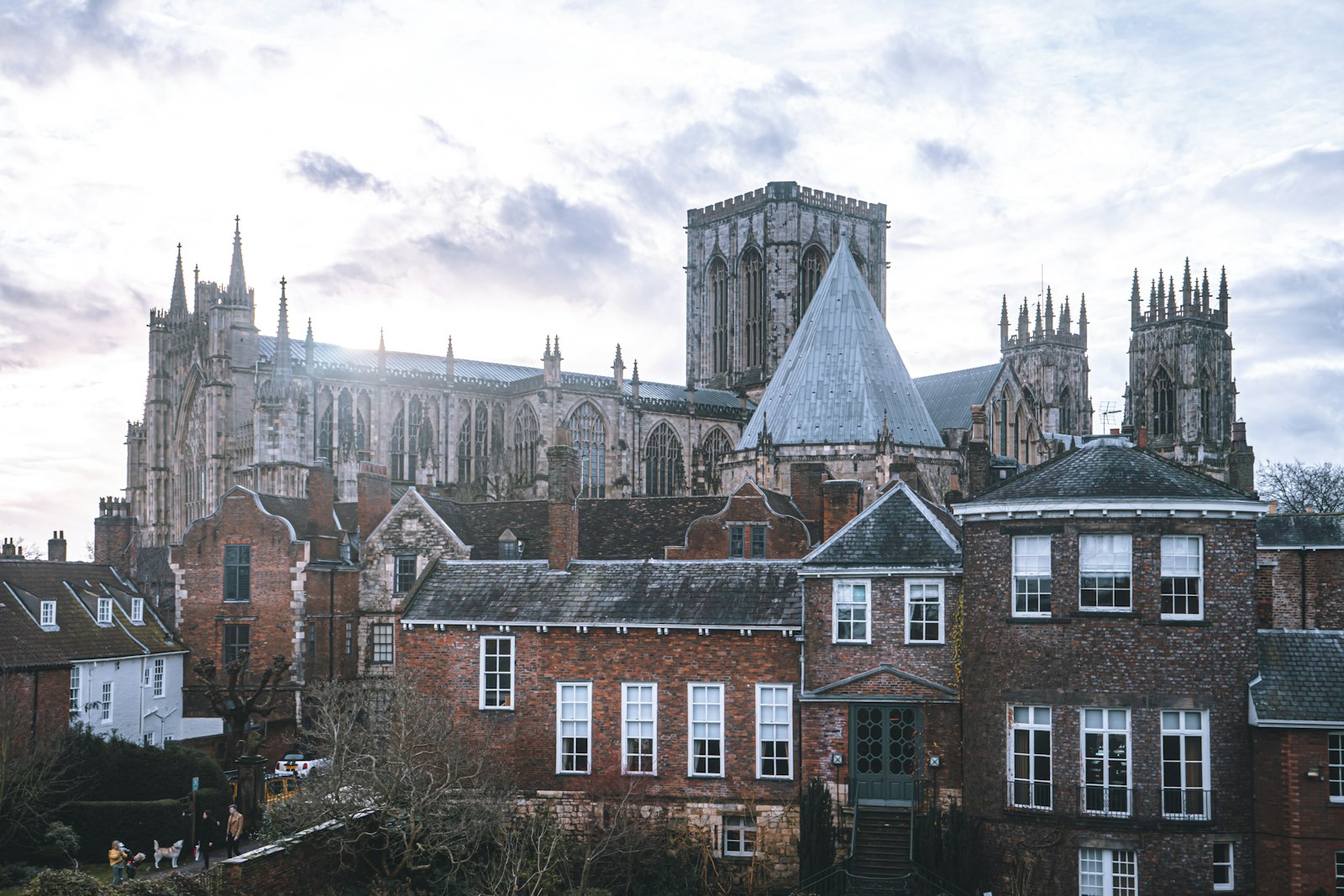
York Minster
York Minster is one of the world’s greatest Gothic cathedrals—a vast, awe-inspiring structure dominating the city. Construction began in 1220 and continued for centuries.
What to See:
- The nave with its soaring ceiling and intricate ribbed vault
- The transepts (particularly the 12th-century transepts with medieval stained glass)
- The choir and chapter house
- The bell tower (254 steps to views across York)
- Stained glass windows (various periods)
Admission: About £15 for the cathedral. Additional admission for tower and undercroft (about £7-8 each). Allow 1.5-2 hours for a proper visit.
Experience: The Minster’s sheer scale is overwhelming. The interior is vast and luminous. Climbing the tower provides views across York and the surrounding countryside.
The Shambles
The Shambles is York’s most famous medieval street—a narrow, winding alley lined with overhanging timber-framed buildings from the 14th-16th centuries. It’s extraordinarily photogenic and one of England’s best-preserved medieval streets.
Character: Charming but touristy (it’s packed with shops, cafes, and gift stores). Wandering it early morning or evening avoids crowds. The buildings themselves are remarkable even if the street is commercialized.
Fun Fact: The “Shambles” designation comes from “shamble” (a meat market shelf). This was literally the street of butchers, and many buildings still bear hooks where animal carcasses hung.
York City Walls
York is surrounded by medieval city walls (the most complete in England). Walking the entire circuit takes about 1.5 hours and provides views of the city and surrounding countryside.
Access: The walls are freely accessible. You can walk the complete circuit or section it. Particular highlights include the Bar (gate) buildings and Monk Bar.
Experience: Walking the walls puts you at rooftop level, offering unique perspectives on the city and Minster.
Jorvik Viking Centre
York was famously the capital of Viking Jorvik from 867-954 AD. This museum/experience transports visitors back to Viking-era York with a ride through a reconstructed Viking village.
What You’ll Do:
Admission: About £12. Allow 1-1.5 hours.
Character: Somewhat gimmicky but genuinely fun and educational. Appeals particularly to families, but adults find it engaging too.
National Railway Museum
A world-class museum showcasing historic trains and railway heritage. The museum is free admission and contains working locomotives, royal trains, and railway memorabilia.
Highlights:
Duration: 2-3 hours depending on interest in trains.
Character: Excellent museum, even if you’re not a train enthusiast. The scale and condition of historic locomotives is impressive.
York Castle & Castle Museum
The castle now consists primarily of the Norman tower (a cylindrical keep) with limited interior access. The Castle Museum next door is more worthwhile.
Castle Museum:
Admission: About £11. Allow 1.5-2 hours.
Food & Dining in York
Breakfast: English breakfasts are universally available.
Lunch: Pub food, sandwiches, or light meals. Many restaurants offer good-value lunch menus.
Dinner: York has excellent restaurants ranging from casual to upscale. Try traditional Yorkshire cuisine (Yorkshire pudding, roasts, meat pies).
Afternoon Tea: Available in tearooms and hotels throughout the city.
Budget: Casual meals £10-20, mid-range restaurants £20-40, upscale £40+.
Local Specialties: Yorkshire pudding (a baked batter dish served with roasts), Yorkshire tea, sticky toffee pudding.
Accommodation in York
Hotels and B&Bs range £60-140 per night. Central locations (near Minster or Shambles) are convenient but pricier. Guest houses in residential streets offer local flavor and better value.
Getting to York
From London: Train from Kings Cross station to York (2-2.5 hours). Frequent departures.
From Edinburgh: Train to York (2.5-3 hours).
Within Northern England: Central position makes York a logical hub for exploring the North.
The Yorkshire Dales
The Yorkshire Dales are valleys cutting through the Pennine hills in northwest Yorkshire. They’re one of England’s most beautiful rural areas, featuring limestone hills, green valleys, stone villages, and numerous walking opportunities.
Key Dales
Wharfedale: Contains the picturesque village of Grassington and the dramatic Bolton Abbey ruins. Good walking and village exploration.
Ribblesdale: A quieter dale with dramatic limestone peaks, including Pen-y-ghent and Whernside.
Airedale: Contains Haworth (Brontë connections) and Saltaire (a UNESCO-listed industrial village).
Swaledale: Remote and scenic with the village of Reeth.
Walking the Dales
The Yorkshire Dales are exceptional for walking. Trails range from village strolls to challenging fell walks.
Popular Walks:
Resources: Guidebooks and online resources provide detailed route information.
The North York Moors
The North York Moors cover 554 square miles of high moorland in east Yorkshire. Purple heather covers the moors in late summer (August-September), creating spectacular scenery.
Key Attractions
Goathland: A picturesque moorland village famous as the filming location for Hogsmeade in the Harry Potter films. It’s genuinely charming beyond its Harry Potter fame.
Whitby: A coastal town on the North Sea with strong literary and nautical connections. The town is charming with cobbled streets, fish and chips, and Whitby Abbey ruins overlooking the town. Whitby has literary significance from Bram Stoker’s “Dracula” (supposedly inspired by a ship arriving in Whitby harbor).
Helmsley: A moorland market town with a castle (now ruins), making it a good base for exploring the moors.
The North York Moors Railway: A heritage railway operating steam trains through scenic moorland. You can ride a train through stunning countryside; journeys range from 1 to 4 hours.
Haworth & Brontë Country
Haworth is a small moorland village famous as the home of the Brontë sisters (Charlotte, Emily, and Anne). The village sits on a steep hillside with a main street of stone cottages leading to Haworth Church and the Brontë Parsonage Museum.
Brontë Parsonage Museum
The Parsonage where the Brontë sisters lived is now a museum with period furnishings and family artifacts. It provides insight into their lives and writing environment.
Admission: About £10. Allow 1-1.5 hours.
Character: The house is small and intimate, revealing the modest circumstances of their lives despite their literary genius.
Haworth Village
The village itself is charming and somewhat touristy (gift shops, tea rooms). Walking the steep main street is pleasant. The surrounding moorland offers walking opportunities.
Harrogate
Harrogate is Yorkshire’s spa town—upscale, elegant, and developed as a resort around mineral springs in the Victorian era. It’s less medieval than York but more refined.
What to Do:
Character: Wealthy, sophisticated, and somewhat rarefied compared to other Yorkshire towns.
Leeds & Sheffield
Leeds and Sheffield are major industrial cities with gritty character, interesting galleries and museums, and revitalized waterfronts.
Leeds:
Sheffield:
Both cities are worth brief visits for urban exploration and museums, though they lack the romantic appeal of York or the rural charm of villages.
Yorkshire Character & Traditions
The Yorkshire Accent & Dialect
Yorkshire has a distinctive accent and dialect. The accent is strong and warm. Common Yorkshire expressions include “summat” (something), “nowt” (nothing), and “our” (my/our). Yorkshire people have a reputation for direct, blunt humor—don’t be offended; it’s their style.
Yorkshire Tea
Yorkshire tea is a cultural point of pride. It’s strong, dark tea (typically in a mug, not a teacup). Tea drinking is ritualized; offering tea is the default hospitality gesture.
Yorkshire Pudding
Yorkshire pudding is a baked batter dish, traditionally served with roasts and gravy. It’s savory, not sweet (common American misconception). Try it everywhere.
Betty’s Tea Rooms
Betty’s is a legendary Yorkshire institution with locations in Harrogate, York, and other towns. It’s an upscale café/restaurant known for excellent tea, cakes, and light meals. It’s expensive (afternoon tea £25-35) but iconic. Crowds can be intense; go early or book ahead.
When to Visit
Spring (April-May): Mild weather, lambs in fields, daffodils blooming. Good time.
Summer (June-August): Best weather, longest days, moorland walking season. Popular and touristy.
Autumn (September-October): Heather blooms on the moors (August-September), turning them purple. Excellent light and weather. This is the most beautiful time on the moors.
Winter (November-March): Cold and grey, but quieter. Moorland can be dramatic in snow, though less likely.
Getting There & Around
From London
Train: London Kings Cross to York (2-2.5 hours). Multiple daily departures.
Between Attractions
Car: Essential for exploring the Dales and Moors. Roads are scenic but can be narrow and winding.
Buses: Limited service connecting villages; plan ahead.
Train: Heritage railways (North York Moors Railway) offer scenic journeys through moorland.
Accommodation
York: Hotels £60-140 per night, B&Bs £50-110 per night.
Villages: Guest houses and farmhouse B&Bs, £50-100 per night.
Luxury: Country house hotels in the Dales, £120-250+ per night.
Practical Information
Money
Card payment standard everywhere. Budget £50-100+ per night for accommodation, £10-25 for casual meals, £25-50+ for restaurants.
Weather Gear
The moors are exposed and weather-prone. Bring:
Final Thoughts
Yorkshire is England’s heartland—authentic, dramatic, and deeply historical. It lacks the polish of southern England’s more famous attractions but compensates with character, natural beauty, and genuine warmth.
Most visitors spend 3-7 days in Yorkshire, using York as a base and day-tripping to the Dales and Moors, or spending concentrated time walking the Dales. The combination of medieval city, rural landscape, literary heritage, and industrial history provides a complete picture of English regionalism and heritage.
Yorkshire deserves its reputation as one of England’s most rewarding destinations for travelers seeking beyond-the-obvious Britain.




Leave a Reply