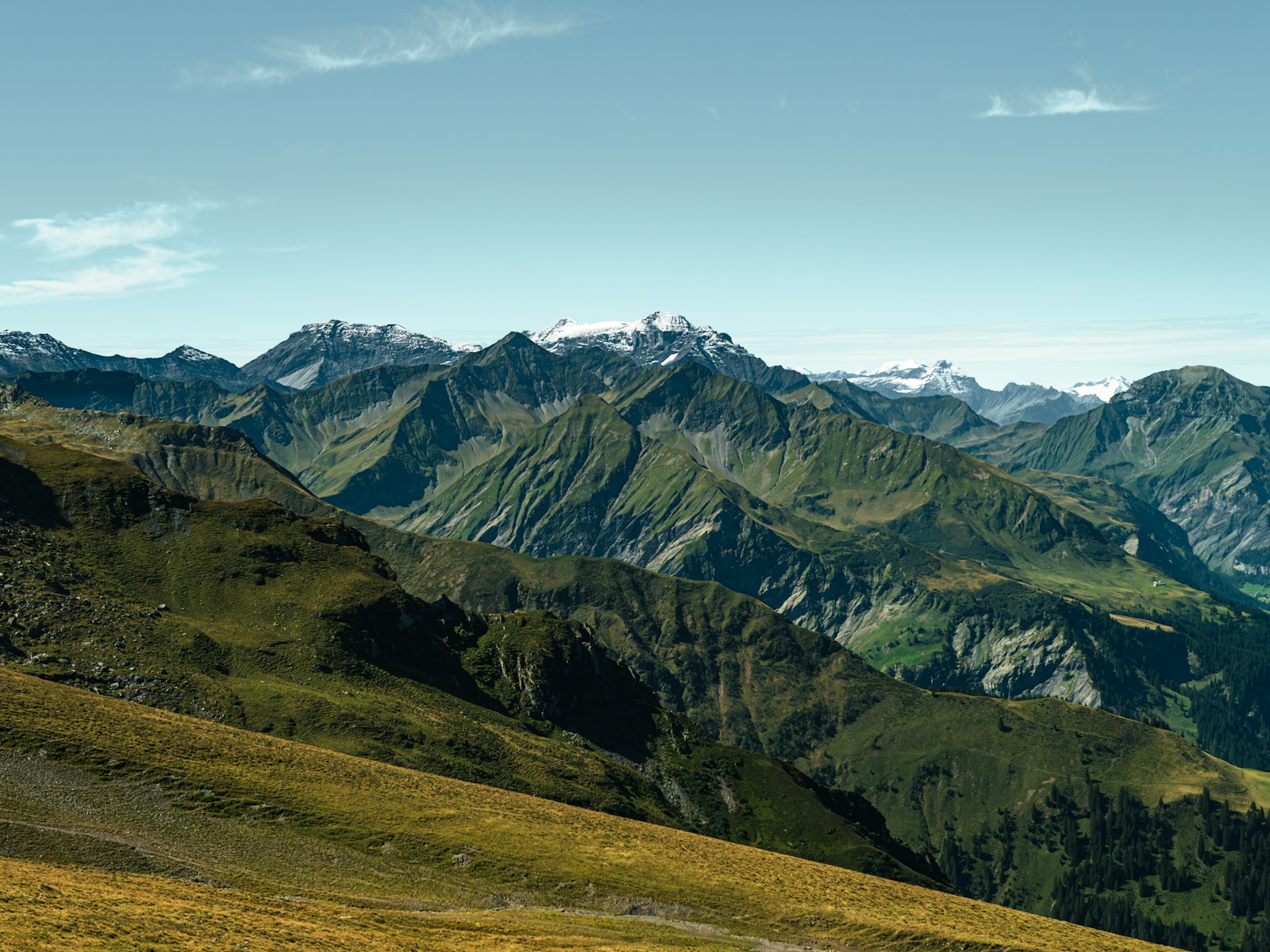
Swiss summers are basically the outdoor adventurer’s equivalent of winning the lottery. The mountains are fully accessible (no snow blocking passes or trails), the weather is reliably beautiful, the days are long (sun doesn’t set until 9-10 PM), and the entire landscape turns into a playground for hiking, swimming, paragliding, and basically any outdoor activity you can imagine. This is the season when Switzerland transforms from winter’s snow-covered wonderland into summer’s endless hiking paradise.
If you’ve never experienced a Swiss summer, you’re missing something fundamental about why people live in mountains and why these regions have inspired artists and writers for centuries. The combination of dramatic peaks, pristine lakes, charming valleys, and that particular Alpine light creates an environment where every day feels like the best outdoor day of your life.
The Best Regions for Summer Travel
Bernese Oberland: Covers Grindelwald, Interlaken, and the Jungfrau region. This is Switzerland’s most dramatic mountain territory and offers some of the world’s best hiking. The region has excellent infrastructure, making it accessible to various fitness levels.
Uri and Gotthard Region: More rugged and less touristy than Bernese Oberland. Home to the Saint Gotthard Pass and dramatic mountain scenery. Excellent for serious hikers and those seeking less crowded trails.
Valais (Wallis): Home to Monte Rosa, the Dom, and other major peaks. Includes Zermatt, one of Switzerland’s most famous mountain villages. Excellent hiking and mountaineering opportunities.
Appenzell Alps: Smaller, gentler mountains in eastern Switzerland. Excellent for leisurely hiking, pastoral scenery, and those who want mountains without the drama of higher peaks.
Lake Regions: Zurich, Geneva, and Lucerne regions have beautiful lakes surrounded by mountains. Perfect for combining beach/lake swimming with Alpine scenery.
Graubünden: Remote, incredibly beautiful, with excellent trails and less crowding than more famous regions. Great for hiking and mountain exploration.
Hiking: The Reason People Come
Summer hiking in Switzerland is essentially the gold standard of European Alpine hiking. The trails are extensively marked, maintained, and documented. Infrastructure (mountain restaurants, huts, cable cars for descent) is world-class. The landscape is staggering, and the weather is generally cooperating.
Epic Multi-Day Treks:
The Tour du Mont-Blanc circumnavigates Europe’s highest mountain (3,808m), crossing into France and Italy. The full circuit takes 7-10 days and is one of Europe’s most famous trekking routes. Alternatively, sections can be done as day hikes.
The Haute Route runs from Chamonix (France) to Zermatt (Switzerland), following high Alpine passes. It’s more serious than general hiking, sometimes requiring scrambling or basic mountaineering skills, but offers an intimate experience of high Alpine terrain.
The Appenzell Alps Trail offers gentler, multi-day trekking through charming hill country, ideal for those seeking mountains without extreme elevation gain.
Day Hikes (the bread and butter of summer in Switzerland):
Almost every Swiss village is surrounded by hiking trails ranging from 1-2 hours (easy walks) to 6-8 hours (strenuous full-day hikes). Most villages have hiking maps at the train station or tourist office, and trails are well-marked with destination signage.
Popular day hikes include:
- Oeschinen Lake (near Kandersteg): 2-3 hours, stunning glacial lake
- Säntis Summit: 4-5 hours, panoramic views across eastern Switzerland
- Marmorera Lake: 4 hours, remote high-altitude lake
- Blausee hike (Kandersteg area): 2-3 hours, stunning blue-water lake
- Countless others depending on your location and fitness level
The beauty of Swiss summer hiking is that trails are graded by difficulty and estimated time, making it easy to choose appropriate challenges.
Mountain Lakes and Swimming
Swiss summers are warm enough (typically 18-22°C) to make lake swimming actually pleasant. The mountain lakes are spectacularly beautiful and often shockingly clear.
Lake Oeschinen: Glacial blue water, surrounded by mountains, reached by cable car (if you don’t want to hike) or various hiking trails. Swimming is popular despite cold water.
Blausee: Impossibly blue lake near Kandersteg. Small but stunning, with easy access and facilities.
Säntis region lakes: Multiple lakes in the Appenzell Alps offer swimming opportunities with less dramatic but charming mountain scenery.
Zurich Lake and Geneva Lake: Larger lakes bordering Switzerland with pleasant towns, beaches, and water-sports infrastructure. Less Alpine but more easily accessible and with warmer water.
Emerald Lakes in Valais: Various high-altitude lakes reflecting surrounding peaks, often requiring hikes to reach but worth the effort.
The water is cold (especially glacier-fed lakes), but on a hot summer day, there’s nothing better than plunging into a pristine Alpine lake with mountains reflected in the surface.
Mountain Railways and Cable Cars
Summer is the season when all mountain railways and cable cars operate (many close in winter). These aren’t just ways to reach high elevations; many are engineering marvels or offer perspectives that ground-based travel can’t provide.
Jungfrau Railway: Cog railway climbing inside mountains to 3,454 meters (Top of Europe). Mentioned in previous Grindelwald article but bears repeating—it’s genuinely remarkable.
Rigi Railway: Historical cog railway (one of the world’s oldest) ascending Rigi mountain with panoramic views across central Switzerland.
Pilatus Railway: Another cog railway with exceptional views and mountain scenery.
Various Cable Cars: Hundreds of cable cars across Switzerland provide access to high elevations or crossing valleys. Many are engineering achievements in themselves.
Mountain Biking with Uplifts: Many cable cars have special provisions for mountain bikes, allowing riders to ascend and descend single-track trails in a day.
Mountain Biking
Switzerland has excellent mountain biking terrain. While the Alps aren’t as famous for mountain biking as they are for hiking, the trails are excellent and less crowded than famous biking destinations.
Downhill Biking: Various areas have serious downhill trails accessed via cable car. Whistler, Canada is more famous, but Swiss downhill is excellent.
Cross-Country/Trail Biking: Gentler trails connecting villages and valleys, combining pastoral scenery with bike travel.
E-Bike Trails: Electric bikes have opened up mountain biking to less athletic riders. Many trails are designed for e-bikes, making mountain scenery accessible to broader audiences.
Bike rentals are available in most mountain towns, and local shops can recommend appropriate trails for your fitness level.
Traditional Alpine Activities
Dairy Farming and Cheese-Making: Summer is when Alpine cheese gets made. Many dairies welcome visitors to watch traditional cheese-making. Some farms offer basic farm-stay experiences, allowing you to experience mountain farming life.
Alphorn Playing: The Alphorn (yes, it’s real) is a traditional Swiss musical instrument. Some regions feature Alphorn performances at mountain restaurants or evening events, especially in tourist-oriented areas.
Traditional Festivals: Summer brings various traditional festivals celebrating local culture, food, and heritage. These happen in villages throughout Alpine Switzerland.
Adventure Activities
Paragliding: Switzerland’s dramatic terrain and reliable summer thermals make it one of the world’s premier paragliding destinations. Tandem flights are available from various launch points, offering perspective on mountains unavailable from ground level.
Via Ferrata: This is rock climbing for people who aren’t rock climbers. Protected paths along cliff faces with fixed cables and rungs allow you to traverse vertical terrain safely. It requires no climbing experience and offers genuine adrenaline and unique perspectives.
Rock Climbing: Switzerland has endless rock climbing areas. Organized courses teach proper technique, and guides can take you to appropriate climbing locations.
Mountaineering: Serious Alpine mountaineering guides lead climbs of significant peaks (Mont Blanc, Gran Paradiso, Monte Rosa, and others). This requires training and commitment but opens serious mountain experiences.
Canyoning: Some regions with dramatic canyons (particularly in Valais) offer guided canyoning experiences—navigating canyons by climbing, rappelling, and swimming.
Summer Food and Wine
Swiss summer food culture is excellent. Mountain restaurants serve hearty, local food: cheese, bread, cured meats, and simple but excellent preparations.
Fondue and Raclette: Warm-weather versions (eaten on mountain patios with wine) of these classics. Light but incredibly satisfying after a day of hiking.
Local Wine: Swiss wines are less famous internationally than French or Italian varieties, but summer Alpine wine—particularly light, local reds or whites—pairs perfectly with mountain meals.
Farmers Markets: Summer brings robust local farmers markets in Swiss cities and towns. Fresh produce, cheese, bread, and regional specialties are available at prices and quality that feel exceptional.
Regional Specifics and Planning
Bernese Oberland: Most famous, most touristy, most extensive hiking infrastructure. Good base: Interlaken, Grindelwald, or Kandersteg.
Valais: More dramatic peaks (Monte Rosa, Dom), more serious hiking. Base: Zermatt, Saas-Fee, or Verbier.
Uri/Gotthard: Dramatic, less touristy, excellent hiking. Base: Andermatt or Hospental.
Appenzell Alps: Gentler scenery, pastoral villages, less crowded. Base: Appenzell or Säntis region.
Graubünden: Remote, excellent trails, good food culture. Base: Davos, St. Moritz, or Klosters.
When to Visit for Summer
June: Highest elevations might still have snow on passes and higher trails. Lower elevations are fully open. Fewer tourists than July-August. Good weather.
July-August: Peak season. All trails fully open, best weather, most crowded. Accommodation prices highest. Warmest temperatures.
September: Excellent weather (often more stable than earlier summer), pleasant temperatures, emptier trails, lower prices. A genuinely excellent month if you’re flexible.
Early October: Still good hiking weather in lower elevations. Higher elevations getting cold. Generally excellent weather. Very manageable crowds.
Practical Summer Tips
What to Pack:
Accommodation: Book in advance during July-August. Quieter months (June, September, October) offer better value and availability. Mountain huts (SAC huts) provide budget alternatives and mountain-immersed experiences.
Getting Around: The Swiss railway system is world-class. Buy a Swiss Pass for unlimited train travel and reductions on mountain railways and cable cars. This quickly pays for itself.
Fitness: Hikes are graded by difficulty and time. Choose appropriately for your fitness. Most Alpine villages have easy walks if strenuous hiking isn’t your thing.
Safety: Trails are generally safe, but mountain weather changes quickly. Start early, check weather, and turn back if conditions deteriorate. Water sources are abundant (often drinkable directly from streams), but verify before drinking.
Why Swiss Summer is Worth the Trip
Swiss summer offers something rare: a landscape genuinely worthy of all the pictures you’ll take, infrastructure that makes adventures accessible to non-experts, weather that cooperates reliably, and people and places with genuine character. You can summit peaks you didn’t know existed, swim in water so clear it’s almost unbelievable, eat cheese at mountain restaurants with views that make you cry, and generally live in that space where adventure and comfort beautifully coexist.
The cost is high—Switzerland isn’t cheap. But the experience is proportionally exceptional. Come in summer, challenge yourself physically while being supported by excellent infrastructure, and understand why mountains matter.
Swiss summer is the kind of season that spoils you for other vacations forever.




Leave a Reply