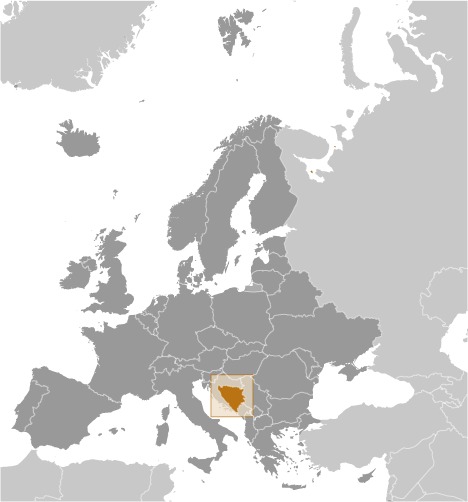
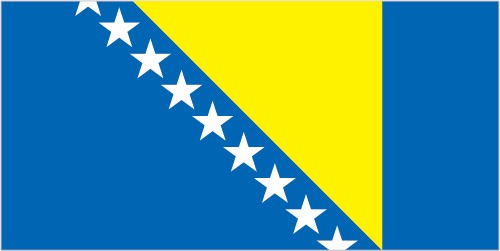
Bosnia & Herzegovina
Your complete guide to Bosnia & Herzegovina
Quick Facts
Capital
Sarajevo
Population
3,835,586
Languages
Bosnian (official) 52.9%, Serbian (official) 30.8%, Croatian (official) 14.6%, other 1.6%, no answer 0.2% (2013 est.)
Currency
konvertibilna markas (BAM)
Area
51,197 sq km
Government
Parliamentary republic
About Bosnia & Herzegovina
Bosnia and Herzegovina occupies a heart-shaped territory in the western Balkans, where Ottoman minarets, Austro-Hungarian facades, and medieval Bosnian tombstones called stećci exist in remarkable proximity. The country's complex ethnic makeup — Bosniaks, Serbs, and Croats — has produced both extraordinary cultural richness and, tragically, one of Europe's most devastating late-twentieth-century conflicts.
Today Sarajevo, the capital, embodies the country's resilient spirit. The city that hosted the 1984 Winter Olympics and endured a brutal four-year siege in the 1990s now bustles with a creative energy — artisan coffee roasters, film festivals, and a nightlife scene that surprises first-time visitors.
Beyond the cities, Bosnia's wild rivers, dense forests, and untouched mountain landscapes make it one of Europe's last true adventure frontiers, with the Neretva and Una rivers drawing rafters and kayakers from across the continent.
History
Bosnia's medieval kingdom was conquered by the Ottoman Empire in 1463, beginning four centuries of rule that shaped its Islamic heritage. Austria-Hungary's occupation from 1878 brought rapid modernization, and the assassination of Archduke Franz Ferdinand in Sarajevo in 1914 ignited World War I. After both World Wars, Bosnia became a republic within Yugoslavia.
The breakup of Yugoslavia in the early 1990s plunged Bosnia into a devastating war (1992–1995) that killed over 100,000 people and displaced millions. The Dayton Agreement ended the fighting and established the country's current two-entity structure. Recovery has been slow but steady, and Bosnia remains on a path toward eventual EU membership.
Bosnia and Herzegovina declared sovereignty in October 1991 and independence from the former Yugoslavia on 3 March 1992 after a referendum boycotted by ethnic Serbs. The Bosnian Serbs – supported by neighboring Serbia and Montenegro – responded with armed resistance aimed at partitioning the republic along ethnic lines and joining Serb-held areas to form a "Greater Serbia." In March 1994, Bosniaks and Croats reduced the number of warring factions from three to two by signing an agreement creating a joint Bosniak-Croat Federation of Bosnia and Herzegovina. On 21 November 1995, in Dayton, Ohio, the warring parties initialed a peace agreement that ended three years of interethnic civil strife (the final agreement was signed in Paris on 14 December 1995). The Dayton Peace Accords retained Bos…
CIA World Factbook
Culture & Society
Bosnian culture is a living mosaic of Ottoman, Austro-Hungarian, and Slavic traditions. The old bazaar quarter of Sarajevo, Baščaršija, remains the cultural heart of the country, where coppersmith shops sit beside centuries-old mosques and Orthodox churches. Bosnian coffee, served in a džezva with lokum, is an essential social ritual, and the cuisine — ćevapi, burek, and dolma — reflects the region's layered heritage.
Languages: Bosnian (official) 52.9%, Serbian (official) 30.8%, Croatian (official) 14.6%, other 1.6%, no answer 0.2% (2013 est.)
Religions: Muslim 50.7%, Orthodox 30.7%, Roman Catholic 15.2%, atheist 0.8%, agnostic 0.3%, other 1.2%, undeclared/no answer 1.1% (2013 est.)
Ethnic Groups: Bosniak 50.1%, Serb 30.8%, Croat 15.4%, other 2.7%, not declared/no answer 1% (2013 est.)
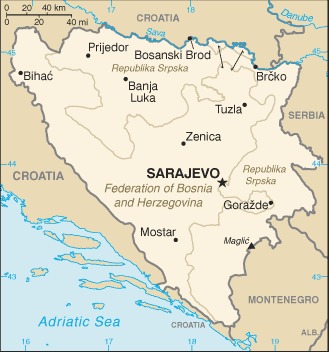
Maps
Articles About Bosnia & Herzegovina
Destinations
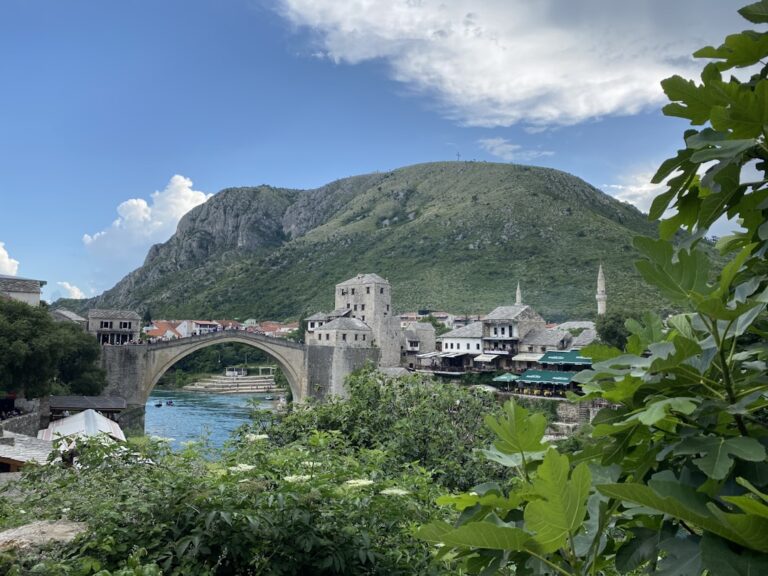
Bosnia's Unexpected Beauty: Mostar, Sarajevo, and Beyond
Bosnia and Herzegovina is the European destination that surprises everyone who visits.
Travel
Bosnia's Unexpected Beauty: Mostar, Sarajevo, and Beyond
Bosnia and Herzegovina is the European destination that surprises everyone who visits.