Ireland
Your complete guide to Ireland
Quick Facts
Capital
Dublin
Population
5,176,569
Languages
English (official, the language generally used), Irish (Gaelic or Gaeilge) (official, spoken by approximately 39.8% of t…
Currency
euros (EUR)
Area
70,273 sq km
Government
Parliamentary republic
About Ireland
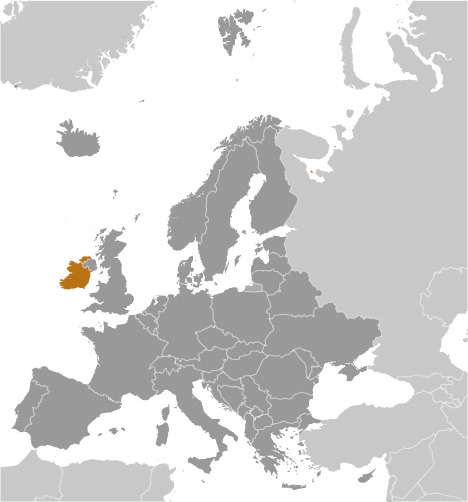
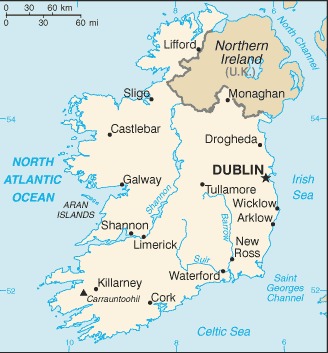
Ireland is an island nation on Europe's Atlantic edge, renowned for its emerald landscapes, literary heritage, and the warmth of its people. The Republic of Ireland occupies about five-sixths of the island, with Northern Ireland forming part of the United Kingdom.
Dublin, the capital, is a compact, walkable city of Georgian squares, lively pubs, and a tech sector that has earned it the nickname 'Silicon Docks.' Beyond Dublin, the Wild Atlantic Way traces 2,500 kilometers of dramatic coastline from Donegal to West Cork, passing the Cliffs of Moher, the Aran Islands, and the Ring of Kerry.
Ireland's transformation from one of Western Europe's poorest countries to one of its most prosperous — driven by foreign investment, education, and the tech industry — is one of the great economic stories of recent decades. Yet the country retains its intimate, conversational character, and the pub remains the beating heart of Irish social life.
History
Ireland's history is one of Celtic monasticism, Viking raids, Norman conquest, and centuries of English and later British rule that left deep political and cultural scars. The Great Famine of 1845–1852 killed roughly a million people and drove another million to emigrate, shaping the vast Irish diaspora that exists today.
The Easter Rising of 1916, the War of Independence (1919–1921), and the subsequent Civil War led to the creation of the Irish Free State in 1922. The Troubles in Northern Ireland (1968–1998) cast a long shadow, but the Good Friday Agreement of 1998 brought peace. EU membership since 1973 and the Celtic Tiger boom of the 1990s–2000s transformed Ireland's economy and global standing.
Celtic tribes arrived on the island between 600 and 150 B.C. Invasions by Norsemen that began in the late 8th century were finally ended when King Brian BORU defeated the Danes in 1014. Norman invasions began in the 12th century and set off more than seven centuries of Anglo-Irish struggle marked by fierce rebellions and harsh repressions. The Irish famine of the mid-19th century was responsible for a drop in the island's population by more than one quarter through starvation, disease, and emigration. For more than a century afterward, the population of the island continued to fall only to begin growing again in the 1960s. Over the last 50 years, Ireland's high birthrate has made it demographically one of the youngest populations in the EU. The modern Irish state traces its origins to the…
CIA World Factbook
Culture & Society
Irish culture is inseparable from its literary tradition — Yeats, Joyce, Beckett, and Heaney represent just the peak of an extraordinarily rich body of writing in both English and Irish Gaelic. Traditional music — fiddles, bodhrán drums, tin whistles, and uilleann pipes — fills pubs from Doolin to Dublin, and Irish dance achieved global fame through Riverdance. The pub is Ireland's living room, a place for storytelling, song, and the slow art of conversation.
Languages: English (official, the language generally used), Irish (Gaelic or Gaeilge) (official, spoken by approximately 39.8% of the population as of 2016; mainly spoken in areas along Ireland's western coast known as gaeltachtai, which are officially recognized regions where Irish is the predominant language)
Religions: Roman Catholic 78.3%, Church of Ireland 2.7%, other Christian 1.6%, Orthodox 1.3%, Muslim 1.3%, other 2.4%, none 9.8%, unspecified 2.6% (2016 est.)
Ethnic Groups: Irish 82.2%, Irish travelers 0.7%, other White 9.5%, Asian 2.1%, Black 1.4%, other 1.5%, unspecified 2.6% (2016 est.)
Maps
Articles About Ireland
Articles
We're still writing about Ireland. Check back soon or browse the category archive.