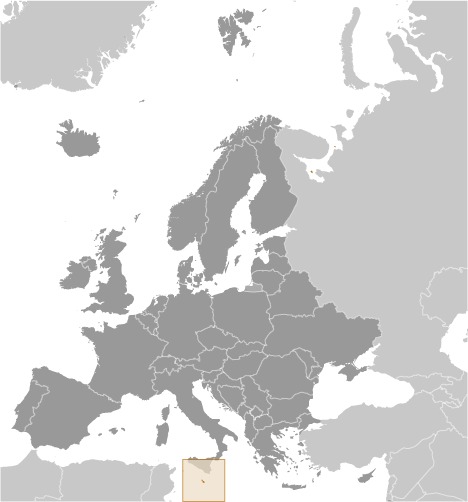
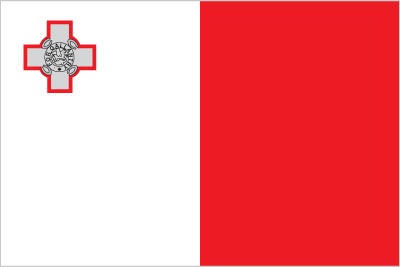
Malta
Your complete guide to Malta
Quick Facts
Capital
Valletta
Population
457,267
Languages
Maltese (official) 90.1%, English (official) 6%, multilingual 3%, other 0.9% (2005 est.)
Currency
euros (EUR)
Area
316 sq km
Government
Parliamentary republic
About Malta
Malta is a sun-baked archipelago in the central Mediterranean, lying between Sicily and the North African coast. Despite being one of Europe's smallest and most densely populated countries, this island nation packs an extraordinary amount of history, culture, and character into its 316 square kilometers.
Valletta, the capital, is a UNESCO World Heritage city whose Baroque churches, fortifications, and narrow grid streets were built by the Knights of St. John after the Great Siege of 1565. The older cities of Mdina and the Three Cities add further layers, while the megalithic temples — older than the Egyptian pyramids — testify to a prehistoric civilization of remarkable sophistication.
Modern Malta is a bilingual nation (Maltese and English), an EU member since 2004, and a popular destination for language students, sun-seekers, and history enthusiasts. The film industry has discovered Malta's photogenic landscapes, and the island has doubled for everything from ancient Rome to King's Landing.
History
Malta's strategic position has made it a prize for every major Mediterranean power. Phoenicians, Romans, Byzantines, Arabs, Normans, and the Knights of St. John all left their mark. The Knights' two-and-a-half-century rule (1530–1798) shaped Malta's identity most profoundly, building Valletta and defending the island against Ottoman attack.
Napoleon seized Malta in 1798, and the British took over in 1800, making it a vital naval base through both World Wars. Malta's heroic resistance during World War II earned the entire nation the George Cross. Independence came in 1964, a republic was declared in 1974, and EU accession in 2004 brought a new era of economic growth.
With a civilization that dates back thousands of years, Malta boasts some of the oldest megalithic sites in the world. Situated in the center of the Mediterranean, Malta’s islands have long served as a strategic military asset, with the islands at various times having come under control of the Phoenicians, Carthaginians, Greeks, Romans, Byzantines, Moors, Normans, Sicilians, Spanish, Knights of St. John, and the French. Most recently a British colony (since 1814), Malta gained its independence in 1964 and declared itself a republic ten years later. While under British rule, the island staunchly supported the UK through both world wars. Since about the mid-1980s, the island has transformed itself into a freight transshipment point, a financial center, and a tourist destination while its key…
CIA World Factbook
Culture & Society
Maltese culture is a distinctive Mediterranean blend. The Maltese language — the only Semitic language written in Latin script — is a living testament to Arab, Italian, and English influences. Village festas honoring patron saints are elaborate affairs with brass bands, fireworks, and street decorations. The cuisine features rabbit (fenek), pastizzi (flaky pastry filled with ricotta or peas), and fresh seafood, all shaped by centuries of cross-cultural exchange.
Languages: Maltese (official) 90.1%, English (official) 6%, multilingual 3%, other 0.9% (2005 est.)
Religions: Roman Catholic (official) more than 90% (2006 est.)
Ethnic Groups: Maltese (descendants of ancient Carthaginians and Phoenicians with strong elements of Italian and other Mediterranean stock)
Maps
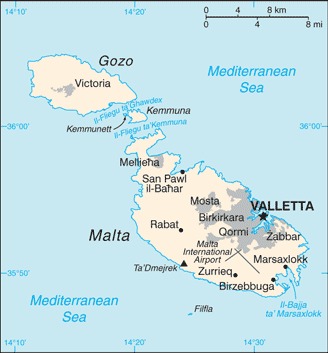
Articles About Malta
Travel
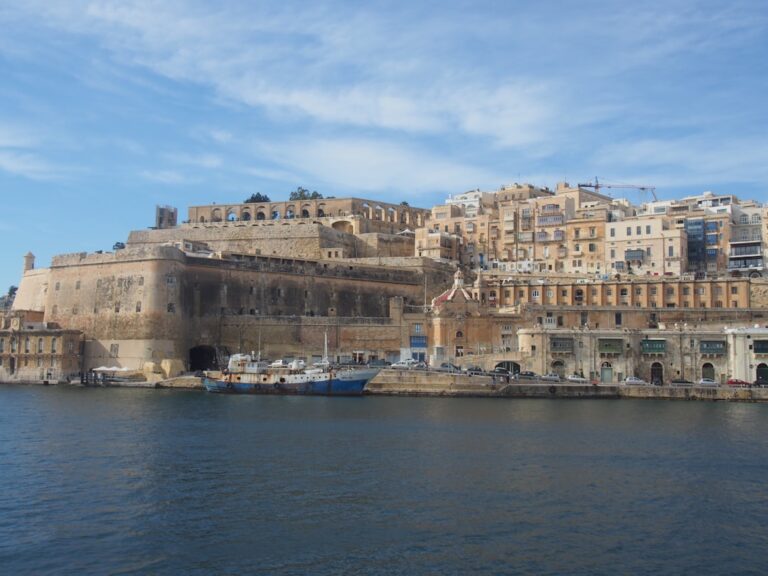
Malta: Sun, History, and Affordable Mediterranean Living
Malta is a contradiction wrapped in honey-coloured limestone. It is a European Union member state where English is an official…