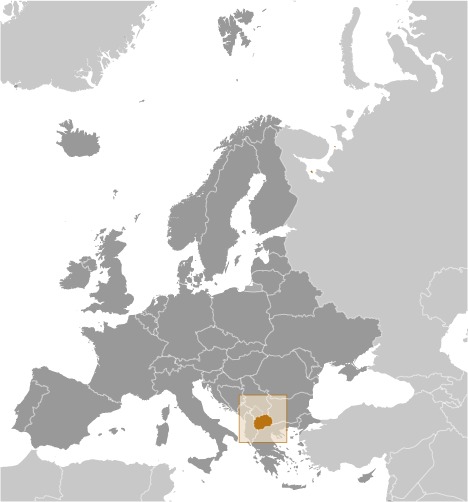
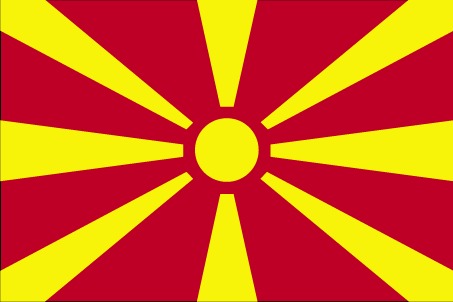
North Macedonia
Your complete guide to North Macedonia
Quick Facts
Capital
Skopje
Population
2,125,971
Languages
Macedonian (official) 66.5%, Albanian 25.1%, Turkish 3.5%, Romani 1.9%, Serbian 1.2%, other (includes Aromanian (Vlach) …
Currency
Macedonian denars (MKD)
Area
25,713 sq km
Government
Parliamentary republic
About North Macedonia
North Macedonia is a landlocked Balkan nation whose ancient name evokes the empire of Alexander the Great, though the modern state's connection to that classical heritage is debated. The country gained independence from Yugoslavia in 1991 and resolved a long-running name dispute with Greece in 2019 by adopting its current name.
Skopje, the capital, is a city of contrasts: Ottoman bazaars and Byzantine churches exist alongside the controversial 'Skopje 2014' project, which filled the center with neoclassical statues and buildings. Lake Ohrid, shared with Albania, is one of Europe's oldest and deepest lakes, surrounded by medieval churches and a UNESCO-listed old town.
North Macedonia's EU accession process is underway, and the country joined NATO in 2020. Despite economic challenges, its blend of Balkan warmth, Ottoman heritage, and natural beauty makes it an increasingly popular destination.
History
The region that is now North Macedonia was part of the Roman, Byzantine, and Ottoman empires before being incorporated into Serbia after the Balkan Wars of 1912–1913. After World War II, it became a constituent republic of Yugoslavia under the name 'Socialist Republic of Macedonia.'
Independence in 1991 was followed by a protracted dispute with Greece over the use of the name 'Macedonia,' which Greece associated with its own northern province. A brief internal conflict in 2001 between the government and ethnic Albanian insurgents was resolved through the Ohrid Framework Agreement, which expanded minority rights. The 2018 Prespa Agreement with Greece resolved the name dispute and opened the door to NATO and EU membership.
North Macedonia gained its independence peacefully from Yugoslavia in 1991 under the name of "Macedonia." Greek objection to the new country’s name, insisting it implied territorial pretensions to the northern Greek province of Macedonia, and democratic backsliding for several years stalled the country’s movement toward Euro-Atlantic integration. Immediately after Macedonia declared independence, Greece sought to block Macedonian efforts to gain UN membership if the name "Macedonia" was used. The country was eventually admitted to the UN in 1993 as "The former Yugoslav Republic of Macedonia," and at the same time it agreed to UN-sponsored negotiations on the name dispute. In 1995, Greece lifted a 20-month trade embargo and the two countries agreed to normalize relations, but the issue of t…
CIA World Factbook
Culture & Society
North Macedonian culture reflects its Balkan and Ottoman heritage. The Ohrid region is a cradle of Slavic literacy — Saints Cyril and Methodius' disciples established a literary school there in the ninth century. Traditional music features the zurla (double-reed instrument) and tapan (drum), and the cuisine centers on grilled meats, ajvar (roasted pepper relish), and tavče gravče (baked beans) — hearty fare shared in long family meals.
Languages: Macedonian (official) 66.5%, Albanian 25.1%, Turkish 3.5%, Romani 1.9%, Serbian 1.2%, other (includes Aromanian (Vlach) and Bosnian) 1.8% (2002 est.)
Religions: Macedonian Orthodox 64.8%, Muslim 33.3%, other Christian 0.4%, other and unspecified 1.5% (2002 est.)
Ethnic Groups: Macedonian 64.2%, Albanian 25.2%, Turkish 3.9%, Romani 2.7%, Serb 1.8%, other 2.2% (2002 est.)
Maps
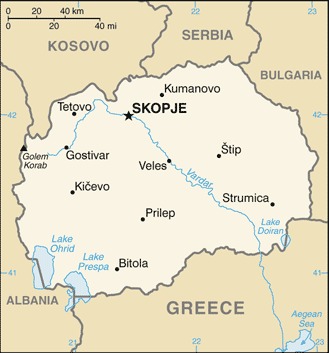
Articles About North Macedonia
Articles
We're still writing about North Macedonia. Check back soon or browse the category archive.