Slovenia
Your complete guide to Slovenia
Quick Facts
Capital
Ljubljana
Population
2,102,678
Languages
Slovene (official) 91.1%, Serbo-Croatian 4.5%, other or unspecified 4.4%, Italian (official, only in municipalities wher…
Currency
euros (EUR)
Area
20,273 sq km
Government
Parliamentary republic
About Slovenia
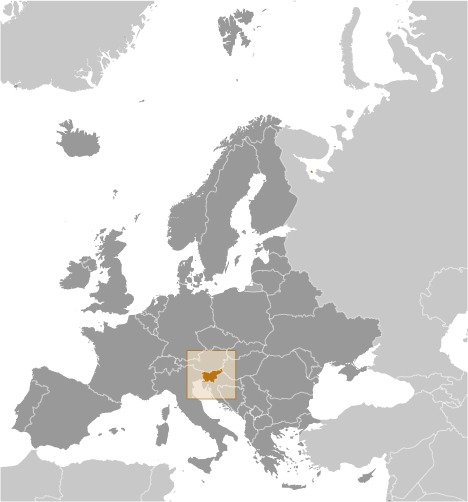
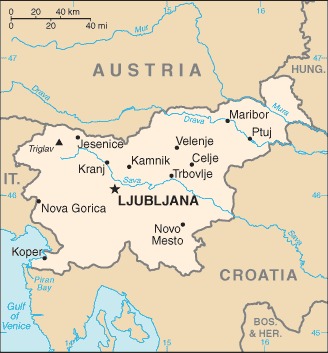
Slovenia is a pocket-sized Alpine nation wedged between Italy, Austria, Hungary, and Croatia, packing an astonishing diversity of landscapes into just 20,000 square kilometers. Julian Alps, karst caves, Adriatic coastline, rolling wine hills, and dense forests all fit within a country smaller than New Jersey.
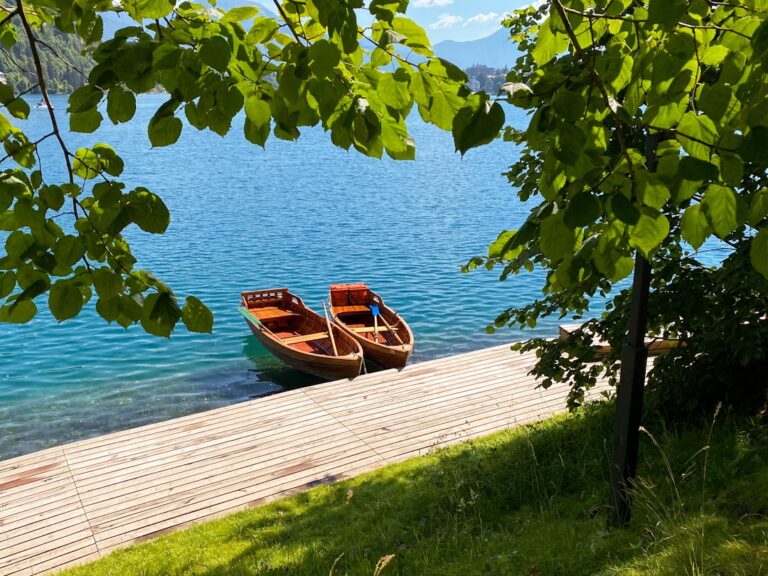
Ljubljana, the capital, is one of Europe's most charming small cities — a car-free historic center along the Ljubljanica River, presided over by a hilltop castle and animated by a thriving cafe and market culture. Lake Bled, with its fairy-tale island church, and the Škocjan Caves, a UNESCO World Heritage Site, are among the country's most recognizable landmarks.
Slovenia joined the EU in 2004, adopted the euro in 2007, and has built one of the most successful post-communist economies, with high living standards, excellent infrastructure, and a deep commitment to environmental sustainability — over 60% of its territory is forested.
History
Slovenes settled in the eastern Alps in the sixth century and were subsequently ruled by Frankish, Habsburg, and Austrian powers for over a thousand years. Despite this long subordination, the Slovene language survived and became the cornerstone of national identity during the nineteenth-century Romantic nationalism movement.
After World War I, Slovenia was incorporated into the Kingdom of Yugoslavia, and after World War II into Tito's communist federation. Slovenia declared independence in 1991, and the ensuing Ten-Day War was the briefest of Yugoslavia's breakup conflicts. Rapid EU and NATO integration followed, and Slovenia served as EU Council president in 2008.
The Slovene lands were part of the Austro-Hungarian Empire until the latter's dissolution at the end of World War I. In 1918, the Slovenes joined the Serbs and Croats in forming a new multinational state, which was named Yugoslavia in 1929. After World War II, Slovenia was one of the republics in the restored Yugoslavia, which, though communist, soon distanced itself from the Soviet Union and spearheaded the Non-Aligned Movement. Dissatisfied with the exercise of power by the majority Serbs, the Slovenes succeeded in establishing their independence in 1991 after a short 10-day war. Historical ties to Western Europe, a growing economy, and a stable democracy have assisted in Slovenia's postcommunist transition. Slovenia acceded to both NATO and the EU in the spring of 2004; it joined the eu…
CIA World Factbook
Culture & Society
Slovenian culture combines Alpine, Mediterranean, and Central European influences. The country boasts a proud literary tradition anchored by the Romantic poet France Prešeren, whose verse adorns the national anthem. Wine culture is deeply rooted — the Primorska and Štajerska regions produce excellent vintages — and the cuisine ranges from Alpine štruklji (rolled dumplings) to coastal seafood and Karst prosciutto. Beekeeping is a national passion, and painted beehive panels are a distinctive Slovenian folk art.
Languages: Slovene (official) 91.1%, Serbo-Croatian 4.5%, other or unspecified 4.4%, Italian (official, only in municipalities where Italian national communities reside), Hungarian (official, only in municipalities where Hungarian national communities reside) (2002 census)
Religions: Catholic 57.8%, Muslim 2.4%, Orthodox 2.3%, other Christian 0.9%, unaffiliated 3.5%, other or unspecified 23%, none 10.1% (2002 est.)
Ethnic Groups: Slovene 83.1%, Serb 2%, Croat 1.8%, Bosniak 1.1%, other or unspecified 12% (2002 est.)
Maps
Articles About Slovenia
Destinations
Why Slovenia Should Be Your Next European Trip
Slovenia is the rare European country that punches so far above its weight it seems almost unfair to its neighbours.
Travel
Why Slovenia Should Be Your Next European Trip
Slovenia is the rare European country that punches so far above its weight it seems almost unfair to its neighbours.