Turkey
Your complete guide to Turkey
Quick Facts
Capital
Ankara
Population
82,017,514
Languages
Turkish (official), Kurdish, other minority languages
Currency
Turkish liras (TRY)
Area
783,562 sq km
Government
Presidential republic
About Turkey
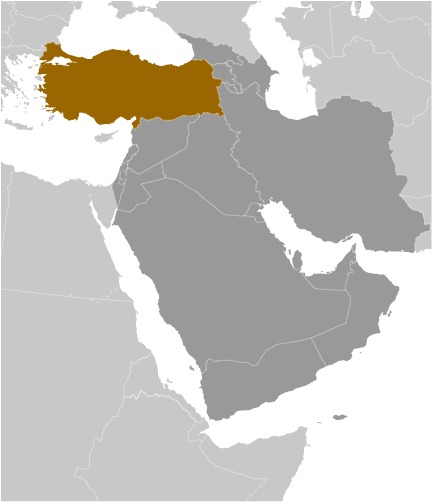
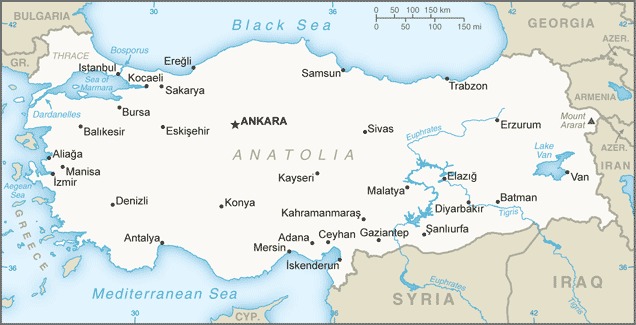
Turkey straddles Europe and Asia, with its European portion (Thrace) separated from the vast Anatolian landmass by the Bosphorus, the Sea of Marmara, and the Dardanelles. This transcontinental position has made Turkey a bridge between civilizations for millennia, and Istanbul — the only city in the world to span two continents — embodies this dual identity magnificently.
Istanbul's skyline of minarets and domes, its Grand Bazaar and Bosphorus ferries, its Roman hippodrome and Ottoman palaces, create one of the world's most layered and intoxicating cities. Ankara, the inland capital, houses government institutions and the Atatürk Mausoleum, while the Aegean and Mediterranean coasts, Cappadocia's fairy chimneys, and the eastern highlands offer staggering geographic diversity.
Turkey has the region's largest economy and a young, dynamic population. Its NATO membership, EU candidacy (ongoing since 2005), and position between Europe, the Middle East, and Central Asia give it outsized geopolitical significance.
History
Turkey's territory has been home to some of history's greatest civilizations: Hittites, Greeks, Romans, Byzantines, and Ottomans all flourished here. Constantinople (Istanbul) served as the capital of the Roman and Byzantine empires for over a millennium before falling to the Ottoman Turks in 1453. The Ottoman Empire, at its height under Suleiman the Magnificent, ruled much of southeastern Europe, the Middle East, and North Africa.
The empire's decline and collapse after World War I led to the Turkish War of Independence and the founding of the Republic of Turkey in 1923 by Mustafa Kemal Atatürk, who launched sweeping secular modernization reforms. The twentieth and twenty-first centuries have seen Turkey navigate between secularism and Islamic politics, military coups and democratic consolidation, and Western alignment and regional ambitions.
Modern Turkey was founded in 1923 from the remnants of the defeated Ottoman Empire by national hero Mustafa KEMAL, who was later honored with the title Ataturk or "Father of the Turks." Under his leadership, the country adopted radical social, legal, and political reforms. After a period of one-party rule, an experiment with multi-party politics led to the 1950 election victory of the opposition Democrat Party and the peaceful transfer of power. Since then, Turkish political parties have multiplied, but democracy has been fractured by periods of instability and military coups (1960, 1971, 1980), which in each case eventually resulted in a return of formal political power to civilians. In 1997, the military again helped engineer the ouster – popularly dubbed a "post-modern coup" – of the th…
CIA World Factbook
Culture & Society
Turkish culture is an extraordinary synthesis of Central Asian, Islamic, Mediterranean, and European influences. The cuisine — kebabs, mezes, baklava, Turkish delight, and the ritual of Turkish tea and coffee — is one of the world's great culinary traditions. Turkish carpets, calligraphy, and ceramics (especially Iznik tilework) represent centuries of artistic refinement. Whirling dervish ceremonies, Ottoman hammams, and the call to prayer from thousands of mosques create a sensory experience found nowhere else.
Languages: Turkish (official), Kurdish, other minority languages
Religions: Muslim 99.8% (mostly Sunni), other 0.2% (mostly Christians and Jews)
Ethnic Groups: Turkish 70-75%, Kurdish 19%, other minorities 7-12% (2016 est.)
Maps
Articles About Turkey
Travel
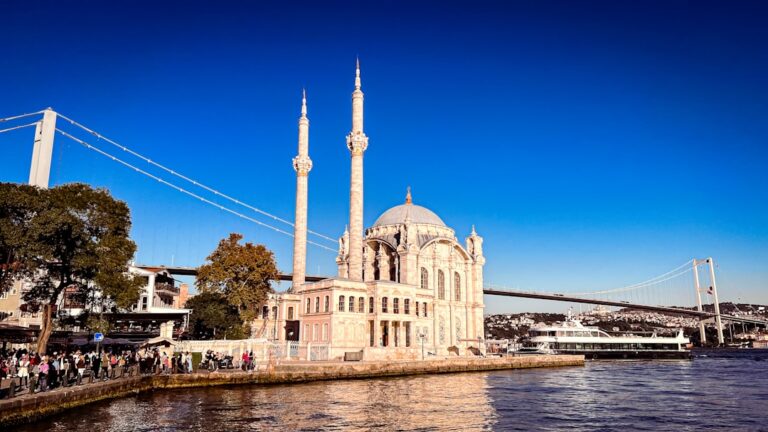
A First-Timer’s Guide to Istanbul’s European Side
Istanbul is the only major city in the world that straddles two continents, and its European side is where most…
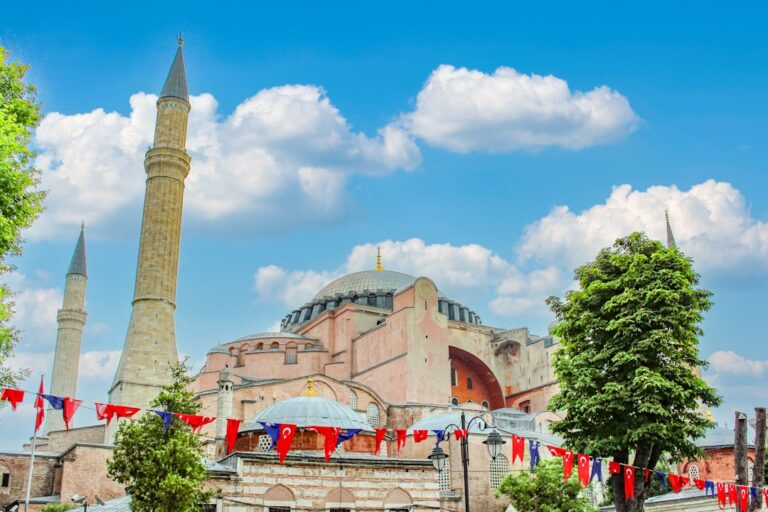
Five reasons why you should visit Turkey
If you’re thinking of spending a holiday in Europe but you’re looking for something a little more exotic, then Turkey…
Food & Drink
A Food Tour of Istanbul's Spice Bazaar and Beyond
Istanbul sits at the crossroads of two continents, and its food reflects every culture that has passed through — Ottoman,…