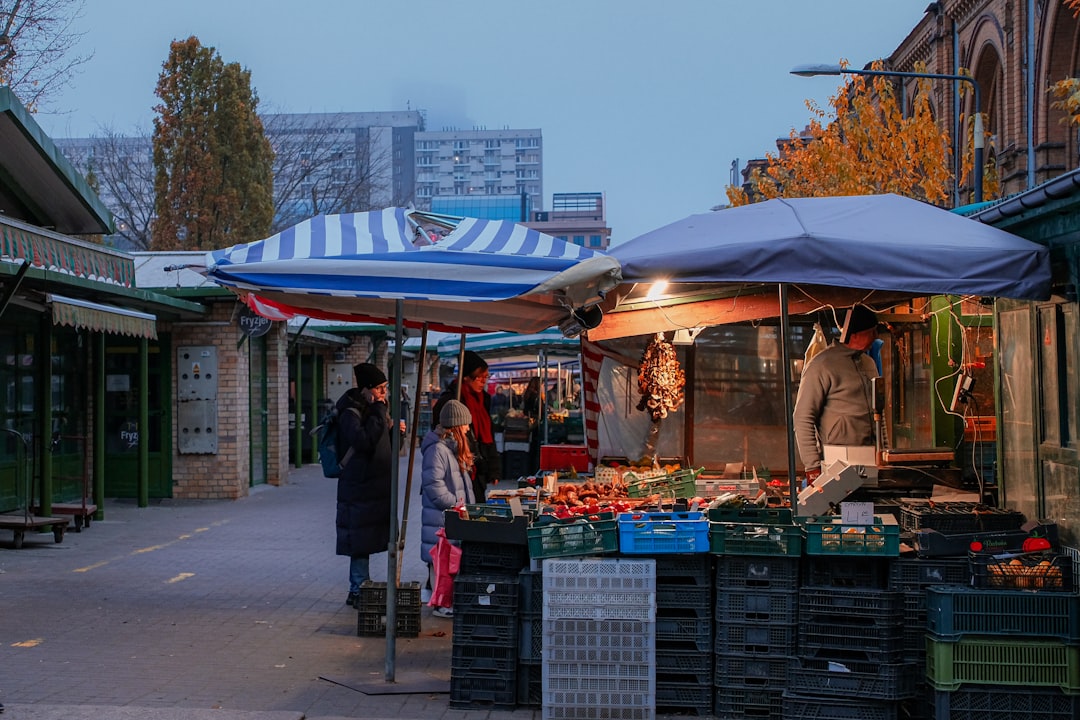
The best way to understand a European city is not through its museums or monuments — it’s through the food people eat standing up, leaning against a wall, or walking down the street with grease on their fingers. Street food is honest. It doesn’t try to impress you with plating or provenance. It just needs to taste good, fill you up, and cost less than a museum ticket. Here is a tour of the best bites you’ll find in capitals across the continent.
Berlin: Currywurst and Doner Kebab
Berlin runs on two street foods. Currywurst — a sliced pork sausage doused in curried ketchup and dusted with curry powder — was invented by Herta Heuwer in 1949 and has its own museum. Konnopke’s Imbiss, operating under the Eberswalder Strasse U-Bahn tracks since 1930, serves one of the city’s best. But the real king of Berlin street food is the doner kebab, adapted by Turkish immigrants in the 1970s into the stuffed flatbread behemoth that now outsells every other fast food in Germany. Mustafa’s Gemuse Kebap on Mehringdamm draws legendary queues for its chicken doner loaded with grilled vegetables, but any corner Imbiss at 2am after a night out will deliver something magnificent.
Prague: Trdelnik
Yes, Czechs will tell you trdelnik is a tourist invention. They’re partly right — the chimney-shaped pastry has Slovak and Hungarian roots and only recently conquered Prague‘s old town. But who cares about authenticity when warm dough is being wrapped around a metal cylinder, rolled in sugar and walnuts, and roasted over coals until caramelized? The newer versions stuffed with ice cream or Nutella are pure tourist bait, but the classic plain version, crispy outside and pillowy within, is genuinely delicious. Grab one near the Charles Bridge and keep walking.
London: Fish and Chips
Fish and chips from a proper chippie — not a gastropub, not a restaurant — remains one of London‘s great pleasures. Poppies in Spitalfields does a beautiful job, with batter that shatters audibly and chips thick enough to require structural engineering. Douse everything in malt vinegar and eat from the paper. The key is finding a place that fries in beef dripping rather than vegetable oil. Mushy peas optional but recommended.
Paris: Crepes
Parisian crepe stands cluster around Montparnasse, where Breton immigrants brought their galettes and crepes generations ago. A simple crepe au sucre et citron (sugar and lemon) from a street vendor costs around three euros and takes thirty seconds to make. For something heartier, get a galette complete — buckwheat crepe with ham, egg, and Gruyere. The best stands have a line of locals, not tourists, and the crepe maker works the circular wooden spreader like a conductor’s baton.
Rome, Amsterdam, Madrid, Budapest, and Warsaw
In Rome, arancini — deep-fried rice balls stuffed with ragu and mozzarella — are the perfect walking food, available from pizzerie al taglio throughout the city. Suppli, their Roman cousin with a mozzarella center that stretches into a “telephone cord,” are equally essential. Amsterdam‘s poffertjes, tiny pillowy pancakes dusted with powdered sugar and served with butter, are best from market stalls like those on Albert Cuyp Markt. In Madrid, churros from Chocolateria San Gines, open since 1894, come with thick hot chocolate so dense your churro practically stands up in it. Budapest‘s langos — deep-fried flatbread topped with sour cream and grated cheese — is sold from market stalls and is best eaten at the Great Market Hall, where you can follow it with a paper cone of roasted chestnuts in autumn. Warsaw’s zapiekanka, an open-faced baguette smothered in mushrooms, cheese, and ketchup, is the ultimate late-night Polish street food, best sourced from the stalls in Plac Nowy in Krakow‘s Kazimierz district — though every Polish city has its own versions.
Practical Tips for European Street Food
- Carry small bills and coins — many street vendors don’t take cards
- Eat where locals eat, not where signs are in English
- Lunch hours (12-2pm) often have the freshest food at market stalls
- Don’t be afraid of lines — they usually mean the food is worth it
- Bring napkins; European street food vendors are often stingy with them
Street food is democracy on a plate. It doesn’t care about your budget, your dress code, or your dietary philosophy. It cares about flavor, speed, and tradition. Eat standing up. Get your hands dirty. That’s how Europe really tastes.




Leave a Reply