Across Eastern Europe, the remnants of Soviet-era architecture stand as haunting monuments to a vanished ideology. From colossal brutalist government buildings to crumbling apartment complexes, these structures tell the story of a political system that sought to reshape not just society but the very landscape. For travelers interested in history, architecture, and the eerie beauty of decay, Eastern Europe’s Soviet relics offer some of the most unforgettable experiences on the continent.
Skopje: Brutalism Meets Earthquake Reconstruction
North Macedonia’s capital was devastated by an earthquake in 1963, and the reconstruction effort led by Japanese architect Kenzo Tange produced some of the most striking brutalist buildings in the Balkans. The main post office, the city wall complex, and the old train station (now a museum, its clock frozen at 5:17 a.m., the moment the earthquake struck) are powerful examples. More recently, the controversial Skopje 2014 project layered neoclassical facades over communist-era buildings, creating a surreal architectural palimpsest. Walking through Skopje feels like moving through multiple timelines simultaneously.
Buzludzha: Bulgaria’s UFO on a Mountaintop
Nothing prepares you for the first sight of the Buzludzha Monument. Built in 1981 atop a 1,441-meter peak in the Bulgarian Stara Planina mountains, this flying-saucer-shaped congress hall was once the proud showpiece of the Bulgarian Communist Party. Its interior was covered in elaborate mosaics depicting the history of socialism, and its tower bore the Communist star visible for miles. After 1989, it was abandoned to the elements. Today, the concrete shell is crumbling, the mosaics are deteriorating, and the entire structure sits in eerie silence above the clouds. There have been efforts to stabilize the building and restore the mosaics, though access to the interior remains officially restricted. Even viewed from outside, Buzludzha is one of the most atmospheric places in all of Europe.
Pripyat: The Ghost City of Chernobyl
The abandoned city of Pripyat, evacuated in 1986 after the Chernobyl nuclear disaster, is perhaps the world’s most famous ghost town. Once home to 49,000 people, mostly workers at the nearby nuclear plant, the city was emptied in 36 hours and never repopulated. Today, trees grow through apartment floors, the iconic Ferris wheel in the amusement park (which never officially opened) rusts in silence, and schoolrooms still contain scattered textbooks and gas masks. Guided tours from Kyiv take visitors through the exclusion zone safely, with radiation exposure on a day trip roughly equivalent to a long-haul flight. It is a profoundly moving experience that brings the Cold War’s most terrifying moment into sharp, physical focus.
Warsaw’s Palace of Culture and Science
Stalin’s gift to Poland, a 237-meter socialist realist skyscraper completed in 1955, still dominates the Warsaw skyline. Locals have a complicated relationship with it; a common joke says the best view in Warsaw is from the Palace, because it is the only place you cannot see the Palace. Today it houses theaters, cinemas, offices, and a viewing terrace on the 30th floor that offers spectacular panoramic views of the city. The building is a fascinating study in how cities adapt to unwanted monuments rather than demolishing them.
The Panelak: Life in Prefabricated Concrete
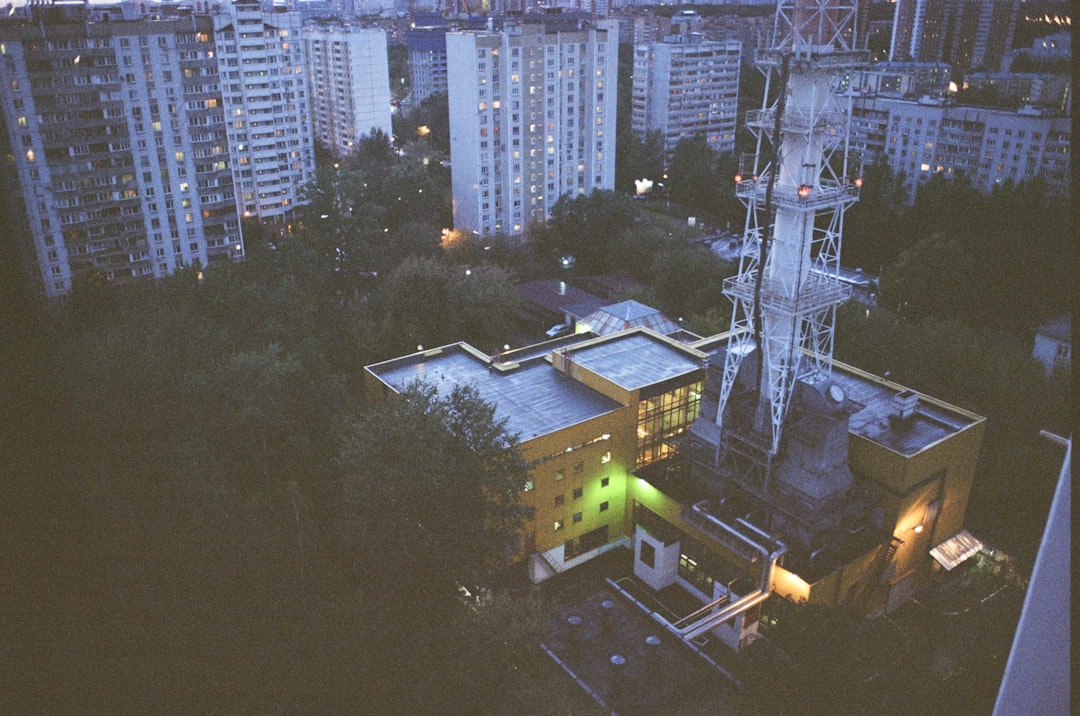
Perhaps the most widespread Soviet architectural legacy is the panelak, prefabricated concrete apartment blocks that housed millions across the Eastern Bloc. From Petrzalka in Bratislava (the largest housing estate in Central Europe, home to over 100,000 people) to the vast complexes ringing Budapest, Prague, and Berlin, these buildings defined the lived experience of socialism. Many have been renovated with colorful facades, but some remain in their original gray concrete state, offering a visceral glimpse into the daily reality of life behind the Iron Curtain.
Ethics of Urban Exploration
A word on responsibility: many of these sites are structurally dangerous or legally off-limits. Always join organized tours where available, respect barriers and signage, and never remove artifacts. These are historical sites, not playgrounds. The best urban exploration leaves no trace and takes only photographs. Several cities now offer dedicated architectural tours. Berlin, Budapest, and Skopje all have excellent guides who contextualize the buildings within their political and social history.




Leave a Reply