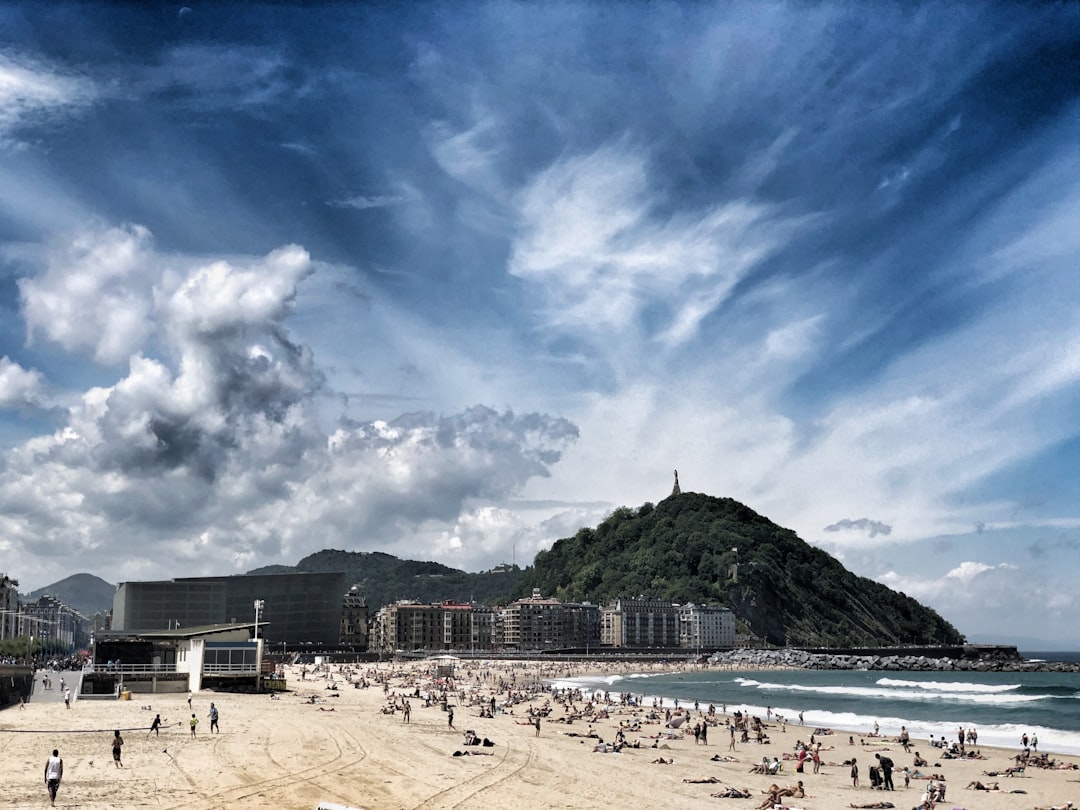
Straddling the border between Spain and France along the Bay of Biscay, the Basque Country is unlike anywhere else in Europe. Its people speak a language with no known relatives, its cuisine is considered among the finest on the continent, and its cultural identity has survived centuries of pressure from larger neighboring powers. For travelers willing to look beyond the usual Spanish highlights, the Basque Country rewards with world-class food, stunning landscapes, and a culture that remains genuinely, fascinatingly unique.
The Mystery of Euskara
The Basque language, Euskara, is one of the great linguistic mysteries of the world. It is a language isolate, meaning it has no proven connection to any other language on Earth. It predates the arrival of Indo-European languages in the region, and despite centuries of suppression (it was banned under Franco’s dictatorship), it has survived and is now co-official with Spanish in the autonomous Basque Country. Street signs are bilingual, children learn it in school, and hearing it spoken in markets and bars is a reminder that you are somewhere truly distinct. Even basic phrases like kaixo (hello) and eskerrik asko (thank you) will earn you smiles of appreciation.
Bilbao: The City That Reinvented Itself
In 1997, the opening of Frank Gehry’s Guggenheim Museum Bilbao transformed a declining industrial city into one of Europe’s must-visit cultural destinations. The building itself, a shimmering titanium-clad sculpture that seems to shift shape as you walk around it, is as much a work of art as anything inside. The collection focuses on contemporary art, with monumental installations by Richard Serra, Jeff Koons’ giant flower-covered puppy sculpture outside, and rotating exhibitions that draw from the global Guggenheim network. But Bilbao has far more than the Guggenheim: the Casco Viejo (Old Town) is a warren of atmospheric streets lined with pintxos bars, the Alhondiga cultural center (redesigned by Philippe Starck) is a marvel, and the surrounding green hills offer easy escapes into nature.
San Sebastian: The World’s Greatest Food City
With more Michelin stars per capita than anywhere except Kyoto, San Sebastian (Donostia in Euskara) has a legitimate claim to being the world’s greatest food city. But you do not need a reservation at Arzak or Mugaritz to eat extraordinarily well here. The Parte Vieja (Old Town) is packed with pintxos bars, the Basque version of tapas, where the counter groans under elaborate small plates. The tradition is to move from bar to bar, eating one or two pintxos at each along with a small glass of txakoli, a slightly sparkling local white wine. Ganbara for wild mushrooms, La Cuchara de San Telmo for slow-cooked cheeks, Bar Nestor for its legendary tortilla. Beyond food, the city’s La Concha beach is one of the most beautiful urban beaches in Europe, a perfect crescent of sand framed by green headlands.
Culture, Sport, and History
Basque culture runs deep. Pelota (also known as jai alai) is the traditional sport, a ferociously fast ball game played against a wall, often in a purpose-built fronton found in nearly every Basque town. The rural caserios (farmhouses) that dot the green countryside are architectural icons, with their distinctive stone walls and broad wooden beams. Many have been converted into agriturismos (rural guesthouses) offering farm-to-table dining experiences.
The town of Gernika holds particular historical significance. It was here, on April 26, 1937, that the German Luftwaffe (at Franco’s request) carried out a devastating bombing raid on a civilian market day, an atrocity immortalized in Picasso’s masterpiece. Today, the Gernika Peace Museum thoughtfully chronicles the bombing and its aftermath, and the town serves as a powerful reminder of the Basque people’s resilience. Visiting on a Monday market day, when the streets fill with vendors and locals just as they did in 1937, adds a poignant layer to the experience.
Getting There and Getting Around
Bilbao’s airport has connections across Europe, and the city is also reachable by train from Madrid and Barcelona. San Sebastian is 100 kilometers east along the coast and connected by bus and the Euskotren regional rail. Renting a car opens up the gorgeous Basque countryside. The coastal road between Bilbao and San Sebastian, winding through fishing villages like Getaria and Zumaia (where dramatic flysch rock formations meet the sea), is one of northern Spain’s finest drives. Across the border, the French Basque towns of Bayonne, Biarritz, and Saint-Jean-de-Luz offer a Gallic twist on Basque culture, with their own excellent food and surf culture.




Leave a Reply