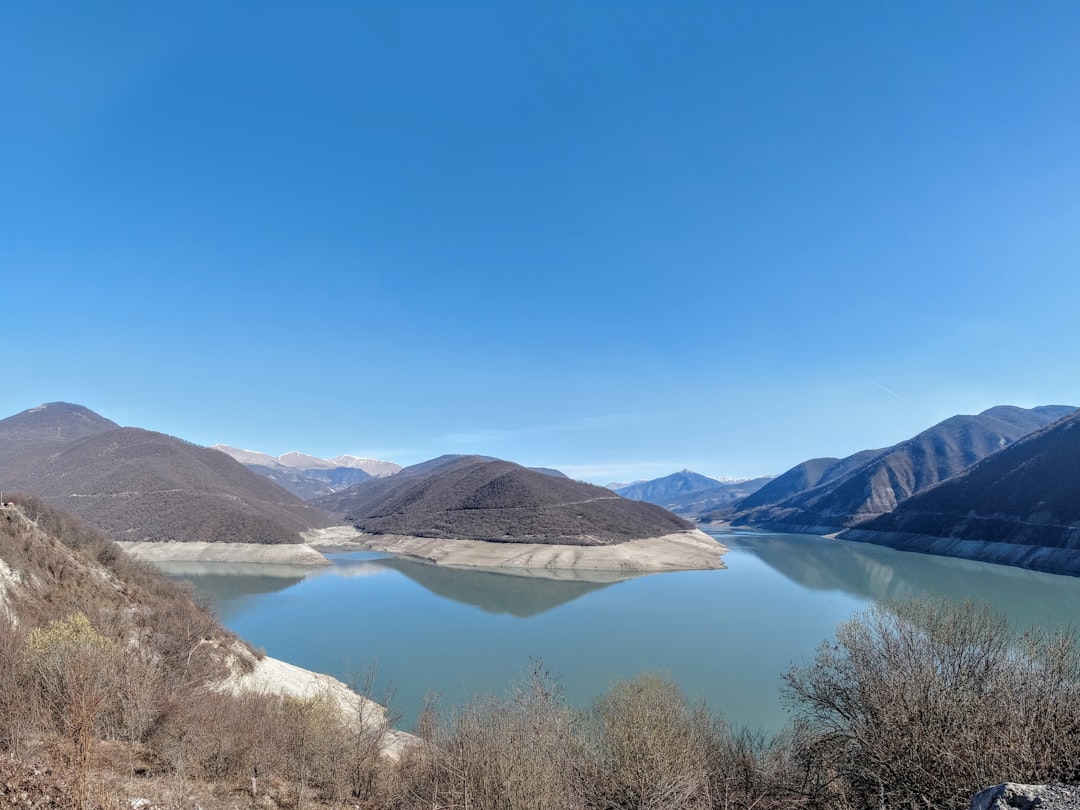
At the crossroads of Europe and Asia, wedged between the Greater Caucasus mountains and the borders of Turkey, Iran, and Russia, lie two ancient nations that most European travelers have never considered visiting. Georgia and Armenia are among the oldest Christian civilizations on Earth, with histories stretching back millennia, cuisines that rival anything in the Mediterranean, and landscapes of jaw-dropping drama. They are also remarkably affordable, disarmingly welcoming, and increasingly easy to reach.
Tbilisi: Georgia’s Intoxicating Capital
Tbilisi is a city that grabs you immediately. The old town is a cascade of crumbling wooden balconies, ornate church domes, and narrow lanes that spill down hillsides toward the Mtkvari River. The sulfur baths in the Abanotubani district, domed brick structures fed by naturally hot, mineral-rich water, have been the social heart of the city for centuries. A private bath room costs around 50 lari (roughly 17 euros) and is one of the most relaxing experiences available anywhere. Above the old town, the Narikala Fortress offers sweeping views, and the Bridge of Peace, a glass-and-steel pedestrian bridge, symbolizes the country’s forward-looking ambition. Tbilisi’s nightlife is thriving, with the Bassiani techno club earning a reputation as one of Europe’s best.
Georgian Wine: 8,000 Years of Tradition
Georgia is widely regarded as the birthplace of wine, with archaeological evidence of winemaking dating back 8,000 years. The traditional Georgian method uses qvevri, large clay vessels buried underground, to ferment and age the wine, a technique now recognized by UNESCO as intangible cultural heritage. The Kakheti region, east of Tbilisi, is the heart of Georgian wine country, with family-run wineries offering tastings and meals. The amber-colored wines made from the Rkatsiteli grape using extended skin contact are unlike anything you have tasted in Western Europe. A supra (traditional feast) with endless toasts led by a tamada (toastmaster) is an essential Georgian experience.
Armenia: Monasteries and Mountains
Armenia adopted Christianity in 301 AD, making it the world’s first Christian nation, and its landscape is dotted with ancient monasteries of extraordinary beauty. Geghard Monastery, partially carved into a cliff face and dating to the 4th century, is a UNESCO World Heritage Site where monks once guarded what they believed was the spear that pierced Christ’s side. The acoustics inside the rock-hewn chambers are remarkable. Further south, the Tatev Monastery perches on the edge of a deep gorge and is reached by the Wings of Tatev, the world’s longest reversible aerial tramway at 5.7 kilometers. The ride alone, soaring over the Vorotan River canyon, is worth the trip to Armenia.
The Food
Both countries are culinary revelations. Georgian cuisine centers on khachapuri (cheese-filled bread, with the Adjarian version arriving as a boat-shaped pie topped with a raw egg and butter), khinkali (enormous soup dumplings eaten by hand), and an array of walnut-based dishes and herb salads. Armenian cuisine offers its own treasures: lavash flatbread (baked in underground clay ovens called tonirs), dolma wrapped in grape leaves, and the smoky grilled meats of a khorovats barbecue. In both countries, a full meal at a good restaurant rarely exceeds 10 to 15 euros per person.
Practical Information
- Tbilisi and Yerevan both have international airports with direct flights from many European cities, including budget carriers like Wizz Air.
- EU citizens can enter both Georgia and Armenia visa-free for up to one year (Georgia) or 180 days (Armenia).
- The land border between Georgia and Armenia is open and crossable by bus or shared taxi (marshrutka).
- Both countries use their own currencies (Georgian lari, Armenian dram), and costs are very low by European standards.
- English is increasingly spoken among younger people, but learning a few phrases of Georgian or Armenian goes a long way.
The hospitality in both nations is legendary and genuine. You will be fed until you cannot move, toasted until your glass is never empty, and welcomed with a warmth that makes Western European service culture feel transactional by comparison. Georgia and Armenia may sit at the edge of the European map, but they belong at the center of any serious traveler’s wish list.




Leave a Reply