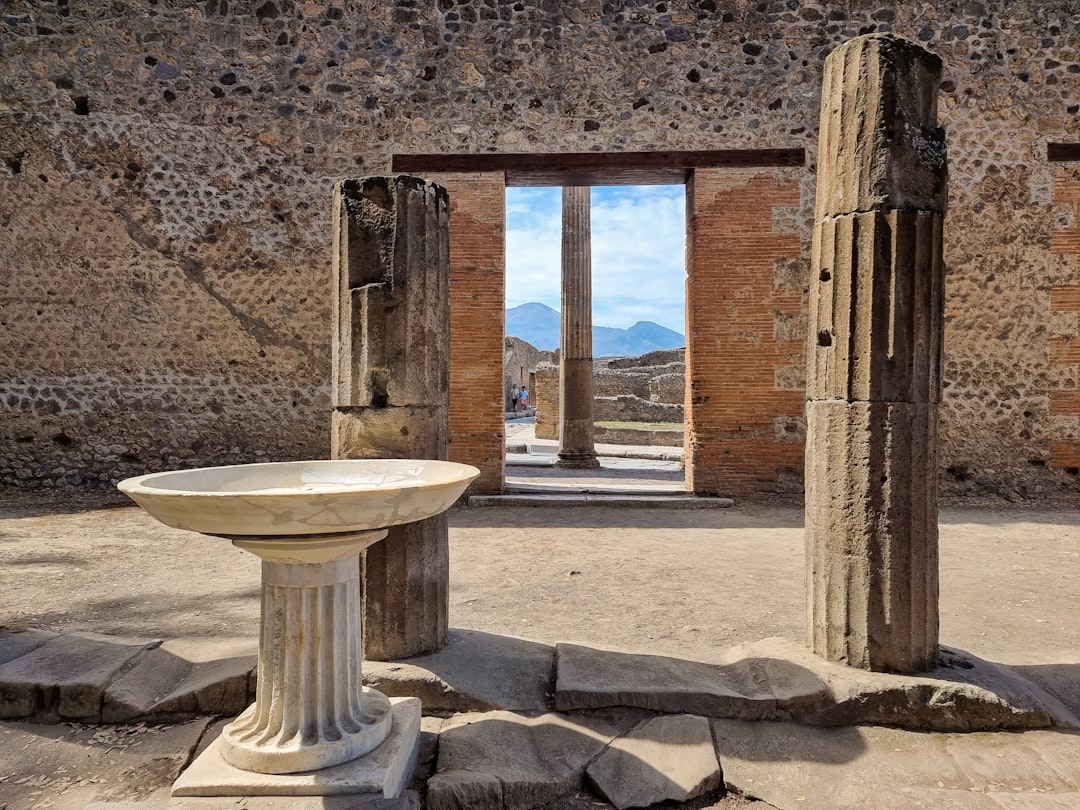
On August 24, 79 AD — or possibly in October, as recent archaeological evidence suggests — Mount Vesuvius erupted with a force estimated at 100,000 times that of the Hiroshima bomb. The eruption buried the thriving Roman cities of Pompeii and Herculaneum under meters of volcanic debris, killing thousands and preserving a snapshot of daily life in the first century with a completeness found nowhere else on Earth. Most visitors head straight to Pompeii, the larger and more famous site. But those who skip Herculaneum, or who rush through either site without knowing where to look, miss some of the ancient world’s most extraordinary treasures.
Why Herculaneum Deserves Equal Attention
Herculaneum was buried not by pumice and ash, as Pompeii was, but by a series of pyroclastic surges — superheated clouds of gas and volcanic material traveling at hundreds of kilometers per hour. This material solidified into a dense, rock-like tuff that preserved the city to an extraordinary degree. Where Pompeii’s upper stories largely collapsed, Herculaneum retains multi-story buildings with intact wooden beams, doors, beds, and even food. You can see carbonized loaves of bread still bearing the baker’s stamp, wooden furniture in its original position, and rope coiled exactly as it was left nearly two thousand years ago.
The Villa of the Papyri, partially excavated at Herculaneum’s edge, is one of antiquity’s greatest archaeological finds. This enormous luxury villa — believed to have belonged to Julius Caesar’s father-in-law, Lucius Calpurnius Piso — contained a library of approximately 1,800 carbonized papyrus scrolls. Using cutting-edge technology including synchrotron X-ray imaging, scholars are now reading these scrolls without unrolling them. Many contain previously unknown works of Epicurean philosophy by Philodemus of Gadara. The villa’s layout inspired the Getty Villa museum in Malibu, California, which is a full-scale recreation.
What Most Visitors Walk Past in Pompeii
Pompeii’s sheer size — it covers 66 hectares, of which roughly two-thirds have been excavated — means that tour groups tend to follow the same well-worn route, hitting the Forum, the amphitheater, and the House of the Faun before heading to the gift shop. But the site rewards those who wander off the main paths.
The Garden of the Fugitives, in Pompeii’s southeastern corner, contains plaster casts of thirteen victims who died trying to flee through a garden. Giuseppe Fiorelli developed the casting technique in 1863: he poured liquid plaster into the voids left in the hardened ash by decomposed bodies, capturing their final postures with haunting precision. The group includes adults and children, some clutching each other. It is the most emotionally powerful encounter in either city.
Pompeii’s bakeries — over 30 have been identified — reveal an entire industry. Millstones made of volcanic rock still stand in their original positions, and ovens resemble modern pizza ovens so closely that the connection between ancient and modern Neapolitan baking seems almost unbroken. The Lupanar, Pompeii’s most famous brothel, is small and surprisingly well-preserved, with explicit frescoes above each doorway that scholars debate served as either advertisements or a menu of services. The thermopolium, or ancient fast-food counter, with its terracotta pots set into a marble counter for serving hot food, reminds us that not much has changed about how people eat on the go.
Oplontis: The Hidden Third Site
Between Pompeii and Herculaneum, in the modern town of Torre Annunziata, the Villa of Poppaea at Oplontis is a UNESCO World Heritage Site that receives a fraction of the visitors. This lavish seaside villa, attributed to Nero’s second wife Poppaea Sabina, contains some of the finest Roman wall paintings in existence — vivid trompe l’oeil architectural scenes, garden views, and theatrical masks in rich blues, reds, and golds that make the faded frescoes at Pompeii look modest by comparison. You may have the entire villa nearly to yourself.
Practical Tips for Visiting Both in One Day
- Start at Herculaneum when it opens at 8:30 AM. It is smaller and can be thoroughly explored in two to three hours.
- Take the Circumvesuviana train from Ercolano Scavi station to Pompei Scavi station — the journey takes about 20 minutes.
- Enter Pompeii through the Porta Marina entrance and head directly to less-visited areas in the eastern section before crowds arrive from tour buses, which typically peak between 10:30 AM and 2:00 PM.
- Bring water, sunscreen, and comfortable shoes — the ancient stone streets are uneven and shade is limited.
- Consider hiking Vesuvius itself. The summit trail takes about 30 minutes from the parking area, and standing on the crater rim looking down at the cities the volcano destroyed is a visceral experience.
Pompeii and Herculaneum are not ruins in the conventional sense. They are time capsules — cities interrupted mid-sentence, their stories still legible in every bakery, bathhouse, and graffiti-covered wall. Give them the time they deserve, and they will change how you understand the ancient world.




Leave a Reply