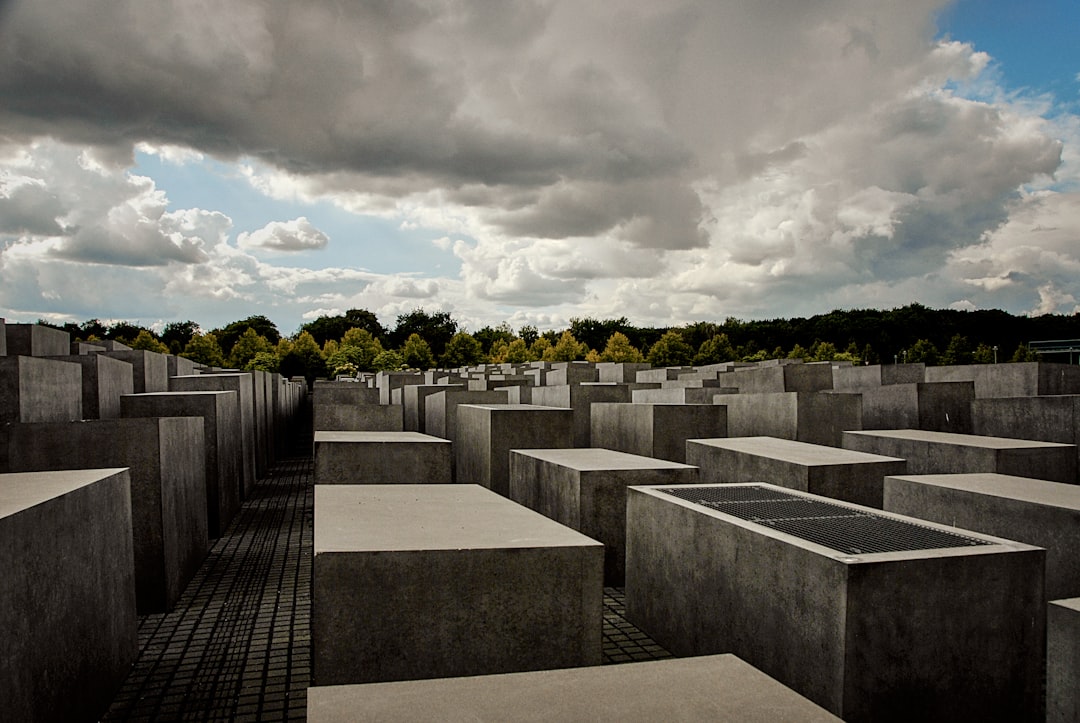
The First World War killed approximately 20 million people — soldiers and civilians — between 1914 and 1918, and wounded another 21 million. On the Western Front, a line of trenches stretching from the English Channel to the Swiss border became the site of industrialized slaughter on a scale the world had never seen. More than a century later, the battlefields of France and Belgium remain among the most powerful and unsettling places in Europe. They are not conventional tourist destinations. They are landscapes of grief, memory, and warning — and they deserve to be visited with the gravity they demand.
Verdun: The Longest Battle
The Battle of Verdun, fought from February to December 1916, was the longest single engagement of the war. The German strategy, conceived by Chief of Staff Erich von Falkenhayn, was explicitly to “bleed France white” by attacking a position the French could not afford to surrender. Over ten months, an estimated 700,000 soldiers were killed or wounded on both sides — roughly 70,000 casualties per month — in an area barely ten kilometers wide. The landscape was so thoroughly devastated by shellfire that nine villages were declared “died for France” and never rebuilt. Their locations are marked by small chapels and memorial stones in a forest that has grown over the craters.
The Douaumont Ossuary is Verdun’s most sobering monument. This 137-meter-long structure, shaped like a sword thrust into the earth, contains the unidentified remains of approximately 130,000 French and German soldiers. Through small windows at the building’s base, visitors can look into the lower chamber and see bones — femurs, skulls, and ribs stacked in compartments organized by the sector of the battlefield where they were found. It is an experience that leaves most visitors in silence. The surrounding cemetery, with its 16,142 white crosses stretching across a hillside, reinforces the scale of loss. Fort Douaumont and Fort Vaux, both key positions in the battle, can be visited and explored — their dark corridors and shell-scarred concrete convey the claustrophobia and terror of underground combat.
The Somme: Britain’s Bloodiest Day
On July 1, 1916, the first day of the Battle of the Somme, the British Army suffered 57,470 casualties — 19,240 of them killed — making it the bloodiest single day in British military history. The battle continued until November, with total Allied and German casualties estimated at over 1.1 million. The Thiepval Memorial, designed by Sir Edwin Lutyens and inaugurated in 1932, bears the names of 72,337 British and South African soldiers who died on the Somme and have no known grave. The memorial’s massive brick and stone arches, visible across the Picardy landscape, create an architecture of absence — the structure’s purpose is defined entirely by the names of the missing.
The Lochnagar Crater, near the village of La Boisselle, was created by the detonation of a massive mine beneath German lines on the morning of July 1. It is 91 meters across and 21 meters deep — now grass-covered and eerily peaceful, but unmistakable in its violence. The Newfoundland Memorial Park at Beaumont-Hamel preserves the trenches and no-man’s-land where the Royal Newfoundland Regiment was virtually annihilated in thirty minutes, suffering over 90 percent casualties. The preserved trenches, with their zig-zag patterns still visible in the earth, and the distance between opposing lines — sometimes less than 100 meters — make the tactical reality of trench warfare viscerally comprehensible.
Flanders Fields: Ypres and Tyne Cot
The Ypres Salient in Belgium was the site of three major battles and years of continuous fighting that reduced the medieval Flemish city of Ypres (now Ieper) to rubble. The city was entirely rebuilt after the war — the Cloth Hall, a magnificent thirteenth-century market building, was reconstructed stone by stone and now houses the In Flanders Fields Museum, one of the finest World War I museums in existence. Its interactive displays, personal testimonies, and immersive audio experiences convey the human dimension of the war with exceptional sensitivity.
Tyne Cot Cemetery, near the village of Passendale (Passchendaele), is the largest Commonwealth war cemetery in the world. It contains 11,961 graves, of which nearly 8,400 are unidentified — their headstones reading simply “A Soldier of the Great War, Known unto God,” a phrase written by Rudyard Kipling, who lost his own son at Loos in 1915. The cemetery’s rear wall bears the names of an additional 34,957 soldiers from the United Kingdom and New Zealand who died in the Ypres Salient after August 16, 1917, and whose graves are unknown. Walking among the headstones — each one representing a person, a family, a life cut short — is an exercise in comprehending the incomprehensible.
The Menin Gate: Every Evening Since 1928
Every evening at eight o’clock, traffic through the Menin Gate in Ieper is stopped, and members of the local fire brigade sound the Last Post on silver bugles. This ceremony has taken place every single evening since July 2, 1928, interrupted only during the four years of German occupation in World War II — it resumed on the very evening of Ieper’s liberation in September 1944. The Menin Gate memorial itself bears the names of 54,395 soldiers of the British Empire who died in the Ypres Salient before August 16, 1917, and have no known grave. The nightly ceremony, attended by a handful of people on quiet winter evenings and hundreds on summer nights, is one of the most moving acts of collective remembrance anywhere in the world.
Visiting with Respect
- These are graveyards and memorials, not attractions. Dress appropriately, speak quietly, and be mindful of other visitors who may have personal connections to those commemorated.
- The Iron Harvest — live ammunition and unexploded ordnance — is still recovered from the fields of the Somme and Flanders every year. Never touch any metal objects found in the soil.
- The Commonwealth War Graves Commission maintains its cemeteries impeccably. If you know the name of a soldier buried or commemorated in the region, the CWGC website can locate their grave or memorial panel.
- Allow at least two days for the Somme and two for the Ypres Salient. Rushing between sites diminishes the experience.
The battlefields of the First World War are Europe at its most haunting and its most honest. They ask us to reckon with the catastrophic consequences of political failure, militarism, and the devaluation of human life. A century on, the landscape has healed — grass covers the craters, trees fill the trenches, poppies bloom in the fields. But the names on the memorials do not fade, and the Last Post still sounds at the Menin Gate, every evening, without fail.




Leave a Reply