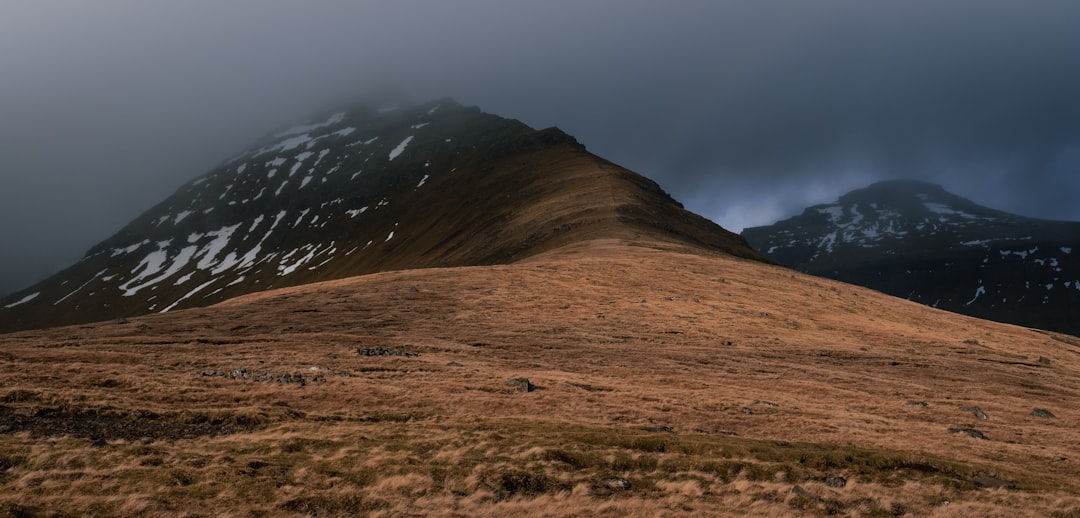
Eighteen islands in the North Atlantic, halfway between Norway and Iceland, where sheep outnumber people and the weather changes every fifteen minutes. The Faroe Islands are not a destination for the faint of heart or the rigid of itinerary. They are a destination for those who find beauty in fog, drama in cliffs, and satisfaction in reaching places that feel genuinely remote — even though they are technically part of the Kingdom of Denmark and only a two-hour flight from Copenhagen.
Tórshavn: The World’s Smallest Capital
Tórshavn, population 14,000, is named after Thor and feels like a village that accidentally became a capital. The old town, Tinganes, is a cluster of red-painted wooden houses with grass roofs perched on a peninsula. The Faroese parliament has met here since the Viking Age, making it one of the oldest parliamentary meeting places in the world. The town has a handful of excellent restaurants — KOKS, which held two Michelin stars, put Faroese cuisine on the global map with dishes featuring fermented lamb, dried fish, and foraged seaweed. For something less formal, try a hot dog from one of the harbor kiosks. Faroese hot dogs, like their Icelandic cousins, are unexpectedly excellent.
Múlafossur and the Iconic Views
The waterfall at Gásadalur, Múlafossur, is the image that launched a thousand Instagram posts: a ribbon of water plunging from a cliff directly into the ocean, with the village of Gásadalur perched above. Until 2004, the village was accessible only by foot or helicopter. A tunnel now connects it to the road network, but Gásadalur still has fewer than twenty residents. The hike to the viewpoint takes only fifteen minutes from the parking area, but arrive early — the spot has become significantly more popular, and the single-lane road struggles with traffic.
Bird Cliffs and Boat Tours
The Vestmanna bird cliffs on Streymoy are home to thousands of puffins, guillemots, and fulmars nesting on narrow ledges hundreds of meters above the sea. Boat tours navigate into narrow sounds and beneath overhanging cliffs where the scale of the landscape becomes viscerally apparent. On Mykines, the westernmost island, you can walk among puffin colonies in summer — though the crossing by ferry is weather-dependent and cancellations are common. The Faroes have the largest colony of storm petrels in the world, and birdwatching here is a serious draw from May through August.
Grass Roofs, Tunnels, and Helicopters
The traditional Faroese grass-roofed house is not a museum piece — many buildings still sport living roofs, including the cathedral in Tórshavn. The islands are connected by an impressive network of undersea tunnels, including the Eysturoyartunnilin, which features an underwater roundabout illuminated by art installations. For the most remote islands, Atlantic Airways operates helicopter services that double as public transport — a helicopter ride between islands costs less than a taxi across many European cities and offers views that no taxi could match.
Practical Considerations
The weather in the Faroes is genuinely unpredictable. Four seasons in one day is not a cliché here — it is a conservative estimate. Pack layers, waterproofs, and a willingness to adapt plans on the fly. The islands are not cheap: expect Scandinavian prices for food and accommodation. A rental car is essential for exploring beyond Tórshavn, but roads are well-maintained despite their dramatic settings. Atlantic Airways flies from Copenhagen, Edinburgh, and Reykjavik. The Smyril Line ferry from Denmark takes about 36 hours but allows you to bring a car. Summer offers the longest days and best weather, but winter brings dramatic storms, shorter days, and the chance to see the Northern Lights.
The Faroe Islands reward travelers who are comfortable with uncertainty. Plans will change. Ferries will be cancelled. Fog will obscure the view you drove two hours to see. But then the clouds will part for five minutes and reveal something so staggeringly beautiful that every inconvenience evaporates. This is edge-of-the-world travel at its finest — raw, unpredictable, and utterly unforgettable.




Leave a Reply