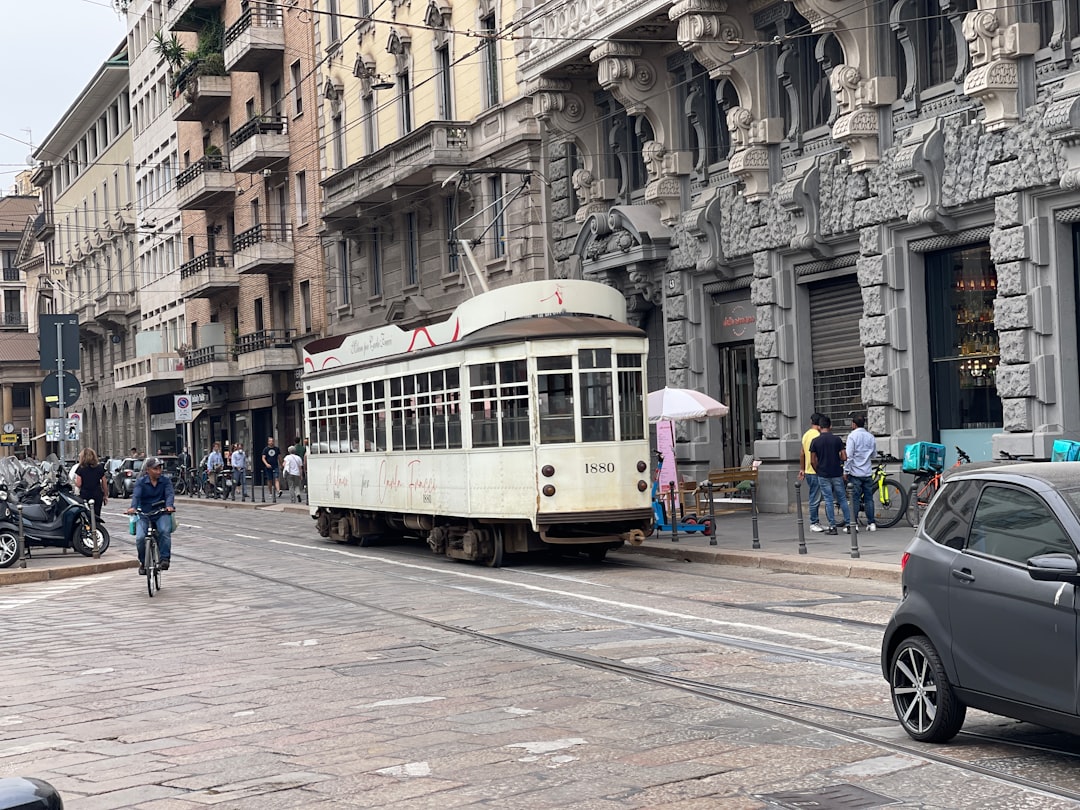
Italy‘s transportation system is a beautiful blend of efficient infrastructure and chaotic improvisation. From high-speed trains connecting major cities to local buses that seem to follow their own schedule, navigating Italian transport requires a combination of practical language skills, flexibility, and a sense of humor. This guide will equip you with the vocabulary and knowledge to move through Italy confidently, whether you’re zooming through Tuscany by train or navigating the labyrinthine metro of Rome.
Train Travel: Italy’s Transportation Backbone
Italian trains are fast, relatively affordable, and connect virtually every town worth visiting. Understanding train vocabulary is essential for any Italian traveler.
The Train Companies
Trenitalia (treh-nee-TAH-lee-ah) – The national railway company, running most regional and long-distance trains.
Italo (ee-TAH-lo) – A private railway company offering high-speed service between major cities. Often cheaper and more modern than Trenitalia.
Frecciarossa (FREH-chah-ROS-sah) – Trenitalia’s high-speed train (literally “red arrow”).
Frecciargento (FREH-chah-AHR-jen-toh) – A faster Trenitalia option (literally “silver arrow”).
Frecciabianca (FREH-chah-bee-AHN-kah) – Slower Trenitalia service (literally “white arrow”).
Essential Train Phrases
Vorrei un biglietto per… (vor-RAY oon bee-YET-toh pehr) – I would like a ticket to…
Un biglietto solo andata (oon bee-YET-toh SOH-lo ahn-DAH-tah) – A one-way ticket.
Un biglietto andata e ritorno (oon bee-YET-toh ahn-DAH-tah eh ree-TOR-noh) – A round-trip ticket.
Per oggi (pehr OHJ-jee) – For today.
Per domani (pehr doh-MAH-nee) – For tomorrow.
A che ora parte il treno? (ah keh OH-rah PAR-teh eel TREH-noh?) – What time does the train depart?
A che ora arriva il treno? (ah keh OH-rah ahr-REE-vah eel TREH-noh?) – What time does the train arrive?
Qual è il binario? (kwal EH eel bee-NAH-ree-oh?) – What is the platform/track number?
Questo è il treno per…? (KWES-toh EH eel TREH-noh pehr?) – Is this the train to…?
Posso mettere la valigia qui? (POS-soh MET-teh-reh lah vah-LEE-jah kwee?) – Can I put my suitcase here?
C’è toilette in questo vagone? (cheh toh-i-LET-teh een KWES-toh vah-GOH-neh?) – Is there a bathroom in this car?
Un caffè/acqua/snack (oon kah-FEH/AHK-kwah/snack) – Ordering from the café car.
CRITICAL TRAIN RULE: Validate Your Ticket
This is one of the most important things to understand about Italian trains: You must validate your ticket at the yellow machine before boarding. The machines are usually located on the platform. Failure to validate your ticket can result in a hefty fine, even if you have a valid ticket—it just hasn’t been validated.
Dov’è la macchina di convalida? (doh-VEH lah MAHK-kee-nah dee kon-vahl-EE-dah?) – Where is the validation machine?
Devo timbrare il biglietto? (DEH-voh teem-BRAH-reh eel bee-YET-toh?) – Do I need to validate the ticket?
High-speed trains (Frecciarossa, Frecciargento) don’t require validation, and modern train systems are becoming digital, but when in doubt, look for the yellow machines—they’re ubiquitous.
Metro Systems: Rome and Milan
Italy’s major cities have metro systems. Rome and Milan are the most useful for tourists.
General Metro Phrases
Dov’è la stazione della metropolitana? (doh-VEH lah stah-tsee-OH-neh DEHL-lah mehtr-oh-pohl-ee-TAH-nah?) – Where is the metro station?
Un biglietto, per favore (oon bee-YET-toh, pehr fah-VOR-eh) – One ticket, please.
Due biglietti (DOO-eh bee-YET-tee) – Two tickets.
Una giornaliera (OO-nah jor-nahl-YEH-rah) – A day pass.
Quale linea per…? (KWAH-leh LEE-neh-ah pehr?) – Which line goes to…?
In che direzione? (een keh dee-reh-tsee-OH-neh?) – In which direction?
Prossima fermata (PROS-see-mah fehr-MAH-tah) – Next stop.
Rome Metro (Metropolitana)
Rome has three metro lines:
Linea A (LEE-neh-ah AH) – Line A (red line)
Linea B (LEE-neh-ah BEE) – Line B (blue line, with a B1 branch)
Linea C (LEE-neh-ah CHEE) – Line C (green line)
Rome’s metro is clean, efficient, and covers most major tourist areas. However, it doesn’t reach some places like the Trevi Fountain or Spanish Steps—you’ll need to walk or take a bus.
Milan Metro (Metropolitana Milanese)
Milan has four metro lines plus trams and buses. The metro is more extensive than Rome’s:
Linea 1 (LEE-neh-ah OO-noh) – Line 1 (red)
Linea 2 (LEE-neh-ah DOO-eh) – Line 2 (green)
Linea 3 (LEE-neh-ah TREH) – Line 3 (yellow)
Linea 4 (LEE-neh-ah KWAT-troh) – Line 4 (purple)
Asking for Directions: The Essential Navigation Phrases
You’ll need to ask for directions countless times while traveling in Italy:
Dov’è…? (doh-VEH?) – Where is…?
Dov’è il Duomo? (doh-VEH eel DOO-oh-moh?) – Where is the Cathedral?
Dov’è la stazione? (doh-VEH lah stah-tsee-OH-neh?) – Where is the train station?
Dov’è l’ospedale? (doh-VEH los-peh-DAH-leh?) – Where is the hospital?
Dov’è la farmacia? (doh-VEH lah far-mah-CHEE-ah?) – Where is the pharmacy?
Dov’è una banca? (doh-VEH OO-nah BAHN-kah?) – Where is a bank?
Qual è la strada per…? (kwal EH lah STRAH-dah pehr?) – What is the road to…?
Come si va a…? (KOH-meh see vah ah?) – How do you get to…?
È lontano? (EH lon-TAH-no?) – Is it far?
È vicino? (EH vee-CHEE-no?) – Is it nearby?
A quanta distanza? (ah KWAN-tah dis-TAHN-tsah?) – At what distance?
Quanti minuti a piedi? (KWAN-tee mee-NOO-tee ah pee-EH-dee?) – How many minutes on foot?
Posso andare a piedi? (POS-soh ahn-DAH-reh ah pee-EH-dee?) – Can I walk there?
Devo prendere un autobus? (DEH-voh PREN-deh-reh oon ow-toh-BOOS?) – Do I need to take a bus?
When asking for directions, pay attention not just to words but to hand gestures. Italians point and gesture extensively, and their gestures often clarify direction as much as their words.
Taxi and Ride-Sharing
Un taxi, per favore (oon TAHK-see, pehr fah-VOR-eh) – A taxi, please (at taxi stands—don’t hail cabs on the street in Italy).
Al’hotel… (ahl oh-TEL) – To the hotel… (followed by hotel name).
Via… (VEE-ah) – To… (followed by street name—”via” means street).
Piazza… (pee-AHT-tsah) – To… (followed by piazza/square name).
Qual è la tariffa? (kwal EH lah tah-REE-fah?) – What is the fare?
È compreso il tassametro? (EH kohm-PREHS-oh eel tahs-sah-MEH-troh?) – Is the meter included?
Potete accettare carte di credito? (poh-TEH-teh ah-cheh-TAH-reh KAR-teh dee KREH-dee-toh?) – Can you accept credit cards?
Italian taxis are metered and generally honest. Always ensure the meter is running. Uber and Lyft operate in major cities like Rome and Milan, but traditional taxis remain more common.
Renting a Car: An Italian Adventure
Renting a car in Italy can be thrilling or terrifying depending on your perspective. Italian drivers are aggressive, traffic rules are more like suggestions, and parking is an Olympic sport.
Vorrei noleggiare un’auto (vor-RAY noh-lehj-JAH-reh oon OW-toh) – I would like to rent a car.
Ho una prenotazione (oh OO-nah preh-noh-tah-tsee-OH-neh) – I have a reservation.
Quale tipo di auto consigliate? (KWAH-leh TEE-poh dee OW-toh kon-seel-YAH-teh?) – What type of car do you recommend?
È inclusa l’assicurazione? (EH een-KLOO-sah lahs-see-koo-rah-tsee-OH-neh?) – Is insurance included?
Quale è il limite di velocità? (KWAH-leh EH eel LEE-mee-teh dee veh-loh-CHEE-tah?) – What is the speed limit?
Dov’è il parcheggio? (doh-VEH eel par-KEJ-joh?) – Where is parking?
Quanto costa il parcheggio? (KWAN-toh KOS-tah eel par-KEJ-joh?) – How much is parking?
Driving Rules You Need to Know
Driving in Italy requires caution and respect for traffic laws, even when Italians seem to ignore them. Fines for violations are steep:
Limite di velocità (LEE-mee-teh dee veh-loh-CHEE-tah) – Speed limit.
Zona Traffico Limitato (ZTL) (ZOH-nah TRAH-fee-koh lee-mee-TAH-toh) – Limited traffic zone. Driving here without authorization results in automatic fines, often sent to your rental company weeks later.
Parcheggio Vietato (par-KEJ-joh vee-eh-TAH-toh) – No parking zone.
Corsia d’Emergenza (KOR-see-ah deh-mehr-JEN-tsah) – Emergency lane (don’t drive here).
Strada Chiusa (STRAH-dah kee-OO-sah) – Road closed.
If you get pulled over:
Che cos’ho fatto? (keh kos-AH-ho FAHT-toh?) – What did I do wrong?
Dove è il mio documento? (DOH-veh EH eel MEE-oh doh-koo-MEN-toh?) – Where is my document/ID?
Vespa and Scooter Rental
Renting a Vespa or scooter is the quintessentially Italian way to travel. It’s exhilarating but requires care and appropriate safety gear:
Vorrei noleggiare una Vespa/un scooter (vor-RAY noh-lehj-JAH-reh OO-nah VES-pah/oon SKOO-tehr) – I would like to rent a Vespa/scooter.
Ho una patente di guida internazionale? (oh OO-nah pah-TEN-teh dee GOO-ee-dah een-tehr-nah-tsee-oh-NAH-leh?) – Do I have an international driver’s license? (the person asks you this).
È necessario indossare il casco? (EH neh-cheh-sah-ree-oh een-dos-SAH-reh eel KAS-koh?) – Is it necessary to wear a helmet? (Yes, always).
Il casco (eel KAS-koh) – Helmet.
Dov’è la benzina? (doh-VEH lah ben-ZEE-nah?) – Where is the gas station?
Pieno, per favore (pee-EH-noh, pehr fah-VOR-eh) – Fill it up, please (at gas station).
Road Signs and Driving Vocabulary
Understanding Italian road signs prevents accidents and fines:
Velocità Massima: 130 km/h – Maximum speed 130 km/h (on highways).
Velocità Massima: 90 km/h – Maximum speed 90 km/h (outside towns).
Velocità Massima: 50 km/h – Maximum speed 50 km/h (in towns).
Dare la Precedenza (DAH-reh lah preh-cheh-DEN-tsah) – Yield/give way.
Senso Unico (SEN-soh OO-nee-koh) – One-way street.
Divieto di Sosta (dee-vee-EH-toh dee SOS-tah) – No parking.
Passo Carabile (PAHS-soh kah-rah-BEE-leh) – Driveway entrance (don’t block).
Curva Pericolosa (KOO-rah peh-ree-koh-LOH-sah) – Dangerous curve.
Public Buses and Local Transport
Local buses are the cheapest way to get around but require some navigation:
Un biglietto, per favore (oon bee-YET-toh, pehr fah-VOR-eh) – One ticket, please.
Quale autobus per…? (KWAH-leh ow-toh-BOOS pehr?) – Which bus goes to…?
Scendo a… (SHEN-doh ah) – I’m getting off at… (to tell the driver your stop).
Prossima fermata? (PROS-see-mah fehr-MAH-tah?) – Next stop?
Many cities now use apps like Moovit or Google Maps that show real-time bus locations and schedules, which is extremely helpful.
Water Transport: Venice and Italian Islands
If you’re visiting Venice or taking ferries to islands:
Dov’è la fermata del vaporetto? (doh-VEH lah fehr-MAH-tah dehl vah-poh-RET-toh?) – Where is the water bus stop?
Un biglietto per… (oon bee-YET-toh pehr) – A ticket to… (destination).
Una giornaliera (OO-nah jor-nahl-YEH-rah) – A day pass.
Il vaporetto (eel vah-poh-RET-toh) – The water bus (Venice public transit).
Il traghetto (eel trah-GET-toh) – The ferry.
Quando parte il prossimo traghetto per…? (KWAN-doh PAR-teh eel PROS-see-moh trah-GET-toh pehr?) – When does the next ferry to… depart?
In Venice, the vaporetto is your primary transportation. Understanding how to navigate it prevents frustration. Pro tip: The express vaporettos (lines 1 and 2 generally) move faster than other lines but cost the same.
Airport Phrases
Dov’è l’aeroporto? (doh-VEH lah-eh-roh-POR-toh?) – Where is the airport?
Come si va all’aeroporto? (KOH-meh see vah ahl-lah-eh-roh-POR-toh?) – How do you get to the airport?
Un biglietto per l’aeroporto (oon bee-YET-toh pehr lah-eh-roh-POR-toh) – A ticket to the airport (taxi/bus).
Terminal 1/2/3 (Terminals use English in Italian airports).
Dov’è il check-in? (doh-VEH eel CHECK-in?) – Where is check-in?
Dov’è il gate? (doh-VEH eel gate?) – Where is the gate?
Most Italian airports have good English signage, and staff speak English, but knowing basic phrases helps.
Pro Tips for Getting Around Italy
First, download offline maps (Google Maps allows this) before leaving your accommodation. Internet can be spotty in smaller towns.
Second, buy transportation passes when available—day passes for metros or 10-ticket bundles for buses are cheaper than individual tickets.
Third, if you get lost, locals are usually happy to help, especially if you approach them respectfully and try to speak Italian first.
Finally, embrace the chaos. Italian transportation has rhythm to it once you understand it. Trains run frequently, buses eventually arrive, and getting slightly lost in an Italian town often leads to discovering amazing restaurants or quiet piazzas that tourists miss.
Buon viaggio (happy travels)!




Leave a Reply