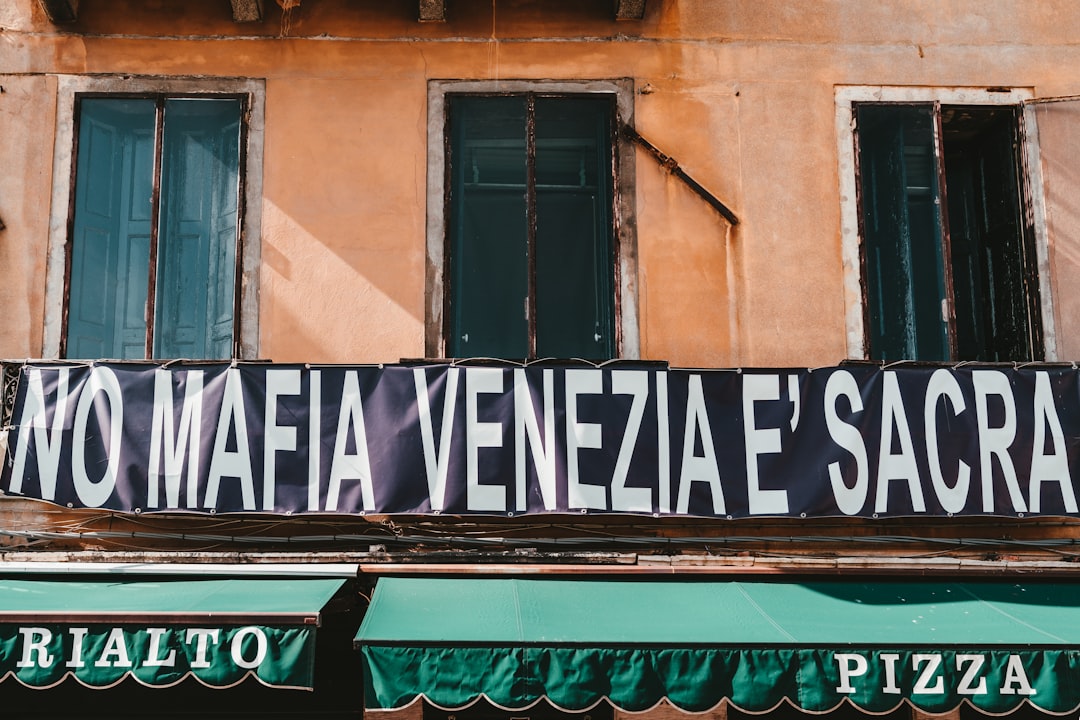
One of the most rewarding aspects of learning Italian is discovering that the language is remarkably phonetic. Unlike English, where “tough,” “though,” and “through” are all pronounced differently, Italian words are pronounced almost exactly as they’re written. This makes Italian one of the most accessible languages for English speakers to pronounce correctly. Master these pronunciation rules, and you’ll sound far better than someone reading directly from a guidebook.
The Golden Rule: Italian Is What You See
The first fundamental truth about Italian pronunciation is that it’s the most phonetic of the major Romance languages. Once you learn the rules, you can usually pronounce any word you’ve never seen before. This is different from English, French, or even Spanish. Letters have consistent sounds, and those sounds don’t change arbitrarily.
The second fundamental truth is that Italians value clear pronunciation highly. A well-pronounced Italian word—even with an English accent—is far better received than mumbling or unclear enunciation. Italians are expressive and articulate in their speech, and they notice when someone is trying to match that clarity.
The Basic Vowels: Start Here
Italian has five vowels: A, E, I, O, U. They’re always pronounced the same way. There are no silent vowels, no weird diphthongs that change meaning. Every vowel gets pronounced.
A (Ah) – Always Like in “Father”
Amore (ah-MOR-eh) – Love
Aria (AH-ree-ah) – Air
Casa (KAH-sah) – House
Mano (MAH-no) – Hand
Banana (bah-NAH-nah) – Banana
This is consistent everywhere. Italian A never sounds like the A in “cat” or “make.”
E – Has Two Sounds Depending on Context
This is where it gets slightly more complex. Italian E can be either open (like in “met”) or closed (like in “day”).
Open E (like “met”):
Bello (BEL-loh) – Beautiful
Mela (MEH-lah) – Apple
Sempre (SEM-preh) – Always
Closed E (like “day”):
Perché (pehr-KEH) – Why
Caffè (kah-FEH) – Coffee
Sera (SEH-rah) – Evening
For practical purposes as a learner, you can usually say E like “eh” and be understood perfectly. Perfect distinction between open and closed E comes with experience and listening to native speakers.
I (Ee) – Always Like in “Machine”
Italian I is always pronounced clearly as “ee.” It’s never silent, and it never makes the “uh” sound of English I in “bit.”
Italiano (ee-tahl-YAH-no) – Italian
Bici (BEE-chee) – Bicycle
Vino (VEE-no) – Wine
Primo (PREE-mo) – First
Divino (dee-VEE-no) – Divine
O – Also Has Open and Closed Versions
Like E, Italian O can be open (like “on”) or closed (like “oh”).
Open O (like “on”):
Cosa (KOH-sah) – Thing
Bosco (BOS-koh) – Forest
Closed O (like “oh”):
Solo (SOH-loh) – Alone
Moto (MOH-toh) – Motorcycle
Again, as a learner, pronouncing O as “oh” works well in most contexts.
U (Oo) – Always Like in “Boot”
Italian U is consistently pronounced like the “oo” in “boot.” It never sounds like the U in “but.”
Uno (OO-no) – One
Punto (POON-toh) – Point
Luna (LOO-nah) – Moon
Fuoco (foo-OH-koh) – Fire
Lungo (LOO-ngo) – Long
Consonants: The Rules That Lock It Together
Most Italian consonants are pronounced like their English equivalents, but some have special rules depending on what vowel follows.
The C Sound: Two Completely Different Sounds
This is crucial and determines whether you sound like a learner or a native speaker.
C Before A, O, U = Hard “K” Sound
Casa (KAH-sah) – House
Cane (KAH-neh) – Dog
Como (KOH-moh) – How/like
Cucchiaio (kook-kee-AH-yo) – Spoon
Curioso (koo-ree-OH-soh) – Curious
C Before E, I = Soft “CH” Sound (like in “cheese”)
Cena (CHEN-ah) – Dinner
Certamente (chehr-tah-MEN-teh) – Certainly
Cipolla (chee-POL-lah) – Onion
Cielo (CHEH-lo) – Sky
Città (chee-TAH) – City
If you see C before E or I, you automatically pronounce it like CH in English. This rule is CONSISTENT.
The G Sound: Another Dual System
G follows the exact same rule as C:
G Before A, O, U = Hard “G” Sound (like in “go”)
Gatto (GAHT-toh) – Cat
Gola (GOH-lah) – Throat
Gusto (GOOS-toh) – Taste
Guancia (GWAN-chah) – Cheek
Giallo (JAHL-loh) – Yellow
G Before E, I = Soft “J” Sound (like in “juice”)
Gelato (jeh-LAH-toh) – Ice cream
Genio (JEH-nee-oh) – Genius
Giro (JEE-roh) – Tour
Giorno (JOR-noh) – Day
Gigante (jee-GAHN-teh) – Giant
Again, this is completely consistent. See E or I after G? It’s a J sound.
The Double Consonant: Critical for Meaning
This is perhaps the single most important pronunciation rule in Italian. Double consonants are held longer and change the meaning of words.
Pena (PEH-nah) – Punishment
Penna (PEN-nah) – Pen (note the longer N)
Nono (NOH-noh) – Ninth
Nonno (NON-noh) – Grandfather (note the longer N)
Caro (KAH-roh) – Dear
Carro (KAR-roh) – Cart (note the longer R)
Bello (BEL-loh) – Beautiful
Belllo – Would be pronounced very slowly, with a held L (rarely appears in Italian, but you understand the concept)
The difference is subtle but important. When you see a double consonant in Italian, you hold it slightly longer. This is what gives Italian its characteristic rhythm. Natives will understand you without perfect double consonant timing, but getting it right sounds dramatically more native.
H – Silent Always
Italian H is always silent. It exists only to modify the pronunciation of C and G.
Ho (oh) – I have (H is silent, sounds like “oh”)
Hanno (AHN-noh) – They have (H is silent, sounds like “AHN-noh”)
Hai (ah-ee) – You have (H is silent, sounds like “ah-ee”)
Hotel (oh-TEL) – Hotel (H is silent, sounds like “oh-TEL”)
R – The Trilled R
Italian R is “trilled” or “rolled.” Your tongue vibrates slightly against the roof of your mouth. This is one of the most distinctly Italian sounds.
Roma (ROH-mah) – Rome (with a slight trill)
Rosso (ROS-soh) – Red (with a slight trill)
Amore (ah-MOR-eh) – Love
Not all English speakers can do a perfect trill, and that’s okay. Even a slightly American R is understood. But if you can roll your R, it makes an enormous difference in how native you sound.
To practice: Say “butter” quickly several times. Feel how your tongue flaps against the roof of your mouth? That’s the beginning of an Italian R. Italian Rs are more deliberate.
J, K, W, X, Y – Rare or Foreign
These letters are uncommon in Italian and usually appear only in borrowed words:
Jeans (jeenz) – Jeans (English word)
Taxi (TAHK-see) – Taxi (from English)
Weekend (wee-KEN-d) – Weekend (from English)
Whisky (WEES-kee) – Whisky (from English)
Special Combinations: The Unique Italian Sounds
Certain letter combinations create sounds unique to Italian that don’t exist in English:
GL Before I = “LY” Sound
Figlio (FEEL-yoh) – Son
Moglie (MOHL-yeh) – Wife
Aglio (AHL-yoh) – Garlic
Maglietta (mahl-YET-tah) – T-shirt
Ghiglia – This would be a normal G sound: Famiglia (fah-MEEL-yah) – Family
GN = “NY” Sound
Gnocchi (NYOK-kee) – Gnocchi (the potato dumplings)
Campagna (kahm-PAHN-yah) – Countryside
Montagna (mon-TAHN-yah) – Mountain
Ognuno (oh-NYOO-noh) – Everyone
Ragno (RAHN-yoh) – Spider
This sound doesn’t exist in English, but think of the NY in “lasagna” or “canyon.”
SC Before E or I = “SH” Sound
Scena (SHEH-nah) – Scene
Scienza (shee-EN-tsah) – Science
Aisce (AHS-sheh) – Ash
SC Before A, O, U = “SK” Sound
Scare (SKAH-reh) – To scare (if it were a verb)
Scopo (SKOH-poh) – Purpose
Scuola (SKWOH-lah) – School
Scuro (SKOO-roh) – Dark
Z – Two Pronunciations
Z Can Sound Like “TS”:
Pizza (PEET-sah) – Pizza (ts sound)
Grazie (GRAHT-see-eh) – Thank you (ts sound)
Stanza (STAHN-tsah) – Room (ts sound)
Z Can Sound Like “DZ”:
Zero (DZEH-roh) – Zero
Zona (DZOH-nah) – Zone
Zucchero (TSOO-keh-roh) – Sugar (ts in this case)
For learners, using the “ts” sound for Z is generally safe and understood.
Stress and Accent Marks: Where the Emphasis Falls
Italian words have a natural stress pattern. Most Italian words are stressed on the second-to-last syllable (penultimate syllable).
PAR-lah – Speak
CAH-sah – House
TEH-leh-foh-noh – Telephone
i-tahl-YAH-nah – Italian (when feminine)
When stress falls on a different syllable, it’s often marked with an accent:
Caffè (kah-FEH) – Coffee (stress on last syllable, marked with accent)
Perché (pehr-KEH) – Why (stress on last syllable, marked with accent)
Città (chee-TAH) – City (stress on last syllable, marked with accent)
Virtù (veer-TOO) – Virtue (stress on last syllable, marked with accent)
The accent mark tells you: stress THIS syllable. Reading accent marks aloud helps you learn stress patterns naturally.
Common Pronunciation Mistakes by English Speakers
Mistake 1: Pronouncing Final Vowels as Silent
English speakers tend to swallow final vowels. In Italian, they’re always pronounced clearly.
WRONG: “cah-suh” or “cas”
RIGHT: “KAH-sah” (with a clear “ah” at the end)
WRONG: “vee-no-uh”
RIGHT: “VEE-noh” (with clear “oh”)
Mistake 2: The “Schwa” Sound for E and O
English speakers reduce unstressed vowels to a schwa sound (uh). In Italian, unstressed vowels keep their original sound.
WRONG: “ah-MOR-uh” (schwa at the end)
RIGHT: “ah-MOR-eh” (clear E sound)
Mistake 3: Not Pronouncing Double Consonants
English speakers often don’t double-hold consonants, which changes meaning.
WRONG: “peh-nah” (punishment, single N)
RIGHT: “pen-nah” (pen, held N)
Mistake 4: Flat Intonation
Italian is a musical language. The melody and rhythm matter. English speakers sometimes flatten Italian into monotone. Italians use more inflection.
Solution: Listen to native speakers and exaggerate intonation slightly when learning.
Mistake 5: Not Rolling the R
Many English speakers skip the R trill entirely. While you’re still understood, it’s a very notable accent marker.
Solution: Practice rolling your R even if imperfectly. Any roll is better than no attempt.
Regional Pronunciation Variations
Italy has significant regional variations in pronunciation, especially in the south. However, the standard pronunciation taught in schools and used in media (based on Tuscan/Florentine Italian) is what you should aim for as a learner.
Roman pronunciation tends to drop or change some sounds slightly, particularly in dialect.
Neapolitan sounds are quite different from standard Italian, with different vowel sounds and consonant emphasis.
Southern Italian generally has slightly more guttural sounds and different stress patterns than Northern Italian.
Milan and the North tend to have crisper, faster pronunciation than the South.
As a learner, focus on standard Italian. You’ll be understood everywhere, and you can appreciate regional variations once you master the basics.
Putting It Together: Practice Words
Here are words that use various pronunciation rules. Practice these to integrate what you’ve learned:
Pronunciation Practice Words:
Gelato (jeh-LAH-toh) – Ice cream (soft C/G rule)
Giorno (JOR-noh) – Day (soft G before I)
Piccolo (PEEK-koh-loh) – Small (double C = hard sound before O)
Accento (ah-CHEN-toh) – Accent (double C + soft C before E)
Ragazzi (rah-GAHT-see) – Boys (double Z, soft Z = ts sound)
Montagna (mon-TAHN-yah) – Mountain (GN = ny sound)
Gnocchi (NYOK-kee) – Gnocchi (GN = ny sound)
Famiglia (fah-MEEL-yah) – Family (GL + I = ly sound)
Acqua (AHK-kwah) – Water (double C before A = hard K, QU = kw)
Questo (KWES-toh) – This (QU = kw, ST remains clear)
Why Italian Pronunciation Matters
Perfect accent isn’t necessary for communication, but good pronunciation earns respect. Italians value clear, articulate speech, and when you pronounce Italian words correctly, you’re showing respect for the language and culture. Additionally, correct pronunciation helps you understand native speakers better—when you hear the correct sounds, you can parse words you’ve never seen before.
Most importantly, Italian is designed to be spoken with joy and expression. The flowing vowels, the rolled R, the musical rhythm—these aren’t just linguistic features. They’re part of why the language feels romantic and alive. By learning to pronounce Italian correctly, you’re not just communicating information; you’re participating in a cultural expression that dates back centuries.
Buona pronuncia (good pronunciation)!




Leave a Reply