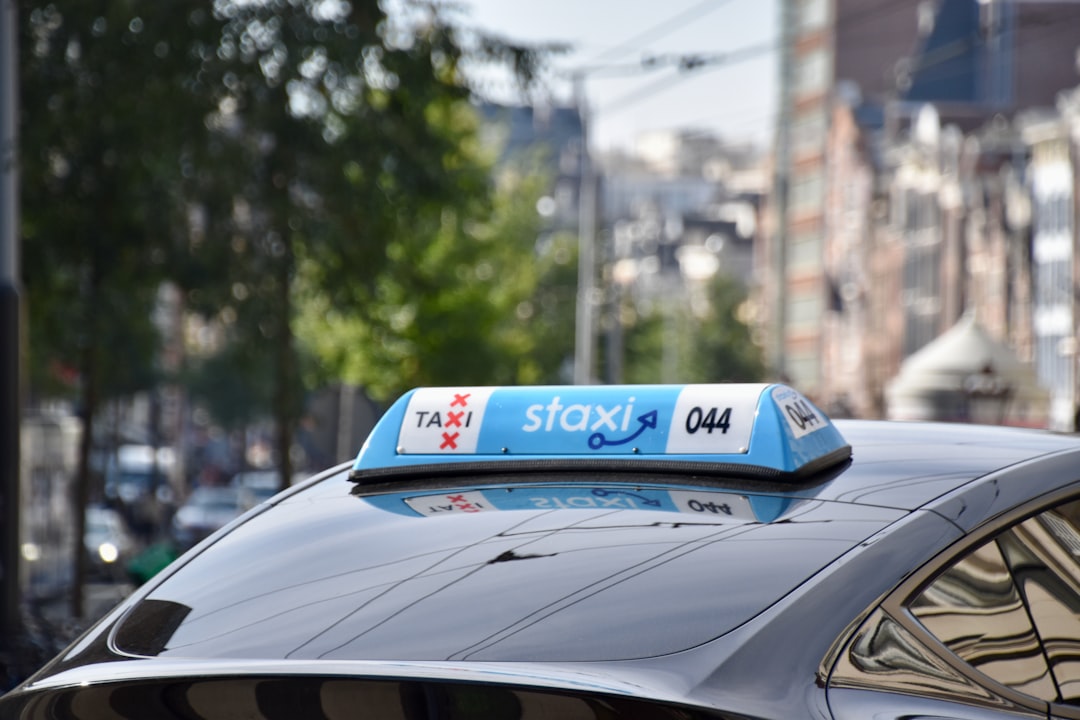
The Netherlands is famously the most cycling-friendly country in the world, and public transportation is excellent. Whether you’re hopping on a train between cities, navigating Amsterdam‘s tram system, renting a bicycle, or taking a canal boat, you need to know key transportation vocabulary and phrases. Getting around independently is one of the great joys of traveling in the Netherlands, and being able to communicate in Dutch makes the experience smoother and more enjoyable. This guide covers all the transportation modes you’ll encounter.
Train Travel (NS – Nederlandse Spoorwegen)
The Dutch national rail company, NS, operates an extensive network. Trains are the primary way to travel between cities and are fast, efficient, and generally on time.
Naar… (gaat de trein)? (NAHR…) – To… (does the train go)?
“Naar Amsterdam?” means “to Amsterdam?”
Wanneer gaat de volgende trein naar…? (VAN-ayr KHAAT duh VOHL-hun-duh TRAYN NAHR…?) – When does the next train to… leave?
Essential for planning your journey.
Hoe laat vertrekt de trein? (HOO LAHT ver-TREKT duh TRAYN?) – What time does the train depart?
Asking for the specific departure time.
Hoe lang duurt de reis? (HOO LAHNG DOORT duh RYS?) – How long does the journey take?
Important for planning your travel time.
Hoeveel kost een kaartje naar…? (HOO-vayl KOST ayn KAHR-chuh NAHR…?) – How much does a ticket to… cost?
Price checking for your destination.
Eenrichtingskaart (AYN-rikh-ting-skahrt) – One-way ticket
If you’re only going one direction.
Retourkaart (ruh-TOUR-kahrt) – Return ticket/round-trip ticket
For going and coming back.
Een kaartje naar Amsterdam (ayn KAHR-chuh NAHR AM-stir-dam) – A ticket to Amsterdam
The basic way to request a ticket.
Eerste klas (AYR-stuh KLAS) – First class
More comfortable and usually quieter.
Tweede klas (TWAY-duh KLAS) – Second class
Standard class, still very comfortable on Dutch trains.
OV-chipkaart (OH-VAY CHIP-kahrt) – Public transport chip card
The electronic card used for public transportation throughout the Netherlands. “Ik wil een OV-chipkaart kopen” (I want to buy an OV-chipkaart).
Welk spoor? (VELK SPOOR?) – Which platform/track?
How you ask which platform your train leaves from. Numbers are displayed as “Spoor 1,” “Spoor 2,” etc.
Let op! De deuren gaan dicht (LET OP! duh DUH-run KHAHN DIKHT) – Warning! The doors are closing
You’ll hear this announcement on trains regularly.
Volgende halte: … (VOHL-hun-duh HAL-tuh:…) – Next stop: …
The announcement of the next station.
Moet ik overstappen? (MOOT ik OH-ver-stah-pun?) – Do I need to change trains?
Asking if your journey requires a transfer.
Waar moet ik overstappen? (VAHR MOOT ik OH-ver-stah-pun?) – Where do I need to change trains?
Following up to know the transfer location.
Het station (het stah-SHOHN) – The train station
Where trains depart and arrive from. Amsterdam Centraal (Central Station) is the main station in Amsterdam.
Treinstel (TRAYN-stel) – Train car/set
If you need to specify which part of the train.
Zitplaats (ZIT-plahts) – Seat
You can reserve seats on longer journeys.
Tram Navigation (Amsterdam, Rotterdam, The Hague)
Most major Dutch cities have tram systems. Amsterdam’s tram network is the most extensive.
Welke tram gaat naar…? (VEL-kuh TRAM KHAAT NAHR…?) – Which tram goes to…?
The basic question for getting oriented.
Tram 4 gaat naar Centraal Station (TRAM VEER KHAAT NAHR sen-TRAHL stah-SHOHN) – Tram 4 goes to Central Station
A typical response you might hear.
Waar is de tramhalte? (VAHR is duh TRAM-hal-tuh?) – Where is the tram stop?
Finding the tram station.
Stap in! (STAP IN!) – Get on!
What the tram driver says when the tram is ready to go.
Uitgang (OWT-KHANG) – Exit
Where to get off the tram.
Volgende halte (VOHL-hun-duh HAL-tuh) – Next stop
You can ask this or hear it announced.
Strippenkaart (STRIP-pun-kahrt) – Strip ticket (older system, mostly replaced by OV-chipkaart)
Historical note: this was the old system, but OV-chipkaart is now standard.
Hier moet ik eruit (HEER MOOT ik ER-owt) – This is where I get off
Letting people know you’re exiting.
Let op, deuren gaan sluiten (LET OP, DUH-run KHAHN SLOY-tun) – Careful, doors are closing
Common tram announcement.
Gaat deze tram naar het Centraal Station? (KHAAT DAY-zuh TRAM NAHR het sen-TRAHL stah-SHOHN?) – Does this tram go to Central Station?
Confirming the tram’s destination.
Asking for Directions
Directions are crucial when exploring Dutch cities by foot.
Waar is de…? (VAHR is duh…?) – Where is the…?
The foundational question: “Waar is het Anne Frank Huis?” (Where is the Anne Frank House?), “Waar is het Rijksmuseum?” (Where is the Rijksmuseum?).
Hoe kom ik naar…? (HOO KOM ik NAHR…?) – How do I get to…?
Another way to ask for directions.
Rechtsaf (REKT-sahf) – Turn right
Direction instruction.
Linksaf (LINKS-ahf) – Turn left
Direction instruction.
Rechtdoor (REKHT-dor) – Go straight ahead
Direction instruction.
Hier (not) afslaan (HEER (NIT) AF-slahn) – Turn/Don’t turn here
Specific directions for which intersection.
Het eerste/tweede straat (het AYR-stuh / TWAY-duh STRAHT) – The first/second street
Ordinal directions.
Een straat verderop (ayn STRAHT ver-DAIR-op) – One block further on
Distance direction.
Bij de brug (by duh BRUG) – At the bridge
Landmarks are useful for directions in water-filled Dutch cities.
Bij het plein (by het PLAYN) – At the square/plaza
Another common landmark reference.
Tegenover (TAY-khun-oh-ver) – Opposite
“Het is tegenover de kerk” (It’s opposite the church).
Naast (NAHST) – Next to
“Het is naast de bank” (It’s next to the bank).
Linker/rechter kant (LINK-er / REKH-ter KANT) – Left/right side
“Aan de linker kant” (on the left side), “Aan de rechter kant” (on the right side).
Is het dichtbij? (is het DIKHT-by?) – Is it nearby?
Asking if the destination is close.
Kun je me op de kaart aanwijzen? (KUN yuh muh op duh KAHRT AHN-wy-zun?) – Can you show me on the map?
A way to ask for help if you have a map with you.
Cycling Vocabulary
The Netherlands is the cycling capital of the world. If you rent a bike (almost everyone does):
Ik wil graag een fiets huren (ik vil KHRAHKH ayn FEETS HU-run) – I would like to rent a bicycle
Essential for most travelers.
Voor hoelang? (VOOR HOO-lahng?) – For how long?
The rental company will ask how many hours/days.
Een dag (ayn DAKH) – One day
Day-long rental.
Een week (ayn WAYK) – One week
Weekly rental.
Hoeveel kost het? (HOO-vayl KOST het?) – How much does it cost?
Price checking for bike rentals.
Met slot (met SLOT) – With a lock
Important! Almost all bike rentals include a sturdy lock.
Met mandje (met MAN-chuh) – With a basket
Many Dutch bikes have baskets on the front.
Met kinderzeteltje (met KIN-der-zet-chuh) – With a child seat
If you’re traveling with a child.
Waar kan ik mijn fiets parkeren? (VAHR KAN ik myn FEETS PAR-kay-run?) – Where can I park my bike?
Essential for finding bike parking.
Fietsenstalling (FEET-sun-STAL-ing) – Bike parking/bike shed
Covered structures for secure bike parking.
Fietspad (FEETS-pad) – Bike path/cycle lane
The dedicated paths for cyclists, marked with red pavement.
Let op fietsers! (LET OP FEET-sers!) – Watch out for cyclists!
A warning sign you’ll see everywhere.
Voetganger (FOOT-khang-er) – Pedestrian
A person walking, not cycling—be aware of them.
Driewieler (DREE-wy-ler) – Tricycle/cargo bike
Some Dutch people use these for hauling things.
Koplampen (KOP-lahm-pun) – Front lights
Dutch law requires front lights for safe cycling.
Achterlicht (AH-ter-likht) – Rear light
Also legally required.
Bel (BEL) – Bell
Most Dutch bikes have a bell to alert pedestrians. Ring it with a gentle “ring-ring.”
Remmen (REM-un) – Brakes
“De remmen werken niet” (The brakes don’t work) if you have a problem.
Taxi and Ride-Share Phrases
Though cycling and public transit are preferred, sometimes you need a taxi or ride-share:
Waar is het taxistandplaats? (VAHR is het TAK-see-STAND-plahts?) – Where is the taxi stand?
Finding official taxis.
Een taxi naar… (ayn TAK-see NAHR…) – A taxi to…
Ordering a taxi to a destination.
Hoeveel kost het naar het hotel? (HOO-vayl KOST het NAHR het hoh-TEL?) – How much will it cost to the hotel?
Asking the fare before getting in.
Let op! Taximeter (LET OP TAK-see-MAY-ter) – Attention! Taxi meter
Make sure the meter is running.
Ik heb Uber nodig (ik hep OO-ber NOH-dikh) – I need Uber
For ride-share apps available in the Netherlands.
Wat is je locatie? (VAT is yuh loh-KAH-tsee?) – What is your location?
What the Uber app asks you to confirm.
Accepteer je betalingen met kaart? (ak-SEP-tair yuh buh-TAH-ling-un met KAHRT?) – Do you accept card payments?
Confirming payment method for taxi or ride-share.
Canal Boat and Ferry Transportation
Amsterdam and other Dutch cities have water transportation:
Waar is de bootsteiger? (VAHR is duh BOOT-stay-khur?) – Where is the boat dock?
Finding where water taxis and ferries depart.
Een rondvaart door Amsterdam (ayn ROND-vahrt dor AM-stir-dam) – A canal tour around Amsterdam
Popular tourist activity.
Hoe lang duurt de rondvaart? (HOO LAHNG DOORT duh ROND-vahrt?) – How long does the canal tour take?
Standard question about duration.
Een kaartje voor de veerboot (ayn KAHR-chuh VOOR duh VAIR-boot) – A ticket for the ferry
For crossing waterways.
Naar welke kant gaat deze boot? (NAHR VEL-kuh KANT KHAAT DAY-zuh BOOT?) – Which side does this boat go to?
Asking the ferry’s destination.
Een privé bootje (ayn pree-VAY BOOT-yuh) – A private boat
If you want to rent a boat for yourself.
Bootschoool/Bootverhuur (BOOT-shool / BOOT-ver-HUR) – Boat rental shop
Where to find boat rental services.
Water taxi (WAH-ter TAK-see) – Water taxi
Fast transportation on water.
Airport Transportation (Schiphol Airport)
Arriving at Amsterdam Airport Schiphol, you have several options:
Trein naar Centraal Station (TRAYN NAHR sen-TRAHL stah-SHOHN) – Train to Central Station
Quick, efficient option from the airport.
Hoeveel kost een kaartje? (HOO-vayl KOST ayn KAHR-chuh?) – How much does a ticket cost?
Checking train fare from airport.
Hoe lang duurt het naar het centrum? (HOO LAHNG DOORT het NAHR het SEN-trum?) – How long does it take to the city center?
About 15 minutes by train from Schiphol.
Busstation (BUS-stah-SHOHN) – Bus station
From the airport, you can also take buses.
Welke bus gaat naar Amsterdam? (VEL-kuh BUS KHAAT NAHR AM-stir-dam?) – Which bus goes to Amsterdam?
Bus option for airport transportation.
Ik wil een taxi (ik vil ayn TAK-see) – I want a taxi
Official taxi service at the airport.
Een shuttle bus naar mijn hotel (ayn SHAT-ul BUS NAHR myn hoh-TEL) – A shuttle bus to my hotel
Some hotels provide shuttle service.
Hoe kom ik bij het bagageuitgave? (HOO KOM ik by het bah-KHAH-zhuh OWT-khah-vuh?) – How do I get to baggage claim?
Finding where luggage is retrieved.
General Transportation Phrases
Ik ben verdwaald (ik ben ver-DVAHLT) – I am lost
If you’ve taken a wrong turn.
Dit is mijn eerste keer in Nederland (dit is myn AYR-stuh KAIR in NAY-der-lahnt) – This is my first time in the Netherlands
Explaining your unfamiliarity to helpful locals.
Dank je wel voor je hulp (DANK yuh vel VOOR yuh HULP) – Thank you for your help
Gratitude for assistance with transportation.
Hoeveel minuten? (HOO-vayl MI-noo-tun?) – How many minutes?
Asking about travel time.
Spits (SPITS) – Rush hour
When public transportation is most crowded.
Druk (DRUK) – Busy/crowded
Describing transportation during peak hours.
Leeg (LAYG) – Empty
When transportation is quiet.
Vertraagd (ver-TRAKHD) – Delayed
When transportation is running late.
Geannuleerd (khuh-AH-noo-lairt) – Cancelled
When transportation is cancelled due to problems.
Werkzaamheden (VERK-zahm-hay-dun) – Construction/roadwork
Why transportation might be disrupted.
Practical Tips for Getting Around
- The OV-chipkaart is essential if you plan to use public transportation multiple times. You can buy one at any train station and load credit onto it.
Getting around the Netherlands using Dutch transportation language not only makes logistics easier but also immerses you in the local way of life. The Dutch are exceptionally helpful to lost travelers, so don’t be shy about asking for directions. Whether you’re catching a train to Delft, cycling through the countryside, or taking a canal boat through Amsterdam, you now have the vocabulary to navigate independently and engage authentically with Dutch culture. Happy travels!




Leave a Reply