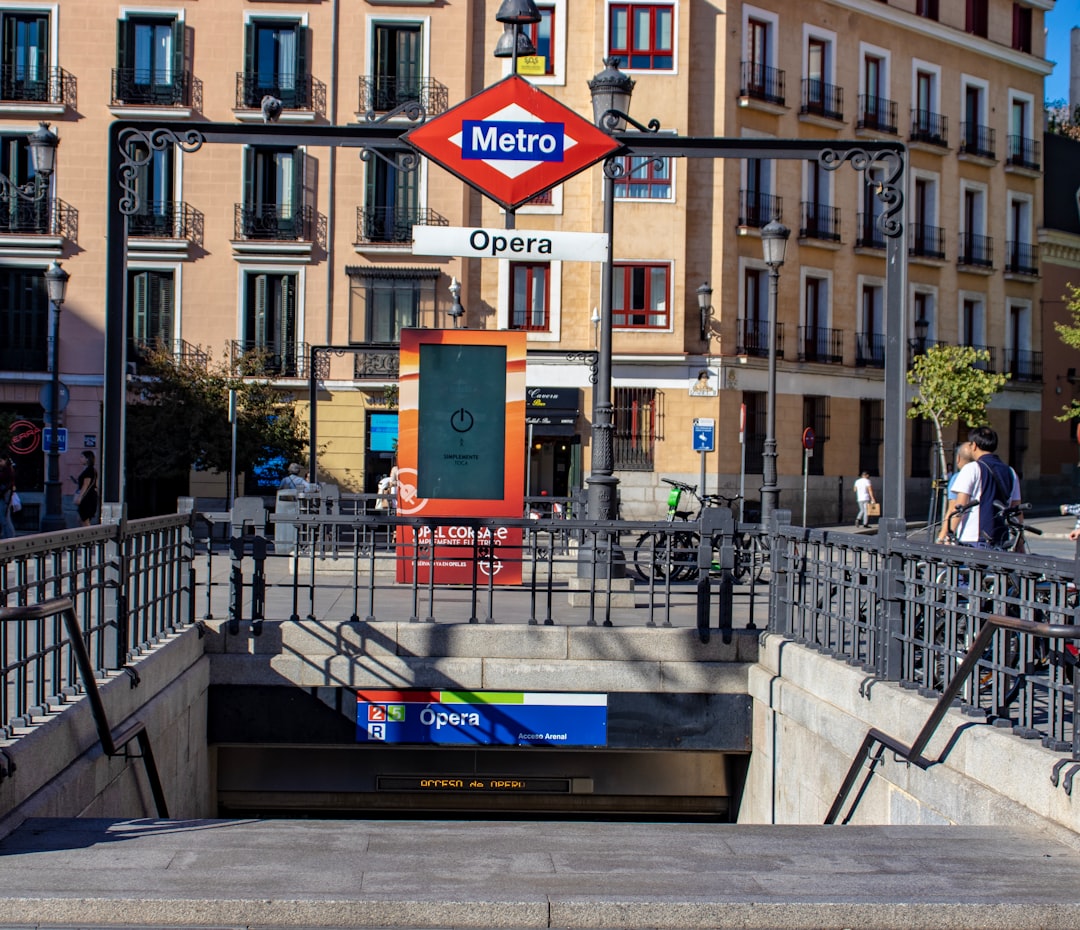
Spain‘s transportation network is one of Europe’s best—efficient trains, extensive metro systems in major cities, and buses connecting even small towns. But getting around smoothly requires knowing the right vocabulary. This guide covers everything from asking directions in the winding streets of Toledo to purchasing tickets for the high-speed AVE trains connecting Spain’s major cities. Master these phrases, and you’ll navigate Spanish transport with confidence.
Train Travel: Spain’s Transportation Backbone
Spanish trains, particularly the Renfe system (Red Nacional de Ferrocarriles), are your best option for traveling between major cities.
La estación de trenes (lah es-tah-thee-ohn deh treh-nes) = The train station
¿Dónde está la estación de trenes? (dohn-deh es-tah lah es-tah-thee-ohn deh treh-nes) = Where is the train station?
Un billete para… (oon bee-yeh-teh pah-rah) = A ticket to…
Un billete de ida (oon bee-yeh-teh deh ee-dah) = A one-way ticket
Un billete de ida y vuelta (oon bee-yeh-teh deh ee-dah ee bwel-tah) = A round-trip ticket
¿A qué hora sale el tren? (ah keh oh-rah sah-leh el tren) = What time does the train leave?
¿De qué andén sale? (deh keh ahn-den sah-leh) = What platform does it leave from?
¿Cuándo llega? (kwahn-doh yeh-gah) = When does it arrive?
El AVE (el ah-beh) = The high-speed train (Alta Velocidad Española)
Premium service, expensive but fast and comfortable
Connects major cities like Madrid, Barcelona, Sevilla, and Valencia
El Renfe Avant (el ren-feh ah-bahnt) = Medium-speed regional trains
Good for medium distances; cheaper than AVE
El tren regional (el tren reh-hee-oh-nahl) = Regional trains
Local trains stopping at many stations
El tren de cercanías (el tren deh ther-kah-nee-ahs) = Commuter trains
For traveling around metropolitan areas like Madrid or Barcelona
Ocupado (oh-koo-pah-doh) = Occupied (you might see this on seats)
Libre (lee-breh) = Free/available (seats with this label are unoccupied)
Asiento de ventana (ah-see-en-toh deh ben-tah-nah) = Window seat
Asiento de pasillo (ah-see-en-toh deh pah-see-yoh) = Aisle seat
Primera clase (pree-meh-rah klah-seh) = First class
Segunda clase (seh-goon-dah klah-seh) = Second class
¿Tengo que cambiar de tren? (ten-goh keh kahm-bee-ar deh tren) = Do I have to change trains?
Este es mi asiento (es-teh es mee ah-see-en-toh) = This is my seat
¿Es este el tren para Madrid? (es es-teh el tren pah-rah mah-dreed) = Is this the train to Madrid?
¿Puede decirme cuándo llegamos a…? (pweh-deh deh-thee-rme kwahn-doh yeh-gah-mos ah) = Can you tell me when we arrive at…?
Metro Systems: Navigating Urban Underground
Madrid and Barcelona have excellent metro systems that are affordable and extensive:
La estación de metro (lah es-tah-thee-ohn deh meh-troh) = The metro station
La línea (lah lee-neh-ah) = The metro line
Un billete de metro (oon bee-yeh-teh deh meh-troh) = A metro ticket
Un bono de diez viajes (oon boh-noh deh dee-ez bee-ah-hes) = A ten-journey pass
Much cheaper per journey than individual tickets
¿Qué línea debo coger para…? (keh lee-neh-ah deh-boh koh-hehr pah-rah) = What line should I take to…?
¿Dónde cambio de línea? (dohn-deh kahm-bee-oh deh lee-neh-ah) = Where do I change lines?
¿Cuál es la próxima estación? (kwal es lah prohk-see-mah es-tah-thee-ohn) = What is the next station?
¿Esta línea va a…? (es-tah lee-neh-ah bah ah) = Does this line go to…?
La tarjeta de transporte (lah tar-heh-tah deh trans-por-teh) = Transportation card
In Madrid, this is called the Zona A card; in Barcelona, the T-10 is popular
Dirección… (dee-rek-thee-ohn) = Direction toward…
On metro maps, lines are often labeled by direction rather than number
Asking Directions: Street-Level Navigation
¿Dónde está…? (dohn-deh es-tah) = Where is…?
¿Por dónde voy a…? (por dohn-deh voy ah) = Which way to…?
¿Me puede indicar dónde está…? (meh pweh-deh een-dee-kar dohn-deh es-tah) = Can you point out where… is?
A la derecha (ah lah deh-reh-chah) = To the right
A la izquierda (ah lah ee-skee-er-dah) = To the left
Recto (rek-toh) = Straight
Siga recto (see-gah rek-toh) = Keep going straight
Gire a la izquierda (hee-reh ah lah ee-skee-er-dah) = Turn left
Gire a la derecha (hee-reh ah lah deh-reh-chah) = Turn right
Cerca de aquí (ser-kah deh ah-kee) = Near here
A unos cien metros (ah oo-nos thee-en meh-tros) = About a hundred meters away
La calle (lah kah-yeh) = The street
La plaza (lah plah-thah) = The square
La avenida (lah ah-beh-nee-dah) = The avenue
El puente (el pweh-n-teh) = The bridge
La parada de autobús (lah pah-rah-dah deh ah-oo-toh-boos) = The bus stop
¿Está lejos? (es-tah leh-hos) = Is it far?
¿Puedo ir a pie? (pweh-doh eer ah pee-eh) = Can I walk there?
¿Cuánto tiempo se tarda? (kwahn-toh tee-em-poh seh tar-dah) = How long does it take?
¿Necesito coger un autobús? (neh-theh-see-toh koh-hehr oon ah-oo-toh-boos) = Do I need to take a bus?
Taxis: When You Need Direct Transport
Un taxi (oon tahk-see) = A taxi
¿Dónde hay una parada de taxis? (dohn-deh ah-ee oo-nah pah-rah-dah deh tahk-sees) = Where is the taxi rank?
¿Cuánto cuesta un taxi a…? (kwahn-toh kwes-tah oon tahk-see ah) = How much does a taxi to… cost?
El taxímetro (el tahk-see-meh-troh) = The meter
¿Está el taxímetro activo? (es-tah el tahk-see-meh-troh akt-ee-boh) = Is the meter running?
Lléveme a… (yeh-beh-meh ah) = Take me to…
A esta dirección (ah es-tah dee-rek-thee-ohn) = To this address
Por la ruta más rápida, por favor (por lah roo-tah mahs rah-pee-dah, por fah-vor) = The fastest route, please
¿Puedo pagar con tarjeta? (pweh-doh pah-gar kohn tar-heh-tah) = Can I pay with a card?
Note: Most Spanish taxis are honest about fares, but always ensure the meter is on. Ride-sharing apps like Uber and Bolt are also widely used in major cities.
Renting a Car: For Independent Travelers
Quiero alquilar un coche (kee-eh-roh ahl-kee-lar oon koh-cheh) = I want to rent a car
¿Cuál es la tarifa diaria? (kwal es lah tah-ree-fah dee-ah-ree-ah) = What is the daily rate?
Incluye seguro (een-kloo-yeh seh-goo-roh) = Does it include insurance?
¿Necesito un depósito de seguridad? (neh-theh-see-toh oon deh-poh-see-toh deh seh-goo-ree-dahd) = Do I need a security deposit?
Mi carné de conducir (mee kar-neh deh kohn-doo-theer) = My driver’s license
Mi pasaporte (mee pah-sah-por-teh) = My passport
La gasolina (lah gah-soh-lee-nah) = Gasoline/petrol
¿Dónde hay una gasolinera? (dohn-deh ah-ee oo-nah gah-soh-lee-neh-rah) = Where is a gas station?
Llenar el depósito (yeh-nar el deh-poh-see-toh) = To fill up the tank
Diésel (dee-eh-sel) = Diesel
Las normas de tráfico (lahs nor-mahs deh trah-fee-koh) = Traffic rules
El límite de velocidad (el lee-mee-teh deh beh-loh-thee-dahd) = Speed limit
El aparcamiento (el ah-par-kah-mee-en-toh) = Parking
Una multa (oo-nah mool-tah) = A fine/ticket
Road Signs and Important Terms
Ceda el paso (theh-dah el pah-soh) = Yield (you’ll see this sign)
Prohibido estacionar (proh-hee-bee-doh es-tah-thee-oh-nar) = No parking
Salida (sah-lee-dah) = Exit
Entrada (en-trah-dah) = Entrance
Peatonal (peh-ah-toh-nahl) = Pedestrian
Autopista (ah-oo-toh-pees-tah) = Motorway/highway
Carril (kar-reel) = Lane
Buses: Affordable and Extensive
Un autobús (oon ah-oo-toh-boos) = A bus
¿Dónde está la parada de autobús? (dohn-deh es-tah lah pah-rah-dah deh ah-oo-toh-boos) = Where is the bus stop?
¿Qué autobús debo coger para…? (keh ah-oo-toh-boos deh-boh koh-hehr pah-rah) = What bus should I take to…?
Un billete para… (oon bee-yeh-teh pah-rah) = A ticket to…
¿Cuánto cuesta? (kwahn-toh kwes-tah) = How much does it cost?
¿Este autobús va a…? (es-teh ah-oo-toh-boos bah ah) = Does this bus go to…?
¿Dónde bajo? (dohn-deh bah-hoh) = Where do I get off?
La próxima parada (lah prohk-see-mah pah-rah-dah) = The next stop
Long-distance buses are operated by companies like FlixBus and are very affordable:
Un autobús de larga distancia (oon ah-oo-toh-boos deh lar-gah dees-tahn-thee-ah) = A long-distance bus
Ferry Travel: Island Hopping
Spain has ferries to the Balearic Islands (Mallorca, Menorca, Ibiza) and Canary Islands:
Un ferry (oon feh-ree) = A ferry
¿Dónde está la estación marítima? (dohn-deh es-tah lah es-tah-thee-ohn mah-ree-tee-mah) = Where is the ferry terminal?
Un billete para… (oon bee-yeh-teh pah-rah) = A ticket to…
¿A qué hora sale el ferry? (ah keh oh-rah sah-leh el feh-ree) = What time does the ferry leave?
¿Cuánto tiempo se tarda? (kwahn-toh tee-em-poh seh tar-dah) = How long does it take?
Mi coche (mee koh-cheh) = My car (if you’re bringing a vehicle)
Major ferry companies: Balearia, Trasmediterránea, UGT
Airport Phrases: Arriving and Departing
El aeropuerto (el ah-eh-roh-pwer-toh) = The airport
¿Dónde está el aeropuerto? (dohn-deh es-tah el ah-eh-roh-pwer-toh) = Where is the airport?
¿Cómo llego al aeropuerto? (koh-moh yeh-goh ahl ah-eh-roh-pwer-toh) = How do I get to the airport?
El mostrador de facturación (el mohs-trah-dor deh fahk-too-rah-thee-ohn) = The check-in desk
¿Dónde está la puerta de embarque? (dohn-deh es-tah lah pwer-tah deh em-bar-keh) = Where is the departure gate?
Mi vuelo es… (mee bweh-loh es) = My flight is…
Mi equipaje (mee eh-kee-pah-heh) = My luggage
Maleta (mah-leh-tah) = Suitcase
Mochila (moh-chee-lah) = Backpack
La aduana (lah ah-doo-ah-nah) = Customs
¿Tengo que pasar por la aduana? (ten-goh keh pah-sar por lah ah-doo-ah-nah) = Do I have to go through customs?
¿Tengo algo que declarar? (ten-goh ahl-goh keh deh-klah-rar) = Do I have anything to declare?
Retrasos (reh-trah-sohs) = Delays
Cancelado (kahn-theh-lah-doh) = Cancelled
Embarque (em-bar-keh) = Boarding
Zona de espera (thoh-nah deh es-peh-rah) = Waiting area
Walking in Historic Cities: Old Town Navigation
Many Spanish city centers have winding medieval streets where GPS struggles:
¿Me puede mostrar en el mapa? (meh pweh-deh mohs-trar en el mah-pah) = Can you show me on the map?
¿Esta calle lleva a…? (es-tah kah-yeh yeh-bah ah) = Does this street lead to…?
¿Estoy en la dirección correcta? (es-toy en lah dee-rek-thee-ohn kor-rek-tah) = Am I going in the right direction?
He subido demasiado (eh soo-bee-doh deh-mah-see-ah-doh) = I’ve gone too far up (in hillside towns)
He bajado demasiado (eh bah-hah-doh deh-mah-see-ah-doh) = I’ve gone too far down
Las escaleras (lahs es-kah-leh-rahs) = The stairs
Expect lots of stairs in old city centers—they’re basically unavoidable
Practical Transportation Tips
¿Hay una oficina de turismo por aquí? (ah-ee oo-nah oh-fee-thee-nah deh too-rees-moh por ah-kee) = Is there a tourism office nearby?
Tourist offices have maps and can help with transport questions
¿Puedo cargar mi tarjeta aquí? (pweh-doh kar-gar mee tar-heh-tah ah-kee) = Can I top up my card here?
Useful for metro passes or transportation cards
¿Hay Wi-Fi en el tren? (ah-ee wee-fee en el tren) = Is there Wi-Fi on the train?
AVE trains typically have Wi-Fi, though connectivity varies
Final Notes
Spain’s transportation system is remarkably efficient and affordable. By mastering these phrases, you’ll transform from a confused tourist checking Google Maps every few minutes to someone confidently navigating trains, metros, and winding city streets. The key is not being shy about asking directions—Spaniards are generally helpful, and asking questions shows respect for their culture.
Whether you’re catching an AVE to Barcelona, navigating Madrid’s Metro, or asking a local for directions in a quiet plaza, these phrases will serve you well. The journey is as much a part of the Spanish experience as the destination.




Leave a Reply