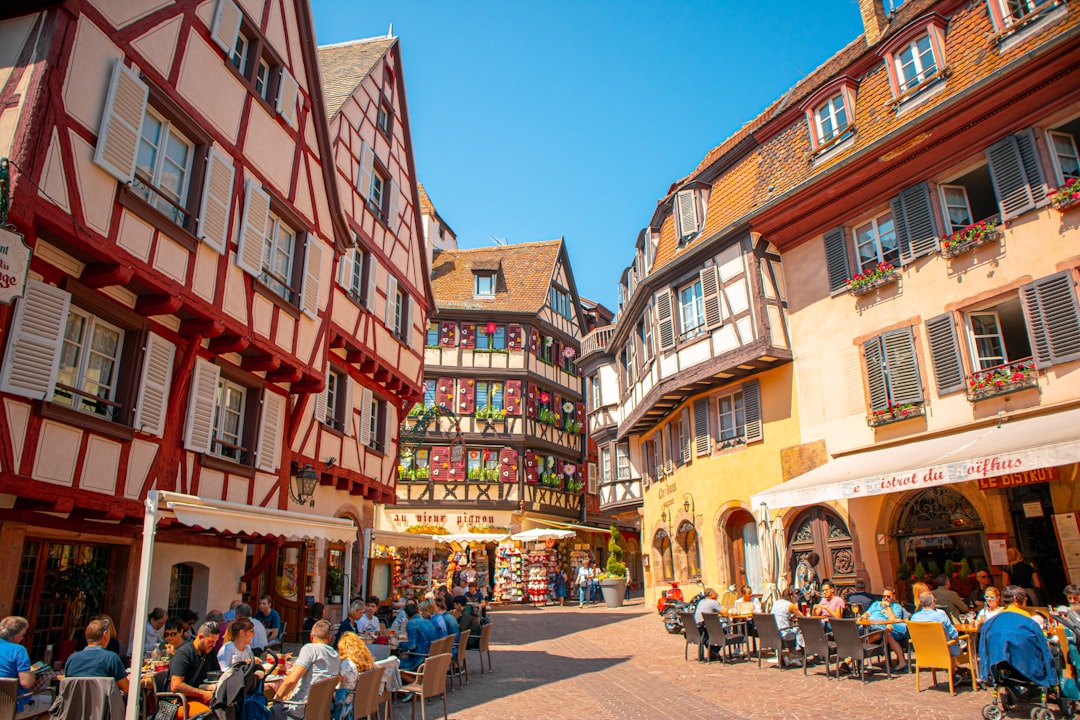
If you’ve ever looked at a map of Europe, you might have noticed something funny: the continent looks a lot different from a hundred years ago. Or a thousand years ago. Or even just thirty years ago. Europe’s borders are like a living, breathing work of art that keeps getting remade every few generations. Unlike the relatively stable continents of North America or Asia, Europe has spent much of its history getting redrawn by wars, empires, and the relentless march of nationalism. Pull up an animated map of Europe from 1000 AD to today, and you’ll see a shape-shifting kaleidoscope that would make any modern graphic designer jealous.
This isn’t just an academic curiosity—understanding how Europe’s borders shifted tells you everything about why the continent has been both so culturally rich and so violently torn apart. Let’s take a journey through a thousand years of boundary revisions, looking at how our twelve countries went from vague tribal territories to the precise lines we see on modern maps.
Poland: The Disappearing Act
Perhaps no country has had a more dramatic border drama than Poland. Imagine a nation that literally vanishes from the map for 123 years. That’s Poland’s story. In the 18th century, Poland was a considerable European power, but it was caught in a terrible geographic position: squeezed between Russia to the east and the German states to the west. Between 1772 and 1795, the three neighboring superpowers—Russia, Prussia (German), and Austria—simply carved up Poland like a Thanksgiving turkey. It’s called the “Partitions of Poland,” and it’s one of history’s most brazen land-grabs.
For 123 years, Poland didn’t exist on any European map. It was absorbed into Russia, Prussia, and Austria. Polish people lived under different rulers, different laws, and different languages. Then, after World War I, when empires crumbled, Poland miraculously reappeared in 1918. The borders drawn then were not the same as the original Polish borders, but the nation was alive again.
But Poland’s border troubles weren’t over. After World War II, everything shifted westward. Poland’s eastern border with the Soviet Union was redrawn, and Poland actually gained territory from Germany (the lands that became Silesia, Pomerania, and East Prussia). Millions of people were displaced in what’s called the “Wild East” migration. Today’s Poland is a different shape and in a different location than the Poland of 1920, but at least it’s been solidly on the map for the last 80 years.
Germany: From 300 States to One, Then Split, Then Reunited
Germany’s story is equally wild, but from the opposite direction. In 1815, after Napoleon’s defeat, there was no “Germany” at all. Instead, there were over 300 independent states, principalities, dukedoms, and city-states scattered across central Europe. The German Confederation was basically a loose club of these squabbling territories.
Then came Otto von Bismarck, the Prussian chancellor who consolidated German power through military strength and shrewd diplomacy. By 1871, most German-speaking lands had been unified under the Prussian crown, and the German Empire was born. For the first time, you had something resembling a coherent “Germany” on the map.
But Germany’s borders didn’t stay stable for long. After World War I, Germany lost territory to France (Alsace-Lorraine), to the newly created Poland, and to Denmark. Then Hitler redrew the map again with his aggressive expansions. After World War II, Germany didn’t just lose borders—it lost an entire half of the country. The Allies divided Germany into occupation zones, which hardened into the Federal Republic of Germany (West) and the German Democratic Republic (East), with the Berlin Wall as their spine. For 28 years, one nation was two nations, families were split by concrete and barbed wire.
Then, in 1989, the Wall fell, and in 1990, Germany was unified again. It’s remarkable to contemplate: since 1800, Germany has existed as 300 states, then 1 unified state, then 2 opposed states, and now 1 again. No country on the continent has had such radical constitutional surgery performed on it so many times.
The Iberian Peninsula: Spain and Portugal Carving Out Their Identities
Spain’s story is less dramatic than Poland’s or Germany’s, but equally interesting. The Spain we know today was largely assembled through the gradual Christian Reconquista against Muslim rulers in the south. The Portuguese separated themselves out as an independent kingdom in the 12th century, establishing a border that’s largely remained stable for nearly 900 years—making the Portugal-Spain border one of the oldest in Europe. That’s quietly remarkable.
Spain as a unified state came together in the 15th century when Ferdinand and Isabella married, joining Aragon and Castile. But for centuries, Spain held vast territories outside the peninsula: parts of Italy, the Netherlands, and eventually empire in the Americas. The Treaty of Utrecht in 1713 actually redrew Spanish possessions and established the modern borders of both Spain and Portugal. By the end of the 18th century, the Iberian Peninsula had taken its modern shape.
Italy and Greece: Invented in the 19th Century
Here’s something that might surprise you: Italy and Greece as unified nation-states didn’t exist until the 19th century. For centuries, the Italian peninsula was a patchwork of kingdoms, republics, papal states, and foreign possessions. The southern portion was ruled by Spain or France. Venice was its own republic. The Papal States controlled Rome. The Kingdom of Piedmont sat in the north. It wasn’t until Giuseppe Garibaldi and others unified the peninsula in the 1860s that “Italy” became a single entity.
Greece had a similar trajectory. It was part of the Ottoman Empire for centuries, with its territory poorly defined. Greek independence came in 1821-1829, but the borders were set by great powers (Britain, Russia, France) rather than Greeks themselves. The modern borders of Greece were established only in the 20th century, particularly after the Greco-Turkish War and the population exchanges of the 1920s. The Greece we see on maps today is actually much smaller than the borders would have been if various conflicts had turned out differently.
The Netherlands Breaking Free from Spain
The Dutch have a uniquely empowering border story. In the 16th century, the lands that became the Netherlands were under Spanish rule, subject to Catholic Madrid and Spanish taxes. The Dutch revolted in a conflict called the Eighty Years’ War (1568-1648), one of history’s longest wars. The Spanish Netherlands remained under Spanish control, but the northern Dutch provinces broke free and formed the United Provinces.
This wasn’t a clean partition—it was a hard-fought military stalemate that eventually led to negotiation. The result: the modern border between the Netherlands and Belgium was established (though Belgium wasn’t independent until 1830). This border represents one of the few instances where a European people actually fought their way to independence from a major power and negotiated from a position of strength.
Scandinavia’s Shifting Unions
Denmark, Sweden, and Norway had their own complex dance. Sweden and Denmark were rivals for control of the Baltic, constantly at war over trade routes and territory. Norway was in a union with Denmark for centuries, then, after the Napoleonic Wars, was transferred to Sweden in the Treaty of Kiel (1814). Norwegians weren’t thrilled about this arrangement, but they were given a constitution and some autonomy.
The Nordic union between Sweden and Norway lasted until 1905, when Norway held a referendum and voted to dissolve the union. Sweden, surprisingly, accepted this peacefully—a rare moment of dignity in 19th-century border disputes. Denmark, meanwhile, lost significant territory to Germany (Schleswig-Holstein) during the wars of German unification in the 1860s, but kept what is modern Denmark.
The Holy Roman Empire’s Impossible Mess
Before we talk about modern borders, we must acknowledge the Holy Roman Empire, which encompassed much of central Europe from the 9th century until 1806. Its borders were nonsensical by modern standards. It included German states, Italian states, Czech lands, and pieces of Poland, Hungary, and the Balkans. It wasn’t so much a unified state as a confederation of hundreds of semi-independent territories under a loose imperial structure. When Napoleon dissolved it in 1806, nobody really mourned—it had become an anachronism.
The Post-World War I Redrawing
After World War I, the European map was redrawn more dramatically than at any time since the Napoleonic Wars. The Ottoman and Austro-Hungarian empires collapsed, and new nations were born: Yugoslavia, Czechoslovakia, and the re-established Poland. The League of Nations drew lines in places where lines had never been clear before. Some of this worked out (mostly); other aspects of the post-WWI borders were so controversial that they planted seeds for World War II.
The Iron Curtain Divides Europe
World War II was followed by another massive redrawing. The Soviet Union expanded westward, absorbing pieces of Poland, Romania, and the Baltic states. Poland was shifted westward like a board game piece, gaining German territory in the west while losing Soviet territory in the east. Germany was divided. Yugoslavia, Czechoslovakia, and Hungary became Soviet satellites. Winston Churchill famously said that an “Iron Curtain” had descended across Europe, and the borders it created were some of the most artificial in European history—they were drawn by military conquest and Cold War ideology, not by any reference to historical, ethnic, or cultural boundaries.
The EU Erases the Borders (Almost)
Perhaps the most remarkable shift in European borders came not with war, but with peace. The European Union, beginning with the European Economic Community in 1957, gradually erased the significance of borders. First came economic cooperation, then the Schengen Area, which allowed free movement between most EU countries starting in 1995. You can drive from France to Germany to Czech Republic to Poland today and barely notice you’ve crossed international borders. There are no guards, no checkpoints (for EU citizens), no customs. It’s a stunning achievement and a reversal of 1,000 years of European border militarization.
The Lesson
Looking at how much Europe’s borders have changed—from Poland vanishing entirely, to Germany fragmenting and reunifying, to Italy and Greece being created from scratch, to Scandinavia’s gentle divorces—you start to understand something profound about the continent. Europe’s borders aren’t natural features. They’re human constructions, products of war and diplomacy, nationalism and empire. Understanding this history makes you appreciate how remarkable it is that modern Europe has chosen to erase these borders, at least for now.
If you want to really grasp this, find an animated map of Europe from 1000 AD to today. Watch Poland vanish and reappear. Watch Germany fragment and reunify. Watch the Ottoman and Austro-Hungarian empires dissolve. Watch the Iron Curtain descend and fall. It’s mesmerizing, and it tells you more about European history than any textbook can.




Leave a Reply