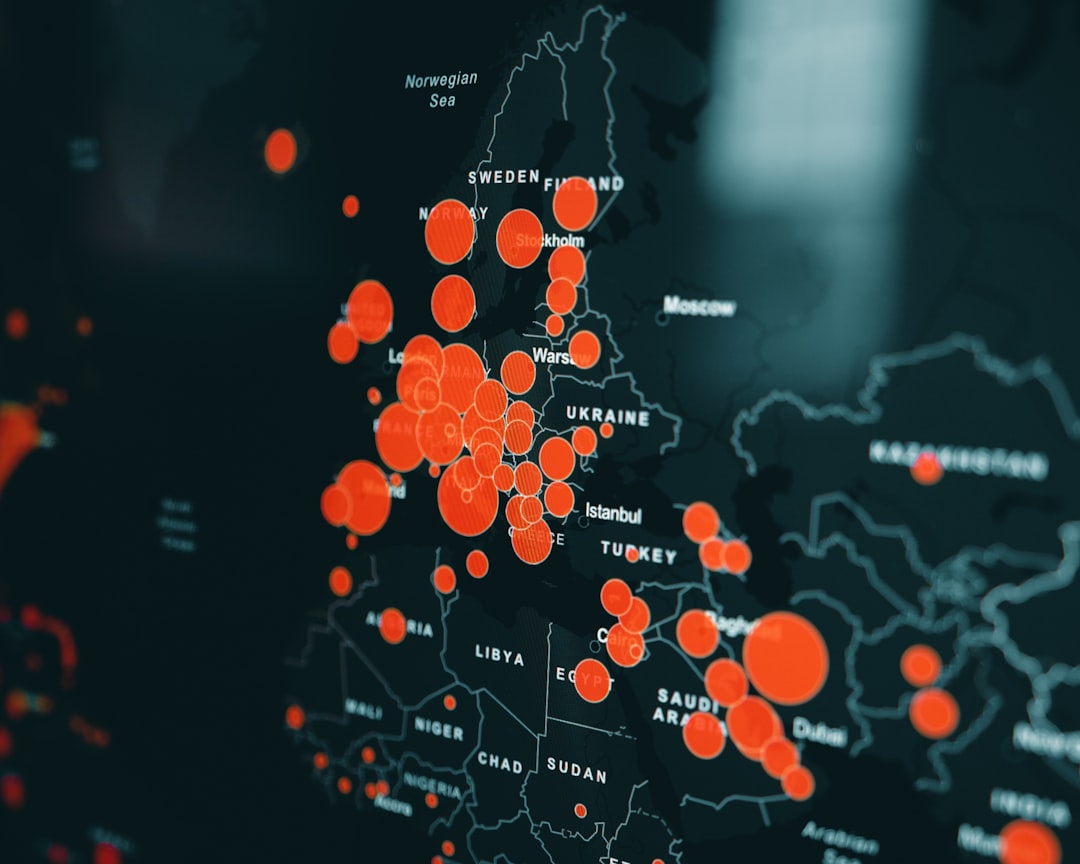
The year is 1347. Imagine you’re a merchant in the bustling port city of Messina, Sicily, going about your daily business. Genoese trading ships have just arrived from the Black Sea region, and with them comes something invisible and deadly: rats carrying fleas infected with the bacterium Yersinia pestis. Within weeks, Messina is dying. Within months, the plague spreads northward through Italy. Within years, it has reached every corner of Europe. The Black Death (1347-1351, though it recurred for centuries) didn’t just kill people—it reshaped European civilization so profoundly that historians often use it as a dividing line between the medieval and early modern periods.
This pandemic affected each of our twelve European countries differently, but everywhere it went, it left a continent transformed. Let’s follow its path and see how the same terrible disease played out across dramatically different regions.
Italy: Ground Zero for European Devastation
Italy experienced the first and perhaps harshest blow. The plague arrived in 1347 in Sicilian and southern Italian ports, probably via Genoese merchants trading with the Black Sea. Italian cities were crowded, interconnected, and wealthy enough to support thriving merchant networks—exactly the conditions in which plague thrives.
Genoa and Venice, the two great maritime republics, were hit catastrophically. Contemporary chronicles describe scenes of horror: entire families dying within days. Some accounts suggest that up to 90% of the population in certain areas perished. Gravediggers couldn’t keep up. Mass graves became common. Florence, one of medieval Europe’s greatest cities, saw its population cut in half within a few years. The Florentine chronicler Giovanni Villani recorded the plague with grim precision, noting that the pestilence was so severe that the living scarcely knew how to bury the dead.
The economic consequences were immediate and severe. Italy’s trading networks, which had enriched the merchant cities for centuries, became vectors for disease. Yet paradoxically, the survivors benefited enormously. With labor scarce, wages skyrocketed. Peasants could demand better conditions from landlords. The rigid feudal hierarchy began to crack under the weight of demographic collapse. Some historians argue that Italy’s relatively faster economic recovery, compared to other regions, was partly because the plague broke the old feudal bonds so thoroughly that a new mercantile system could emerge.
France: Losing a Third of Its Population
France was hit almost as hard as Italy, with estimates suggesting the kingdom lost about one-third of its population between 1347 and 1351. The plague swept through the densely populated north, reaching Paris and spreading through the countryside in waves.
The French response was, at times, catastrophically counterproductive. Some authorities ordered mass bloodlettings, believing the plague could be drained away like a bad humour. Others turned to religion, organizing flagellant processions where penitents would whip themselves bloody in the streets, believing that suffering and penance could appease God’s wrath. The flagellant movement gained significant traction in France and spread to other regions, though it was eventually suppressed by both church and state authorities.
The French countryside suffered especially badly. Rural areas had less access to physicians (not that physicians could help much). Entire villages were sometimes abandoned as populations died or fled. Yet this devastation also inadvertently helped trigger the Hundred Years’ War with England, which would dominate European politics for the next century. With populations decimated and economies in chaos, France and England found themselves weakened at exactly the moment they might have been negotiating, and the power vacuum led to military adventurism.
Spain: The Iberian Peninsula Convulsed
Spain, fractured among several Christian kingdoms and with Al-Andalus (Islamic territory) in the south, experienced the plague unevenly. Castile, Aragon, Portugal, and Granada all were struck, but at different times and with different intensity. The plague hit Andalusia hard, particularly affecting the Islamic population, though Christian populations weren’t spared.
The Spanish kingdoms’ already complex political situation became more chaotic. When mortality is that severe, succession disputes become more likely, and Spain saw numerous conflicts over who should rule. The plague arguably delayed the final Reconquista (the conquest of Granada) by several decades—it’s hard to wage long military campaigns when your population is being decimated by disease.
One interesting aspect of the Spanish experience: evidence suggests the plague may have contributed to the later Spanish Inquisition. With social bonds broken, populations displaced, and traditional authorities discredited, scapegoating became more prevalent. Jewish communities, already marginalized, became targets of blame. Pogroms erupted in Spanish cities, though the systematic expulsion of Spanish Jews came much later (1492).
Germany and the Netherlands: Devastation and Scapegoating
The German lands, fragmented among hundreds of small states, experienced the plague differently in different regions, but overall mortality was severe. The major cities—Cologne, Hamburg, Frankfurt—were hit hard. The plague spread along trade routes, which meant that the wealthy mercantile towns suffered first and worst.
Germany‘s experience with the plague is dark in one particular way: it became the epicenter of Jewish persecution during the outbreak. Conspiracy theories blamed Jewish communities for deliberately poisoning wells to cause the plague (a completely false accusation, of course, but one that circulated widely). Germans began accusing Jews of the poisonings, and horrific pogroms ensued. Entire Jewish communities were massacred. In some cities, thousands of Jews were burned to death. This is one of the ugliest chapters of the plague’s European history, and the persecution left deep scars in German-Jewish relations for centuries.
The Netherlands experienced similar devastation and similar scapegoating. Dutch cities like Amsterdam and Rotterdam saw massive population losses. The Dutch countryside was hit as hard as anywhere else. But the Netherlands also showed remarkable recovery. The labor shortage led to wage increases and improved conditions for peasants and artisans, which may have contributed to the Dutch development toward a more mercantile, less feudal economy.
Scandinavia and Norway: The Worst Hit
If Italy was hit first and France was hit hardest among the major kingdoms, Norway experienced perhaps the worst devastation per capita. The plague reached Scandinavia around 1349-1350, arriving via Bergen, Norway’s main international trading port. In Norway, estimates suggest that 60% or more of the population died—possibly the highest mortality rate in all of Europe.
Why was Norway hit so hard? Several factors contributed: the cold climate meant that once plague arrived, it persisted longer through seasons. The sparse population meant that when death came, entire settlements were wiped out, leaving vast tracts of land empty. The Norwegian countryside was heavily agricultural and feudal, with little urban escape or economic diversification. One Norwegian historian described the plague years as “the beginning of the end” for Norwegian independence—the population loss was so severe that when Sweden (through union) and Denmark would rise as Scandinavian powers, Norway simply lacked the demographic power to compete.
In Norway, the plague’s cultural impact was profound. The danse macabre—the artistic theme of death dancing with all social classes—became particularly prominent in Norwegian art and literature. Church decorations from the period show skeletal figures dancing with kings, peasants, and bishops equally. It was a democratic vision of death that had particular resonance in a culture so thoroughly decimated.
Denmark and Sweden experienced severe plague as well, though not quite as devastatingly as Norway. The Danish islands and Swedish coasts, being more urban and interconnected, suffered heavily, but the rural populations, though hard-hit, recovered more readily than in Norway.
Poland: Relatively Spared?
Poland presents an interesting puzzle. While other European regions were being devastated, Poland appears to have been hit less severely—perhaps due to lower population density, more limited international trade connections, and geographic isolation from the Mediterranean centers of disease. This relative sparing may have inadvertently strengthened Poland’s position in European geopolitics in the later medieval period.
The reasons are debated among historians. Some suggest that Poland’s less developed urban centers meant fewer transmission vectors. Others point to the fact that Jewish communities in Poland (which hosted a significant Jewish population fleeing persecution elsewhere) may have actually been less persecuted during the plague, reducing the chaotic social breakdown that occurred elsewhere. Whatever the cause, Poland’s relatively lower mortality rate meant it retained more population and demographic vigor than some neighboring regions.
Greece and the Byzantine Transition
Greece, under Byzantine rule at this time, experienced the plague as part of the Byzantine Empire’s broader crisis. The Byzantine Empire in the 14th century was already in terminal decline, squeezed by Ottoman expansion and internal civil wars. The plague added another catastrophic blow. Constantinople itself was hit hard, and the population decline contributed to the empire’s weakening.
What’s poignant about Greece’s experience is that it was in the midst of a civilizational transition. The Byzantine Empire, which had inherited the mantle of Rome and had preserved Greek culture for over a thousand years, was dying. The plague hit at the moment of maximum vulnerability, hastening the empire’s collapse. Within a century, Constantinople would fall to the Ottomans, and Greece would enter centuries of Ottoman rule. The plague didn’t cause this, but it certainly hastened it.
The Broader Transformations: End of Feudalism and Rise of New Ideas
Across all twelve countries, the plague’s effects were similar in their broad outlines, though different in details. Everywhere, the enormous mortality rates broke the old feudal system. With labor scarce, peasants could demand better terms. Serfdom began to decline. The rigid social hierarchy of medieval Europe became more fluid. In some regions (particularly England), peasant unrest led to revolts demanding an end to feudal obligations.
The plague also triggered profound intellectual and religious ferment. Monasteries were devastated, and this contributed to a decline in the church’s monopoly on knowledge and spiritual authority. The gross inadequacy of contemporary medicine in the face of the plague led to eventual questioning of ancient medical authorities. The psychological impact—the realization that an entire civilization could be brought to its knees by an invisible enemy—shook the foundations of European confidence in the old order.
Artistic and Cultural Responses
The artistic legacy of the plague is preserved in the haunting imagery of the danse macabre—the theme that death comes for everyone, rich and poor alike. You can see this imagery in European churches from Spain to Scandinavia. It’s a peculiarly democratic vision: Death dancing with the King, the Pope, the Merchant, the Peasant. This themes dominated European art for a century or more after the plague.
Literature also changed. Italian poets like Petrarch and Boccaccio wrote powerfully about the plague. Boccaccio’s “Decameron” actually frames a collection of stories around a group of Florentines fleeing the plague to the countryside. The plague became a recurring theme in European literature.
The Lesson: Disease as Historical Force
The Black Death teaches us that sometimes the most profound forces in history aren’t battles or political decisions—they’re biological. A bacterium spread by fleas killed perhaps 75-200 million people across Eurasia. Across our twelve European countries, it killed somewhere between 40-50% of the population. It broke the feudal system, triggered social upheaval, sparked scapegoating and persecution, transformed art and literature, and created the demographic and social conditions for the Renaissance and early modern Europe to emerge.
When you travel in Europe and see medieval buildings, many of them come from the decades just after the plague—a period of reconstruction and renewal. The plague killed the medieval world, and in doing so, created the conditions for something new to be born.




Leave a Reply