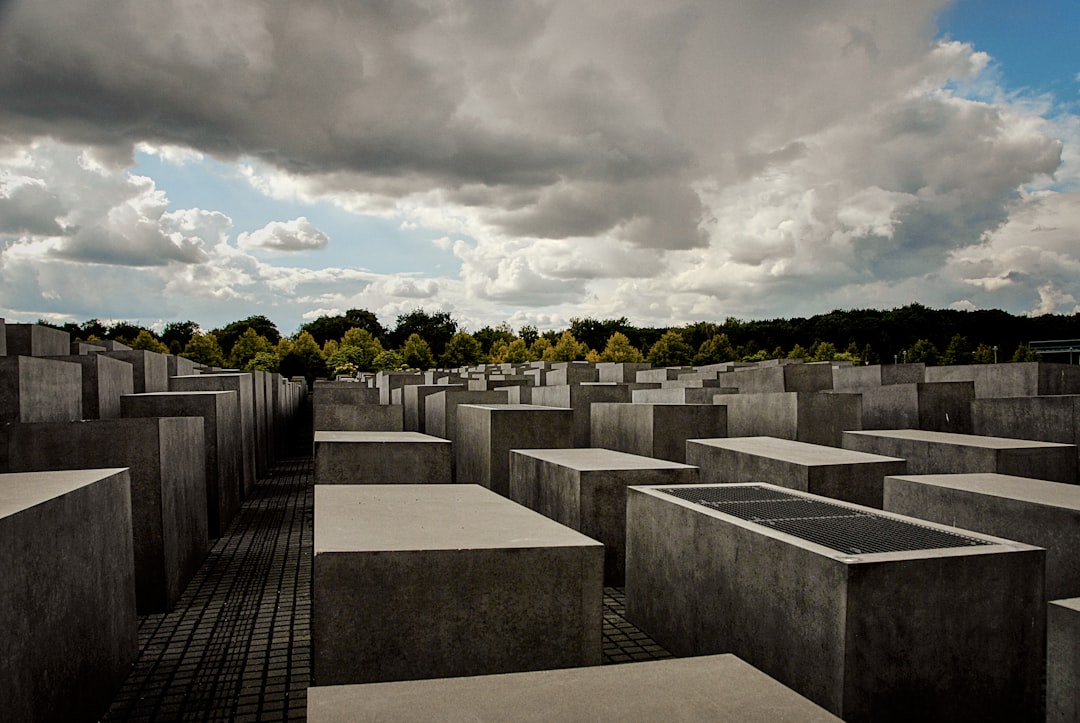
If there’s one thing that World War II teaches us, it’s that history isn’t monolithic. The same war, the same years, the same global conflict played out in radically different ways depending on where you were and which side you were on. A Frenchman living in occupied Paris had a completely different experience from a Swede living in neutral Stockholm, who had a completely different experience from a Pole watching their nation be invaded from both sides. To understand World War II, you can’t just talk about battles and generals—you have to zoom in and see how the war felt in twelve different countries, each with its own story of survival, collaboration, resistance, and rebuilding.
France: Defeat, Division, and Liberation
France’s World War II experience was one of the quickest and most humiliating defeats in European history, followed by years of occupation and division, and finally liberation. When Nazi Germany invaded in May 1940, the French army—traditionally one of Europe’s strongest—collapsed in just six weeks. The speed of the defeat shocked the French people and the world.
The country was then divided. Northern France and the Atlantic coast fell under direct German occupation. The southern third of France remained nominally independent as the Vichy French State, led by Marshal Philippe Pétain, a World War I hero who collaboratingly agreed to partnership with Nazi Germany. France was forced to pay massive occupation costs to Germany, and French resources flowed eastward to fuel the Nazi war machine.
For four years, France endured occupation. Parisians lived under Nazi rule. Rationing was severe. Thousands of French Jews were deported to concentration camps. French men were conscripted to work in German factories. Yet France was also the birthplace of sustained resistance. The Free French movement, led by Charles de Gaulle from London, kept the flame of French independence alive. Resistance fighters conducted sabotage, gathered intelligence, and fought the occupiers.
The liberation came with the D-Day invasion in June 1944 and the subsequent Allied advance eastward. By August 1944, Paris was liberated in an emotional moment that was both joyful and complicated—the city was freed, but by foreign armies, and the aftermath meant reckoning with Vichy collaboration.
Germany: The Perpetrator, Defeated and Divided
Germany’s experience was the inverse of France’s in many ways. For several years, Germany seemed victorious, conquering most of Europe and threatening to dominate the continent for generations. But Germany’s victory was built on unsustainable aggression and racial ideology so extreme that it couldn’t survive contact with the reality of the wider world.
What’s remarkable about Germany’s WWII experience is the extent to which civilians were mobilized and then devastated by the war. German cities were bombed mercilessly by Allied air forces. By the end of the war, Hamburg, Cologne, and Berlin had been reduced to rubble. The firebombing of Dresden killed tens of thousands in a single night. Germans experienced not just military defeat but the complete destruction of their urban landscape.
And of course, Germany was the perpetrator of the Holocaust. Twelve million people—six million of them Jews—were systematically murdered in the Nazi genocide. Germans, particularly those in leadership but also the broader population, had to eventually confront what had been done in their name.
When Germany surrendered in 1945, the country was occupied and divided into four zones (Soviet, American, British, and French). Two of those zones eventually merged to form West Germany; the Soviet zone became East Germany. Germany would remain divided for 45 years, a physical embodiment of the war’s consequences. The Berlin Wall, erected in 1961, was the most dramatic symbol: a wall through the middle of Berlin separating capitalist West from communist East, and separating families from each other. Germany’s experience of WWII wasn’t just four years of war—it was four years of war followed by 45 years of division.
Spain: Neutrality, Fascist Sympathy, and Abstention
Spain presents one of WWII’s most complicated cases. Officially, Spain was neutral. In reality, Spain under Francisco Franco was fascist and sympathetic to Nazi Germany and Fascist Italy. Franco had recently won the Spanish Civil War (1936-1939) with military support from Hitler and Mussolini. He owed them a debt.
Yet Franco didn’t enter WWII on the Axis side, despite German pressure. Why? Partly because Spain’s economy was shattered from the civil war. Partly because Franco calculated that he could do better by staying neutral and playing both sides. Franco allowed German submarines to use Spanish ports. Spanish “volunteers” (really soldiers with Franco’s permission) fought for Germany on the Russian front. Spanish pilots flew for the Luftwaffe. But Spain never formally declared war.
This ambiguous position meant that Spain suffered from the war—loss of its soldiers in Russia, economic hardship, isolation from the Allies—but not as devastatingly as actual combatants. The peculiarity of Spain’s position meant that when WWII ended, Franco survived as one of the few fascist dictators who didn’t fall. He would rule Spain until 1975, making Spain’s recovery and transition to democracy delayed compared to other European nations.
Netherlands: Occupation, Anne Frank, and the Hunger Winter
The Netherlands was quickly overrun by Nazi Germany in May 1940. The Dutch army surrendered after just five days, though not before destroying the port city of Rotterdam with German bombing. Holland was occupied for five years. The German occupiers instituted strict rule and began the systematic persecution of Dutch Jews.
Most famously, this is where Anne Frank lived in hiding with her family, keeping her diary until they were discovered and deported to concentration camps. Anne’s story is just one among hundreds of thousands—the Netherlands lost around 75% of its Jewish population during the war, one of the highest proportions in Europe.
But the Dutch also earned a remarkable distinction: as a nation, they worked harder to rescue Jews than almost any occupied country. Thousands of Dutch Jews were hidden by Dutch families, at great personal risk. The non-Jewish Dutch resistance helped Jews escape and find sanctuary.
The war’s final chapter in the Netherlands was particularly brutal. The “Hunger Winter” of 1944-45, when the German occupiers restricted food supplies in retaliation for Dutch resistance, killed tens of thousands of Dutch civilians through starvation. It was a grim final period of occupation that demonstrated how cruelty could continue even as the war was clearly being lost.
Denmark: Occupation with a Twist
Denmark was also occupied by Nazi Germany in April 1940, but the Danish experience was notably different from that of other occupied countries. The German occupiers allowed Denmark to maintain its own government and king, making it the first country Germany occupied and one of the most lightly ruled.
This arrangement meant that Denmark suffered less physical destruction than other occupied territories. It also meant that the Danes had more freedom of maneuver. Most remarkably, when the Nazis began the systematic persecution of Jews and ordered the deportation of Danish Jews in October 1943, the Danish King Christian X and the Danish people responded by—almost uniquely in Nazi-occupied Europe—mounting a massive rescue operation.
Warnings reached the Jewish community about the impending roundups. The Danish resistance, with the help of the general population, organized a remarkable rescue operation. Thousands of Danish Jews were smuggled across the narrow strait to Sweden, which remained neutral and would accept them. Estimates suggest that around 7,000 Danish Jews were rescued, with only a few hundred deported. It remains one of the most inspiring stories of resistance to the Holocaust.
Denmark was liberated in May 1945, and unlike Germany, was not divided or occupied by multiple powers. The Danes’ ability to maintain their own government structure and to mount their rescue operation meant that Denmark recovered more quickly than most of occupied Europe.
Italy: Axis Power, Internal Division, and Flip
Italy presents yet another story. Italy entered WWII as an Axis power, fighting alongside Germany. But Italy was never as ideologically committed to fascism as Germany was, and Italian military performance was often poor. Northern Africa, Greece, and the Eastern Front all saw Italian forces struggle.
Then, in 1943, everything changed. The Allies invaded Sicily and began moving north. Internally, Italian fascism was collapsing. Mussolini was arrested in July 1943. The Italian government negotiated surrender to the Allies in September 1943. But here’s where it gets complicated: German forces moved in to occupy much of Italy. Northern Italy was occupied by Germany, and a puppet fascist state (the Italian Social Republic) was set up under German control.
So Italy ended up split. The south, including Rome, was controlled by the Allies and the Italian government. The north was occupied by Germany. Italian partisans, like their counterparts in Greece and Yugoslavia, fought German occupiers with ferocity. It took until May 1945 for German forces to finally surrender in Italy.
Italy’s experience meant that it suffered the damage of war as both an Axis combatant and as an occupied territory. Reconstruction was painful, but Italy, like Germany, eventually became a democracy and a cornerstone of Western Europe.
Portugal: Neutral, Selling Tungsten to Both Sides
Portugal, like Spain, was ruled by a fascist dictator (António de Oliveira Salazar) but remained officially neutral during WWII. Unlike Spain, Portugal didn’t have the recent experience of a civil war, so its position was different.
Portugal’s experience of WWII is a study in pragmatic capitalism. Portugal was strategically important because it supplied tungsten, a critical mineral needed for military production. Both the Allies and the Axis wanted Portuguese tungsten. Salazar played both sides, selling tungsten to Germany and also allowing the Allies to use the Azores as a strategic base later in the war. Portugal was technically neutral but financially benefiting from both sides.
This pragmatism meant that Portugal escaped the destruction of war. Lisbon even became a neutral haven where spies, refugees, and diplomats mingled. But neutrality also meant that Portugal was excluded from the postwar recovery and remained isolated from Western Europe for decades. Salazar’s dictatorship lasted until 1974, making Portugal’s transition to democracy one of the latest in Western Europe.
Sweden: Neutral with Complications
Sweden, like Portugal and Spain, was neutral, but Sweden’s situation was unique. Sweden had no fascist government—it had a center-right democratic government. Yet Sweden was surrounded by war. It shared a border with German-occupied Norway and Finland (which was allied with Germany against the Soviet Union). To the east was the Soviet Union.
Swedish neutrality was pragmatic. Sweden traded with both sides, particularly selling high-quality iron ore to Germany—Sweden’s iron ore was critical to German steel production. Sweden also allowed German troops to transit through Swedish territory to reach Norway and Finland. This collaboration with Germany is not a proud chapter of Swedish history.
Yet Sweden also provided sanctuary to refugees from Norway, Denmark, and Finland. Swedish diplomats worked to protect and rescue Jews (most famously Raoul Wallenberg, who saved thousands of Hungarian Jews). Sweden accepted thousands of refugees. By the war’s end, Sweden had both collaborated with Germany and helped many of its victims.
Sweden’s reward for its pragmatic neutrality was that it suffered no war damage and emerged as one of Europe’s strongest economies, a position that would define Swedish wealth and influence for the rest of the 20th century.
Norway: Occupied, Resistance, Quisling
Norway was invaded by Germany in April 1940 and occupied for five years. The invasion was particularly brutal—the German plan was to Germanize Norway by importing German settlers and making Norway part of the German racial empire.
The Norwegian king, Haakon VII, refused to cooperate with the German occupiers and escaped to Britain, setting up a government-in-exile. A Norwegian fascist named Vidkun Quisling collaborated with the Germans (his name became a synonym for “traitor” across Europe).
Norway developed one of the most active resistances in occupied Europe. Norwegian partisans conducted sabotage, smuggled refugees, and fought German forces. The German occupiers responded with brutality. By war’s end, thousands of Norwegians had been killed either in combat or in German reprisals.
Norway’s geographic position meant that it was also liberated last. The liberation came only in May 1945, after the German surrender. This meant that Norway endured five years of occupation—the longest for any Scandinavian country except Finland (which was fighting Germany toward the end).
Greece: Invasion, Starvation, and Civil War
Greece was invaded by Italy in 1940 and then occupied by Germany in 1941. The German occupation was brutal, and the occupation cost was catastrophic. Famine conditions developed, particularly in Athens. During the Hunger Winter of 1941-42, somewhere between 100,000 and 300,000 Greeks died of starvation. It was one of the war’s humanitarian catastrophes.
Greece was also the site of the first partisan uprising against German occupation in Europe. Greek communist partisans and monarchist partisans fought the Germans, but they also fought each other. The ideological divisions that emerged during the occupation would continue after liberation.
When Greece was liberated in 1944-45, the country was immediately plunged into civil war between communists and monarchists. The civil war lasted from 1946 to 1949 and was devastating. Greece’s experience of WWII was thus not just five years of foreign occupation, but then followed by years of internal conflict. Greece’s recovery was slower and more painful than most European nations’.
Poland: The Most Devastated Nation
Poland’s experience of WWII was arguably the most catastrophic of any European nation. Poland was invaded by Germany from the west in September 1939 and by the Soviet Union from the east in September 1939 (having signed a non-aggression pact that included a secret protocol dividing Poland). The country was partitioned between two totalitarian powers.
From 1939 to 1941, the Soviet Union occupied eastern Poland. Then, when Germany invaded the Soviet Union in June 1941, Germany took all of Poland. From 1941 to 1945, Poland was under complete Nazi occupation. Poland lost approximately six million people during WWII—about 17% of its entire population. This is the highest percentage loss of any European nation.
The Holocaust was particularly catastrophic in Poland. The largest Jewish populations in Europe were in Poland, and Poland became the site of the greatest genocide. The concentration camps, including Auschwitz, were built in occupied Poland. Around 90% of Polish Jews—roughly three million people—were murdered.
Beyond the Holocaust, Poland suffered general devastation. Warsaw, Poland’s capital, was not just occupied but virtually destroyed. The Warsaw Uprising of 1944, where Poles tried to liberate themselves as the Soviets approached, was brutally suppressed by Germans, and the city was largely reduced to rubble.
When the war ended, Poland didn’t get to decide its own future. The Allies at Yalta and Potsdam decided that Poland would be shifted westward—its eastern territories taken by the Soviet Union, while German territories in the east would become Polish territory. Millions of people were displaced. Poland emerged from the war decimated, traumatized, and under Soviet control, a position it would remain in for 45 years.
Czech Republic: Munich, Betrayal, and Assassination
Czechoslovakia’s WWII experience began even before the war officially started. In 1938, at the Munich Conference, Britain and France agreed to let Germany annex the Sudetenland region of Czechoslovakia without even consulting the Czech government. Czechoslovak President Beneš later said it was the cruelest betrayal. The Czechs lost territory and security in one stroke.
Then, in March 1939, Germany completed its conquest by taking over the remaining Czech territories, establishing the Protectorate of Bohemia and Moravia. The Czech lands were now directly ruled by Nazi Germany.
The most famous act of Czech resistance was the assassination of Reinhard Heydrich, the Nazi official ruling the protectorate, in May 1942. A Czech resistance unit ambushed and mortally wounded Heydrich. The German response was immediate and savage. The village of Lidice, suspected of harboring the assassins, was razed and its population massacred. Nearly 170 villagers were killed. Yet the assassination was a stunning act of resistance—proving that even under Nazi occupation, Czechs could strike back.
Like Poland, Czechoslovakia was liberated by the Soviet Union, not the Western Allies. This meant that the country fell under Soviet control. From 1945 onward, Czechoslovakia was a Soviet satellite state, which fundamentally shaped its postwar history until the Soviet Union itself collapsed in 1991.
Greece: Invasion, Starvation, and Civil War (Continued Detail)
Greece’s experience deserves emphasis for its particular brutality. The famine of 1941-42 was one of WWII’s deadliest humanitarian catastrophes. Estimates vary, but between 100,000 and 300,000 Greeks died of starvation. It’s a chapter of the war that’s often overlooked in English-language histories, but it was catastrophic for the Greek people.
The occupation was also notable for partisan resistance. Greek communists and monarchists formed resistance movements, but they viewed each other with almost as much suspicion as they viewed the Germans. When liberation came, Greece immediately fractured into civil war—a fight between communist and monarchist forces to determine who would rule the newly liberated country. The civil war lasted until 1949, killing tens of thousands more Greeks.
A Panoramic Conclusion
Looking at WWII through the lens of these twelve countries, what becomes clear is that this wasn’t a single war but twelve different wars, each with different causes, different experiences, and different outcomes. France experienced rapid defeat and occupation. Germany experienced expansion and then catastrophic collapse. Spain and Portugal got to stay neutral. Italy went from aggressor to occupied. Denmark managed occupation with minimal loss. Norway endured occupation and then emerged unified. Greece experienced famine and then civil war. Poland experienced the worst devastation of all.
WWII didn’t just reshape borders—it reshaped nations. Some countries, like Germany, would be divided. Others, like Poland, would be repositioned westward. Spain and Portugal would remain under fascist rule for decades longer. The Soviet Union would dominate Eastern Europe. The United States would dominate Western Europe. And across the continent, millions had died, cities were destroyed, and entire populations had been displaced.
This is why WWII matters not as a distant historical event but as the shaping force of modern Europe. Everything about modern Europe—its borders, its politics, its divisions, its sense of trauma and renewal—can be traced back to what happened in these twelve countries between 1939 and 1945.




Leave a Reply